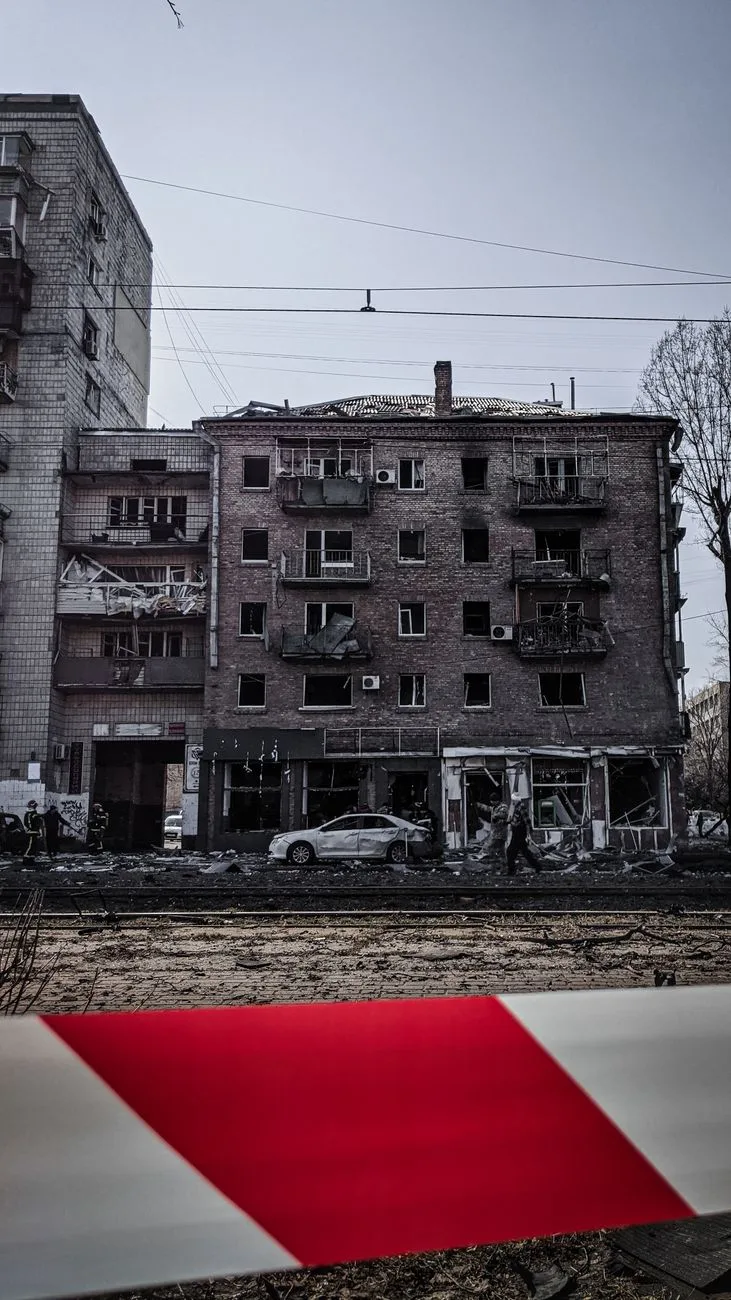



Russian drones close several Kyiv bridges and hit residential building
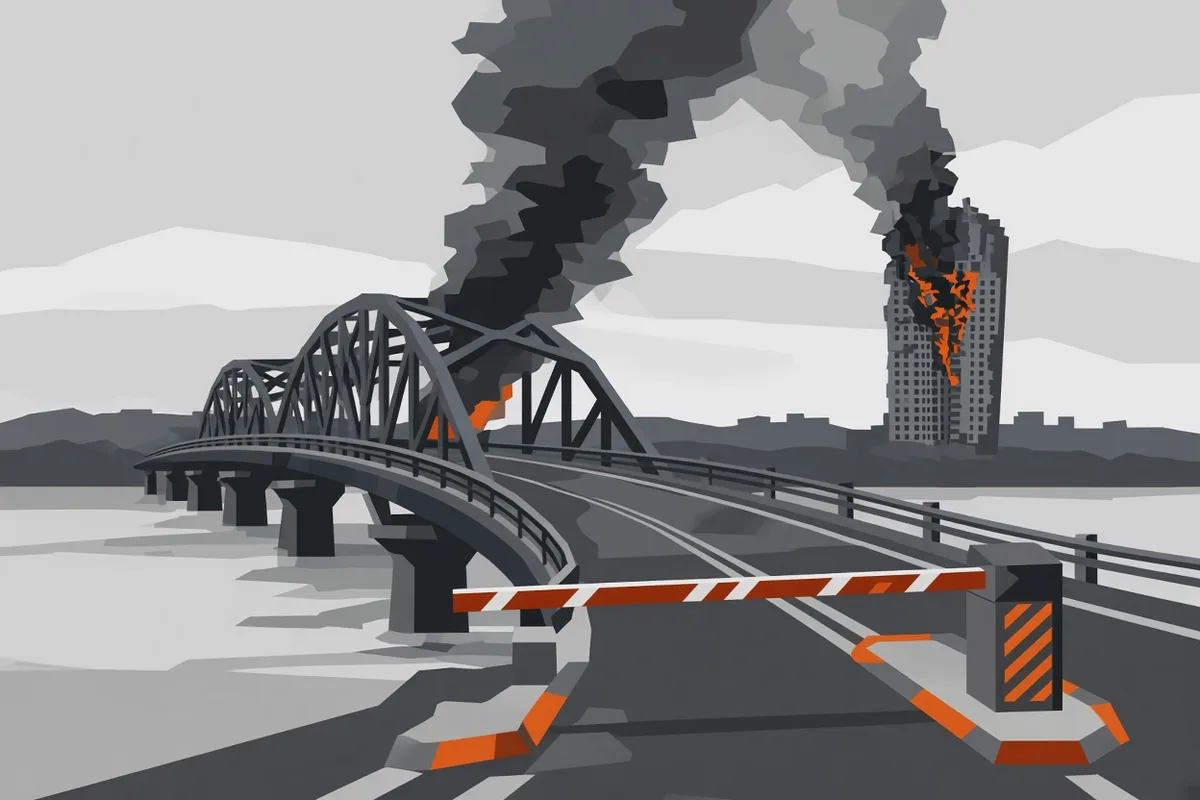
A metro train was physically crossing Kyiv’s Pivdennyi Bridge when the blast came on the morning of October 1. Dust forced its way into the carriage through the ventilation system. No passengers or crew were injured. Windows stayed intact. The train was sent to a depot for inspection.
Two drones had landed near a supporting structure of the bridge, known also as the Southern or Yuzhnyi. It was the first major Kyiv bridge struck by Russian drones since the start of the full-scale invasion in February 2022. Traffic was halted while engineers looked it over. An early inspection found no critical damage, and some ground service resumed.
Hours later another drone struck the roadway. By evening, mayor Vitali Klitschko offered a preliminary assessment: “As a result of the UAV strike, according to preliminary information, the bridge support, crash barrier, roadway, and protective concrete structure of the metro were damaged.” Surface transport and metro service across the crossing were suspended. Russia may have used a new 40-kilogram warhead on the strike.
Overnight from October 1 into October 2, fire broke out on the 24th and 25th floors of a 25-story residential tower in Kyiv’s Darnytskyi district, destroying roughly 40 square meters of the building. The State Emergency Service of Ukraine reported the human cost as crews worked the upper floors: “Rescuers evacuated two injured people from the building and handed them over to medics. During firefighting efforts, the body of a deceased person was discovered. Six more people were also evacuated.”
That same night Klitschko flagged a fresh strike on the capital’s southern river crossing. “The Pivdennyi Bridge has been hit again. Emergency services are heading to the scene.” Debris had also fallen in Holosiivskyi district, damaging windows of a non-residential building and several cars. No casualties and no fires were recorded there. The hits kept coming through the next two days, the same span of river under repeated attack while the rest of the city’s crossings absorbed the load.
On October 3 a drone struck the Northern Bridge. Two people were injured. The blast damaged the road surface and the trolleybus power lines; repair crews moved onto the catenary while authorities held three lanes open from the left bank toward the right and a single lane the opposite way.
Three of Kyiv’s six road bridges over the Dnipro stood fully or partially closed—the Southern and the Northern, with restrictions also on the Paton and Metro bridges. Among the major highway spans, only Darnytsia operated without restriction. Buses 21, 73 and 101 were rerouted via the Podil Bridge Crossing toward Poshtova Square and European Square. Resident Oleksandr Pihalo found the traffic jammed solid. “It’s a total mess on the road today,” he said.

The Kyiv Defense Council held an emergency meeting with military personnel, security forces and emergency responders. Lawmaker Volodymyr Kreidenko put forward ferry and pontoon crossings—one route from Slavutych to Poshtova Square—along with odd-even car registration and increased bus capacity. The proposals were compiled and forwarded to central authorities without final plans locked in. Russia’s Defense Ministry claimed the bridges served troop movement and the logistics of military cargo deliveries toward Donbas, and claimed a hit on the Kyivska substation in Nalyvaikivka.
The same campaign reached well beyond the capital’s river. On the evening of October 3 a Shahed crashed onto the roadway in Haivoron, in the Kirovohrad region. A man was killed. A woman was injured and hospitalized. Dry grass caught fire at the crash site; rescue workers extinguished it. Andriy Raikovych was the source. The Shahed 136, known in Russian service as the Geran-2, is a one-way kamikaze drone built to fly to a ground target and detonate on impact. Russia has mass-used the design against Ukrainian infrastructure since the full-scale invasion began in February 2022, the current phase of a war that started in 2014.
Kharkiv regional head Oleh Syniehubov reported drones and guided bombs that killed five people and wounded more than forty. In the Russian-occupied Luhansk region, Kremlin-installed head Leonid Pasechkin said Ukrainian drones struck a truck and a passenger car on a highway, killing two.
U.N. High Commissioner for Human Rights Volker Türk, speaking in Geneva on Friday, said civilians are bearing the brunt of this war. “The war in Ukraine is a human rights catastrophe that is growing and intensifying by the week, causing unfathomable pain to civilians,” he said. “Across Ukraine, people are living in constant dread.”
Early Saturday in Kyiv, Klitschko warned as the next wave arrived: “Explosions in the city. Kyiv is under ballistic attack. Stay in shelters!” Fires broke out in Sviatoshynskyi and Obolonskyi.
Moldovan president Maia Sandu said Saturday the war was dangerously reaching her country after airspace incursions. Five Russian air attack weapons, including Banderol missiles and drones, had violated Moldovan airspace and exploded on its soil.
Foreign minister Andrii Sybiha set the only partial pause Ukraine would accept. “We are ready for an energy and Black Sea ceasefire, but only in that combination. Energy and a ceasefire in the Black Sea.” On X, President Volodymyr Zelensky pressed the other end of the same campaign: close the sanctions loopholes that still let foreign components reach Russian production. Russia’s drones and missiles, he said, are critically dependent on those parts. “Every Russian drone can actually be stopped right at the production line.”
Metro traffic across the Southern Bridge remains closed behind a gate that alert levels alone cannot open. City metro officials have said they stand ready to resume train service during yellow alerts, yet Klitschko has held the condition firm: nothing restarts until scientific research institutes deliver the formal expert evaluations the Ministry of Restoration requested. Structural clearance comes first. Platform readiness does not override it.