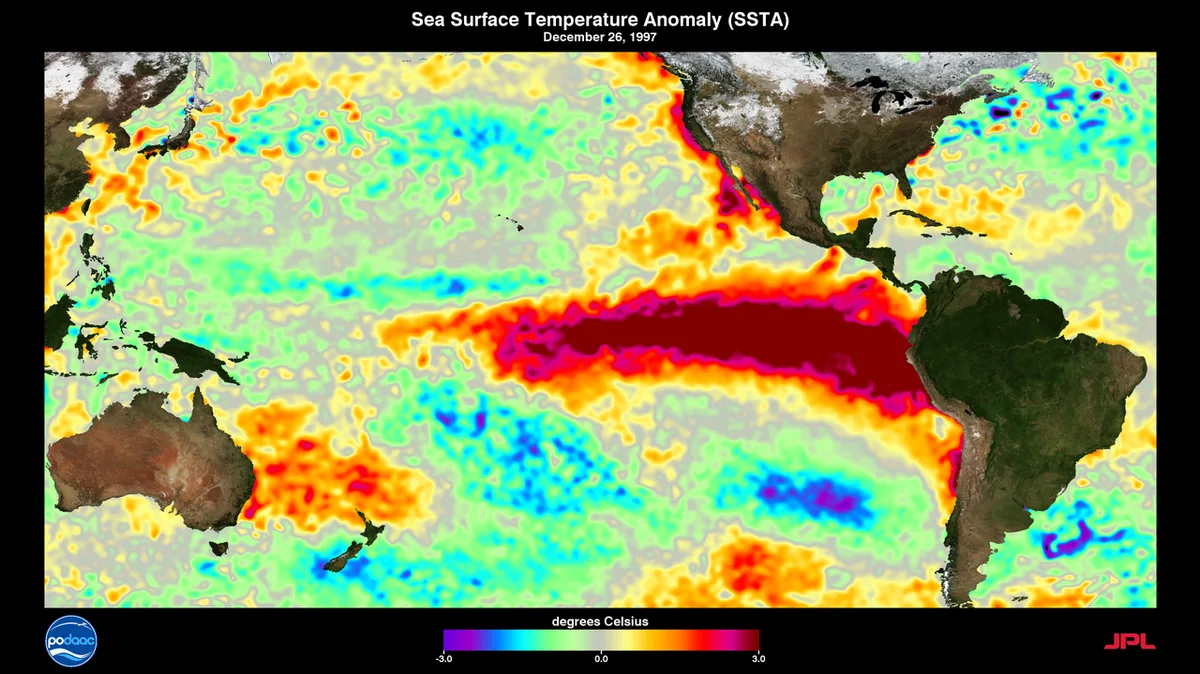



Extreme El Niño Raises Global Climate Risks

Forecasters expect El Niño to become exceptionally strong, with China’s climate agency projecting Pacific sea-surface temperature indices will peak at 3.2–3.5°C around November, above levels recorded at comparable stages of previous major events; the effects could persist into 2027. Researchers project the associated heat could cause roughly 450,000 excess deaths worldwide over coming months, while warning that El Niño’s shifting rainfall patterns can bring drought in some regions and heavy rain or flooding in others, threatening crops and worsening food and humanitarian pressures. China’s forecasters expect unusually heavy autumn rainfall in parts of the country, and scientists say the event offers a preview of temperatures climate change could make more typical in coming decades. Along California’s coast, a Kelvin wave could raise sea levels by up to 30 centimetres for months; high tides about 1.2 feet above normal have prompted a coastal flood advisory for low-lying roads, trails and beaches around San Francisco Bay. In India, prolonged ocean warming and marine heatwaves could harm reefs, fisheries and marine productivity, while reduced coastal upwelling may put pressure on the summer monsoon.