Development
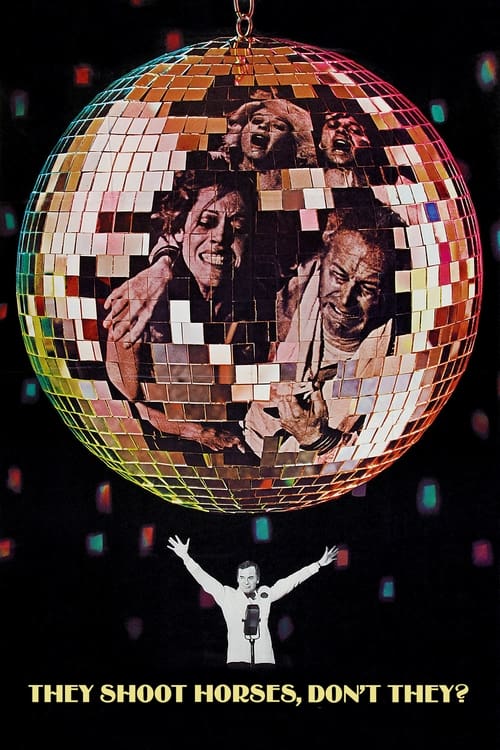
In the early 1950s, Norman Lloyd and Charlie Chaplin were looking for a project on which to collaborate, with Lloyd as director and Chaplin as producer. Lloyd purchased the rights to Horace McCoy's novel for $3,000 and planned to cast Chaplin's son, Sydney, and newcomer Marilyn Monroe in the lead roles. Once arrangements were completed, in 1952 Chaplin took his family on what was intended to be a brief trip to the United Kingdom for the London premiere of Limelight. During this trip, in part because Chaplin was accused of being a Communist supporter during the McCarthy era, FBI head J. Edgar Hoover negotiated with the Immigration and Naturalization Service to revoke his re-entry permit and the film project was cancelled. When the rights to the book reverted to McCoy's heirs sixteen years later (he had died in 1955), they refused to renew the deal with Lloyd, since nothing had come of his original plans.
In 1966 film rights were bought by screenwriter James Poe, who wanted to direct. Finance was arranged through Palomar Pictures, whose president was then Edgar Scherick.
Scherick offered the project to the producing team of Bob Chartoff and Irwin Winkler, who were enthusiastic, but felt the script needed a rewrite and that they would struggle to make the film for Scherick's desired budget of $900,000. They also had concerns about Poe's ability as a director and worried that he was too arrogant.
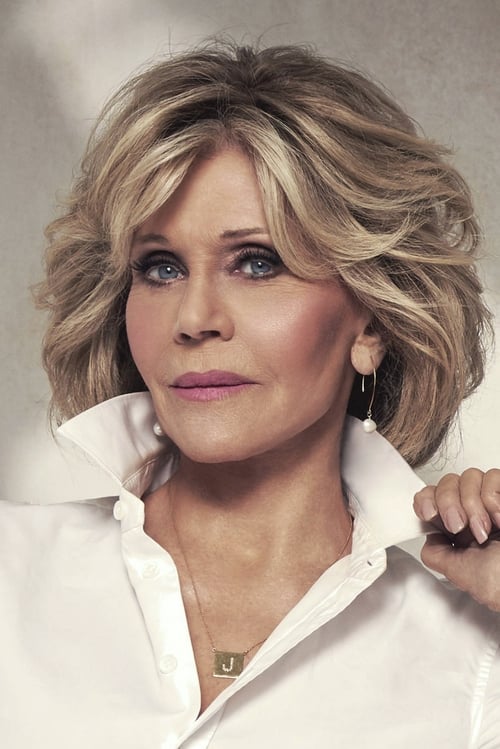
Mia Farrow was interested in starring, but Scherick felt her fee of $500,000 was too high. Eventually it was agreed to show the script to Jane Fonda, who was interested. Michael Sarrazin was borrowed from Universal to play the male lead. Fonda said she was originally unimpressed by the script, but her husband Roger Vadim, who saw similarities between the book and works of the French existentialists, urged her to reconsider.
Scherick eventually agreed to raise the budget to $4 million. Martin Baum became head of ABC Pictures, and Winkler says Baum arranged for Scherick to be fired. Baum wanted the second female lead to be played by Susannah York, though Poe had promised the role to his then-girlfriend Barbara Steele. Winkler says it was Baum who suggested Red Buttons and Gig Young, and pushed for Poe to be fired. The producers were reluctant especially as Jane Fonda liked Poe and had director approval. Winkler arranged for Poe to direct a screen test for Bonnie Bedelia with Fonda; the test did not go well and Fonda became less enthusiastic about Poe's capabilities as a director. Poe was fired from the project. Baum publicly blamed the firing on the fact the script was not ready and the budget was too high.
The main candidates to replace Poe were William Friedkin, Jack Clayton, Larry Peerce, Roger Vadim, Sydney Pollack, and Jack Smight. Clayton admired the novel but wanted to start from scratch which the producer were not willing to do. According to Winkler, Smight wanted $250,000, Friedkin wanted $200,000, and Pollack was willing to do it for $150,000; thus, Pollack got the job.
Meeting with Pollack to discuss the script, Jane Fonda was surprised when he asked for her opinion. She later said, "It was the first time a director asked me for input on how I saw the character and the story." She read the script with a critical eye, made notes on the character, and later observed in her autobiography, "It was a germinal moment [for me] ... This was the first time in my life as an actor that I was working on a film about larger societal issues, and instead of my professional work feeling peripheral to life, it felt relevant." Troubled about problems in her marriage at the time, she drew on her personal anguish to help her with her characterization.
Pollack had the script rewritten by Robert E. Thompson. Warren Beatty originally was considered for the role of Robert Syverton and Pollack's first choice for Rocky was character actor Lionel Stander.
Filming was pushed back from December 1968 to February 1969 to allow for rewrites and recasting. Immediately prior to filming there were rumors Sarazzin would be dropped. Pollack wanted Warren Beatty to play the role instead but Beatty was busy making The Only Game in Town'. Universal agreed to waive payment in the delay of the film and Sarazzin kept the role.