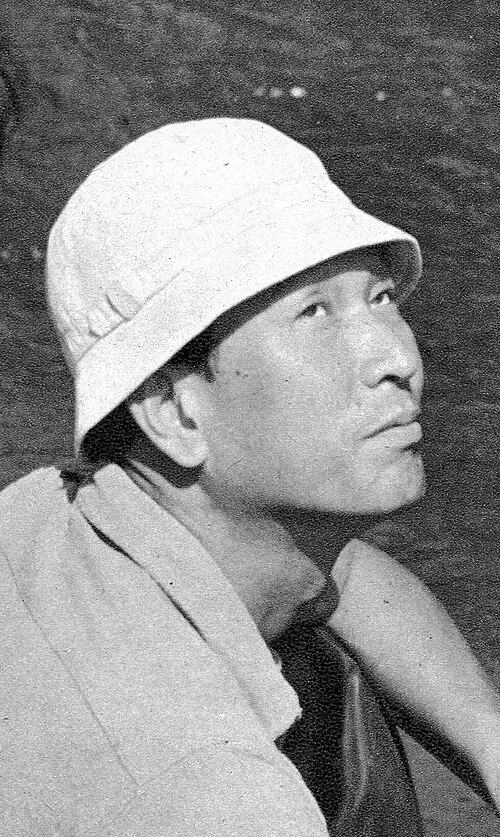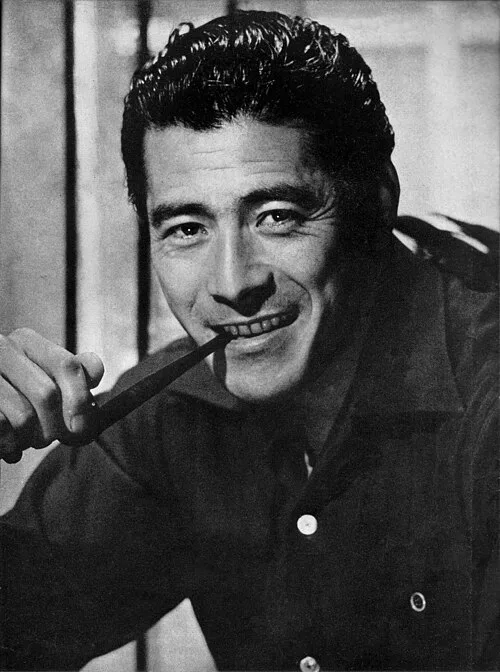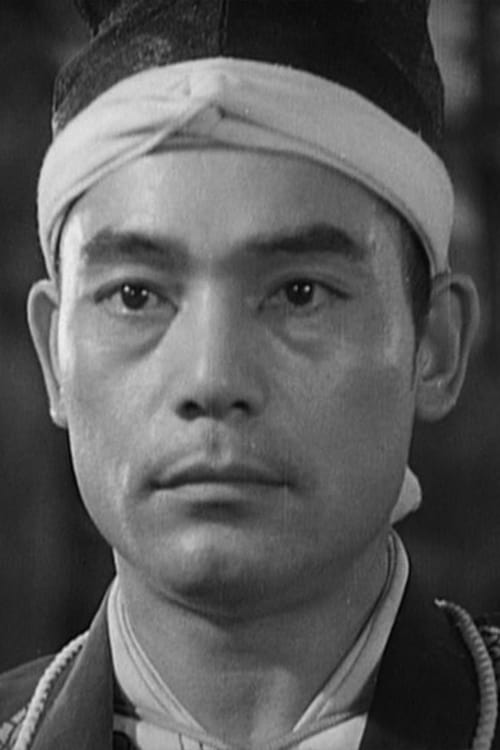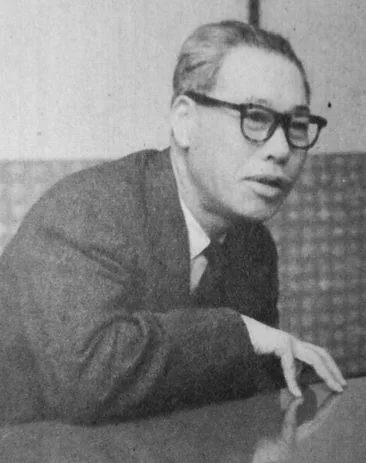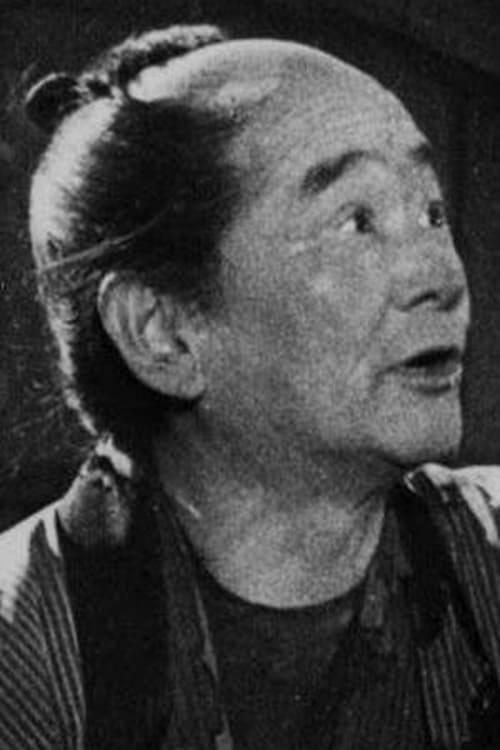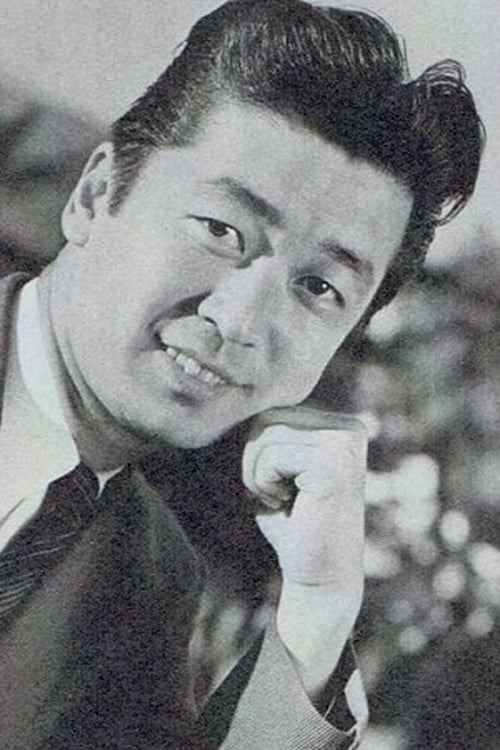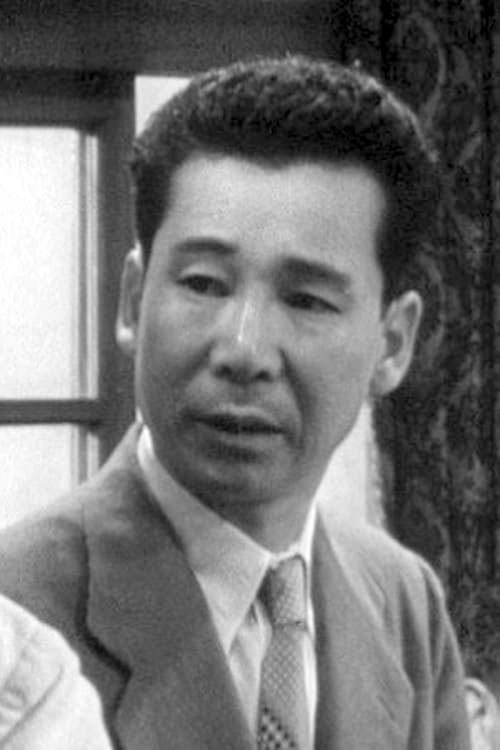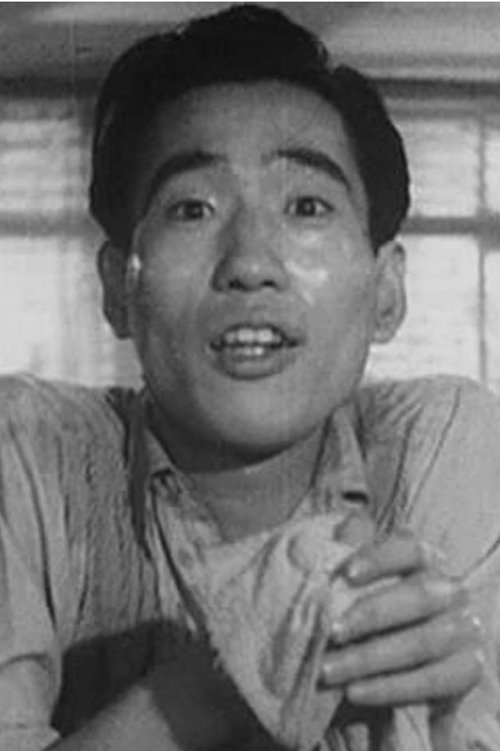




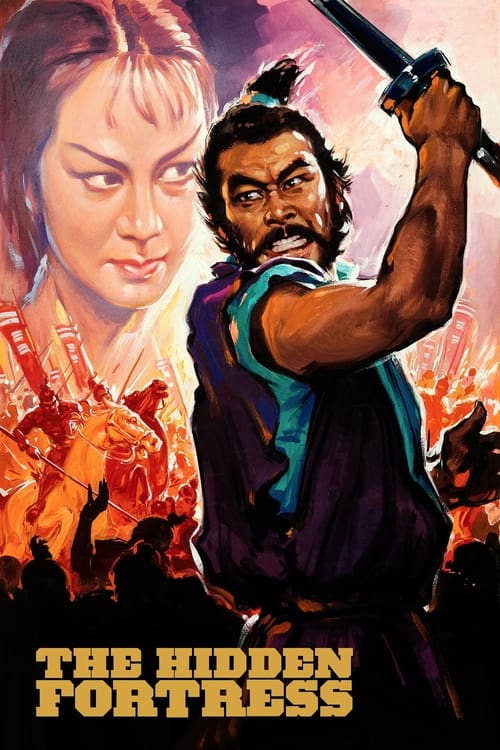
The Hidden Fortress (Japanese: 隠し砦の三悪人, Hepburn: Kakushi Toride no San Akunin; lit. 'The Three Villains of the Hidden Fortress') is a 1958 Japanese epic jidaigeki adventure film directed by Akira Kurosawa, with special effects by Eiji Tsuburaya. It tells the story of two peasants who agree to escort a man and a woman across enemy lines in return for gold, without knowing that he is a general and she is a princess. The film stars Toshiro Mifune as General Makabe Rokurōta and Misa Uehara as Princess Yuki, while the peasants, Tahei and Matashichi, are portrayed by Minoru Chiaki and Kamatari Fujiwara respectively.
The Hidden Fortress was the fourth highest-grossing film of the year in Japan, and Kurosawa's most successful film up to that point. It influenced the 1977 American film Star Wars.
Contents
Plot
Two bedraggled peasants, Tahei and Matashichi, sell their homes and leave to enlist with the feudal Yamana clan, hoping to make their fortunes as soldiers. Instead, they are mistaken for soldiers of the defeated Akizuki clan, have their weapons confiscated, and are forced to help dig graves before being sent away without any food. After quarrelling and splitting up, the two are each captured again and reunited when the Yamana force them alongside dozens of other prisoners to dig through the ruins of the Akizuki castle for the clan's secret reserve of gold. After a prisoner uprising, Tahei and Matashichi slip away, steal some rice, and make camp near a river.
While building a fire, they find a piece of gold marked with the crescent of the Akizuki clan hidden in a hollowed-out stick. Looking for more of the gold, the peasants are discovered by a mysterious man whom they take to be a bandit. They explain how they intend to escape Yamana territory: rather than cross the closely-guarded border into the neighboring state of Hayakawa, they will travel to Yamana itself and then pass into Hayakawa. The stranger is enthused by their plan, so he shows them another piece of gold, and he leads them to a secret camp in the mountains where the rest is hidden. Unbeknownst to them, the man is a famous Akizuki general, Makabe Rokurōta. Although Rokurōta initially planned to kill the peasants, he changes his mind and decides to use their plan to bring the gold and Princess Yuki of the Akizuki clan, also hidden in the camp, to Hayakawa, whose lord has promised to protect them.
Rokurōta escorts Princess Yuki and the huge cache, 200 kan of the clan's gold (still hidden in hollowed-out logs of wood), to Yamana, bringing Matashichi and Tahei to help carry the gold but kept unaware of Yuki and Rokurōta's identities. To protect Yuki, he has her pretend to be a deaf-mute and has a decoy (Rokurōta's younger sister) sent to the Yamana to be executed so they will believe that she is dead. During their travels, Tahei and Matashichi get the group into dangerous situations several times owing to their cowardice and greed. During a stop for the night at an inn, Yuki forces Rokurōta to buy the freedom of a captive young woman who had belonged to the Akizuki clan, who then refuses to leave them.
After losing their horses and obtaining a cart to move the gold, the group is spotted by a Yamana patrol, and Rokurōta is forced to kill them. While pursuing two stragglers, he accidentally rides into a Yamana camp, where the commanding officer, Rokurōta's old rival Hyoe Tadokoro, recognizes him. Tadokoro is sorry he did not get to face Rokurōta in battle and challenges him to a lance duel. Rokurōta wins, but spares Tadokoro's life before stealing a horse and riding back to the group. While in Yamana, they see worshippers gathering for the Fire Festival, so Tahei and Matashichi decide to hide the load of wood among them, but, since they are under the eyes of the Yamana soldiers, they are forced to throw the cart onto the bonfire and join in the ritual dance. Princess Yuki is quite taken by the philosophy behind the Festival regarding the shortness of life and the pettiness of the world. The next day they dig the gold out of the fire's remains and take away as much as they can carry. One night as they approach the Hayakawa border, they are surrounded. Matashichi and Tahei manage to hide in the confusion while the rest are captured by Yamana soldiers and detained at an outpost. The two of them try to turn in Rokurōta for a reward, but having already captured them, the soldiers laugh at them and they leave for Hayakawa with nothing.
Cast
Toshiro Mifune as General Rokurota Makabe (真壁 六郎太, Makabe Rokurota)
Minoru Chiaki as Tahei
Kamatari Fujiwara as Matashichi
Susumu Fujita as General Hyoe Tadokoro (田所 兵衛, Tadokoro Hyoe)
Takashi Shimura as General Izumi Nagakura (長倉 和泉, Nagakura Izumi)
Misa Uehara as Princess Yuki
Eiko Miyoshi as Yuki's lady-in-waiting
Toshiko Higuchi as a woman purchased by the group who chooses to accompany them
Yū Fujiki as a Yamana soldier
Sachio Sakai as a samurai
Yoshio Tsuchiya as a Yamana samurai
Kokuten Kōdō as an old villager who tells Matashichi about a reward for Yuki's capture
Kōji Mitsui as a Yamana guard overseeing the excavation of Akizuki Castle
Production
The Hidden Fortress was Kurosawa's first feature filmed in a widescreen format, Tohoscope, which he continued to use for the next decade. The film was originally presented with Perspecta directional sound, which was re-created for the Criterion Blu-ray release.
Key parts of the film were shot in Hōrai Valley in Hyōgo and on the slopes of Mt. Fuji, where bad weather from the record-breaking Kanagawa typhoon delayed the production. Toho's frustration with Kurosawa's slow pace of shooting led to the director forming his own production company the following year, though he continued to distribute through Toho.
Music
The film's musical score was composed by Masaru Sato. The soundtrack album comprises 65 tracks.
Tracks
Titles
Fallen Warrior's Death
Peaceful Mountain Pass Road
Yamana: Temporary Checkpoint
War town ~ To the border
Prisoner's loss of dignity
Burnt Ruins of Autumn Moon Castle
Flight
Money!!!
Mysterious Mountain Man 1
Mysterious Mountain Man 2
Good idea to go cross country
Shining Extended Staff
Road to the Hidden Fortress
Woman on the Summit
Useless Work
Spring Woman
Escaping Woman
Reward Money
Rokurota, to the Cave
Princess Yuki's tears
Horse and Princess
Riding in the indicated direction
Setting off
Gestured Excuse
Rokurota's Scouting
Reliable Ally 1
Release
The Hidden Fortress was released theatrically in Japan on December 28, 1958. The film was the highest-grossing film for Toho in 1958, ranking as the fourth highest-grossing film overall in Japan that year. In box-office terms, The Hidden Fortress was Kurosawa's most successful film, until the 1961 release of Yojimbo.
The film was released theatrically in the United States by Toho International with English subtitles. It was screened in San Francisco in November 1959 and received a wider release on October 6, 1960, with a 126-minute running time. The film was re-issued in the United States in 1962 with a 90-minute running time. The film was compared unfavorably to Rashomon (1950) and Seven Samurai (1954), and performed poorly at the U.S. box office.
Critical reception
In a 1957 review, Variety called it "a long, interesting, humour-laden picture in medieval Japan". Performances of the lead actors, Kurosawa's direction and Ichio Yamazaki's camerawork were praised.
An article published in The New York Times on January 24, 1962, featured a review of the film by journalist Bosley Crowther, who called The Hidden Fortress a superficial film. He said that Kurosawa, "the Japanese director whose cinema skills have been impressed upon us in many pictures, beginning with "Rashomon", is obviously not above pulling a little wool over his audiences' eyes — a little stooping to Hollywoodisms — in order to make a lively film." Crowther further opined that "Kurosawa, for all his talent, is as prone to pot boiling as anyone else."
Writing for The Criterion Collection in 1987, David Ehrenstein called it "one of the greatest action-adventure films ever made" and a "fast-paced, witty and visually stunning" samurai film. According to Ehrenstein:
The battle on the steps in Chapter 2 (anticipating the climax of Ran) is as visually overwhelming as any of the similar scenes in Griffith's Intolerance. The use of composition in depth in the fortress scene in Chapter 4 is likewise as arresting as the best of Eisenstein or David Lean. Toshiro Mifune's muscular demonstrations of heroic derring-do in the horse-charge scene (Chapter 11) and the scrupulously choreographed spear duel that follows it (Chapter 12) is in the finest tradition of Douglas Fairbanks. Overall, there’s a sense of sheer "movieness" to The Hidden Fortress that places it plainly in the ranks of such grand adventure entertainments as Gunga Din, The Thief of Baghdad, and Fritz Lang's celebrated diptych The Tiger of Eschnapur and The Hindu Tomb.
David Parkinson of the Empire on a review posted on January 1, 2000, gave the film four out of five stars and wrote "Somewhat overshadowed by the likes of Seven Samurai, this is a vigorously played, meticulously staged adventure. It's not top drawer, but still ranks among the best of Kurosawa's minor masterpieces."
Writing for The Criterion Collection in 2001, Armond White said "The Hidden Fortress holds a place in cinema history comparable to John Ford's Stagecoach: It lays out the plot and characters of an on-the-road epic of self-discovery and heroic action. In a now-familiar fashion, Rokurōta and Princess Yuki fight their way to allied territory, accompanied by a scheming, greedy comic duo who get surprised by their own good fortune. Kurosawa always balances valor and greed, seriousness and humor, while depicting the misfortunes of war."
Awards
The film won the Silver Bear for Best Director at the 9th Berlin International Film Festival in 1959. Kinema Junpo awarded Shinobu Hashimoto the award for Best Screenwriter for his work on the film and for Tadashi Imai's Night Drum and Yoshitaro Nomura's Harikomi.
Legacy
Influence
American director George Lucas has acknowledged the heavy influence of The Hidden Fortress on his 1977 film Star Wars, particularly in the technique of telling the story from the perspective of the film's lowliest characters, C-3PO and R2-D2. Some of the major characters from Star Wars have clear analogues in The Hidden Fortress, including C-3PO and R2-D2 being based on Tahei and Matashichi, and Princess Leia on Princess Yuki. Lucas's original plot outline for Star Wars bore an even greater resemblance to the plot of The Hidden Fortress; this draft would subsequently be reused as the basis for The Phantom Menace. The movie is referenced in Lego Star Wars: The Skywalker Saga, where during a cutscene for the first level of Return of the Jedi, there is a flag written in Aurebesh, which translates to "Hidden Fortress".
Remake
A loose remake entitled Hidden Fortress: The Last Princess was directed by Shinji Higuchi and released on May 10, 2008.