An Unmarried Woman and film stardom
Clayburgh was cast as Carole Lombard in the 1976 biopic Gable and Lombard with James Brolin as Clark Gable. Variety called it "a film with many major assets, not the least of which is the stunning and smashing performance of Clayburgh as Carole Lombard" and Time Out London felt she "produced a very modern version of the Lombard larkishness." Vincent Canby of The New York Times suggested that her performance "comes off better" than Brolin's Gable, as "she appears to be creating a character whenever the fearfully bad screenplay allows it." Despite this, he felt both actors were miscast as the famous couple, writing further, "Miss Clayburgh could be an interesting actress, but there are always problems when small performers try to portray the kind of giant legends that Gable and Lombard were. Because both Gable and Lombard are still very much alive in their films on television and in repertory theaters, there is difficulty in responding to Mr. Brolin and Miss Clayburgh in any serious way."
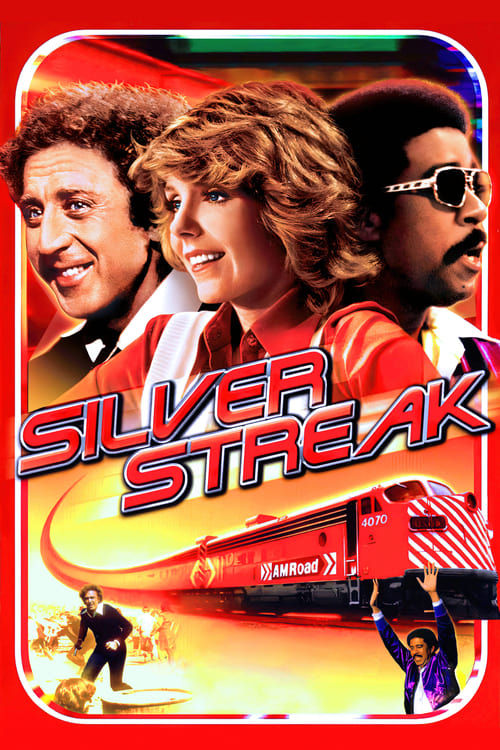
She starred in the acclaimed TV movie Griffin and Phoenix (1976) co-starring with Peter Falk. It tells the story of two ill-fated middle-aged characters who both face a terminal cancer diagnosis and have months left to live. Notably, Clayburgh developed the same type of cancer her character had in this film, succumbing to it in 2010. Also in 1976, she had her first big box office success playing the love interest of Gene Wilder's character in the comedy-mystery Silver Streak, also starring Richard Pryor. Critics felt Clayburgh had little to do in Silver Streak, and The New York Times called her "an actress of too much intelligence to be able to fake identification with a role that is essentially that of a liberated ingenue".
In 1977, she had another hit with Semi-Tough, a comedy set in the world of American professional football, which also starred Burt Reynolds and Kris Kristofferson. Clayburgh played Barbara Jane Bookman, who has a subtle love triangle relationship with both Reynolds and Kristofferson's characters. Vincent Canby liked her performance, writing, "Miss Clayburgh, who's been asked to play zany heroines in Gable and Lombard and Silver Streak by people who failed to provide her with material, has much better luck this time. She's charming," and The Washington Post enjoyed her chemistry with Reynolds: "Reynolds and Clayburgh look wonderful together. They seem to harmonize in a way that would only be more apparent - and make their eventual recognition of being in love seem more appropriate." Both Semi-Tough and Silver Streak earned her a reputation "as a popular modern stylist of screwball comedy" and The Guardian noted how Clayburgh "had the kind of warmth and witty sophistication barely seen in Hollywood since Carole Lombard and Jean Arthur".
Clayburgh's breakthrough came in 1978 when she received the first of her two Academy Award for Best Actress nominations for Paul Mazursky's An Unmarried Woman. In what would be her career-defining role, Clayburgh was cast as Erica, the courageous abandoned wife who struggles with her new 'single' identity after her stockbroker husband leaves her for a younger woman. Upon release, An Unmarried Woman drew praise and was popular at the box office, briefly making Clayburgh, at 34, a star. Clayburgh's performance garnered some of the best reviews of her career: Roger Ebert called the film "a journey that Mazursky makes into one of the funniest, truest, sometimes most heartbreaking movies I've ever seen. And so much of what's best is because of Jill Clayburgh, whose performance is, quite simply, luminous. Clayburgh takes chances in this movie. She's out on an emotional limb. She's letting us see and experience things that many actresses simply couldn't reveal" while The New York Times wrote, "Miss Clayburgh is nothing less than extraordinary in what is the performance of the year to date. In her we see intelligence battling feeling – reason backed against the wall by pushy needs."
Writing for The New Yorker, veteran critic Pauline Kael noted: Jill Clayburgh has a cracked, warbly voice -- a modern polluted-city huskiness. And her trembling, near-beautiful prettiness suggests a lot of pressure. On the stage, she can be dazzling, but the camera isn't in love with her -- she doesn't seem lighted from within. When Erica's life falls apart and her reactions go out of control, Clayburgh's floating, not-quite-sure, not-quite-here quality is just right. And she knows how to use it: she isn't afraid to get puffy-eyed from crying, or to let her face go slack. Her appeal to the audience is in her addled radiance; she seems so punchy that we're a little worried for her. No other film has made such a sensitive, empathic case for a modern woman's need to call her soul her own.
In addition to her Oscar nomination, Clayburgh also earned her first Golden Globe nomination for Best Actress in a Motion Picture – Drama (both of which she lost to Jane Fonda for Coming Home) and won the Best Actress Award at the Cannes Film Festival, which she and Isabelle Huppert shared.
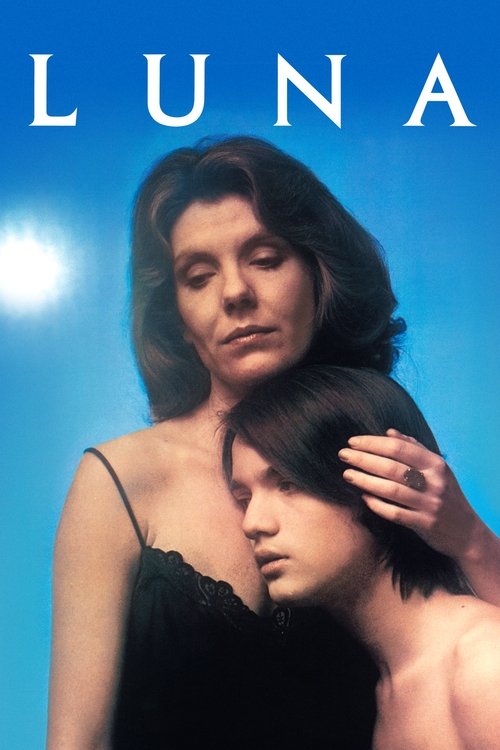
During this time, she turned down the lead in Norma Rae, a film that earned Sally Field her first Oscar. Still, in 1979, Clayburgh had a career peak after starring in two movies that garnered her widespread acclaim. The first was Bernardo Bertolucci's La Luna (1979), which she made in Italy. The film presents an incestuous relationship between a mother and her drug-addicted son, and was poorly received at the time. Clayburgh agreed to star in this film because she felt that "most great roles explore something that is socially taboo". Bertolucci was especially impressed with her work, having complimented her ability "to move from one extreme to the other in the same shot, be funny and dramatic within the same scene". Despite the film's controversy, Clayburgh's performance as a manipulative opera singer was generally praised: Critic Richard Brody called it "her most extravagant role" and a review in The New York Times felt she was "extraordinary under impossible circumstances". Also, in the London Review of Books, Angela Carter wrote, "Jill Clayburgh, seizing by the throat the opportunity of working with a great European director, gives a bravura performance: she is like the life force in person".
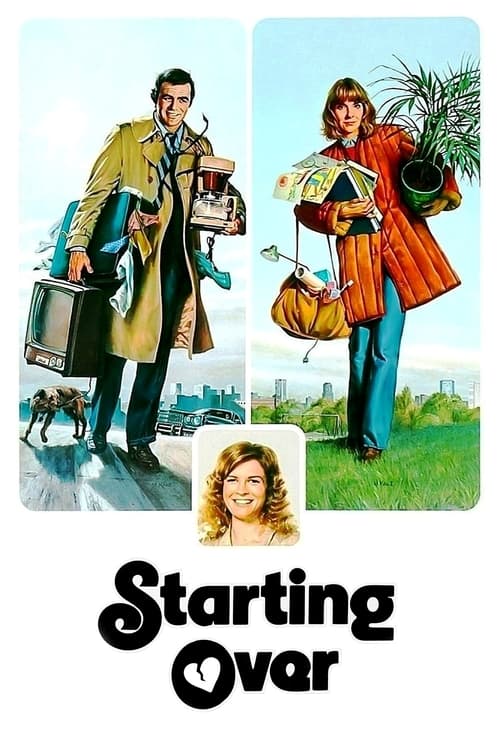
Her second and last film of 1979 was Alan J. Pakula's Starting Over, a romantic comedy with Burt Reynolds and Candice Bergen. Pakula hired her because, "the extraordinary thing is that she's so many people. In a Jill Clayburgh movie you don't know what you're going to get." As a nursery-school teacher who falls reluctantly in love with Reynolds's divorced character, her performance was lauded by The New York Times: "Miss Clayburgh delivers a particularly sharp characterization that's letter-perfect during the first part of the story and unconvincing in the second, through no fault of her own." Starting Over earned her a second Oscar and Golden Globe nomination for Best Actress. Also that year, she later returned to the stage with In the Boom Boom Room as a go-go dancer. She had wanted to play this role since 1972 when the play originally premiered on Broadway, but she lost the role to Madeline Kahn. Although she wasn't cast in David Rabe's play, she later married him in 1979.
Her back-to-back success with An Unmarried Woman and Starting Over led writer Mel Gussow to suggest that Clayburgh was one of the few "stars for the 80's, fresh, natural anti‐ingenues" alongside Meryl Streep and Diane Keaton, adding, "These are stage actresses who have become movie stars on their own terms, free of "glamour," ready to clown as well as to play heroines." In 1980, she was cast opposite Michael Douglas in a romantic comedy, It's My Turn, in which she teaches the proof of the snake lemma. Novelist Eleanor Bergstein, who had written the screenplay, was delighted with Clayburgh's casting. "To me," says Bergstein, "Jill is one of the few actresses who looks like she has imagined her life, made her life happen. I think that divides women in a way, women whose intelligence animates their faces. They have willed themselves to be beautiful, to be exactly who they are. Their minds inform their faces. I think Jill is like that. Lots of actresses are just the opposite." Clayburgh herself was attracted to the part because "Kate is the closest person to myself that I have ever played. People always say, 'Oh, An Unmarried Woman, that's you.' But really, of course, it's not." The following year, she was a conservative Supreme Court justice in First Monday in October, a comedy with Walter Matthau. Her performance was praised and earned her a Golden Globe nomination for Best Actress in a Motion Picture – Comedy or Musical.