Views
In a 2007 interview, del Toro described his political position as "a little too liberal". He pointed out that the villains in most of his films (such as the industrialist in Cronos, the Nazis in Hellboy, and the Francoists in Pan's Labyrinth) are united by the common attribute of authoritarianism: "I hate structure. I'm completely anti-structural in terms of believing in institutions. I hate them. I hate any institutionalized social, religious, or economic thing."
In 2009, del Toro signed a petition in support of director Roman Polanski after Polanski was detained while traveling to a Switzerland film festival in relation to his 1977 charges of drugging and raping a 13-year-old girl. The petition argued the arrest would undermine the tradition of film festivals as a place for works to be shown "freely and safely", and that arresting filmmakers traveling to neutral countries could open the door "for actions of which no-one can know the effects."
Raised Catholic, del Toro told Charlie Rose in a 2009 interview that his upbringing was excessively "morbid" and said, "I mercifully lapsed as a Catholic... but as Buñuel used to say, 'I'm an atheist, thank God.'" He insists that he is spiritually "not with Buñuel" and that he is "once a Catholic, always a Catholic, in a way". He concluded, "I believe in Man. I believe in mankind, as the worst and the best that has happened to this world." He has also responded to the claim that he views his art as his religion: "It is. To me, art and storytelling serve primal, spiritual functions in my daily life. Whether I'm telling a bedtime story to my kids or trying to mount a movie or write a short story or a novel, I take it very seriously." Nevertheless, he became a "raging atheist" after seeing a pile of human fetuses while volunteering at a Mexican hospital. He also said that he was horrified by the way the Catholic Church complied with Francoist Spain, and even had a character in one of his films quote what actual priests would say to Republican faction members in concentration camps. Upon discovering the religious beliefs of English writer C. S. Lewis, del Toro stated that he could no longer relate to Lewis and his work, despite having done so beforehand. He described Lewis as "too Catholic" for him, despite the fact that Lewis was never a Catholic.
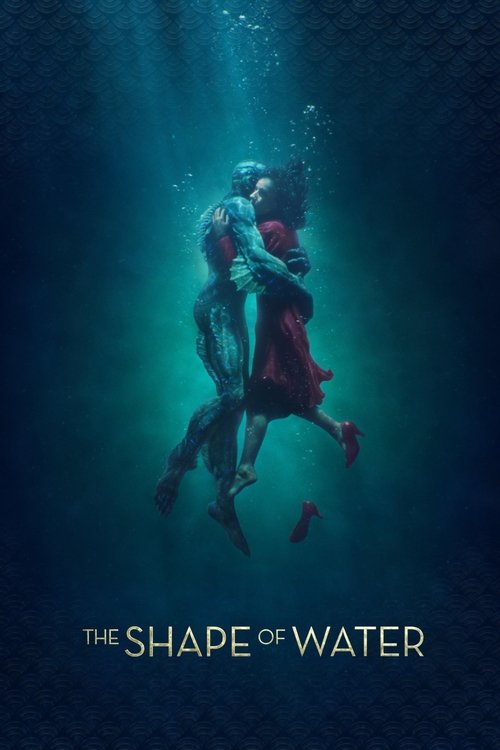
Del Toro is not entirely disparaging of Catholicism, and his background continues to influence his work. While discussing The Shape of Water, he mentioned the Catholic influence on the film: "A very Catholic notion is the humble force, or the force of humility, that gets revealed as a god like figure toward the end. It's also used in fairy tales. In fairy tales, in fact, there is an entire strand of tales that would be encompassed by the title 'The Magical Fish'. And [it's] not exactly a secret that a fish is a Christian symbol." In the same interview, he said, "I don't think there is life beyond death, I don't. But I do believe that we get this clarity in the last minute of our life. The titles we achieved, the honors we managed, they all vanish. You are left alone with you and your deeds and the things you didn't do. And that moment of clarity gives you either peace or the most tremendous fear, because you finally have no cover, and you finally realize exactly who you are."
In an interview for his book and exhibition Guillermo del Toro at Home with Monsters, del Toro stated in 2016, "A lot of Mexican Catholic dogma, the way it's taught, it's about existing in a state of grace, which I found impossible to reconcile with the much darker view of the world and myself, even as a child. I couldn't make sense of impulses like rage or envy and, when I was older, more complex ones, you know. I felt there was a deep cleansing allowing for imperfection through the figure of a monster. Monsters are the patron saints of imperfection."
Del Toro has been publicly critical of the administration of Andrés Manuel López Obrador for its handling of public support for Mexican cinema. In May 2020 he joined other filmmakers in opposing a Morena proposal that abolished the Fondo de Inversión y Estímulos al Cine (Fidecine), which provided subsidies to the Mexican film industry. In November 2022 the Mexican Academy of Film Arts and Sciences postponed the 65th Ariel Awards, citing a serious financial crisis caused by a lack of resources; Del Toro reacted on Twitter, writing that "the systematic destruction of Mexican cinema and its institutions—which took decades to build—has been brutal", and comparing the López Obrador administration unfavorably with the government of José López Portillo (1976–1982). Del Toro also offered to finance the statuettes; the ceremony was externally funded and took place on 9 September 2023 in Guadalajara, Jalisco.
He is also highly skeptical of AI in filmmaking, telling the British Film Institute in September 2024, "I saw a demo of AI [being used for animation] and I thought, 'Oh, that's what people think animation is: giving prompts and the computer does it. [...] AI has demonstrated that it can do semi-compelling screensavers—that's essentially that. And I think the value of art is not how much it costs and how little effort it requires, it's how much you would risk to be in its presence. Are [screensavers] going to make [viewers] cry because they lost a son, a mother? Because they misspent their youth? No. [AI is] in the hands of people that don't think about it as a tool but as a solution. [...] It should be, if at all, optional." In an interview with NPR's Fresh Air, del Toro again expressed disinterest and skepticism in generative AI in film saying "The other day, somebody wrote me an email, said, 'What is your stance on AI?' And my answer was very short. I said, 'I'd rather die.'"