Plot
In 1887 Buffalo, New York, American heiress Edith Cushing, daughter of wealthy businessman Carter Cushing, is visited by her mother's ghost who warns, "Beware of Crimson Peak."
In 1901, Edith is now a budding author, and meets English baronet Sir Thomas Sharpe and his sister, Lucille. Thomas seeks investors for his invention, a digging machine to revive his family's clay mines, but Mr. Cushing rejects his proposal. Thomas and Edith become romantically attached, leading her father to hire a private detective who uncovers unsavory facts about the Sharpe siblings. Mr. Cushing bribes them to leave America, forcing Thomas to "break Edith's heart" by disparaging her and her novel.
Thomas returns Edith's manuscript with a letter explaining his actions, and they reconcile. Mr. Cushing is brutally murdered, raising the suspicions of Edith's childhood friend, Dr. Alan McMichael. Thomas marries Edith—giving her a ring taken from Lucille—and they arrive at Allerdale Hall, the Sharpes' dilapidated Cumberland mansion, which is sinking into the red clay mine below. Lucille plies Edith with tea made from "firethorn berries" and Thomas persuades her to put her father's fortune toward his machine.
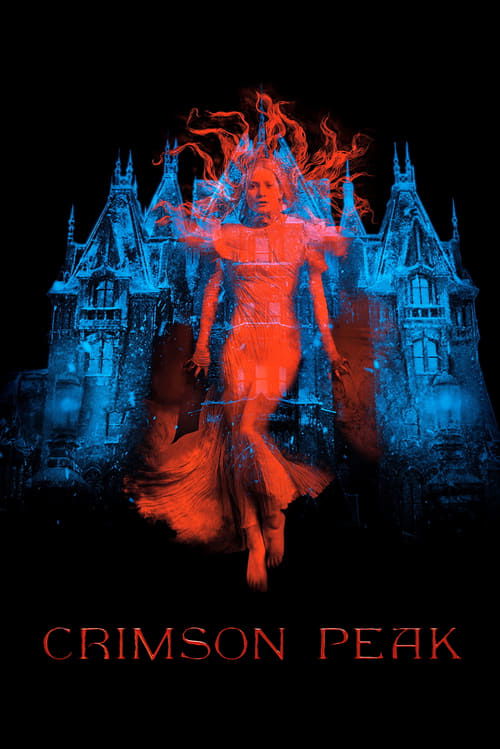
Edith begins to notice Thomas's absence from their shared bedroom during the night. She is plagued by nightmares and continually visited by gruesome red ghosts around Allerdale, one of which tricks her into opening a closet, where she discovers wax phonograph cylinders, before chasing her into the cellars, where she finds a locked trunk engraved with the name "Enola". Soon after this, Thomas tells Edith that the estate is referred to as "Crimson Peak" due to the warm clay from the mine leaching up from the ground and staining the winter snow, turning it bright red. Thomas takes Edith on a trip to the local post office for some fresh air after Edith demands to leave, where she receives a letter addressed to E. Sharpe. Snowed in for the night, they finally have sex, which Lucille is infuriated to learn.
Edith steals a key from Lucille bearing the inscription "Enola" and unlocks the trunk to find a gramophone and secret documents. Using the gramophone to listen to the audio recordings on the wax cylinders, and while reading the paper documents, Edith learns that Thomas previously married three other wealthy women—including Enola Sciotti, the letter's intended recipient—and that Lucille has been poisoning Edith with tea as part of the siblings' "marriage and murder" scheme to finance Thomas's inventions. Edith confronts her husband and sister-in-law, catching them in an incestuous embrace, and Lucille pushes her from a balcony.
Alan has learned what Mr. Cushing uncovered about the Sharpes: Thomas's multiple marriages and Lucille's time in a mental institution. He travels to Allerdale Hall to rescue Edith, arriving just after she has been pushed. Tending to her injuries, Alan prepares to leave with Edith, but Lucille stabs him and demands that Thomas finish the job. Thomas, instead, inflicts an intentionally nonfatal stab wound to Alan before hiding him in the cellar.
Lucille forces Edith to sign a transfer deed granting the Sharpes ownership of her estate, and confesses to having murdered Thomas's previous wives and having borne a child with Thomas that soon died—these are the ghosts who have appeared to Edith. Lucille admits to murdering Edith's father, as well as her own mother when she discovered Lucille and Thomas's sexual relationship. Edith stabs Lucille with her pen and flees, but is confronted by Thomas, who has truly fallen in love with her. He burns the deed and begs his sister to join him and Edith in a new life together, but an enraged Lucille fatally stabs him. She pursues Edith with the cleaver she used to kill her mother, but is halted by Thomas's ghost, allowing Edith to kill her with a shovel. Edith silently bids Thomas farewell before he vanishes.
Edith and Alan are rescued by the villagers, and Lucille becomes the ghost of Allerdale Hall, playing her piano for eternity. Some time later, Edith writes a novel titled Crimson Peak.







.jpg?width=400)