



North Korea reportedly fires projectile into eastern waters
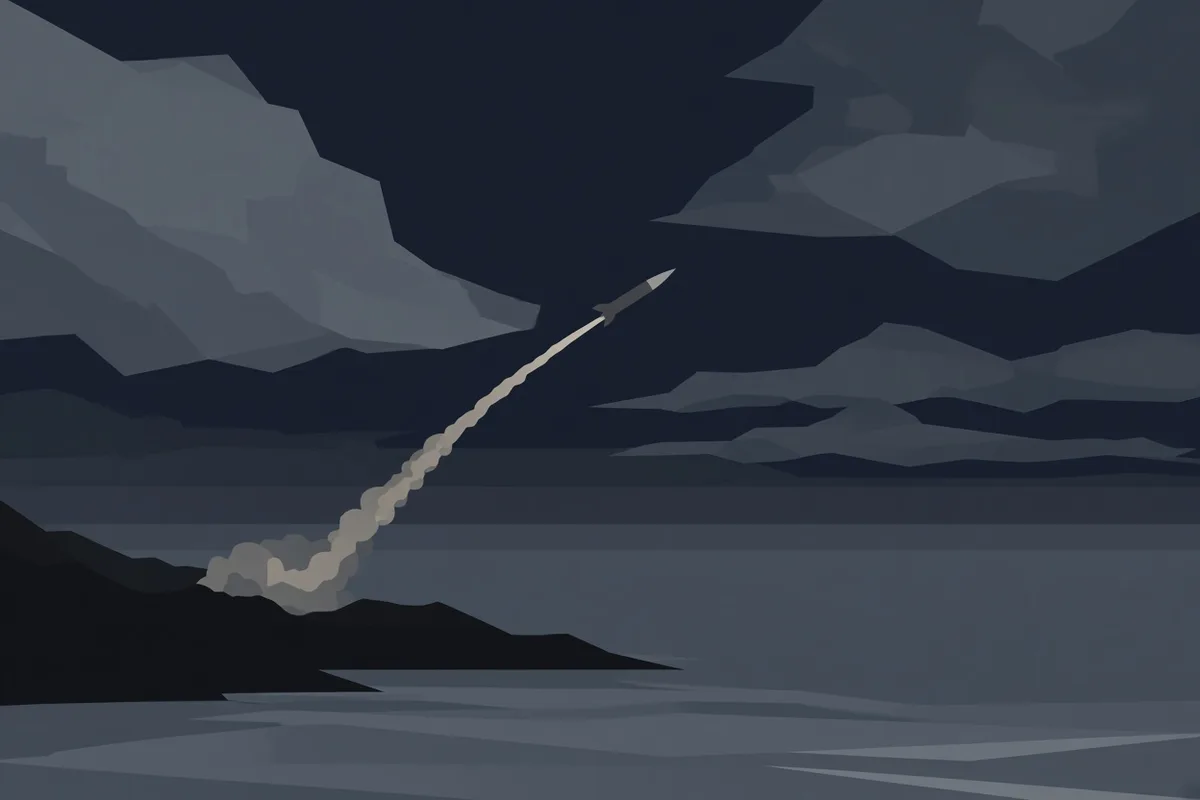
Around 6:30 a.m. on Saturday, October 3, 2026, a projectile left the Wonsan area toward the East Sea. The account released later that day placed Kim Jong Un at the launch, watching a firepower unit with a special mission carry out the shot.
Kim Yo Jong confirmed the event the same day through the Korean Central News Agency. “At dawn this morning, a drill for firing a strategic weapon towards the East Sea of Korea was carried out,” she said. She added that “mid-range strategic missiles were used in the training,” and that the leader had personally observed the exercise.
The timing stood apart from the usual pattern. North Korea had typically waited until the day after a launch to state its purpose and results. This time the explanation—an announced drill with mid-range strategic missiles—arrived on the day the projectile left the coast, while the flight over the water was still the immediate fact.
South Korea’s Joint Chiefs of Staff detected a ballistic missile launched toward the East Sea and estimated that it flew over 700 kilometers. Japan’s Defense Ministry announced that the projectile had traveled about 680 kilometers and reached a maximum altitude of about 90 kilometers. The object was believed to have fallen into waters outside Japan’s exclusive economic zone. No damage to aircraft or ships was confirmed. South Korea and the United States began a detailed analysis of the flight.
In the same-day statement, Kim Yo Jong turned to the short tracks themselves. “We have already witnessed similar cases four times, and it has been practically verified that the superiority of our missiles' unique flight patterns is real,” she said. The foreign estimates of distance, in her telling, measured not the full flight but how little of it had been held.
“While we should not blindly trust the detection data released by the enemy, these figures allow us to gauge the limitations of their detection capabilities and the uniqueness of our missiles,” she continued. The account said that when a wave-like flight trajectory was applied, the target was lost after the first leap point. “If we extend the trajectory during the descent phase, we obtain numbers that are relatively similar to the ranges announced by the enemy.”
Representatives of the Missile Bureau reported that recently introduced technology allowed at least four different flight-trajectory modes to be set by objective and by target. The statement pressed the need to understand the missile’s speed. Speed and the low-altitude path change were the point.
“In other words, this means there is virtually no way to evade this strike,” Kim Yo Jong said.
The October 3 firing followed the pattern of a ballistic missile launch on August 12, when another projectile had been sent up in connection with South Korea–United States joint military exercises. North Korea conducted six underground nuclear tests at Punggye-ri from 2006 to 2017, the only country confirmed to carry out nuclear weapons tests in the twenty-first century. The mid-range strategic training belonged to that longer line of tests and launches.
The projectile left the Wonsan coast inside days already charged by earlier shots from the same area and by a rising exchange along the border. On September 20, two short-range ballistic missiles left the Wonsan area toward the East Sea. One flew about 450 kilometers. The other flew more than 600 kilometers. The next day, September 21, a landmine blast in the Demilitarized Zone near the 25th Division boundary line injured three South Korean soldiers; one account said two. Seoul blamed North Korean mines south of the Military Demarcation Line and demanded an apology and responsible action.
Kim Yo Jong dismissed the demand as “utterly pathetic.” She called the South’s conclusions about the blast “a farce.” In the same stretch of statements she framed North Korea’s border fortification work as shutting the door and rejected talks, leaving no room for contact across the line. The exchange ran through the final days of September without easing. By early October the Wonsan pair and the mine incident still stood open. The mid-range strategic training of October 3 arrived a day after her latest reply, inside that sequence rather than apart from it, the next concrete act over the same eastern water.
Japan lodged a protest with North Korea over the safety of Japanese citizens. Japan’s coast guard cautioned ships in the area. South Korea’s presidential National Security Council convened an emergency meeting on October 3. The military raised its monitoring against the possibility of further tests and said it would share intelligence with the United States and Japan. Seoul treated the firing as a violation of United Nations rules. The South Korean military said its armed forces were closely monitoring the various movements of North Korea within the framework of a solid combined defense posture between South Korea and the United States, and that they maintained the capability and readiness to respond. Real-time information sharing with the United States and Japan continued through the day as the flight was assessed.
If the projectile is confirmed as a ballistic missile, the October 3 shot from the Wonsan area would be North Korea’s fifteenth ballistic-missile launch this year. South Korea and the United States kept their review of the flight under way while the raised monitoring held. The projectile came down in waters east of the peninsula, beyond the tracks the neighbors had published.