


UNICEF report says 1.5 million Pakistani children faced online sexual abuse
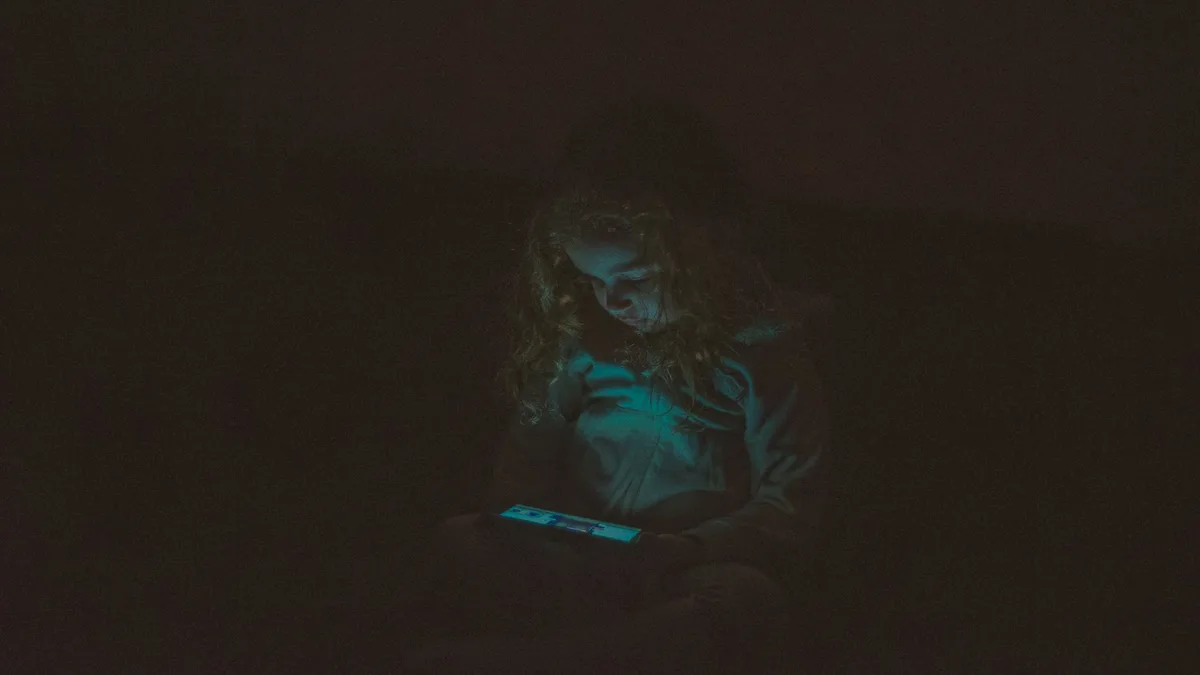
Inside the online game, the stranger had already begun chatting with 17-year-old Zara Shah and was acting like a friend. AFP changed her name for safety. What started as play shifted in clear steps she later described.
“We started chatting while playing an online game, and he began acting like a friend. Later, he wanted to meet and, after, started asking me for nudes,” Zara Shah said.
She refused. The reply was not another invitation but a threat aimed past her. “When I refused, he threatened to find my family online and tell them that we had been talking,” she said.
The path was: a game chat, a request to meet, a demand for nude images, then the warning that her family could be found online and told they had been talking. The stranger she had met while playing had moved from friendliness to leverage.
On September 3, 2026, in Islamabad, Ayesha Raza Farooq, chairperson of the National Commission on the Rights of the Child, Pernille Ironside, UNICEF Representative in Pakistan, and Barrister Aqeel Malik launched Disrupting Harm in Pakistan: Evidence on Technology-Facilitated Child Sexual Exploitation and Abuse. The report was produced by the UNICEF Office of Strategy and Evidence – Innocenti with ECPAT International and INTERPOL, and funded by Safe Online. Its evidence came from a nationally representative household survey of children aged 12 to 17 and their caregivers, interviews with frontline and justice professionals, and a review of laws and policies.
Approximately 1.5 million internet-using Pakistani children aged 12 to 17 experienced technology-facilitated sexual exploitation or abuse—sexual harm carried out through phones, computers, and online platforms—in a single year. That was nearly one in 16. UNICEF estimated that 74 percent of Pakistani children in that age group used the internet.
The forms the research documented included unwanted sexual images or conversations, requests for intimate images, the sharing of a child’s images without permission, blackmail, and fake sexual images or videos of children generated by artificial intelligence.
In 85 percent of the incidents children cited in the report, the perpetrator was someone the child already knew. Most offenders in child sexual abuse are people the child already knows—relatives, acquaintances, friends of the family—rather than strangers, and the Pakistan research found the same pattern online. Daniel Kardefelt, lead author of the UNICEF global report, told AFP how contact often began. “The abuse may start with a friendly conversation, a gaming interaction, a promise of gifts, money or romance,” he said. “Perpetrators may spend months building trust using information that they find on social media,” Kardefelt said.
Social media accounted for 44 percent of reported instances of abuse, making it the most commonly reported digital environment in the research. Mehek Naeem, director of PAHCHAAN, a children’s rights organisation based in Lahore, said around 44 percent of reported abuse was entirely online, with Snapchat and WhatsApp among the most common settings.
Girls faced a heightened risk of sexual extortion—pressure through threats involving intimate images or the prospect of exposure—in a conservative setting. Those threats could lead to restrictions on their mobility or to withdrawal from school.

Most of the children reached by the research told no one what had happened to them. More than half of those who experienced technology-facilitated sexual exploitation or abuse did not tell anyone, according to UNICEF. AFP reported the share at 71 percent. Of the children surveyed, none went to the police. None called a helpline. None spoke to a social worker. The research named the barriers: stigma, shame, victim-blaming, and fear of how family or society might react, along with a lack of trust in the police.
Zara Shah’s decision sat inside that larger silence. The threat against her family had made the risk of speaking specific. “I could have been stopped from going to school or leaving the house altogether,” she said. “Staying quiet felt like the better option than speaking up. But anxiety kills me every day.”
Pakistan already has a legal framework addressing technology-facilitated offences against children. Tahira Afrasiyab, a spokesperson for the non-profit organisation Muslim Hands, said the difficulty lay elsewhere. “There is no implementation,” she said.
Human rights lawyer Salman Afridi described how economic vulnerability could be weaponised for amounts as small as 10,000 Pakistani rupees—about 36 US dollars—exchanged for the production of sexual content. “What we are seeing is the use of technology to facilitate an entire chain of grooming, inducement, coercion, blackmail, production, distribution and commercialisation,” Afridi said. “There is a strong basis for describing this as a commercial ecosystem of exploitation.”
This month the Punjab Assembly unanimously passed a resolution seeking to restrict social media for children under 16. Digital rights activist Usama Khilji disagreed. “I disagree with the ban,” he said. “It will be a challenge to implement, and children can circumvent the ban through VPNs. Children have the right of freedom of expression, and a ban takes that away.”
Andrea Varrella, Head of Programme for Justice and Child Rights at ECPAT International, said girls and boys had been subjected to the abuse at similar rates, yet stigma and expectations around masculinity could mean boys are overlooked as victims and discouraged from speaking. Mark Beavan, Head of INTERPOL’s Crimes Against Children Unit, said the findings could support law enforcement and other stakeholders in strengthening criminal-justice responses. Safe Online is investing 15 million dollars across 25 countries to turn the evidence into action.
Pernille Ironside said the digital world should be a safe space for children, and that the required shift was from asking children simply to avoid risks to building stronger systems that prevent abuse and hold perpetrators and digital platforms accountable. Ayesha Raza Farooq said Pakistan had an important legal foundation for protecting children from online exploitation and abuse, and that the priority now was to ensure those protections translate into action—that children and families can access justice, that cases are handled in a child-sensitive and dignified manner, and that institutions have the capacity and resources to respond effectively. Safer platform design and confidential ways for children to seek help sat among the concrete needs the research left on the table.
Zara Shah still lived with the fear that followed a conversation begun while she was playing an online game.
“I was, and am, scared,” she said.
“I live in fear.”