



Lockheed Martin Unveils PAC-3 Edge for Hypersonic Threats
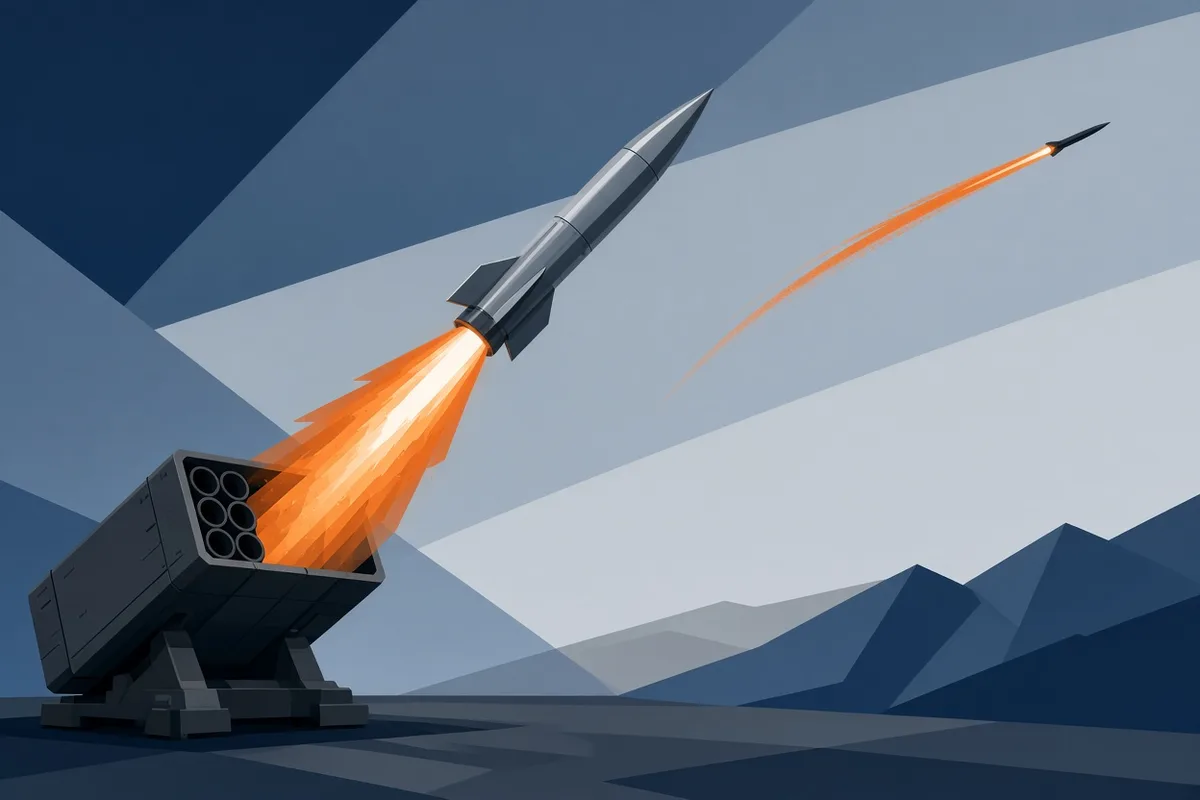
Tim Cahill named the threat class first. Speaking to Breaking Defense ahead of the Association of the United States Army conference, the president of Lockheed Martin Missiles and Fire Control was describing PAC-3 Edge on the day the company put the interceptor into public view. Lockheed Martin unveiled it on October 9, 2026.
Cahill cast the missile as a weapon meant for the hardest aerial problems the service expected next. Hypersonic weapons, those that sustain speeds above Mach 5 and can still change course inside the atmosphere, sit inside that class, along with other missiles built to stress existing lower-tier defenses.
“PAC-3 Edge is designed to go after the most stressing targets that we — and, more importantly, that the Department of War — believes are the next-generation [threats] that they’re going to be seeing in the fight from our adversaries,” he said. “PAC-3 Edge will be longer ranged. It’ll be higher altitude. It’ll be more capable to take on targets that are trying to hide. It’ll have greater sensitivity in its seeker. It’ll have greater capability to maneuver and to respond to threats.”
Those claims defined Lockheed’s entry in the U.S. Army’s Future Interceptor effort, the program aimed at a next-generation lower-tier interceptor against advanced aerial threats. The Patriot system has been the Army’s primary high-to-medium air defense since the mid-1980s and its main terminal-phase anti-ballistic missile defense, covering the last stage of a ballistic missile’s flight. Lockheed’s PAC-3 family had already redesigned the interceptor for hit-to-kill work against tactical ballistic missiles, destroying a target by direct collision. Future Interceptor is the push beyond that envelope. Cahill said Lockheed had advanced to the next development stage as one of two firms selected. He did not name the other.
The Army’s path had stalled once already. In 2024 the service canceled the Lower-Tier Future Interceptor program, the earlier effort to field a successor for the Patriot’s lower tier. A year later the outlook shifted. In October 2025, Maj. Gen. Frank Lozano, then the program executive officer for missiles and space, said support might return. “There are some aspects of the LTFI program that are still somewhat pre-decisional, but I believe that we will get support for the program, and I may be in a position this time next year to begin program-of-record execution,” he said. “I think right now the glass is probably half full that we’ll get to run that program, and so we’re really in the planning process in figuring out what that’s going to look like moving forward.”
The revived work, recast as Future Interceptor, aimed at the same class of problem: advanced aerial threats that fly farther, higher, and with more late-course maneuver than the systems already in the inventory. What remained open was the hardware itself—what any company would actually put on the line to close that gap.
Lockheed’s answer rests on the PAC-3 Missile Segment Enhancement already in the Patriot inventory. “Lockheed Martin’s PAC-3 Edge interceptor leverages the combat-proven PAC-3 MSE, delivering even greater maneuverability, power and velocity to ensure the Army’s layered defensive architecture remains the most advanced in the world,” Cahill said.
The seeker is new. Developed in-house at Lockheed’s Strigo Product Center, it is the sensor that finds and tracks a target once the interceptor is airborne. Lockheed has invested $250 million in the Strigo facility to date. The company plans about $800 million for the seeker alone, with several hundred million already spent.

Propulsion comes from a multi-pulse solid rocket motor supplied by Northrop Grumman. Cahill described it to Breaking Defense as a three-pulse design, one that can release thrust in stages to stretch range and altitude instead of burning its energy in a single continuous push. Upgraded flight controls complete the package. The MSE spine stays; the subsystems that govern reach and late-course turn are what change. Lockheed has been funding that change itself.
“We’ve already probably somewhere between $50 [million] and $100 million or better put into this,” Cahill said. The company planned hundreds of millions more of its own cash for the missile alone, on top of the separate seeker and solid-rocket-motor outlays already under way.
“The cost of this would be about that of the existing PAC-3 MSE,” he told Reuters. “At full production, the annual rate would be about 2,000 units a year, comparable with PAC-3 MSE.” Past budgets had averaged the MSE at about $4 million per round. The Army’s fiscal 2027 proposal prices it at about $5.3 million.
Edge would be built on the existing PAC-3 line in Camden, Arkansas. Lockheed was already raising a new MSE production facility there outfitted with robotics, automation, and AI; once MSE work moved across, the legacy plant would receive the same upgrades. “That’ll be available then to build Edge in the future,” Cahill said. “Before we ever get to the point where we’re producing Edge, we will have already outfitted the entire factory from end to end with the most modern manufacturing capability available, frankly, in the world.”
Undefinitized contract actions for the PAC-3 and THAAD ramps supplied the contractual authority while final terms were still being written. “We were moving forward anyway on our own investment, so we didn’t lose time on that. But clearly the UCAs get us all the contractual authority we need to move forward,” Cahill said. “Definitization of the final contracts — they’ll happen when they happen. Those won’t hold us up.”
PAC-3 Edge is meant to leave the tube from launchers and networks the Army already owns. Planned integration covers the M903 launcher, the Integrated Battle Command System that ties air and missile defense units into one fire-control picture, containerized launchers, and HIMARS Flex. An M903 holds twelve PAC-3 MSE rounds. HIMARS Flex, introduced in June 2026, can carry eight PAC-3 interceptors. The same batteries would put the longer-ranged round into the layered PAC-3 family as its high-end counterpart, with no separate command chain required.
Lockheed’s partnership with General Dynamics to expand solid rocket motor production was progressing well, Cahill said. Under the plan, General Dynamics produces solid rocket motors for Lockheed’s Guided Multiple Launch Rocket System. Lockheed designs the motor. General Dynamics puts the propellant into it. “We just had a motor firing here in the last few days,” he said. “There was a Lockheed Martin-designed GMLRS motor that was partnered with General Dynamics to put propellant in it and to actually fire the motor.”
Testing is scheduled to begin in 2027. Deployment is targeted by 2031. Lockheed is aiming to have PAC-3 Edge ready for rapid deployment by that year. The four years between those marks are the window left to take the interceptor from first flight tests to a round the Army can field.