



German RobCo Reaches $1B Valuation After Share Sale
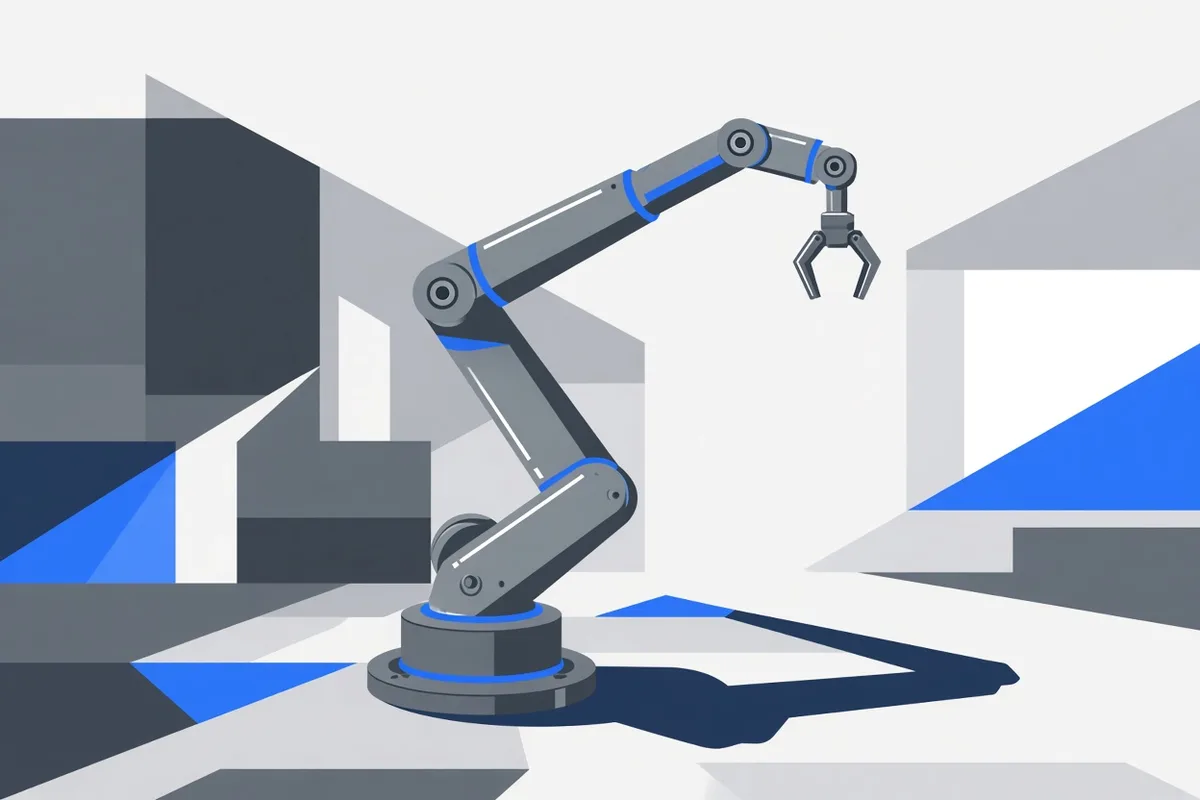
Employees at RobCo sold equity in a secondary transaction the day the German robotics firm crossed a billion-dollar valuation. The shares moved first. Staff turned holdings into cash and realized part of the value they had helped create, as stock passed to investors already inside the company and others arriving for the first time. Roman Hölzl, co-founder and chief executive, cast the moment around those sellers rather than the buyers.
“This is an important moment for RobCo, and I cannot think of a better way to mark it than by giving some of the people who built this company the opportunity to realize part of the value they created,” said Roman Hölzl, Co-founder and CEO of RobCo.
RobCo made the announcement on October 5, 2026. The Wall Street Journal first reported the transaction. In a secondary sale, existing shareholders sell stock they already hold; the company itself does not issue new shares for its own balance sheet. A significant portion of what changed hands that day came from employees. Long-standing staff who had built the firm since its founding now had a path to liquidity.
The secondary sale was worth $40 million. Employees sold into a mix of existing backers and new capital from Cherry Ventures and European Tech Collective. The price those buyers accepted rested on a January 2026 Series C that had raised $100 million, co-led by Lightspeed Venture Partners and Lingotto Innovation alongside Sequoia, Greenfield Partners, Kindred Capital, Leitmotif and The Friedkin Group. That round had left RobCo valued at roughly $500 million. The secondary transaction carried the company past $1 billion. The valuation doubled in nine months.
“There was strong demand to invest in RobCo, so we used that moment to strengthen the company. A billion-dollar valuation is an incredible milestone, but we're much more excited about what comes next: bringing the next generation of autonomous industrial robotics to factory floors,” said Roman Hölzl.
In 2020 three researchers from the Technical University of Munich founded RobCo in Munich. Roman Hölzl, Paul Maroldt, and Constantin Dressel built it as a single stack from the first day, hardware and software designed together. Their robots acquired task-specific skills through demonstration and self-learning rather than manual programming. The machine adapted and repeated the work without a coder rewriting every step.
The company has sold more than 1,000 robots. Clients include BMW, DynaEnergetics, Fabricated Extrusion Company, T-Systems, and Rosenberger. On those floors the systems took on machine tending and palletizing, the ordinary industrial work of feeding equipment and stacking finished goods. In 2024 RobCo raised $42.5 million in a funding round led by Lightspeed. The firm expanded into the United States in 2025. That stretch—from a Munich research group to more than a thousand machines in service for nameplate manufacturers—was the ground the secondary sale stood on.
What the capital was underwriting sat one step beyond the thousand machines already in service: systems built to take the high-mix, unstructured work that fixed automation had never absorbed. The flagship was a dual-arm self-learning robot built for high-mix, unstructured, safety-critical work on real factory floors. Alfie combined perception, reasoning and execution in one system. RobCo described the machine as a step toward Level 4 autonomy: a robot that learns, adapts and executes with minimal human intervention.
Bimanual manipulation put two arms on the same problem. The aim was precision assembly, sensitive handling, picking, kitting and palletizing. A demonstration taught the task; self-learning carried the skill forward as conditions shifted, without a coder rewriting every motion. That was the distinction the company had chased from the start—hardware and software as one stack, skills acquired rather than programmed by hand—and the gap factories still needed closed at volume. The capital flowing into RobCo was underwriting exactly that reach: machines that do not stop at reasoning, but act where the work already is.
Luciana Lixandru, Partner at Sequoia Capital, named the stake in plain language.
“RobCo is building for a future in which AI doesn't just reason and generate, but acts in the physical world. The progress the company has made over the past few years is impressive, but we believe this is still the beginning,” said Luciana Lixandru, Partner at Sequoia Capital.
AI that reasons and generates stays on a screen. AI that acts takes hold of material work on factory floors, under the shifting conditions that still defeat fixed automation, at the daily volume industrial plants require. Investors treated that physical turn as unfinished business, not a finished claim.
“RobCo has the ambition and technology to fundamentally change how industrial work gets done, and we're excited to see the company take that vision from Europe to factory floors around the world,” said Luciana Lixandru.
Roman Hölzl has relocated to the United States. The co-founder and chief executive moved to drive expansion personally inside the company’s fastest-growing market. RobCo now has customers in more than a dozen U.S. states. Those operations are supported by manufacturing and assembly in Austin, Texas, and a lab in San Francisco, with the original base remaining in Munich. Leadership now sits on the ground where the customer list is lengthening fastest.
Flagship Alfie will commercially launch on March 4, 2027, at RobCoN, the company’s first annual summit, in Munich.