



Diesel Price Surge Raises Costs Beyond Fuel
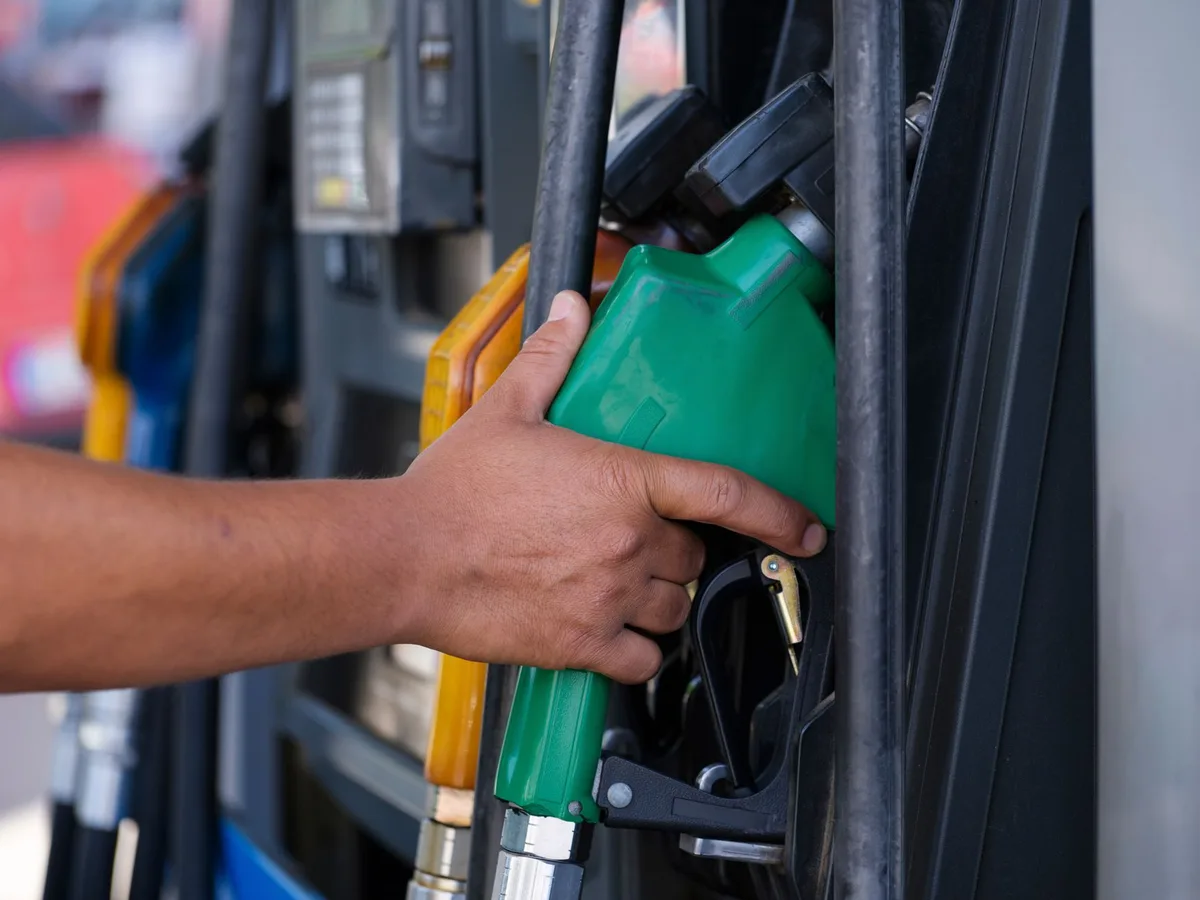
The national average for diesel reached about $6.06 a gallon Friday, a record high. That was up from $5.85 a week earlier and from about $3.71 a gallon at the same time last year.
Bernard Yaros, lead U.S. economist for Oxford Economics, stated the gap most people never notice. “We all focus on gasoline because, ultimately, we’re consumers and pump prices are very visible. But what we don’t think about is the price of diesel, which is the workhorse fuel for the U.S. economy and especially for key sectors.”
Most drivers never lift a diesel nozzle. The fuel still reaches them. It powers the heavy trucks and equipment that move goods long before any shelf price is set, so a climb at the diesel pump rarely ends at the diesel pump. Friday’s $6.06 left a harder question than the gallon alone: how far the surge would push costs beyond fuel, and who along the chain would feel it first.
Texas farmers report the diesel climb at every stage of their work—running equipment, moving cattle, hauling crops. Higher costs to grow and deliver do not stay on the farm. They press on what reaches the aisle, and food is among the first places that pressure can land, especially beef, produce, and other perishables that must be hauled and restocked often.

“From an inflationary perspective, I’m very concerned about the recent rise in diesel prices as it pertains to the cost of food or grocery store prices,” Bernard Yaros said. “Take the food industry, for instance. Diesel powers the irrigation pumps, the tractors in the field and the trucks that bring food from the farm to your local grocery store. It’s part of every layer of food production in the U.S.”
The same fuel cost is already written into shipping. Amazon introduced a temporary 3.5 percent fuel and logistics surcharge for some third-party sellers. UPS and FedEx raised fuel surcharges. The U.S. Postal Service imposed a temporary surcharge on packages. Who pays along that chain is no longer theoretical. What tightened the supply behind those prices is a narrower fact.
Diesel averaged $3.56 a gallon in January 2025. Since the Iran conflict began, it climbed to $5.13.
An energy industry source who requested anonymity because the person was not authorized to speak publicly traced the climb to one choke point. “The great majority of the price movement that you've seen in diesel markets over the last five months has been the direct result of the conflict in Iran and specifically the closure of the Strait of Hormuz.”
Roughly 20 million barrels of oil pass through the Strait of Hormuz each day. The strait is a narrow waterway between Iran, Oman and the United Arab Emirates and one of the world's most important energy choke points; disruptions there tighten fuel supplies and drive diesel prices higher. Saudi Arabia temporarily shut its East-West oil pipeline after a drone attack. That pipeline had become increasingly important because it allows Saudi oil to bypass the Strait of Hormuz.

The crude that still clears the water does not become the fuel in a truck tank the same week it sails.
“Refineries don't process crude instantaneously,” the energy industry source said. “A lot of times what you're filling up your car with today was refined a week and a half ago and was produced two months before that.”
The lag means higher diesel costs keep working through the economy even after crude oil prices stabilize, leaving more to pay for groceries, deliveries and everyday goods. Patrick De Haan, GasBuddy analyst, noted that refineries are already near full capacity, limiting how quickly significantly more fuel can be produced. The White House has met with refiners to push expanded U.S. refining capacity.
Department of Energy data put the truck costs in plain view. A fully loaded semitruck gets 6 to 7 miles per gallon of diesel. Its tanks hold roughly 250 gallons.
Filling them costs over $1,280 at current prices.

Those dollars remain in the freight bill and the shelf price long after the supply headlines fade. This week attention turned to when the climb might reverse.
President Donald Trump this week offered a timeline for when he believes energy prices will drop. He spoke first to the speed of the fall. “Right after the election, oil prices are going to be tumbling downward. They're going to be tumbling down, and we'll get them down. I think for gasoline we'll get them below $2 a gallon,” Trump said.
The question that followed asked whether that drop would arrive before the midterm elections. The second answer moved the horizon. “I think it's going to take a little bit longer than the midterms.”
Tumbling right after the election was the first clock. Gasoline below two dollars a gallon was the mark. Longer than the midterms was the stretch he then added. Diesel sits outside that two-dollar gasoline target. The national average that reached about $6.06 a gallon Friday is the figure still on the board.
A fully loaded semitruck’s tanks hold roughly 250 gallons. Filling them costs over $1,280.