


Disney HR layoffs
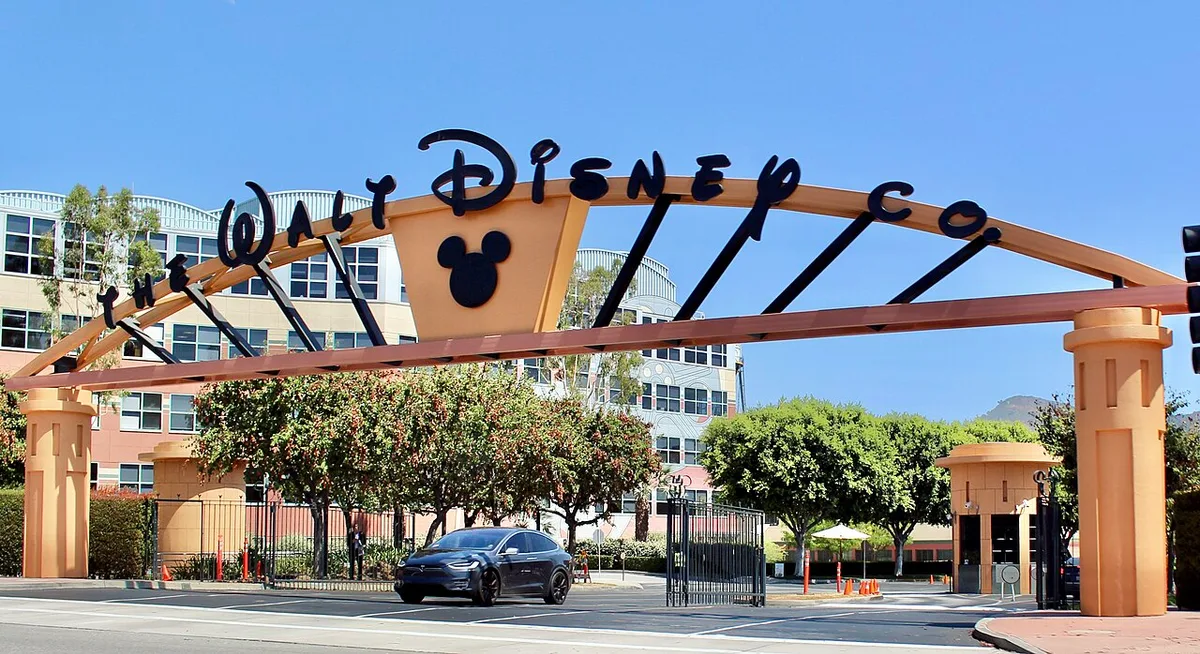
Monica Davis put the reverse on LinkedIn after Disney laid off about 300 employees, primarily in human resources and IT and tech. It was the third round this year under CEO Josh D’Amaro. “Some of the people let go today are the same people who sat on the other end of the call when my role was eliminated this summer,” she wrote.
Her own Disney position had been eliminated in June. The colleagues who handled that call were now among those leaving. About three hundred roles had landed inside the departments that process headcount, the same corporate functions that once shepherded everyone else’s reductions.
In April about 1,000 roles had already been eliminated, mainly through the consolidation of enterprise marketing under Asad Ayaz, Disney’s chief marketing and brand officer. July brought several hundred more cuts spanning Pixar, ESPN, Disney Entertainment Television, and the film studios. Most of those July losses fell inside Pixar and National Geographic. Deadline put the combined 2026 reductions past 1,500 positions by late September.
Disney employed about 231,000 people worldwide at the end of fiscal 2025, roughly 172,000 of them in the United States. In August the company opened a voluntary early-retirement program aimed at executives over 50 with at least ten years of service. The opt-in window closed over the weekend of September 27 and 28.
On August 5, D’Amaro and chief financial officer Hugh Johnston set out the frame in a letter to shareholders. “We remain highly focused on reducing costs across the enterprise to create incremental capacity to invest for growth and are evaluating a variety of levers, including reductions in labor and SG&A,” they wrote. SG&A is the accounting label for selling, general, and administrative expenses—the overhead of the enterprise itself. The letter named labor as one lever among others still under review.
On September 18, Horacio Gutierrez, Disney’s chief legal and global affairs officer, sent a memo to the legal and global affairs staff. The unit, he warned, would become a much smaller organization. “As a result, we’ll have to consider a whole range of new models for different workloads, including automating certain workflows by leveraging the latest technologies,” Gutierrez wrote. Automating a workflow means shifting a sequence of repeated tasks onto software that can learn patterns from data and carry them out without a person handling each step. Artificial intelligence is the field that builds those systems—tools able to learn, classify information, and generate text in ways once limited to people. Disney had named Karandeep Anand its first chief technology officer. Anand had previously been chief executive of Character.AI, a company that hosts conversational software agents, programs that reply to people in ordinary language.
The redesign reached beyond legal and global affairs. Human resources and technology—the functions that had processed the year’s earlier exits and kept the systems running—were the ones the new models and the new tech stack were now resizing.
On Thursday, October 1, Dana Walden, Disney’s president and chief creative officer, spoke at a Bloomberg conference about a restructuring of the television business. The work was being led by Debra O’Connell, chairman of Disney Entertainment Television, who reports to Walden. O’Connell’s portfolio includes ABC Entertainment, 20th Television, Hulu Originals, Disney Kids & Family, National Geographic Content, and Freeform—units brought together in part through Disney’s 2019 acquisition of most of 21st Century Fox’s entertainment assets. Each division had kept its own executive layer overseeing programming for Disney+, Hulu, and the linear channels. Those leadership positions were expected to be among the roles affected. ABC News, also under O’Connell, faced further reductions as well.
“We will be taking a bunch of divisions that have been run separately and centralizing as a television business, not a bunch of silos,” Walden said. She added that “there is a need to constantly evaluate how you're structured and how big is the organization.” The overhaul was expected to produce hundreds of layoffs. Senior executives were still working out the details, and the plan might not be finalized before year-end. Disney had waited to assess uptake from the early-retirement program before proceeding with the television changes.
Disney stock traded at $101.72 on October 1, down 3.03 percent, after the Wall Street Journal report on the television restructuring moved through afternoon trading. Shares of DIS stood roughly 13 percent below the 52-week high of $117.09.
In the August 5 letter, D’Amaro and Johnston had left the cost campaign without a finish line. “We are mid-stream in this work and will provide future updates on progress,” they wrote. The sentence carried no end date and no final tally of roles. The human-resources and technology reductions were one completed action. The television redesign made public the same day was another still open.
“They're the ones who walked us through severance, answered the benefits questions, and kept their voices steady on hard days,” Monica Davis wrote on LinkedIn. Severance is the package of continued pay and benefits an employer extends when a role is cut. “Now there the ones logging off for the last time.”