






The World Health Organization (WHO) is a specialized agency of the United Nations (UN) which coordinates responses to international public health issues and emergencies. It is headquartered in Geneva, Switzerland, and has six regional offices and 150 field offices worldwide. Only sovereign states are eligible to join, and it is the largest intergovernmental health organization at the international level.
The WHO's stated purpose is to achieve the highest possible level of health for all the world's people, defining health as "a state of complete physical, mental and social well-being and not merely the absence of disease or infirmity." The main functions of the World Health Organization include promoting the control of epidemic and endemic diseases; providing and improving the teaching and training in public health, the medical treatment of disease, and related matters; and promoting the establishment of international standards for biological products.
The WHO was established on 7 April 1948, and formally began its work on 1 September 1948. It incorporated the assets, personnel, and duties of the League of Nations' Health Organization and the Paris-based Office International d'Hygiène Publique, including the International Classification of Diseases (ICD). The agency's work began in earnest in 1951 after a significant infusion of financial and technical resources.
The WHO's official mandate is to promote health and safety while helping the vulnerable worldwide. It provides technical assistance to countries, sets international health standards, collects data on global health issues, and serves as a forum for scientific or policy discussions related to health. Its official publication, the World Health Report, provides assessments of worldwide health topics.
The WHO has played a leading role in several public health achievements, most notably the eradication of smallpox, the near-eradication of polio, and the development of an Ebola vaccine. Its current priorities include communicable diseases, such as HIV/AIDS, Ebola, malaria and tuberculosis; non-communicable diseases such as heart disease and cancer; healthy diet, nutrition, and food security; occupational health; and substance abuse. The agency advocates for universal health care coverage, engagement with the monitoring of public health risks, coordinating responses to health emergencies, and promoting health and well-being generally.
The WHO is governed by the World Health Assembly (WHA), which is composed of its 193 member states. The WHA elects and advises an executive board made up of 34 health specialists; selects the WHO's chief administrator, the director-general (currently Tedros Adhanom Ghebreyesus of Ethiopia); sets goals and priorities; and approves the budget and activities. The WHO is funded primarily by contributions from member states (both assessed and voluntary), followed by private donors.
Contents
History
Origin and founding
Arcot Ramaswamy Mudaliar, the first president of the UN Economic and Social Council (ECOSOC) in 1946, played a central role in founding the World Health Organization (WHO). Under his presidency, ECOSOC initiated the international conference that established the WHO as a specialized UN agency.
The International Sanitary Conferences (ISC), the first of which was held on 23 June 1851, were a series of conferences that took place until 1938, about 87 years. The first conference, in Paris, was almost solely concerned with cholera, which would remain the disease of major concern for the ISC for most of the 19th century. With the cause, origin, and communicability of many epidemic diseases still uncertain and a matter of scientific argument, international agreement on appropriate measures was difficult to reach. Seven of these international conferences, spanning 41 years, were convened before any resulted in a multi-state international agreement. The seventh conference, in Venice in 1892, finally resulted in a convention. It was concerned only with the sanitary control of shipping traversing the Suez Canal, and was an effort to guard against importation of cholera.
Five years later, in 1897, a convention concerning the bubonic plague was signed by sixteen of the nineteen states attending the Venice conference. While Denmark, Sweden-Norway, and the US did not sign this convention, it was unanimously agreed that the work of the prior conferences should be codified for implementation. Subsequent conferences, from 1902 until the final one in 1938, widened the diseases of concern for the ISC, and included discussions of responses to yellow fever, brucellosis, leprosy, tuberculosis, and typhoid. In part as a result of the successes of the Conferences, the Pan-American Sanitary Bureau (1902) and the Office International d'Hygiène Publique or "International office of Public Hygiene" in English (1907) were soon founded. When the League of Nations was formed in 1920, it established the Health Organization of the League of Nations. After World War II, the United Nations (UN) assembled all the other health organizations to form the WHO.
The WHO played a crucial role in coordinating the global response to the COVID-19 pandemic, providing essential guidelines on preventive measures, supporting research on vaccines, and facilitating vaccine distribution through initiatives like COVAX.
Establishment
During the 1945 United Nations Conference on International Organization, Szeming Sze, a delegate from the Republic of China, conferred with Norwegian and Brazilian delegates on creating an international health organization under the auspices of the new United Nations. After failing to get a resolution passed on the subject, Alger Hiss, the secretary general of the conference, recommended using a declaration to establish such an organization. Sze and other delegates lobbied and a declaration passed calling for an international conference on health. The use of the word "world", rather than "international", emphasized the truly global nature of what the organization was seeking to achieve. The constitution of the World Health Organization was signed by all 51 countries of the United Nations, and by 10 other countries, on 22 July 1946. It thus became the first specialized agency of the United Nations to which every member subscribed. Its constitution formally came into force on the first World Health Day on 7 April 1948, when it was ratified by the 26th member state. The WHO formally began its work on 1 September 1948.
The first meeting of the World Health Assembly finished on 24 July 1948, having secured a budget of US$5 million (then £1,250,000) for the 1949 year. G. Brock Chisholm was appointed director-general of the WHO, having served as executive secretary and a founding member during the planning stages, while Andrija Štampar was the assembly's first president. Its first priorities were to control the spread of malaria, tuberculosis and sexually transmitted infections, improve maternal and child health, nutrition and environmental hygiene. Its first legislative act was concerning the compilation of accurate statistics on the spread and morbidity of disease. The logo of the World Health Organization features the Rod of Asclepius as a symbol for healing.
In 1959, the WHO signed Agreement WHA 12–40 with the International Atomic Energy Agency (IAEA), which says:
whenever either organization proposes to initiate a programme or activity on a subject in which the other organization has or may have a substantial interest, the first party shall consult the other with a view to adjusting the matter by mutual agreement.
The nature of this statement has led some groups and activists including Women in Europe for a Common Future to claim that the WHO is restricted in its ability to investigate the effects on human health of radiation caused by the use of nuclear power and the continuing effects of nuclear disasters in Chernobyl and Fukushima. They believe WHO must regain what they see as independence. Independent WHO held a weekly vigil from 2007 to 2017 in front of WHO headquarters. However, as pointed out by Foreman in clause 2, it states:
Operational history
In 1947, the WHO established an epidemiological information service via telex. Two years later, in 1949, the Soviet Union and its constituent republics quit the organization over its unwillingness to share the penicillin recipe; they did not return until 1956. In 1950, a mass tuberculosis inoculation campaign using the BCG vaccine began.
The malaria eradication programme was launched in 1955, though its objectives were later revised so that in most regions the goal shifted from eradication to control. In 1958, Viktor Zhdanov, Deputy Minister of Health of the USSR, urged the World Health Assembly to undertake a global initiative to eradicate smallpox, leading to the adoption of Resolution WHA11.54.
The WHO's first report on diabetes mellitus was issued in 1965, the same year that the International Agency for Research on Cancer was established. In 1966, the organization moved its headquarters from the Ariana wing at the Palace of Nations to a new purpose-built facility in Geneva.
By 1967, the WHO intensified the global smallpox eradication campaign, contributing $2.4 million annually and adopting new disease surveillance methods at a time when 2 million people were dying of smallpox each year. The main challenge was underreporting of cases, which WHO addressed by creating a network of consultants to help countries implement surveillance and containment. The organization also helped manage the last European outbreak, which occurred in Yugoslavia in 1972. After more than two decades of effort, a Global Commission declared in 1979 that smallpox had been eradicated—the first disease in history to be eliminated by human effort.
In 1974, the WHO launched the Expanded Programme on Immunization and also began its control programme for onchocerciasis, in partnership with the Food and Agriculture Organization (FAO), the United Nations Development Programme (UNDP), and the World Bank. The following year, it introduced the Special Programme for Research and Training in Tropical Diseases (TDR), co-sponsored by UNICEF, UNDP, and the World Bank, in response to a 1974 WHA resolution. The TDR aimed to coordinate international research into the diagnosis, treatment, and control of tropical diseases, while also building research capacity in endemic countries.
Policies and objectives
Overall focus
The WHO's Constitution states that its objective "is the attainment by all people of the highest possible level of health". It also seeks to provide a CRVS (civil registration and vital statistics) system to provide monitoring of vital events (birth, death, wedding, divorce).
Since the late 20th century, the rise of new actors engaged in global health—such as the World Bank, the Gates Foundation, the U.S. President's Emergency Plan for AIDS Relief (PEPFAR) and dozens of public-private partnerships for global health—have weakened the WHO's role as a coordinator and policy leader in the field; subsequently, there are various proposals to reform or reorient the WHO's role and priorities in public health, ranging from narrowing its mandate to strengthening its independence and authority.
In line with a growing global trend, as documented by the OECD and established at the EU, the WHO has embraced increased public participation in health policymaking. This is in alignment with the UN Sustainable Development Goals (SDGs) and other intergovernmental agreements, and means "empowering people, communities and civil society through inclusive participation in decision-making processes that affect health across the policy cycle and at all levels of the system."
During the 1970s, WHO had dropped its commitment to a global malaria eradication campaign, as it was considered too ambitious; it retained a strong commitment to malaria control. WHO's Global Malaria Programme works to monitor malaria cases and potential problems in malaria control schemes. As of 2012, the WHO was to report as to whether RTS,S/AS01, were a viable malaria vaccine. For the time being, insecticide-treated mosquito nets and insecticide sprays are used to prevent the spread of malaria, as are antimalarial drugs – particularly to vulnerable people such as pregnant women and young children.
In 1988, WHO launched the Global Polio Eradication Initiative to eradicate polio. It has also been successful in helping to reduce cases by 99% since WHO partnered with Rotary International, the US Centers for Disease Control and Prevention (CDC), the United Nations Children's Fund (UNICEF), and smaller organizations. As of 2011, it has been working to immunize young children and prevent the re-emergence of cases in countries declared "polio-free". In 2017, a study was conducted as to why Polio Vaccines may not be enough to eradicate the Virus & conduct new technology. Polio is now on the verge of extinction, thanks to a Global Vaccination Drive. The World Health Organization (WHO) stated the eradication programme has saved millions from deadly disease.
Policy packages
The WHO has developed several technical policy packages to support countries to improve health:
ACTIVE (physical activity)
HEARTS (cardiovascular diseases)
MPOWER (tobacco control)
REPLACE (trans fat)
SAFER (alcohol)
SHAKE (salt reduction)
Governance and support
The remaining two of WHO's thirteen identified policy areas relate to the role of WHO itself:
"to provide leadership, strengthen governance and foster partnership and collaboration with countries, the United Nations system, and other stakeholders in order to fulfil the mandate of WHO in advancing the global health agenda"; and
"to develop and sustain WHO as a flexible, learning organization, enabling it to carry out its mandate more efficiently and effectively".
The WHO, along with the World Bank, constitute the core team responsible for administering the International Health Partnership (IHP+). The IHP+ is a group of partner governments, development agencies, civil society, and others committed to improving the health of citizens in developing countries. Partners work together to put international principles for aid effectiveness and development co-operation into practice in the health sector.
The organization relies on contributions from renowned scientists and professionals to inform its work, such as the WHO Expert Committee on Biological Standardization, the WHO Expert Committee on Leprosy, and the WHO Study Group on Interprofessional Education & Collaborative Practice.
WHO runs the Alliance for Health Policy and Systems Research, targeted at improving health policy and systems.
WHO also aims to improve access to health research and literature in developing countries, such as through the HINARI network.
WHO collaborates with The Global Fund to Fight AIDS, Tuberculosis and Malaria, UNITAID, and the United States President's Emergency Plan for AIDS Relief to spearhead and fund the development of HIV programs.
WHO created the Civil Society Reference Group on HIV, which brings together other networks that are involved in policymaking and the dissemination of guidelines.
Data handling and publications
The World Health Organization works to provide the needed health and well-being evidence through a variety of data collection platforms, including the World Health Survey covering almost 400,000 respondents from 70 countries, and the Study on Global Aging and Adult Health (SAGE) covering over 50,000 persons over 50 years old in 23 countries. The Country Health Intelligence Portal (CHIP), has also been developed to provide an access point to information about the health services that are available in different countries. The information gathered in this portal is used by the countries to set priorities for future strategies or plans, implement, monitor, and evaluate it.
The WHO has published various tools for measuring and monitoring the capacity of national health systems and health workforces. The Global Health Observatory (GHO) has been the WHO's main portal which provides access to data and analyses for key health themes by monitoring health situations around the globe.
The WHO Assessment Instrument for Mental Health Systems (WHO-AIMS), the WHO Quality of Life Instrument (WHOQOL), and the Service Availability and Readiness Assessment (SARA) provide guidance for data collection. Collaborative efforts between WHO and other agencies, such as through the Health Metrics Network, also aim to provide sufficient high-quality information to assist governmental decision making. WHO promotes the development of capacities in member states to use and produce research that addresses their national needs, including through the Evidence-Informed Policy Network (EVIPNet). The Pan American Health Organization (PAHO/AMRO) became the first region to develop and pass a policy on research for health approved in September 2009.
On 10 December 2013, a new WHO database, known as MiNDbank, went online. The database was launched on Human Rights Day, and is part of WHO's QualityRights initiative, which aims to end human rights violations against people with mental health conditions. The new database presents a great deal of information about mental health, substance abuse, disability, human rights, and the different policies, strategies, laws, and service standards being implemented in different countries. It also contains important international documents and information. The database allows visitors to access the health information of WHO member states and other partners. Users can review policies, laws, and strategies and search for the best practices and success stories in the field of mental health.
Structure and governance
The World Health Organization is a member of the United Nations Development Group.
Membership
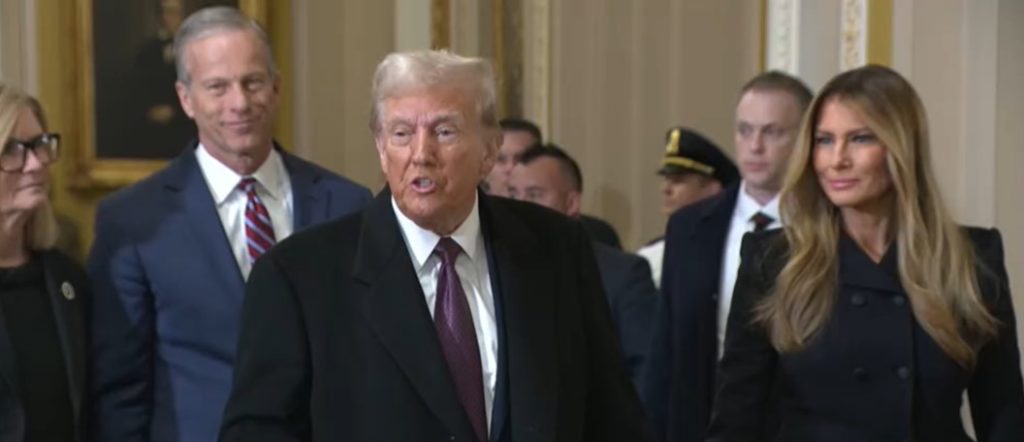
As of March 2026, the WHO has 192 member states: all member states of the United Nations except for Argentina, Liechtenstein and the United States (190 countries), plus the Cook Islands and Niue (non-UN members). No new members have joined since Tuvalu in 2023. A state becomes a full member of the WHO by ratifying the treaty known as the Constitution of the World Health Organization. As of January 2026, it also had two associate members, Puerto Rico and Tokelau. The WHO two-year budget for 2022–2023 is paid by its 194 members and 2 associate members. Several other countries have been granted observer status. Palestine is an observer as a "national liberation movement" recognized by the League of Arab States under United Nations Resolution 3118. The Sovereign Military Order of Malta (or Order of Malta) also attends on an observer basis. The Holy See attends as an observer, and its participation as "non-Member State Observer" was formalized by an Assembly resolution in 2021. The government of Taiwan was allowed to participate under the designation "Chinese Taipei" as an observer from 2009 to 2016, but has not been invited again since. On 20 January 2025, U.S. President Donald Trump signed Executive Order 14155 initiating the 12-month process of withdrawing the U.S. from the WHO, with its completion being certified on 22 January 2026. On 5 February 2025, Argentinian president Javier Milei announced that Argentina would also be withdrawing from WHO, with the completion being certified on 17 March 2026.
WHO member states appoint delegations to the World Health Assembly, the WHO's supreme decision-making body. All UN member states are eligible for WHO membership, and, according to the WHO website, "other countries may be admitted as members when their application has been approved by a simple majority vote of the World Health Assembly". The World Health Assembly is attended by delegations from all member states, and determines the policies of the organization.
The executive board is composed of members technically qualified in health and gives effect to the decisions and policies of the World Health Assembly. In addition, the UN observer organizations International Committee of the Red Cross and International Federation of Red Cross and Red Crescent Societies have entered into "official relations" with WHO and are invited as observers. In the World Health Assembly, they are seated alongside the other NGOs.
The Republic of China (ROC), whose government controlled Mainland China from 1912 to 1949 and has controlled Taiwan since the end of World War II, was a founding member of WHO, representing "China". With the adoption of United Nations General Assembly Resolution 2758 in 1971, representation of "China" was handed to the People's Republic of China (PRC), and the Republic of China was expelled from the WHO and other UN bodies. Per the One-China policy, both the ROC and PRC lay claims of sovereignty to each other's territory.
World Health Assembly and Executive Board
The World Health Assembly (WHA) is the legislative and supreme body of the WHO. Based in Geneva, it typically meets in May each year. It appoints the director-general every five years and votes on matters of policy and finance of WHO, including the proposed budget. It also reviews the executive board's reports and decides whether any areas of work require further examination.
The Assembly elects 34 members, technically qualified in the field of health, to the executive board for three-year terms. The main functions of the board are to implement the Assembly's decisions and policies, advise it, and facilitate its work. As of June 2023, the chair of the executive board is Dr. Hanan Mohamed Al Kuwari of Qatar.
Director-General
The head of the organization is the director-general, elected by the World Health Assembly. The term lasts for five years, and directors-general are typically appointed in May, when the Assembly meets. The current director-general is Tedros Adhanom Ghebreyesus, who was appointed on 1 July 2017.
Global institutions
In addition to regional, country, and liaison offices, the World Health Assembly has also established other institutions to promote and conduct research.
International Agency for Research on Cancer (IARC)
Personnel
The WHO employs 7,000 people in 149 countries and regions to carry out its principles. In support of the principle of a tobacco-free work environment, the WHO does not recruit cigarette smokers. The organization has previously instigated the Framework Convention on Tobacco Control in 2003.
Goodwill Ambassadors
The WHO operates "Goodwill Ambassadors"; members of the arts, sports, or other fields of public life aimed at drawing attention to the WHO's initiatives and projects. There are currently five Goodwill Ambassadors (Jet Li, Nancy Brinker, Peng Liyuan, Yohei Sasakawa and the Vienna Philharmonic Orchestra) and a further ambassador associated with a partnership project (Craig David).
On 21 October 2017, the director-general Tedros Adhanom Ghebreyesus appointed the then Zimbabwean president Robert Mugabe as a WHO Goodwill Ambassador to help promote the fight against non-communicable diseases. The appointment address praised Mugabe for his commitment to public health in Zimbabwe. The appointment attracted widespread condemnation and criticism in WHO member states and international organizations due to Mugabe's poor record on human rights and presiding over a decline in Zimbabwe's public health. Due to the outcry, the following day the appointment was revoked.
Medical Society of the World Health Organization
Since the beginning, the WHO has had the Medical Society of the World Health Organization. It has conducted lectures by noted researchers and published findings, recommendations. The founder, Dr. S. William A. Gunn has been its president. In 1983, Murray Eden was awarded the WHO Medical Society medal, for his work as consultant on research and development for WHO's director-general.
Financing and partnerships
The WHO is financed by contributions from member states and outside donors. In 2020–21, the largest contributors were Germany, Gates Foundation, United States, France, United Kingdom and European Commission. The WHO Executive Board formed a Working Group on Sustainable Financing in 2021, charged to rethink WHO's funding strategy and present recommendations. Its recommendations were adopted by the 2022 World Health Assembly, the key one being to raise compulsory member dues to a level equal to 50% of WHO's 2022–2023 base budget by the end of the 2020s.
Assessed contributions are the dues the Member States pay depending on the states' wealth and population
Voluntary contributions specified are funds for specific programme areas provided by the Member States or other partners
Core voluntary contributions are funds for flexible uses provided by the Member States or other partners
At the beginning of the 21st century, the WHO's work involved increasing collaboration with external bodies. As of 2002, a total of 473 nongovernmental organizations (NGO) had some form of partnership with WHO. There were 189 partnerships with international NGOs in formal "official relations" – the rest were considered informal. Partners include the Bill and Melinda Gates Foundation and the Rockefeller Foundation.
As of 2022, the largest annual assessed contributions from member states came from the United States ($109 million), China ($57 million), Japan ($41 million), Germany ($29 million), France ($22 million) and the United Kingdom ($21 million).
According to The Associated Press, the WHO routinely spends about $200 million a year on travel expenses, more than it spends to tackle mental health problems, HIV/AIDS, tuberculosis, and malaria combined. In 2016, Margaret Chan, director-general of WHO from January 2007 to June 2017, stayed in a $1000-per-night hotel room while visiting West Africa.
The biggest contributor used to be the United States, which gives over $400 million annually. U.S. contributions to the WHO are funded through the U.S. State Department's account for Contributions to International Organizations (CIO). In April 2020, U.S. President Donald Trump, with backing by members of his party, announced that his administration would halt funding to the WHO. Funds previously earmarked for the WHO were to be held for 60–90 days pending an investigation into the WHO's handling of the COVID-19 pandemic, particularly in respect to the organization's purported relationship with China. The announcement was immediately criticized by world leaders including António Guterres, the secretary general of the United Nations; Heiko Maas, the German foreign minister; and Moussa Faki Mahamat, African Union chairman. During the first two years of the pandemic, American funding of the WHO declined by a quarter, although it is expected to increase during 2022 and 2023.
WHO Public Health Prizes and Awards
World Health Organization Prizes and Awards are given to recognize major achievements in public health. The candidates are nominated and recommended by each prize and award selection panel. The WHO Executive Board selects the winners, which are presented during the World Health Assembly.
World headquarters and offices
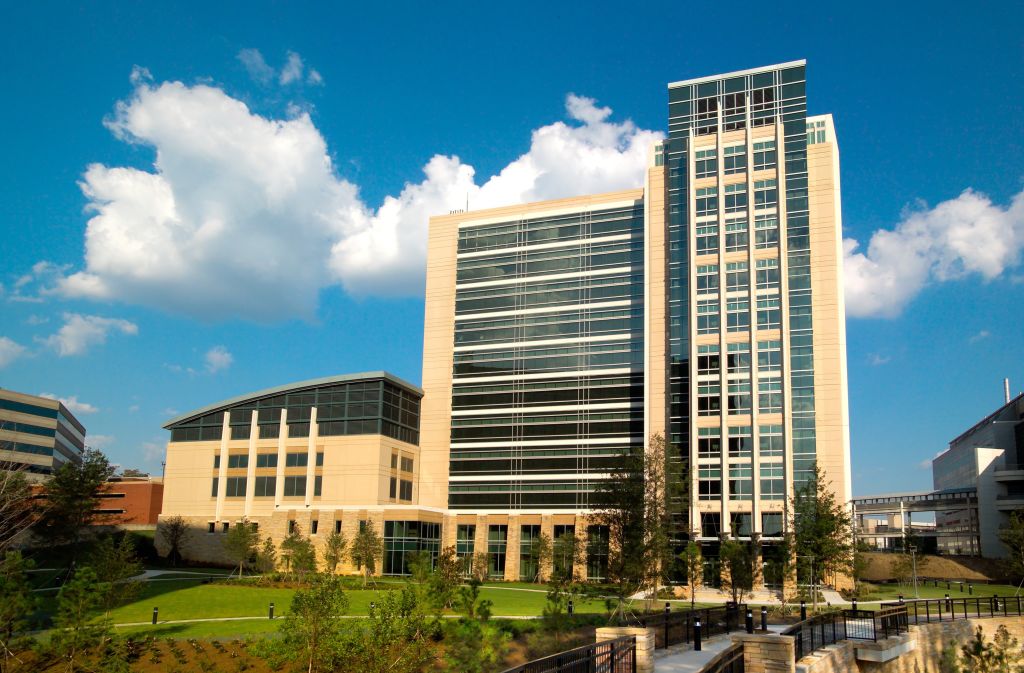
The seat of the organization is in Geneva, Switzerland. It was designed by Swiss architect Jean Tschumi and inaugurated in 1966. In 2017, the organization launched an international competition to redesign and extend its headquarters.
Country and liaison offices
The World Health Organization operates 150 country offices in six different regions. It also operates several liaison offices, including those with the European Union, United Nations and a single office covering the World Bank and International Monetary Fund. It also operates the International Agency for Research on Cancer in Lyon, France, and the WHO Centre for Health Development in Kobe, Japan. Additional offices include those in Pristina; the West Bank and Gaza; the US-Mexico Border Field Office in El Paso; the Office of the Caribbean Program Coordination in Barbados; and the Northern Micronesia office. There will generally be one WHO country office in the capital, occasionally accompanied by satellite-offices in the provinces or sub-regions of the country in question.
The country office is headed by a WHO Representative (WR). As of 2010, the only WHO Representative outside Europe to be a national of that country was for the Libyan Arab Jamahiriya ("Libya"); all other staff was international. WHO Representatives in the Region termed the Americas are referred to as PAHO/WHO Representatives. In Europe, WHO Representatives also serve as head of the country office, and are nationals except for Serbia; there are also heads of the country office in Albania, the Russian Federation, Tajikistan, Turkey, and Uzbekistan. The WR is a member of the UN system country team which is coordinated by the UN System Resident Coordinator.
The country office consists of the WR, and several health and other experts, both foreign and local, as well as the necessary support staff. The main functions of WHO country offices include being the primary adviser of that country's government in matters of health and pharmaceutical policies.
Regional offices
The regional divisions of WHO were created between 1949 and 1952, following the model of the pre-existing Pan American Health Organization, and are based on article 44 of the WHO's constitution, which allowed the WHO to "establish a [single] regional organization to meet the special needs of [each defined] area". Many decisions are made at the regional level, including important discussions over WHO's budget, and in deciding the members of the next assembly, which are designated by the regions.
Each region has a regional committee, which generally meets once a year, normally in the autumn. Representatives attend from each member or associative member in each region, including those states that are not full members. For example, Palestine attends meetings of the Eastern Mediterranean Regional Office. Each region also has a regional office. Each regional office is headed by a director, who is elected by the Regional Committee. The board must approve such appointments, although as of 2004, it had never over-ruled the preference of a regional committee. The exact role of the board in the process has been a subject of debate, but the practical effect has always been small. Since 1999, regional directors serve for a once-renewable five-year term, and typically take their position on 1 February.
Each regional committee of the WHO consists of all the Health Department heads, in all the governments of the countries that constitute the Region. Aside from electing the regional director, the regional committee is also in charge of setting the guidelines for the implementation, within the region, of the health and other policies adopted by the World Health Assembly. The regional committee also serves as a progress review board for the actions of WHO within the Region. The regional director is effectively the head of WHO for their region. The RD manages and/or supervises a staff of health and other experts at the regional offices and in specialized centres. The RD is also the direct supervising authority – concomitantly with the WHO Director-General – of all the heads of WHO country offices, known as WHO Representatives, within the region.
The strong position of the regional offices has been criticized in WHO history for undermining its effectiveness and led to unsuccessful attempts to integrate them more strongly within 'One WHO'. Disease specific programmes such as the smallpox eradication programme or the 1980s Global Programme on AIDS were set up with more direct, vertical structures that bypassed the regional offices.
Private funding
In 2024, the Bill & Melinda Gates Foundation was the organization's major private contributor, funding 10% of its budget.