1951–1966: Early stage, film, and television work
Shatner's movie career began while he was still attending college. In 1951, he had a small role in a Canadian comedy drama, The Butler's Night Off: its credits list him as Bill Shatner, and describe his role simply as "a crook". After graduating, he worked as an assistant manager and actor at both the Mountain Playhouse in Montreal and the Canadian National Repertory Theatre in Ottawa before joining the Stratford Shakespeare Festival in Ontario.
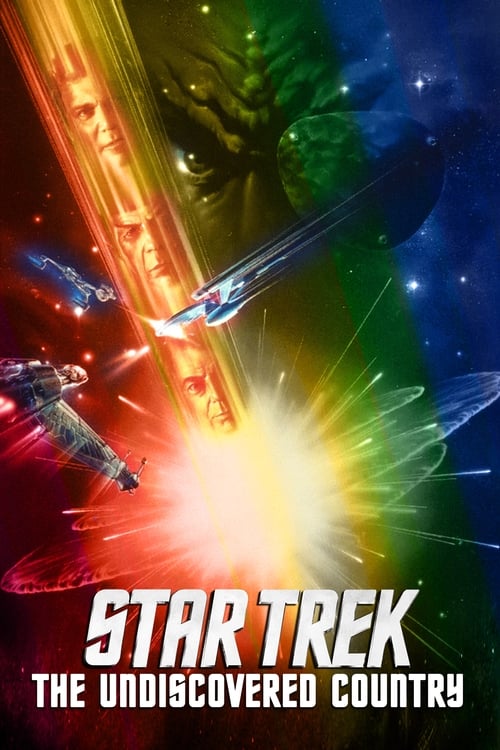
His roles at the festival included a part in Marlowe's Tamburlaine, in which he made his Broadway debut in 1956. His brief appearance in the opening scene of a high-profile production of Sophocles's Oedipus Rex by Tyrone Guthrie introduced him to television viewers across the whole of Canada. In Henry V, he combined playing the minor role of the Duke of Gloucester with understudying Christopher Plummer as the king: when a kidney stone obliged Plummer to withdraw from a performance, Shatner's decision to present a distinctive interpretation of his role rather than imitating his senior's impressed Plummer as a striking manifestation of initiative and potential. Plummer later appeared as a Klingon adversary of Captain Kirk's in Star Trek VI: The Undiscovered Country.
Guthrie too rated the young Shatner very highly, later recalling him as the most promising actor that his Festival employed, and for a time, he was seen as a potential peer of Steve McQueen, Paul Newman and Robert Redford. In the view of Pat Jordan, author of an in-depth profile of Shatner for The New York Times, his subsequent failure to achieve the acclaim accorded to his starrier contemporaries was attributable to his professional philosophy of "work equals work", and his consequent participation in many "forgettable" projects that probably did his career more harm than good. On the eve of his momentous casting as James Kirk, he was in Jordan's opinion seen merely as an actor who "showed up on time, knew his lines, worked cheap and always answered his phone".
In 1954, Shatner decided to leave Stratford and move to New York City in the hope of building a career on the Broadway stage. He was soon offered the chance to make his first appearance on American television: in a children's program called The Howdy Doody Show, he created the role of Ranger Bob, co-starring with a cast of puppets and Clarabell the Clown, whose dialogue with Shatner consisted entirely of honks on a bicycle horn.
It was four years before he won his first role in a major Hollywood movie, appearing in the MGM film The Brothers Karamazov as Alexei, the youngest of the brothers, in a cast that included Yul Brynner. In December 1958, directed by Kirk Browning, he appeared opposite Ralph Bellamy as a Roman tax collector in Bethlehem on the day of Jesus's birth in a Hallmark Hall of Fame live television production entitled The Christmas Tree, the cast list of which included Jessica Tandy, Margaret Hamilton, Bernadette Peters, Richard Thomas, Cyril Ritchard, and Carol Channing. His American television profile was heightened further when he had a leading role in an episode in the third (1957–58) season of Alfred Hitchcock Presents, "The Glass Eye".
In 1959, Shatner received good reviews in the role of Lomax in The World of Suzie Wong on Broadway. In March of that year, while still performing in that production, he also played detective Archie Goodwin in what would have been television's first Nero Wolfe series, had it not been aborted by CBS after shooting a pilot and a few episodes.
Shatner appeared in two episodes of The Twilight Zone, "Nick of Time" (1960) and "Nightmare at 20,000 Feet" (1963); when the anthology film The Twilight Zone: The Movie was produced twenty years later, the movie climaxed with a remake of the latter episode. He appeared twice as Wayne Gorham in NBC's Outlaws (1960), a Western series with Barton MacLane, and then returned to Alfred Hitchcock Presents for a 5th-season episode, "Mother, May I Go Out to Swim?".
In 1961, co-starring with Julie Harris, he appeared on Broadway in A Shot in the Dark, directed by Harold Clurman; Gene Saks and Walter Matthau took part in the play too, Matthau winning a Tony Award for his performance. Shatner was featured in two episodes of the NBC television series Thriller ("The Grim Reaper" and "The Hungry Glass") and the film The Explosive Generation (1961). He took the lead role in Roger Corman's movie The Intruder (1962). which Stanley Kauffmann of The New Republic described as Shatner's first interesting performance, and had a supporting role in the Stanley Kramer film Judgment at Nuremberg (1961). In the 1963–64 season, he appeared in an episode of the ABC series Channing. In 1963, he starred in the Family Theater production called "The Soldier" and received credits in other programs of The Psalms series. That same year, he guest-starred in Route 66, in the episode "Build Your Houses with Their Backs to the Sea".
In 1964, Shatner guest-starred in the second episode of the second season of the ABC science fiction anthology series The Outer Limits, "Cold Hands, Warm Heart". Also that year, he appeared in an episode of the CBS drama The Reporter, "He Stuck in His Thumb", and played a supporting role in the Western feature film The Outrage, a remake of Akira Kurosawa's Rashomon starring Paul Newman, Laurence Harvey, Claire Bloom and Edward G. Robinson. The same year, Shatner was cast in an episode of The Man from U.N.C.L.E. that featured Leonard Nimoy, later to be his co-star in Star Trek.
Also in 1964, he played the titular Alexander in the pilot for a proposed series called Alexander the Great alongside Adam West as Cleander. The series was not picked up, and the pilot remained unaired until 1968, when it was repackaged as a TV movie to capitalize on the fame that West and Shatner had won in the interim. Shatner had hoped that the series would be a major success, but West was apparently unsurprised by its failure to proceed, later castigating the pilot for "one of the worst scripts I have ever read" and recalling it as "one of the worst things I've ever done."
In 1965, Shatner guest-starred in 12 O'Clock High as Major Curt Brown in the episode "I Am the Enemy". In the same year, he had the lead role in a legal drama, For the People, starring as an assistant district attorney married to a woman played by Jessica Walter; the show's cancellation after its 13-episode first season allowed him to walk onto the bridge of the Enterprise the following year.
Shatner starred in the 1966 gothic horror film Incubus (Esperanto: Inkubo) the second feature-length movie ever made with all dialogue spoken in Esperanto. He also starred in an episode of Gunsmoke in 1966 as the character Fred Bateman. He appeared as attorney-turned-counterfeiter Brett Skyler in a 1966 episode of The Big Valley, "Time to Kill". In 1968, he starred in the little known Spaghetti Western White Comanche, playing both a white-hat character and his black-hat evil twin: Johnny Moon, a virtuous half-Comanche gunslinger, and Notah, a bloodthirsty warlord.