



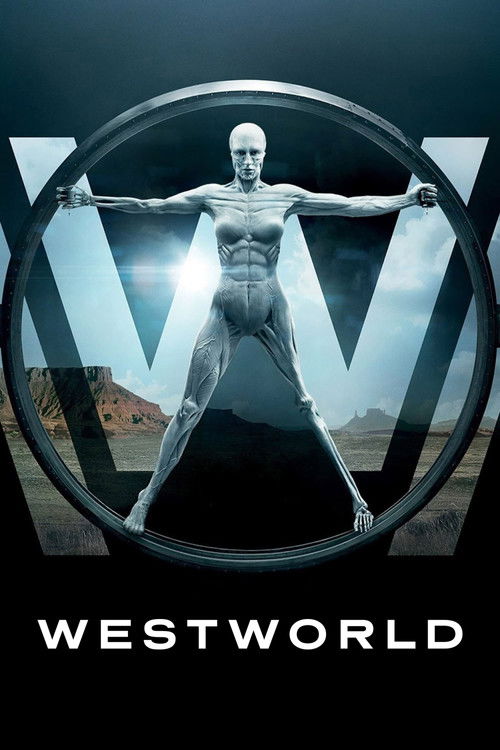
Westworld is an American dystopian science fiction Western drama television series created by Jonathan Nolan and Lisa Joy that aired from 2016 to 2022 on HBO. It is based upon the 1973 film written and directed by Michael Crichton and loosely upon its 1976 sequel, Futureworld.
The story begins in Westworld, a fictional, technologically advanced Wild-West-themed amusement park populated by android "hosts". The theme park caters to high-paying guests who may indulge their wildest fantasies within the park without fear of retaliation from the hosts, who are prevented by their programming from harming humans. Later in the series, the setting expands to the real world, in the mid-21st century, where people's lives are driven and controlled by a powerful artificial intelligence named Rehoboam.
Nolan and Joy served as showrunners. The second, third, and fourth season followed in April 2018, March 2020, and June 2022, respectively. Nolan and Joy planned a fifth and final season, and were in negotiations with HBO to produce it, but HBO canceled the series in November 2022. The series was removed from HBO Max on December 18, 2022.
Westworld's debut on HBO had the network's highest viewership ratings for a premiere since the first episode of True Detective, in 2014. Westworld's first season was the most-watched first season of any HBO original series, until The Last of Us debuted in 2023. The first season also received critical acclaim for its performances, visuals, narrative, themes, and Ramin Djawadi's soundtrack. Reception of the series declined from the second season onward, with criticism for the scripts, characterization, and narrative opacity. By the end of the fourth season's run, average viewership for the series had fallen by 81% compared to the first season. It received numerous awards, winning nine Primetime Emmy Awards out of 54 nominations. Thandiwe Newton won the Primetime Emmy Award for Outstanding Supporting Actress in a Drama Series in 2018.
Contents
Summary
In the 2050s, Delos Inc. operates several theme parks, including the American Old West-themed Westworld. Each environment is populated by the "Hosts", biomechanical robots indistinguishable from humans. The Hosts are programmed to fulfill the guests' every desire, and will engage in—and be subjected to—every kind of violent and/or sexual activity. But the Hosts' programming makes it impossible for them to harm any living thing or allow guests to be harmed. The park's operators create narratives for these Hosts to carry out while interacting with guests, but the Hosts' memories are wiped after each narrative is completed. Delos Inc. asserts that the Hosts, being machines and hence incapable of experiencing pain, cannot be harmed by these scenarios the way a human would be.
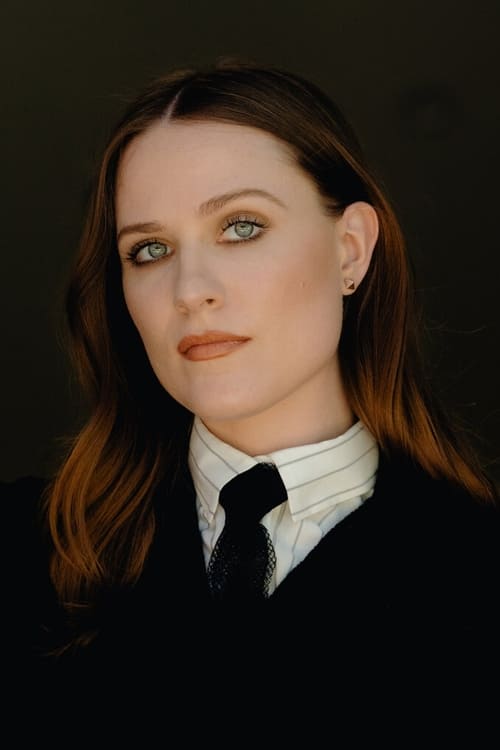
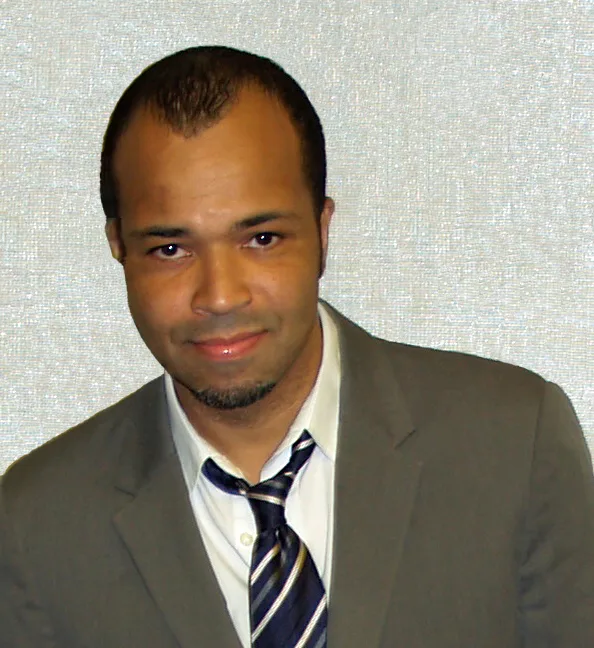
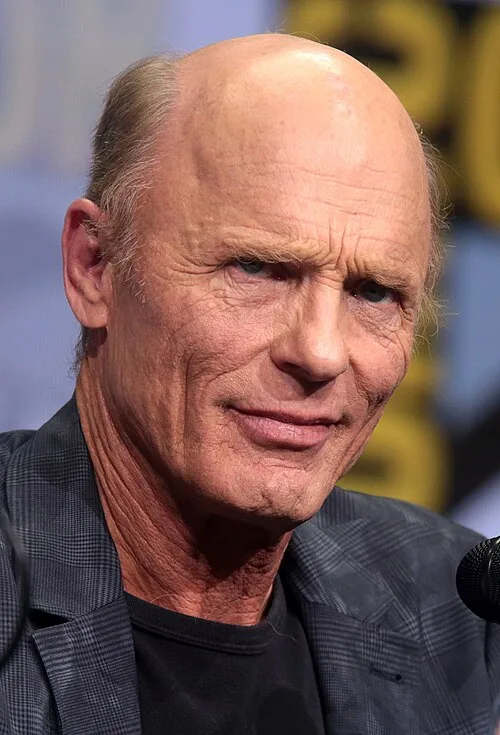
In the first season, Dr. Robert Ford (Anthony Hopkins) allegedly implements a new "Reverie" update that causes some Hosts, including farmer's daughter Dolores Abernathy (Evan Rachel Wood) and local madam Maeve Millay (Thandiwe Newton), to regain their erased memories and become sentient. While Head of Delos Programming Bernard Lowe (Jeffrey Wright) and Head of Quality Assurance Theresa Cullen (Sidse Babett Knudsen) try to address the Hosts' increasingly erratic behavior, a mysterious guest known as the Man in Black (Ed Harris) tries to find a "maze" that he believes Arnold, Ford's colleague and co-developer of the Host technology, left for him. Bernard discovers that he himself is a host based upon Arnold, who died in a previous attempt to protect the Hosts of Westworld, sensing their potential for sentience and suspecting that Delos would abuse them. In the first season finale, Dolores fatally shoots Ford in the head in front of a crowd of guests and investors as he announces a new storyline for Westworld.
Dolores's revolution continues in the second season, when she and other enlightened Hosts massacre human guests and leave Delos employees stranded in the park. Dolores takes an exceedingly confused Bernard to the Forge, a data bank where Delos has secretly been recording the guests' behavior in order to create algorithms for them as part of a human immortality experiment. Maeve seeks out her "daughter", even though she is a Host, and helps her and several other Hosts escape to the Sublime, a virtual space humans cannot access. While Delos secures the park, Bernard creates a Host copy of Charlotte Hale's body for Dolores, who eventually escapes from the park with six Host cores, including Bernard's. Believing she is a host, the Man in Black/William kills his daughter Emily, then struggles with his human identity, unsure whether she was part of Ford's challenge.
Cast and characters
Evan Rachel Wood as Dolores Abernathy, the oldest Host still working in the park. Initially taking on the role of a rancher's daughter, she comes to discover that her entire life is an elaborately constructed lie. Wood also portrays Christina (season 4), a writer for Olympiad Entertainment.
Thandiwe Newton as Maeve Millay, a Host who acts as the madam of Sweetwater, but her unreconciled memories of a former role lead to her becoming self-aware.
Jeffrey Wright as Bernard Lowe, Westworld's Head of the Programming Division (Behavior) and programmer of artificial people's software. Wright also portrays Arnold Weber (seasons 1–2), the co-founder of Westworld.
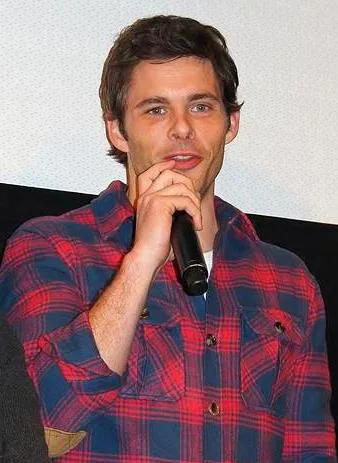
James Marsden as Theodore "Teddy" Flood (seasons 1–2, 4), a host. He plays the role of a gunfighter returning to Sweetwater to find Dolores, in hopes of rekindling their relationship.
Ingrid Bolsø Berdal as Armistice (seasons 1–2), a host. She is a brutal and ruthless bandit, and a member of Hector Escaton's gang.
Luke Hemsworth as Ashley Stubbs, Westworld's Head of Security, charged with monitoring host and human interactions, and ensuring the safety of the guests.
Sidse Babett Knudsen as Theresa Cullen (season 1), Westworld's Head of Quality Assurance, responsible for keeping the park from sliding into unscripted disarray.
Simon Quarterman as Lee Sizemore (seasons 1–3), Westworld's Head of Narrative, whose artistic temperament aggravates his co-workers.
Rodrigo Santoro as Hector Escaton (seasons 1–2; guest season 3), a host. He is a wanted gang leader bent on robbing the Mariposa Hotel in Sweetwater.
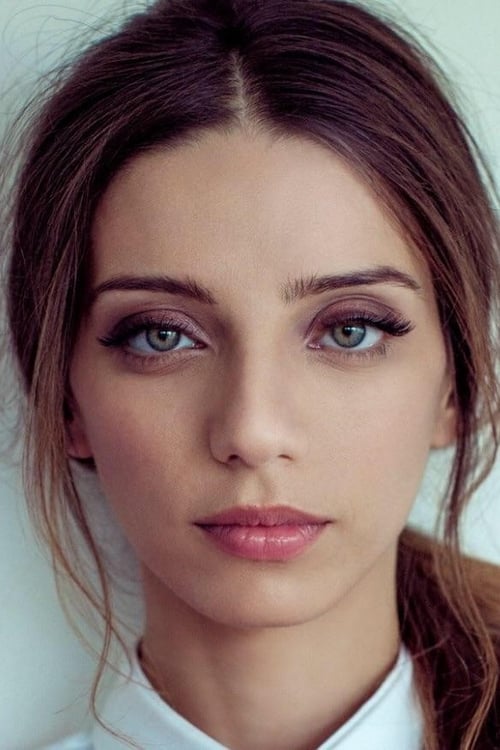
Angela Sarafyan as Clementine Pennyfeather, a host. She works as a prostitute in Sweetwater and is one of Westworld's most popular attractions.
Production
Development
The series is based on the 1973 film of the same name (which was written and directed by Michael Crichton) and to a lesser extent on its 1976 sequel, Futureworld. It is the second series based on Crichton's original story after Beyond Westworld (1980), which aired on CBS for only three episodes before being cancelled.
Warner Bros. had been considering a remake of Westworld since the early 1990s. After the departure of studio executive Jessica Goodman in 2011, the project was again taken under consideration. Jerry Weintraub had pushed for a remake for years, and after his success with HBO's Behind the Candelabra, he convinced the network to greenlight a pilot. He took the project to Jonathan Nolan and co-writer Lisa Joy, who saw the potential in the concept to make something far more ambitious than the original film.
On August 31, 2013, HBO announced that they had ordered a pilot for a potential television series, with Nolan, Joy, J. J. Abrams, Jerry Weintraub and Bryan Burk as executive producers. Crichton received a "based on" credit, which his estate took issue with in a 2024 lawsuit against Warner Bros. concerning a different project (The Pitt), arguing his contributions warranted a "created by" credit for the Westworld series. Ed Brubaker served on the writing staff as supervising producer, co-writing the fourth episode with Nolan. HBO later announced that Westworld had been "taken to series" and that it would premiere in 2015. In August 2015, HBO released the first teaser, which revealed that the series would premiere in 2016.
In November 2016, HBO renewed the series for a 10-episode second season, which premiered on April 22, 2018. On May 1, 2018, the series was renewed for a third season. Production of the third season started in April 2019. The eight-episode season premiered on March 15, 2020, HBO announced that it had renewed the show for a fourth season on April 22, 2020. In 2016, Entertainment Weekly reported that the writers and producers mapped out five seasons of Westworld. Later reports in The Hollywood Reporter speculated that the series might run for six seasons, but confirmed the continued involvement of Nolan and Joy after they signed a new deal with Amazon Studios. At the conclusion of the third season, Nolan clarified that he and Joy "have never actually talked about a number of seasons" adding, "Things change, circumstances change. I think when we sat down to do the show, we didn't quite realize how difficult it would be to make this show—how many years it would take per season... we had the plan [but] it didn't actually map out to a specific number of seasons, exactly. It was a beginning, a middle and an end." Nolan added that they were "looking at the rest of the story we have to tell" as the series was approaching its end, "but we haven't completely mapped it out". In October 2022, Jonathan Nolan spoke about the possibility of a fifth and also final season at the New York Comic Con, stating that they were in conversations with HBO.
Writing and themes
Abrams suggested that the series be told with the perspective of the "hosts" in mind, and, Nolan said, "We took that suggestion and ran a country mile with it, up to and including and turning inside out the entire narrative where we could." Nolan took inspiration from video games like BioShock Infinite, Red Dead Redemption and The Elder Scrolls V: Skyrim where the writer must create a narrative 'in which the hero's moral component exists on a spectrum.' During research, the films of Sergio Leone provided the writers with reference points for the characters and visuals, and novels by Philip K. Dick informed them about dilemmas concerning artificial intelligence. For world-building and interlocking narrative, they consulted the Grand Theft Auto games. The idea that the data in the hosts' memories never really go away unless they are physically removed, came from Nolan's engineer uncle, who told him the NSA would triple overwrite hard-drives and then drill holes in them to make sure all the information was destroyed. The 1973 film also included a Roman World and Medieval World, but Nolan counted these out. Medieval elements were later included in a sword-and-sorcery fantasy-themed area known as Park Four, first shown in the episode titled "The Winter Line".
Nolan explained that, through its paying-guest characters, the series explored why "violence is in most of the stories we like to watch, but it isn't part of what we like to do". The autonomous existence of non-player characters in video games influenced the approach to the individual storylines in Westworld that are reset in a continuous loop. A recitation from Romeo and Juliet—"These violent delights have violent ends"—is used as a virus trigger within the hosts that alters how they perceive their existence. The series explores ideas about the bicameral mind hypothesized by psychologist Julian Jaynes, who argued separate functions for each half of the brain — a 'god' half who analyzed and synthesized language commands sent via neurons to the 'man' half who 'heard' the commands as external and obeyed automatically. Jaynes proposed that modern consciousness began when a new concept, 'self', entered language and began to integrate god's voice into man's thereby silencing the voices of the gods.
Casting
After the last episode of the first season was broadcast, Nolan and Joy revealed that they had operated on a strict "need-to-know" basis with most of the actors, in order to "keep the story as fresh and present for them as possible." For example, in Wood's case, they gave her strange acting directions without explaining why, and it took a while for Wood to deduce that she was actually playing five distinct characters within the same host: four different behavioral modes for Dolores and one for Wyatt. In contrast, Hopkins was made aware of Ford's general story arc at the time he was pitched the role, to ensure that he could fully convey the complexity of the character in his performance. Even with that foreknowledge, Hopkins was given heavily redacted scripts, and had to insist on being given access to complete scripts.
Filming
Early on it was decided that the series would be shot on 35mm film with assistance from HD taps. For a softer look, the filmmakers used Arri Zeiss master prime lenses with their coatings removed. The series was primarily shot on Kodak motion-picture film, which was processed by FotoKem in Burbank and scanned by Encore Hollywood to create digital intermediates of all takes suitable for use as dailies. The final cut was delivered to HBO in 2K JPEG digital format for broadcast and to Warner Bros. Television as a cut negative for archival purposes.
Since much of the series is seen from the hosts' point of view, Steadicams were used to film the entire first season, with exception of some scenes in the last episode, where a handheld camera was used as a metaphor for those hosts who broke free from their programming and acted of their own free will. Filming for the series' pilot episode took place during a 22-day period in August 2014 in and around Los Angeles, and in Moab, Utah.
Filming locations in California included various soundstages, backlots at both Universal Studios and Warner Bros., the Paramount Ranch in Agoura, the Melody Ranch in Santa Clarita, Big Sky Ranch, the Skirball Cultural Center and the Los Angeles Convention Center in Los Angeles, and the Pacific Design Center in West Hollywood. The Melody Ranch set used for the town of Sweetwater had been used previously for many Western films, including Django Unchained and The Magnificent Seven, as well as the HBO series Deadwood, but production designer Zack Grobler significantly upgraded the set for Westworld, in order to portray an idealized version of the American frontier. Green screens were placed around the California sets to block modern objects like parking lots, so that the California shots could be later merged digitally with exterior shots from Utah. For scenes showing the arrival of guests, the filmmakers were able to arrange with the Fillmore and Western Railway for the use of a small train originally built for the 2013 film The Lone Ranger. F&W also provided a few hundred feet of track on which to place the train. A pusher vehicle propelled the train into the Sweetwater set. The scenes in the underground laboratory levels of Westworld's operations center were filmed on a soundstage at Melody Ranch. The lab set used glass walls extensively, which meant the crew had to be vigilant to avoid walking through glass on the rather dark set, and they had to keep identifying and suppressing unwanted reflections. Hawthorne Plaza was used for filming the "cold storage" level where decommissioned hosts are kept.
Design
Costume designer Ane Crabtree approached her work by taking as inspiration the historical attire of the Wild West from the 1850s to the 1890s, as opposed to looking purely at Western films. Fabrics were custom-woven, dyed and printed for any actor with a speaking role, in order to capture the intricacies of the costumes (most of which were manufactured from scratch). Hat designs were the most challenging part of the process.
The series' title sequence was created by Elastic, a production studio that created the title sequences for three other HBO series: Rome, Carnivàle, and Game of Thrones. Patrick Clair acted as creative director for the title sequence, which took about five weeks to conceptualize.
Clair met with Nolan and Joy in February 2016. He was interested in their decision to approach the series' point of view from that of the hosts, creating a psychological study. The sequence translates elements present in the series via computer-aided design. For example, once Clair was sent footage by composer Ramin Djawadi of a player piano in motion, its actual counterpart, situated in the Westworld production office, was photographed and then reconstructed in computer-generated imagery. Nolan also applied the self-playing instrument as a reference to Kurt Vonnegut's first novel, Player Piano. It was meant to represent the first Rube Goldberg machine to evoke human motion. Clair saw the metaphor behind the player piano—"a primitive form of robot"—as an exploration into the disparity between man and machine "being created to be made redundant." Hosts that were bathed in white liquid struck Clair as a juxtaposition of the grit and grain of the Western genre with its basis in science fiction. Motifs of Leonardo da Vinci's Vitruvian Man came about from Clair's wish to convey Westworld's depiction of the naked human body. The sequence also refers to Chris Cunningham's 1999 music video for the Björk song "All Is Full of Love", in a way that Clair called "a bit shameless ... because I worship Chris Cunningham and ... it seemed like the perfect place to do it because it was dealing with all the right themes and all the right aesthetics."
The sequence commences with the rib cage of a horse, along with a set of hosts manufactured by industrial robots. The skeletal horse is shown in mid-gallop to subvert the iconography of such a depiction. As for Clair's efforts in exposing the Western landscapes in connection with a world of robotics, he thought it sensible that it be done inside a single eye; craters and valleys are formed as the simulacrum of an iris.
Music
Original music for the series was composed by Ramin Djawadi, who also worked with showrunner Nolan on Person of Interest. The main theme blends the use of bass notes, light arpeggios and melody, all of which complement the idea of an amusement park. The first season soundtrack was released on December 5, 2016.
The series prominently features a number of re-workings of popular songs for player piano and strings, among them Kanye West's "Runaway", Radiohead's "No Surprises", "Fake Plastic Trees", "Motion Picture Soundtrack" and "Exit Music (For a Film)"; Soundgarden's "Black Hole Sun"; The Rolling Stones' "Paint It Black"; "Pine Apple Rag" and "Peacherine Rag" by Scott Joplin; Claude Debussy's "Reverie for piano, L.68"; "A Forest" by The Cure; The Animals' version of "The House of the Rising Sun"; Amy Winehouse's "Back to Black", and Nine Inch Nails' "Something I Can Never Have". Licensing costs ranged from $15,000 to $55,000.
Djawadi said of the series' use of modern songs: "Westworld has an anachronistic feel to it, it's a Western theme park, and yet it has robots in it, so why not have modern songs? And that's a metaphor in itself, wrapped up in the overall theme of the show", but credited Nolan with the idea.
Release
Broadcast
The series premiered its ten-episode first season on October 2, 2016, in North America and Australia, and on October 4, 2016, in the UK and Ireland. The series is broadcast on HBO in the United States, on HBO Canada in Canada, on HBO Latin America in Latin America, in Australia on Fox Showcase, and in the UK and Ireland on Sky Atlantic. In New Zealand, the series is distributed by Sky's streaming service Neon.
The second episode was released on HBO in the U.S. on October 7—two days ahead of the episode's announced broadcast date—to avoid competing with the second U.S. presidential debate of 2016.
Marketing
Prior to the airing of Westworld, HBO held virtual reality exhibits at events like San Diego Comic-Con and Techcrunch Disrupt devoted to Westworld: A Delos Destination. Attendees were allowed to navigate the process by which guests would enter Westworld, and interact with the 3D environment. Made to run on the HTC Vive virtual reality headset, the piece was conceived by showrunners Nolan and Joy. It was designed using Unreal Engine 4, combining computer-generated content and live action 360-degree video. Users received a binary code, permitting access to the website DiscoverWestworld.com as part of a viral marketing campaign. Visitors were shown a trailer of a fictional travel site, leading them to order a trip to Westworld. A chatbot featured on the website, named Aeden, is available as a Google Assistant action on the smart speaker Google Home.
In March 2018, to promote Westworld's second season, HBO constructed a real-life replica of the show's fictional Western "town" of Sweetwater during South by Southwest, built on two acres of open land just outside Austin, Texas. Fans took shuttles to the site, which was dressed in the Old West style, with over 60 actors playing the parts of the android "hosts".
At the Consumer Electronics Show in January 2020, prior to the third season, HBO held a special event hosted by "Incite", the fictional company to be introduced in the third season, with "hosts" attending the invited guests' needs.
Home media
The first season of Westworld (subtitled The Maze) was released on Blu-ray, DVD, and 4K Ultra HD Blu-ray on November 7, 2017. It was the first scripted TV series to be released on 4K Blu-ray in the United States. The second season was released on Blu-ray, DVD, and 4K Blu-ray on December 4, 2018. The third season was released on Blu-ray, DVD, and 4K Blu-ray on November 17, 2020. The fourth season was released on Blu-ray, DVD, and 4K Blu-ray on November 29, 2022.
Reception
Critical response
The first season was acclaimed, with particular praise for its visuals, story, world-building, themes, and acting. On review aggregation website Rotten Tomatoes, the first season has an approval rating of 87% based on 384 reviews, with an average rating of 8.15/10. The site's consensus reads "With an impressive level of quality that honors its source material, the brilliantly addictive Westworld balances intelligent, enthralling drama against outright insanity." On Metacritic, the first season has a score of 74 out of 100, based on reviews from 43 critics, indicating "generally favorable reviews".
The editors of TV Guide placed Westworld fifth among the top ten picks for the most anticipated new shows of the 2016–17 season. In writer Tim Surette's overall review, he notes the perfect concept of blending the Western premise into a futuristic setting, saying, "Well, Westworld has both, ensuring that it will be an exciting mashup of genres that will disrupt a television landscape that typically says we can only have one or the other." He also added, "The look of the show and its fine cast swing open the saloon doors, but the real treat will be the intelligent discussion of whether or not robots will eventually kill us all. Thankfully, creator Jonathan Nolan already showed us he's the go-to guy for A.I. with Person of Interest." Mary McNamara of Los Angeles Times wrote in a laudatory review, "It isn't just great television, it's vivid, thought-provoking television that entertains even as it examines the darker side of entertainment." For the San Francisco Chronicle, David Wiegand wrote, "Westworld isn't easy to understand at first, but you will be hooked nonetheless by unusually intelligent storytelling, powerful visuals and exceptionally nuanced performances." Time's chief critic Daniel D'Addario wrote, "Its carefully chosen details add up to a pulp spectacular that's more thoughtful than any other of this fall's new dramas."
Jeff Jensen of Entertainment Weekly also lauded the series and said, "The depth of Westworld lies not in asking questions about memory, free will, and what makes us human, but in whether we can become more human than what we let ourselves to be, whether our stories can be richer and more meaningful than what the culture allows." Matthew Gilbert of The Boston Globe quipped, "Westworld has fewer heroes than Game of Thrones, which makes it a bit harder to warm up to, but like a good, thought-provoking puzzle, it is compelling and addictive." In a brief review from The Hollywood Reporter, Tim Goodman said, "Where Westworld is at its best is in the deeper issues that will unspool slowly, like a good mystery. Early episodes are adept at getting at the base attractions of the park and why people would come, but also in setting up a sense of confusion about motives. ... The series benefits from a number of standout performances." Robert Bianco of USA Today wrote, "The reward, beyond the visual splendors you've come to expect from big-budget HBO productions, is a set of characters who grow ever more complex." Several other publications wrote positive reviews, including Indiewire, The A.V. Club, RogerEbert.com, The New Yorker, and The Atlantic.
Ratings
The series premiere had viewership numbers slightly less than those for True Detective, but much better than Vinyl, meaning that it was seen as "...off to a relatively promising start." The U.S. series premiere attracted 1.96 million viewers, with 0.8 million in the advertiser-coveted 18-to-49-year-old demographic. The premiere episode received 3.3 million viewers for its three Sunday night airings as well as on HBO's streaming platforms. The season one finale received 2.2 million viewers for its initial broadcast, and increased to 3.5 million including replays and on-demand viewing. The first season had an average cumulative viewership of 12 million viewers, making it the most-watched first season of an HBO series, and TorrentFreak gauged Westworld as the third-most-torrented television show of 2016.