Foreign policy
Orbán attended the inauguration ceremonies of re-elected Turkish President Recep Tayyip Erdoğan in Ankara in 2018 and 2023. In October 2018, Orbán said after talks with President Erdoğan in Budapest that "A stable Turkish government and a stable Turkey are a precondition for Hungary not to be endangered in any way due to overland migration."
In June 2019, Orbán met Myanmar's State Counsellor and Nobel Peace Prize winner Aung San Suu Kyi. They discussed bilateral ties and illegal migration.
Orbán has maintained close ties with China throughout his tenure, and his administration is generally seen as China's closest ally in the EU. Hungary joined China's Belt and Road Initiative (BRI) in 2015, while in April 2019, Orbán attended a BRI forum in Beijing, where he met the Chinese leader Xi Jinping. He spearheaded plans to open a Fudan University campus in Budapest, which led to pushback in Hungary. He met with Chinese Communist Party (CCP) Politburo member and top diplomat Wang Yi in Budapest on 20 February 2023; he afterwards backed the peace plan released by Wang Yi concerning Russia's invasion of Ukraine.
Orbán questioned Nord Stream 2, a new Russia–Germany natural gas pipeline. He said he wants to hear a "reasonable argument why South Stream was bad and Nord Stream is not". "South Stream" refers to the Balkan pipeline cancelled by Russia in December 2014 after obstacles from the EU.
Since 2017, Hungary's relations with Ukraine have rapidly deteriorated over the issue of the Hungarian minority in Ukraine. Orbán and his cabinet ministers repeatedly criticized Ukraine's 2017 education law, which makes Ukrainian the only language of education in state schools, and threatened to block further Ukraine's EU integration until it is modified or repealed. It is worth noting that the language law was amended in December 2023 in favor of the official languages of the European Union, including Hungarian.
Orbán has been considered one of the most pro-Russian heads of state worldwide, publicly praising Putin and his policies, even in the aftermath of the 2022 Russian invasion of Ukraine. On one hand, he has described the war as "clear aggression" by Russia, saying a sovereign Ukraine is needed "to stop Russia posing a threat to the security of Europe." However, conversely, he has also criticised the European Union for "prolonging the war" in Ukraine by sanctioning Russia and sending weapons and money to Ukraine instead of encouraging a negotiated peace, and has been accused of blocking aid to Ukraine. Consequently, Austro-Hungarian journalist Paul Lendvai called Orbán the Divider of Europe.
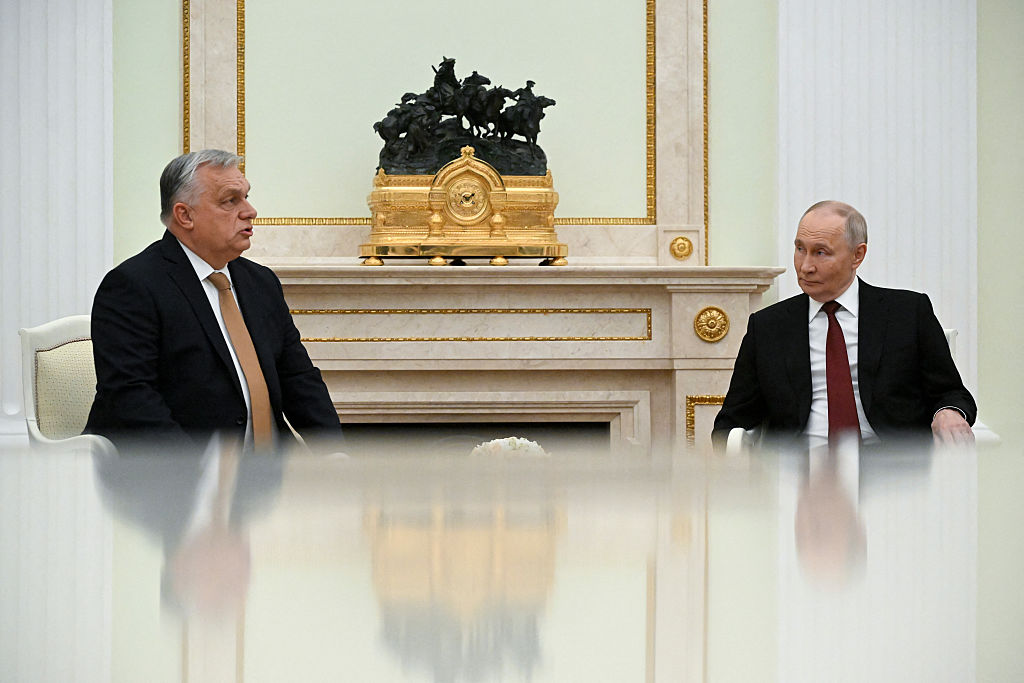
Amidst the 2021-2022 Ukraine crisis, Orbán was the first EU leader to meet with Vladimir Putin in Moscow in a visit he called "a peacekeeping mission". They also discussed Russian gas exports to Hungary. On 2 March, as Russia had already launched an invasion of Ukraine, Orbán decided to welcome Ukrainian refugees to Hungary, and will support the Ukrainian membership to the European Union. Initially, Orbán condemned Russia's invasion of Ukraine and said Hungary would not veto EU sanctions against Russia. However, Orbán rejected sanctions on Russian energy, due to Hungary's excessive dependency (85%) on Russian fossil fuels. In late March 2022, Ukraine President Volodymyr Zelensky singled out Orbán for his lack of support for Ukraine. In June, Zelensky thanked Orbán for supporting Ukraine's sovereignty and for giving asylum to Ukrainians.
On 27 February 2023, Viktor Orbán said that Hungary supports China's peace plan in the Russo-Ukrainian war, despite opposition by Western leaders. Beijing's 12-point statement that criticised unilateral sanctions, would reduce strategic risks associated with nuclear weapons in Central and Eastern Europe, according to the statement.
On 16 October 2025, Orbán announced that Hungary had begun preparations for the 2025 Russia–United States summit in Hungary after having a phone call with Donald Trump that day. However, on 22 October, Trump announced that the meeting had been cancelled because negotiations had stalled.
Since 2014, Hungary has had observer status at the General Assembly of Turkic-speaking States, and in 2017 it submitted an application for accession to the International Turkic Academy. During the 6th Summit of Turkic Council, Orbán said that Hungary is seeking even closer cooperation with the Turkic Council. In 2018, Hungary obtained observer status in the council. In 2021, Orbán mentioned that the Hungarian and Turkic peoples share a historical and cultural heritage "reaching back many long centuries". He also pointed out that the Hungarian people are "proud of this heritage", and "were also proud when their opponents in Europe mocked them as barbarian Huns and Attila's people". In 2023, during his visit to Kazakhstan, Orbán said that Hungarians come to Kazakhstan "with great pleasure" because the two nations are connected by "millennial common roots".
The Hungarian government expressed support for Israel in the Gaza war. On 13 October, Orbán stated "Israel has the right to defend itself" and "we will not allow sympathy rallies supporting terrorist organisations". On 22 October, Fidesz parliamentary leader Máté Kocsis announced that the party will introduce a manifesto before the parliament condemning Hamas terrorism.
In April 2025, Israeli Prime Minister Benjamin Netanyahu visited Budapest, despite the ICC's arrest warrant for Netanyahu for alleged war crimes and crimes against humanity in the Gaza Strip. During the visit, the Hungarian government of Orbán announced that Hungary would withdraw from the International Criminal Court (ICC), describing it as "politically biased".
Orbán often attacked the administrations of presidents Barack Obama and Joe Biden, particularly for their supposed pro-immigration policies. Some analysts argue that Orban's attacks on the US are largely political theater for his domestic voters.
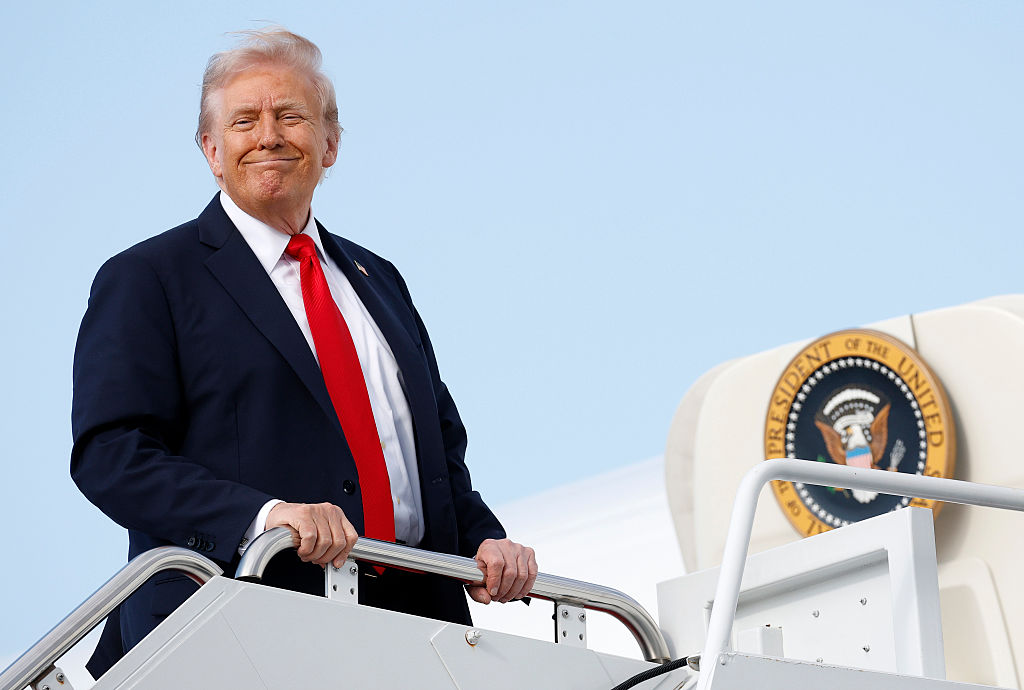
Orbán endorsed Trump in 2016, 2020 and 2024. Orbán is widely recognized as the only European leader to publicly endorse Donald Trump in every election.
In January 2022, Donald Trump endorsed Orbán in the 2022 Hungarian parliamentary election, saying in a statement that he "truly loves his Country and wants safety for his people", and praising his hard-line immigration policies. Donald Trump's former chief strategist, Steve Bannon, once called Orbán "Trump before Trump".
In August 2021, Tucker Carlson hosted some episodes of his show, Tucker Carlson Tonight, from Budapest, praising Orbán as the one elected leader "on the face of the earth, ... who publicly identifies as a Western-style conservative". He also conducted a fifteen-minute interview with Orbán, which was widely criticized for its fawning nature and lack of challenging questions.
In May 2022 the Conservative Political Action Conference, the "flagship conference" of American conservatism, held a satellite event in Budapest. In Florida, a law regulating sex education in schools, sometimes called the "Don't Say Gay" law, resembles a similar Hungarian law passed in 2021 and was, according to governor Ron DeSantis's press secretary, inspired by it.
In August 2022, Orbán was the opening speaker at the Conservative Political Action Conference (CPAC) in Dallas, Texas.