




Vikings were a seafaring people originally from Scandinavia (present-day Denmark, Norway, and Sweden), who from the late 8th to the late 11th centuries raided, pirated, traded, and settled throughout parts of Europe. They voyaged as far as the Mediterranean, North Africa, the Middle East, Greenland, and Vinland (present-day Newfoundland in Canada, North America). In their countries of origin, and in some of the countries they raided and settled, this period of activity is popularly known as the Viking Age, and the term "Viking" also commonly includes the inhabitants of the Scandinavian homelands as a whole during the late 8th to the mid-11th centuries. The Vikings had a profound impact on the early medieval history of northern and Eastern Europe, including the political and social development of England (and the English language) and parts of France, and the establishment of Kievan Rus', the ancestor of the later states of Belarus, Russia, and Ukraine.
Expert sailors and navigators of their characteristic longships, Vikings established Norse settlements and governments in the British Isles, the Faroe Islands, Iceland, Greenland, Normandy, and the Baltic coast, as well as along the Dnieper and Volga trade routes across Eastern Europe where they were also known as Varangians. The Normans, Norse-Gaels, Rus, Faroese, and Icelanders emerged from these Norse colonies. At one point, a group of Rus Vikings went so far south that, after briefly being bodyguards for the Byzantine emperor, they attacked the Byzantine city of Constantinople. Vikings also voyaged to the Caspian Sea and Arabia. They were the first Europeans to reach North America, briefly settling in Newfoundland (Vinland). While spreading Norse culture to foreign lands, they simultaneously brought home slaves, concubines, and foreign cultural influences to Scandinavia, influencing the genetic and historical development of both. During the Viking Age, the Norse homelands were gradually consolidated from smaller kingdoms into three larger kingdoms: Denmark, Norway, and Sweden.
The Vikings spoke Old Norse and made inscriptions in runes. For most of the Viking Age, they followed the Old Norse religion, but became Christians over the 8th–12th centuries. The Vikings had their own laws, art, and architecture. Most Vikings were also farmers, fishermen, craftsmen, and traders. Popular conceptions of the Vikings often strongly differ from the complex, advanced civilisation of the Norsemen that emerges from archaeology and historical sources. A romanticised picture of Vikings as noble savages began to emerge in the 18th century; this developed and became widely propagated during the 19th-century Viking revival. Varying views of the Vikings—as violent, piratical heathens or as intrepid adventurers—reflect conflicting modern Viking myths that took shape by the early 20th century. Current popular representations are typically based on cultural clichés and stereotypes and are rarely accurate—for example, there is no evidence that they wore horned helmets, a costume element that first appeared in the 19th century.
Contents
Etymology
The etymology of the word Viking has been much debated by academics, with many origin theories being proposed. One theory suggests that the word's origin is from the Old English wicing 'settlement' and the Old Frisian wizing, attested almost 300 years prior. Another less popular theory is that víking came from the feminine vík 'creek', 'inlet', 'small bay'. The Old Norse word víkingr does not appear in written sources until the 12th century, apart from a few runestones.
Another etymology that gained support in the early 21st century derives Viking from the same root as Old Norse vika 'sea mile', originally referring to the distance between two shifts of rowers, ultimately from the Proto Germanic *wîkan (to recede). This is found in the early Nordic verb *wikan 'to turn', similar to Old Icelandic víkja 'to move, to turn', with "well-attested nautical usages", according to Bernard Mees. This theory is better attested linguistically, and the term most likely predates the use of the sail by the Germanic peoples of northwestern Europe.
In the Middle Ages, viking came to refer to Scandinavian pirates or raiders. The earliest reference to wicing in English sources is from the Épinal-Erfurt glossary (c. 700), about 93 years before the first known attack by Viking raiders in England. The glossary lists the Latin translation for wicing as piraticum 'pirate'. In Old English, the word wicing appears in the Anglo-Saxon poem Widsith, probably from the 9th century. The word was not regarded as a reference to nationality, with other terms such as Northmen and Dene 'Danes' being used for that. In Asser's Latin work The Life of King Alfred, the Danes are referred to as pagani 'pagans'; historian Janet Nelson states that pagani became "the Vikings" in standard translations of this work, even though there is "clear evidence" that it was used as a synonym for Danes, while Eric Christiansen avers that it is a mistranslation made at the insistence of the publisher. The word Viking was introduced into Modern English during the late 18th-century Viking revival, at which point it acquired romanticised heroic overtones of "barbarian warrior" or noble savage.
History
Viking Age
The Viking Age in Scandinavian history is taken to have been the period from the earliest recorded raids by Norsemen in 793 until the Norman conquest of England in 1066. Vikings used the Norwegian Sea and Baltic Sea for sea routes to the south.
The Normans were descendants of those Vikings who had been given feudal overlordship of areas in northern France, namely the Duchy of Normandy, in the 10th century. In that respect, descendants of the Vikings continued to have an influence in northern Europe. Likewise, King Harold Godwinson, the last Anglo-Saxon king of England, had Danish ancestors. Two Vikings even ascended to the throne of England, with Sweyn Forkbeard claiming the English throne in 1013 until 1014 and his son Cnut the Great being king of England between 1016 and 1035.
Geographically, the Viking Age covered Scandinavian lands (modern Denmark, Norway and Sweden), as well as territories under North Germanic dominance, mainly the Danelaw, including Scandinavian York, the administrative centre of the remains of the Kingdom of Northumbria, parts of Mercia, and East Anglia. Viking navigators opened the road to new lands to the north, west and east, resulting in the foundation of independent settlements in the Shetland, Orkney, and Faroe Islands; Iceland; Greenland; and L'Anse aux Meadows, a short-lived settlement in Newfoundland, circa 1000. The Greenland settlement was established around 980, during the Medieval Warm Period, and its demise by the mid-15th century may have been partly due to climate change. The semi-legendary Viking Rurik is said to have taken control of Novgorod in 862, while his kinsman Oleg captured Kiev in 882 and made it the capital of the Rus. The Rurik dynasty would rule Russia until 1598.
As early as 839, when Swedish emissaries are first known to have visited Byzantium, Scandinavians served as mercenaries in the service of the Byzantine Empire. In the late 10th century, a new unit of the imperial bodyguard formed. Traditionally containing large numbers of Scandinavians, it was known as the Varangian Guard. The word Varangian may have originated in Old Norse, but in Slavic and Greek it could refer either to Scandinavians or Franks. In these years, Swedish men left to enlist in the Byzantine Varangian Guard in such numbers that a medieval Swedish law, the Västgötalagen, from Västergötland declared no-one could inherit while staying in "Greece"—the then Scandinavian term for the Byzantine Empire—to stop the emigration, especially as two other European courts simultaneously also recruited Scandinavians: Kievan Rus' c. 980–1060 and London 1018–1066 (the Þingalið).
Expansion
Colonisation of Iceland by Norwegian Vikings began in the 9th century. The first source mentioning Iceland and Greenland is a papal letter from 1053. Twenty years later, they appear in the Gesta of Adam of Bremen. It was not until after 1130, when the islands had become Christianised, that accounts of the history of the islands were written from the point of view of the inhabitants in sagas and chronicles. The Vikings explored the northern islands and coasts of the North Atlantic, ventured south to North Africa, and brought slaves from the Baltic coast and European Russia.
They raided and pillaged, traded, acted as mercenaries and settled colonies over a wide area. Early Vikings probably returned home after their raids. Later in their history, they began to settle in other lands. Vikings under Leif Erikson, heir to Erik the Red, reached North America and set up short-lived settlements in present-day L'Anse aux Meadows, Newfoundland, Canada. This expansion occurred during the Medieval Warm Period.
Viking expansion into continental Europe was limited. Their realm was bordered by powerful tribes to the south. Early on, it was the Saxons who occupied Old Saxony, located in what is now Northern Germany. The Saxons were a fierce and powerful people and were often in conflict with the Vikings. To counter the Saxon aggression and solidify their own presence, the Danes constructed the huge defence fortification of Danevirke in and around Hedeby.
The Vikings witnessed the violent subduing of the Saxons by Charlemagne, in the thirty-year Saxon Wars of 772–804. The Saxon defeat resulted in their forced christening and the absorption of Old Saxony into the Carolingian Empire. Fear of the Franks led the Vikings to further expand Danevirke, and the defence constructions remained in use throughout the Viking Age and even up until 1864.
The southern coast of the Baltic Sea was ruled by the Obotrites, a federation of Slavic tribes loyal to the Carolingians and later the Frankish empire. The Vikings—led by King Gudfred—destroyed the Obotrite city of Reric on the southern Baltic coast in 808 AD and transferred the merchants and traders to Hedeby. This secured Viking supremacy in the Baltic Sea, which continued throughout the Viking Age.
Because of the expansion of the Vikings across Europe, a comparison of DNA and archeology undertaken by scientists at the University of Cambridge and University of Copenhagen suggested that the term "Viking" may have evolved to become "a job description, not a matter of heredity", at least in some Viking bands.
End of the Viking Age
While the Vikings were active beyond their Scandinavian homelands, Scandinavia was itself experiencing new influences and undergoing a variety of cultural changes.
By the late 11th century, royal dynasties were legitimised by the Catholic Church (which had had little influence in Scandinavia 300 years earlier) which were asserting their power with increasing authority and ambition, with the three kingdoms of Denmark, Norway, and Sweden taking shape. Towns appeared that functioned as secular and ecclesiastical administrative centres and market sites, and monetary economies began to emerge based on English and German models. By this time the influx of Islamic silver from the East had been absent for more than a century, and the flow of English silver had come to an end in the mid-11th century.
Christianity had taken root in Denmark and Norway with the establishment of dioceses in the 11th century, and the new religion was beginning to organise and assert itself more effectively in Sweden. Foreign churchmen and native elites were energetic in furthering the interests of Christianity, which was now no longer operating only on a missionary footing, and old ideologies and lifestyles were transforming. By 1103, the first archbishopric was founded in Scandinavia, at Lund, Scania, then part of Denmark.
The assimilation of the nascent Scandinavian kingdoms into the cultural mainstream of European Christendom altered the aspirations of Scandinavian rulers and of Scandinavians able to travel overseas, and changed their relations with their neighbours.
One of the primary sources of profit for the Vikings had been slave-taking from other European peoples. The medieval Church held that Christians should not own fellow Christians as slaves, so chattel slavery diminished as a practice throughout northern Europe. This took much of the economic incentive out of raiding, though sporadic slaving activity continued into the 11th century. Scandinavian predation in Christian lands around the North and Irish Seas diminished markedly.
The kings of Norway continued to assert power in parts of northern Britain and Ireland, and raids continued into the 12th century, but the military ambitions of Scandinavian rulers were now directed toward new paths. In 1107, Sigurd I of Norway sailed for the eastern Mediterranean with Norwegian crusaders to fight for the newly established Kingdom of Jerusalem; the kings of Denmark and Sweden participated actively in the Baltic Crusades of the 12th and 13th centuries.
Culture
A variety of sources illuminate the culture, activities, and beliefs of the Vikings. Although they were generally a non-literate culture that produced no literary legacy, they had an alphabet and described themselves and their world on runestones. Most contemporary literary and written sources on the Vikings come from other cultures that were in contact with them. Since the mid-20th century, archaeological findings have built a more complete and balanced picture of the lives of the Vikings. The archaeological record is particularly rich and varied, providing knowledge of their rural and urban settlement, crafts and production, ships and military equipment, trading networks, as well as their pagan and Christian religious artefacts and practices.
Literature and language
The most important primary sources on the Vikings are contemporary texts from Scandinavia and regions where the Vikings were active. Writing in Latin letters was introduced to Scandinavia with Christianity, so there are few native documentary sources from Scandinavia before the late 11th and early 12th centuries. The Scandinavians did write inscriptions in runes, but these were usually very short and formulaic. Most contemporary documentary sources consist of texts written in Christian and Islamic communities outside Scandinavia, often by authors who had been negatively affected by Viking activity.
Later writings on the Vikings and the Viking Age can also be important for understanding them and their culture, although they need to be treated cautiously. After the consolidation of the church and the assimilation of Scandinavia and its colonies into mainstream medieval Christian culture in the 11th and 12th centuries, native written sources began to appear in Latin and Old Norse. In the Viking colony of Iceland, extraordinary vernacular literature blossomed in the 12th through 14th centuries, and many traditions connected with the Viking Age were written down for the first time in the Icelandic sagas. A literal interpretation of these medieval prose narratives about the Vikings and the Scandinavian past is doubtful, but many specific elements remain worthy of consideration, such as the great quantity of skaldic poetry attributed to court poets of the 10th and 11th centuries, the exposed family trees, the self-images, and the ethical values that are contained in these literary writings.
Indirectly, the Vikings have also left a window open onto their language, culture and activities, through many Old Norse place names and words found in their former sphere of influence. Some of these place names and words are still in direct use today, almost unchanged, and shed light on where they settled and what specific places meant to them. Examples include place names like Egilsay (from Eigils ey meaning Eigil's Island), Ormskirk (from Ormr kirkja meaning Orms Church or Church of the Worm), Meols (from merl meaning Sand Dunes), Snaefell (Snow Fell), Ravenscar (Ravens Rock), Vinland (Land of Wine or Land of Winberry), Kaupanger (Market Harbour), Tórshavn (Thor's Harbour), and the religious centre of Odense, meaning a place where Odin was worshipped. Viking influence is also evident in concepts like the present-day parliamentary body of the Tynwald on the Isle of Man.
Many common words in everyday English language stem from the Old Norse of the Vikings and give an opportunity to understand their interactions with the people and cultures of the British Isles. In the Northern Isles of Shetland and Orkney, Old Norse completely replaced the local languages and over time evolved into the now extinct Norn language. Some modern words and names only emerge and contribute to our understanding after a more intense research of linguistic sources from medieval or later records, such as York (Horse Bay), Swansea (Sveinn's Isle) or some of the place names in Normandy like Tocqueville (Toki's farm).
Burial sites
There are numerous burial sites associated with Vikings throughout Europe and their sphere of influence—in Scandinavia, the British Isles, Ireland, Greenland, Iceland, Faeroe Islands, Germany, Latvia, Estonia, Finland, Russia, etc. The burial practices of the Vikings were quite varied, from dug graves in the ground, to tumuli, sometimes including so-called ship burials.
According to written sources, most of the funerals took place at sea. Funerals involved either burial or cremation, depending on local customs. In the area that is now Sweden, cremations were predominant; in Denmark burial was more common; and in Norway both were common. Viking barrows are one of the primary sources of evidence for circumstances in the Viking Age. The items buried with the dead give some indication as to what was considered important to possess in the afterlife. It is unknown what mortuary services were given to dead children by the Vikings. Some of the most important burial sites for understanding the Vikings include:
Norway: Oseberg; Gokstad; Borrehaugene, Myklebust
Sweden: Gettlinge gravfält; the cemeteries of Birka, a World Heritage Site; Valsgärde; Gamla Uppsala; Hulterstad gravfält, near Alby; Hulterstad, Öland, Gotland.
Denmark: Jelling, a World Heritage Site; Lindholm Høje; Ladby ship; Mammen chamber tomb and hoard.
Estonia: Salme ships – The largest and earliest Viking ship burial ground ever uncovered.
Scotland: Port an Eilean Mhòir ship burial; Scar boat burial, Orkney.
Faroe Islands: Hov.
Iceland: Mosfellsbær in Capital Region; the boat burial in Vatnsdalur, Austur-Húnavatnssýsla.
Greenland: Brattahlíð.
Germany: Hedeby.
Ships
There have been several archaeological finds of Viking ships of all sizes, providing knowledge of the craftsmanship that went into building them. There were many types of Viking ships, built for various uses; the best-known type is probably the longship. Longships were intended for warfare and exploration, designed for speed and agility, and were equipped with oars to complement the sail, making navigation possible independently of the wind. The longship had a long, narrow hull and shallow draught to facilitate landings and troop deployments in shallow water. Longships were used extensively by the Leidang, the Scandinavian defence fleets. The longship allowed the Norse to go Viking, which might explain why this type of ship has become almost synonymous with the concept of Vikings.
The Vikings built many unique types of watercraft, often used for more peaceful tasks. The knarr was a dedicated merchant vessel designed to carry cargo in bulk. It had a broader hull, a deeper draught, and a small number of oars (used primarily to manoeuvre in harbours and similar situations). One Viking innovation was the 'beitass', a spar mounted to the sail that allowed their ships to sail effectively against the wind. It was common for seafaring Viking ships to tow or carry a smaller boat to transfer crew and cargo from the ship to shore.
Ships were an integral part of Viking culture. They facilitated everyday transportation across seas and waterways, exploration of new lands, raids, conquests, and trade with neighbouring cultures. They also held a major religious importance. People with high status were sometimes buried in a ship along with animal sacrifices, weapons, provisions and other items, as evidenced by the buried vessels at Gokstad and Oseberg in Norway and the excavated ship burial at Ladby in Denmark. Ship burials were also practised by Vikings overseas, as evidenced by the excavations of the Salme ships on the Estonian island of Saaremaa.
Well-preserved remains of five Viking ships were excavated from Roskilde Fjord in the late 1960s, representing both the longship and the knarr. The ships were scuttled there in the 11th century to block a navigation channel and thus protect Roskilde, then the Danish capital, from a seaborne assault. The remains of these ships are on display at the Viking Ship Museum in Roskilde.
In 2019, archaeologists uncovered two Viking boat graves in Gamla Uppsala. They also discovered that one of the boats still holds the remains of a man, a dog, and a horse, along with other items. This has shed light on the death rituals of Viking communities in the region.
Social structure
Viking society was divided into the three socio-economic classes: thralls, karls and jarls. This is described vividly in the Eddic poem of Rígsþula, which also explains that it was the god Ríg—father of mankind also known as Heimdallr—who created the three classes. Archaeology has confirmed this social structure.
The lowest ranking class were thralls, Old Norse for slaves, who comprised as much as a quarter of the population. Slavery was vital to Viking society – for everyday chores and large-scale construction, and also for trading and for the economy. Thralls were servants and workers on the farms and in larger households of the karls and jarls, and they were used for constructing fortifications, ramps, canals, mounds, roads and similar projects built by hard labour. According to the Rígsþula, thralls were despised and looked down upon. New thralls were supplied by either the sons and daughters of thralls, or were captured abroad by the Vikings on their raids in Europe. The thralls were brought back to Scandinavia by boat, used on location or in newer settlements to build needed structures, or sold, often to the Arabs in exchange for silver dirhams or silk.
Free peasants (karlar). They owned farms, land and cattle, and engaged in chores like ploughing the fields, milking the cows, and building houses and wagons, but used thralls to make ends meet. Other names for karls were bonde or simply free men. Similar classes were churls and huskarls.
Aristocracy (jarlar). They were wealthy and owned large estates with huge longhouses, horses and many thralls. The thralls did most of the daily chores, while the jarls carried out administration, politics, hunting, and sports – they also visited other jarls or went abroad on expeditions. When a jarl died and was buried, his household thralls were sometimes sacrificially killed and buried next to him, as many excavations have revealed.
In daily life, there were many intermediate positions in the overall social structure and it appears that there was some social mobility between them. These details are unclear, but titles and positions like hauldr, thegn, and landmand, show mobility between the karls and the jarls.
Other social structures included the communities of félag in both the civil and the military spheres, to which its members (called félagi) were obliged. A félag could be centred around certain trades, a common ownership of a sea vessel or a military obligation under a specific leader. Members of the latter were referred to as drenge, one of the words for warrior. There were also official communities within towns and villages, the overall defence, religion, the legal system and the Things.
Cultural assimilation
Elements of a Scandinavian identity and practices were maintained in settler societies, but they could be quite distinct as the groups assimilated into neighbouring societies. Assimilation to the Frankish culture in Normandy for example was rapid. Links to a Viking identity remained longer in the remote islands of Iceland and the Faroes.
Weapons and warfare
Knowledge about the arms and armour of the Viking age is based on archaeological finds, pictorial representation, and to some extent on the accounts in the Norse sagas and Norse laws recorded in the 13th century. According to custom, all free Norse men were required to own weapons and were permitted to carry them at all times. These arms indicated a Viking's social status: a wealthy Viking had a complete ensemble of a helmet, shield, mail shirt, and sword. However, swords were rarely used in battle; they were probably not sturdy enough for combat and most likely only used as symbolic or decorative items.
A typical bóndi (freeman) was more likely to fight with a spear and shield, and most also carried a seax as a utility knife and side-arm. Bows were used in the opening stages of land battles and at sea, but they tended to be considered less "honourable" than melee weapons. Vikings were relatively unusual for the time in their use of axes as a main battle weapon. The Húscarls, the elite guard of King Cnut (and later of King Harold II) were armed with two-handed axes that could split shields or metal helmets with ease.
The warfare and violence of the Vikings were often motivated and fuelled by their beliefs in Norse religion, focusing on Thor and Odin, the gods of war and death.
Violence was common in Viking Age Norway. An examination of Norwegian human remains from the Viking Age found that 72% of the examined males and 42% of the examined females had suffered weapon-related injuries. Violence was less common in Viking Age Denmark, where society was more centralized and complex than the clan-based Norwegian society.
The Viking warrior is often associated with violent fits of rage and frenzied fighting in modern popular culture, as reflected in meanings attached to the words berserkergang and berserker that would not have been the meanings understood by medieval Norse society. Such a fighting style may have been deployed intentionally by shock troops, and it has been proposed that the berserk-state may have been induced by consuming large amounts of alcohol, or through ingestion of materials with psychoactive properties, such as the solanaceous plant Hyoscyamus niger, as speculated by Karsten Fatur or by consumption of the hallucinogenic mushroom Amanita muscaria, as first hypothesised by the Swedish theologian Samuel Ødman in 1784 and later by the botanist F.C. Schübeler in 1885. The Norwegian battlefield archaeologist Are Skarstein Kolberg asserts that "...Ödman's hypothesis is not supported by the saga literature or by the archaeological record", and according to Roderick Dale, there is no evidence for it from the Viking Age or from Old Norse literature.
Trade
The Vikings established and engaged in extensive trading networks throughout the known world and had a profound influence on the economic development of Europe and Scandinavia.
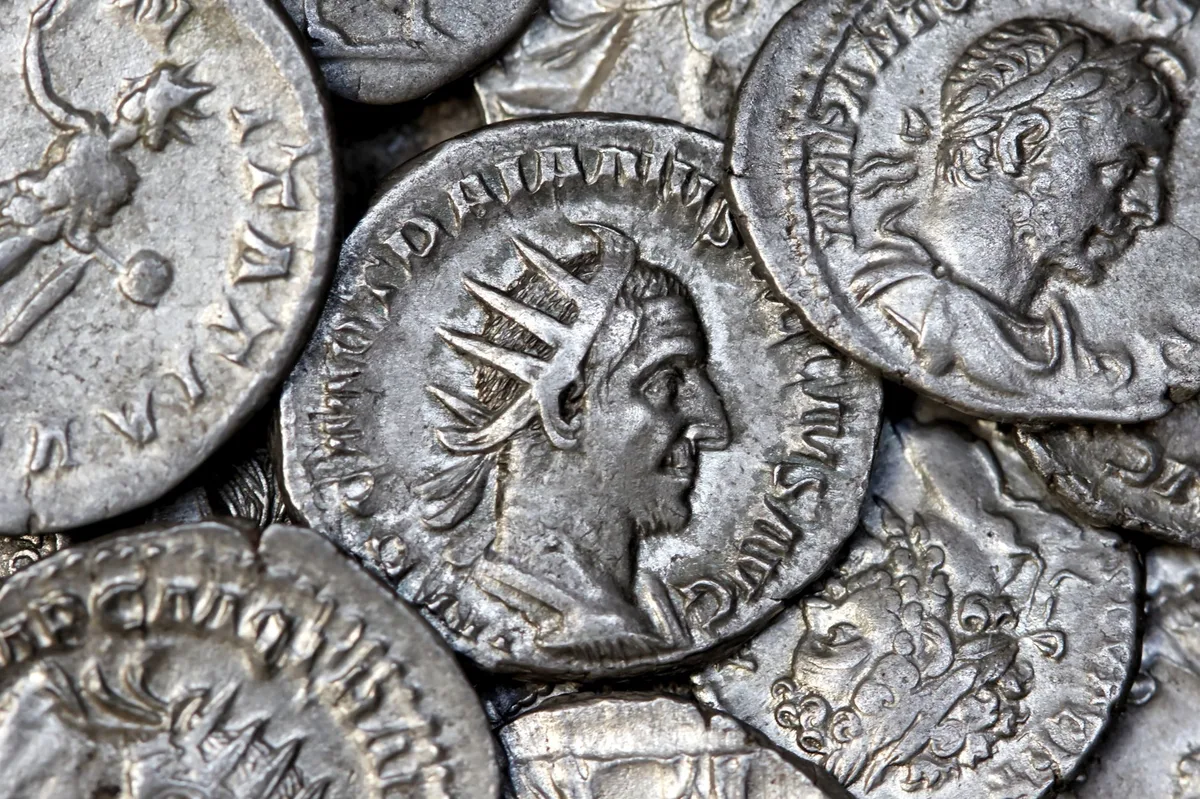
Other than in such trading centres as Ribe Hedeby in Denmark, Scandinavia was unfamiliar with the use of coinage. Therefore, its economy was based on bullion; that is, the purity and weight of precious metals used in exchange. Silver was the precious metal most commonly used, although gold was also used. Traders carried small portable scales, enabling them to measure weight precisely, which allowed an accurate medium of exchange, even lacking a regular coinage.
Goods
Organised trade covered everything from ordinary items in bulk to exotic luxury products. The Viking ship designs, like that of the knarr, were an important factor in their success as merchants. Imported goods from other cultures included:
Spices were obtained from Chinese and Persian traders, who met with the Viking traders in Russia. Vikings used homegrown spices and herbs like caraway, thyme, horseradish and mustard, but imported cinnamon.
Glass was much prized by the Norse. The imported glass was often made into beads for decoration and these have been found in the thousands. Åhus in Scania and the old market town of Ribe were major centres of glass bead production.
Silk was a very important commodity obtained from Byzantium (modern day Istanbul) and China. It was valued by many European cultures of the time, and the Vikings used it to indicate status such as wealth and nobility. Many of the archaeological finds in Scandinavia include silk.
Wine was imported from France and Germany as a drink of the wealthy, augmenting the regular mead and beer.
To counter these valuable imports, the Vikings exported a large variety of goods. These goods included:
Amber—the fossilised resin of the pine tree—was frequently found on the North Sea and Baltic coastline. It was worked into beads and ornamental objects, before being traded. (See also the Amber Road).
Fur was also exported as it provided warmth. This included the furs of pine martens, foxes, bears, otters and beavers.
Cloth and wool. The Vikings were skilled spinners and weavers and exported woollen cloth of a high quality.
Down was collected and exported. The Norwegian west coast supplied eiderdowns and sometimes feathers were bought from the Samis. Down was used for bedding and quilted clothing. Fowling on the steep slopes and cliffs was dangerous work and was often lethal.
Legacy
English language
The Vikings heavily influenced Old English to contribute to Modern English. Nouns lost their grammatical gender and grammatical conjugation was reduced to a simple -s added to the third person verb. Preposition stranding also entered English, which is permitted in Old Norse.
Medieval perceptions
In England the Viking Age began dramatically on 8 June 793 when Norsemen destroyed the abbey on the island of Lindisfarne. The devastation of Northumbria's Holy Island shocked and alerted the royal courts of Europe to the Viking presence. "Never before has such an atrocity been seen", declared the Northumbrian scholar Alcuin of York. Medieval Christians in Europe were totally unprepared for the Viking incursions and could find no explanation for their arrival and the accompanying suffering they experienced at their hands save the "Wrath of God". More than any other single event, the attack on Lindisfarne demonised perception of the Vikings for the next twelve centuries. Not until the 1890s did scholars outside Scandinavia begin to seriously reassess the achievements of the Vikings, recognising their artistry, technological skills, and seamanship.
Norse Mythology, sagas, and literature tell of Scandinavian culture and religion through tales of heroic and mythological heroes. Early transmission of this information was primarily oral, and later texts relied on the writings and transcriptions of Christian scholars, including the Icelanders Snorri Sturluson and Sæmundur fróði. Many of these sagas were written in Iceland, and most of them, even if they had no Icelandic provenance, were preserved there after the Middle Ages due to the continued interest of Icelanders in Norse literature and legal codes.
The 200-year Viking influence on European history is filled with tales of plunder and colonisation, and the majority of these chronicles came from western European witnesses and their descendants. Less common, although equally relevant, are references to Vikings in chronicles that originated in the east, including the Nestor chronicles, Novgorod chronicles, Ibn Fadlan chronicles, Ibn Rusta chronicles, and brief mentions by Photius, patriarch of Constantinople, regarding the first Viking attack on the Byzantine Empire. Other chroniclers of Viking history include Adam of Bremen, who wrote, in the fourth volume of his Gesta Hammaburgensis Ecclesiae Pontificum, "[t]here is much gold here (in Zealand), accumulated by piracy. These pirates, which are called wichingi by their own people, and Ascomanni by our own people, pay tribute to the Danish king." In 991, the Battle of Maldon between Viking raiders and the inhabitants of Maldon in Essex was commemorated with a poem of the same name.
Post-medieval perceptions
Early modern publications, dealing with what is now called Viking culture, appeared in the 16th century, e.g. Historia de gentibus septentrionalibus (History of the northern people) of Olaus Magnus (1555), and the first edition of the 13th-century Gesta Danorum (Deeds of the Danes), by Saxo Grammaticus, in 1514. The pace of publication increased during the 17th century with Latin translations of the Edda (notably Peder Resen's Edda Islandorum of 1665).
In Scandinavia, the 17th-century Danish scholars Thomas Bartholin and Ole Worm and the Swede Olaus Rudbeck used runic inscriptions and Icelandic sagas as historical sources. An important early British contributor to the study of the Vikings was George Hickes, who published his Linguarum vett. septentrionalium thesaurus (Dictionary of the Old Northern Languages) in 1703–05. During the 18th century, British interest and enthusiasm for Iceland and early Scandinavian culture grew dramatically, expressed in English translations of Old Norse texts and in original poems that extolled the supposed Viking virtues.
The word "viking" was first popularised at the beginning of the 19th century by Erik Gustaf Geijer in his poem, The Viking. Geijer's poem did much to propagate the new romanticised ideal of the Viking, which had little basis in historical fact. The renewed interest of Romanticism in the Old North had contemporary political implications. The Geatish Society, of which Geijer was a member, popularised this myth to a great extent. Another Swedish author who had great influence on the perception of the Vikings was Esaias Tegnér, a member of the Geatish Society, who wrote a modern version of Friðþjófs saga hins frœkna, which became widely popular in the Nordic countries, the United Kingdom, and Germany.
Fascination with the Vikings reached a peak during the so-called Viking revival in the late 18th and 19th centuries as a form of Romantic nationalism. In Britain this was called Septentrionalism, in Germany "Wagnerian" pathos, and in the Scandinavian countries Scandinavism. Pioneering 19th-century scholarly editions of the Viking Age began to reach a small readership in Britain. Archaeologists began to dig up Britain's Viking past, and linguistic enthusiasts started to identify the Viking-Age origins of rural idioms and proverbs. The new dictionaries of the Old Norse language enabled the Victorians to grapple with the primary Icelandic sagas.
In modern popular culture
Led by the operas of German composer Richard Wagner, such as Der Ring des Nibelungen, Vikings and the Romanticist Viking Revival have inspired many creative works. These have included novels directly based on historical events, such as Frans Gunnar Bengtsson's The Long Ships (which was also released as a 1963 film), and historical fantasies such as the film The Vikings, Michael Crichton's Eaters of the Dead (movie version called The 13th Warrior), and the comedy film Erik the Viking. The vampire Eric Northman, in the HBO TV series True Blood, was a Viking prince before being turned into a vampire. Vikings appear in several books by the Danish American writer Poul Anderson, while British explorer, historian, and writer Tim Severin authored a trilogy of novels in 2005 about a young Viking adventurer Thorgils Leifsson, who travels around the world.
In 1962, American comic book writer Stan Lee and his brother Larry Lieber, together with Jack Kirby, created the Marvel Comics superhero Thor, which they based on the Norse god of the same name. The character is featured in the 2011 Marvel Studios film Thor and its sequels. The character also appears in the 2012 film The Avengers and its associated animated series.
The appearance of Vikings within popular media and television has seen a resurgence in recent decades, especially with the History Channel's series Vikings (2013), directed by Michael Hirst. The show has a loose grounding in historical facts and sources, but bases itself more so on literary sources, such as fornaldarsaga Ragnars saga loðbrókar, itself more legend than fact, and Old Norse Eddic and Skaldic poetry. The events of the show frequently make references to the Völuspá, an Eddic poem describing the creation of the world, often directly referencing specific lines of the poem in the dialogue. The show portrays some of the social realities of the medieval Scandinavian world, such as slavery and the greater role of women within Viking society. The show also addresses the topics of gender equity in Viking society with the inclusion of shield maidens through the character Lagertha, also based on a legendary figure. Recent archaeological interpretations and osteological analyses of previous excavations of Viking burials have given support to the idea of the Viking woman warrior, namely the excavation and DNA study of the Birka female Viking warrior, within recent years. However, the conclusions remain contentious.
Vikings have served as an inspiration for numerous video games, such as The Lost Vikings (1993), Age of Mythology (2002), and For Honor (2017). All three Vikings from The Lost Vikings series—Erik the Swift, Baleog the Fierce, and Olaf the Stout—appeared as a playable hero in the crossover title Heroes of the Storm (2015). The Elder Scrolls V: Skyrim (2011) is an action role-playing video game heavily inspired by Viking culture. Vikings are the lead focus of the 2020 video game Assassin's Creed Valhalla, which is set in 873 AD, and recounts an alternative history of the Viking invasion of Britain.
Experimental archaeology
Experimental archaeology of the Viking Age is a flourishing branch and several places have been dedicated to this technique, such as Jorvik Viking Centre in the United Kingdom, Sagnlandet Lejre and Ribe Viking Center in Denmark, Foteviken Museum in Sweden or Lofotr Viking Museum in Norway. Viking-age reenactors have undertaken experimental activities such as iron smelting and forging using Norse techniques at Norstead in Newfoundland for example.
On 1 July 2007, the reconstructed Viking ship Skuldelev 2, renamed Sea Stallion, began a journey from Roskilde to Dublin. The remains of that ship and four others were discovered during a 1962 excavation in the Roskilde Fjord. Tree-ring analysis has shown the ship was built of oak in the vicinity of Dublin in about 1042. Seventy multinational crew members sailed the ship back to its home, and Sea Stallion arrived outside Dublin's Custom House on 14 August 2007. The purpose of the voyage was to test and document the seaworthiness, speed, and manoeuvrability of the ship on the rough open sea and in coastal waters with treacherous currents. The crew tested how the long, narrow, flexible hull withstood the tough ocean waves. The expedition also provided valuable new information on Viking longships and society. The ship was built using Viking tools, materials, and much of the same methods as the original ship.
Other vessels, often replicas of the Gokstad ship (full- or half-scale) or Skuldelev have been built and tested as well. The Snorri (a Skuldelev I Knarr), was sailed from Greenland to Newfoundland in 1998.
Common misconceptions
Apart from two or three representations of (ritual) helmets—with protrusions that may be either stylised ravens, snakes, or horns—no depiction of the helmets of Viking warriors, and no preserved helmet, has horns. The formal, close-quarters style of Viking combat (either in shield walls or aboard "ship islands") would have made horned helmets cumbersome and hazardous to the warrior's own side.
Historians therefore believe that Viking warriors did not wear horned helmets; whether such helmets were used in Scandinavian culture for other, ritual purposes, remains unproven. The general misconception that Viking warriors wore horned helmets was partly promulgated by the 19th-century enthusiasts of Götiska Förbundet, founded in 1811 in Stockholm. They promoted the use of Norse mythology as the subject of high art and other ethnological and moral aims.
The Vikings were often depicted with winged helmets and in other clothing taken from Classical antiquity, especially in depictions of Norse gods. This was done to legitimise the Vikings and their mythology by associating it with the Classical world, which had long been idealised in European culture.
The latter-day mythos created by national romantic ideas blended the Viking Age with aspects of the Nordic Bronze Age some 2,000 years earlier. Horned helmets from the Bronze Age were shown in petroglyphs and appeared in archaeological finds (see Bohuslän and Veksø Helmets). They were probably used for ceremonial purposes.
Cartoons like Hägar the Horrible and Vicky the Viking, and sports kits such as those of the Minnesota Vikings and Canberra Raiders have perpetuated the myth of the horned helmet.
Viking helmets were conical, made from hard leather with wood and metallic reinforcements for regular troops. The iron helmet with mask and mail was for the chieftains, based on the previous Vendel-age helmets from central Sweden. The only original Viking helmet discovered is the Gjermundbu helmet, found in Norway. This helmet is made of iron and has been dated to the 10th century.
The image of wild-haired, dirty savages sometimes associated with the Vikings in popular culture is a distorted picture of reality. Viking tendencies were often misreported, and the work of Adam of Bremen, among others, told largely disputable tales of Viking savagery and uncleanliness.
Genetic legacy
Margaryan et al. 2020 analysed 442 Viking world individuals from various archaeological sites in Europe. They were found to be closely related to modern Scandinavians. The Y-DNA composition of the individuals in the study was also similar to that of modern Scandinavians. The most common Y-DNA haplogroup was I1 (95 samples), followed by R1b (84 samples) and R1a, especially (but not exclusively) of the Scandinavian R1a-Z284 subclade (61 samples). The study showed what many historians have hypothesised: that it was common for Norseman settlers to marry foreign women. Some individuals from the study, such as those found in Foggia, displayed typical Scandinavian Y-DNA haplogroups but also southern European autosomal ancestry, suggesting that they were the descendants of Viking settler males and local women. The five individual samples from Foggia were likely Normans. The same pattern of a combination of Scandinavian Y-DNA and local autosomal ancestry is seen in other samples from the study, for example Varangians buried near lake Ladoga and Vikings in England, suggesting that Viking men had married into local families in those places too.
The study found evidence of a Swedish influx into Estonia and Finland; and Norwegian influx into Ireland, Iceland and Greenland during the Viking Age. However, the authors commented "Viking Age Danish-like ancestry in the British Isles cannot be distinguished from that of the Angles and Saxons, who migrated in the fifth to sixth centuries AD from Jutland and northern Germany".
Margaryan et al. 2020 examined the skeletal remains of 42 individuals from the Salme ship burials in Estonia. The skeletal remains belonged to warriors killed in battle who were later buried together with numerous valuable weapons and armour. DNA testing and isotope analysis revealed that the men came from central Sweden.
Female descent studies show evidence of Norse descent in areas closest to Scandinavia, such as the Shetland and Orkney islands. Inhabitants of lands farther away show most Norse descent in the male Y-chromosome lines.
A specialised genetic and surname study in Liverpool showed marked Norse heritage: up to 50% of males of families that lived there before the years of industrialisation and population expansion. High percentages of Norse inheritance—tracked through the R-M420 haplotype—were also found among males in the Wirral and West Lancashire. This was similar to the percentage of Norse inheritance found among males in the Orkney Islands.