




The United States Office of Special Counsel (OSC) is an independent agency of the U.S. federal government. It is a permanent, investigative, and prosecutorial agency whose basic legislative authority comes from four federal statutes: the Civil Service Reform Act, the Whistleblower Protection Act, the Hatch Act, and the Uniformed Services Employment and Reemployment Rights Act (USERRA). OSC's primary mission is to safeguard the merit system in federal employment by protecting employees and applicants from prohibited personnel practices (PPPs), especially reprisal for "whistleblowing". The agency also operates a secure channel for federal whistleblower disclosures of violations of law, rule, or regulation; gross mismanagement; gross waste of funds; abuse of authority; and substantial and specific danger to public health and safety. In addition, OSC issues advice on the Hatch Act and enforces its restrictions on partisan political activity by government employees. Finally, OSC protects the civilian employment and reemployment rights of military service members under USERRA. OSC has around 140 staff, and the Special Counsel is an ex officio member of Council of Inspectors General on Integrity and Efficiency (CIGIE), an association of inspectors general charged with the regulation of good governance within the federal government.
Contents
Jurisdiction
Pursuant to 5 U.S.C. § 1214, the U.S. Office of Special Counsel has jurisdiction over most prohibited personnel practice (PPP) complaints brought by executive branch employees, former employees, and applicants for employment (hereinafter simply "employee" or "employees"). When a PPP complaint is submitted, the agency examines the allegations. If OSC finds sufficient evidence of a violation, it may seek corrective action, disciplinary action, or both.
By statute, federal employees may not be retaliated against when they disclose information that they reasonably believe evidences the following types of wrongdoing: a violation of law, rule, or regulation; gross mismanagement; a gross waste of funds; an abuse of authority; or a substantial and specific danger to public health or safety. The Special Counsel is authorized to receive such disclosures of wrongdoing, but it lacks jurisdiction over PPPs committed against employees of the Central Intelligence Agency, Defense Intelligence Agency, National Security Agency, and certain other intelligence agencies found at 5 U.S.C. §2302(a)(2)(C)(ii), as well as the Government Accountability Office and any executive branch agencies principally concerned with counterintelligence or foreign intelligence, as designated by the president.
Prohibited personnel practices
OSC's primary mission is to protect federal employees and others from "prohibited personnel practices". Those practices, defined by law at § 2302(b) of Title 5 of the United States Code (U.S.C.), generally stated, provide that a federal employee may not take, direct others to take, recommend or approve any personnel action that:
discriminate against an employee or applicant based on race, color, religion, sex, national origin, age, handicapping condition, marital status, or political affiliation;
solicit or consider employment recommendations based on factors other than personal knowledge or records of job-related abilities or characteristics;
coerce the political activity of any person;
deceive or willfully obstruct anyone from competing for employment;
influence anyone to withdraw from competition for any position so as to improve or injure the employment prospects of any other person;
give an unauthorized preference or advantage to anyone so as to improve or injure the employment prospects of any particular employee or applicant;
engage in nepotism (i.e., hire, promote, or advocate the hiring or promotion of relatives);
engage in reprisal for whistleblowing—i.e., take, fail to take, or threaten to take or fail to take a personnel action with respect to any employee or applicant because of any disclosure of information by the employee or applicant that he or she reasonably believes evidences a violation of a law, rule or regulation; gross mismanagement; gross waste of funds; an abuse of authority; or a substantial and specific danger to public health or safety (if such disclosure is not barred by law and such information is not specifically required by Executive Order to be kept secret in the interest of national defense or the conduct of foreign affairs—if so restricted by law or Executive Order, the disclosure is only protected if made to the Special Counsel, the Inspector General, or comparable agency official);
History
OSC was established on January 1, 1979. Until 1989, it operated as the independent investigative and prosecutorial arm of the Merit Systems Protection Board (MSPB), or "the Board". By law, OSC received and investigated complaints from employees alleging prohibited personnel practices by federal agencies; enforced the Hatch Act, including by providing advice on restrictions imposed by the act on political activity by covered federal, state, and local government employees; and received disclosures from federal employees about wrongdoing in government agencies. OSC enforced restrictions against prohibited personnel practices and unlawful political activity by filing, where appropriate, petitions for corrective and/or disciplinary action with the Board.
In 1989, Congress enacted the Whistleblower Protection Act (WPA). The statute made OSC an independent agency within the executive branch of the federal government, with continued responsibility for the functions described above. It also strengthened protections against reprisal for employees who disclose wrongdoing in the government and enhanced OSC's ability to enforce those protections.
In 1993, Congress enacted legislation that significantly amended Hatch Act provisions applicable to federal and District of Columbia government employees and enforced by OSC. (Provisions of the Act regarding certain state and local government employees were unaffected by the 1993 amendments.)
In 1994, USERRA became law. It defined employment-related rights of persons in connection with military service, prohibited discrimination against them because of that service, and gave OSC new authority to pursue remedies for violations by federal agencies.
Also in 1994, OSC's reauthorization act expanded protections for federal employees, and defined new responsibilities for OSC and other federal agencies. It provided, for example, that within 240 days of receiving a PPP complaint, OSC should determine whether there are reasonable grounds to believe that such a violation occurred, exists, or will be taken. The act extended the protections of certain legal provisions enforced by OSC to approximately 60,000 employees of what is now the Department of Veterans Affairs (DVA) and to employees of certain government corporations. It also broadened the scope of personnel actions covered under those provisions. Finally, the act made federal agencies responsible for informing their employees of available rights and remedies under the WPA, and directed agencies to consult with OSC in that process.
1970s and 1980s
According to congressional testimony by Tom Devine, legal director of the nonprofit Government Accountability Project:
The Watergate investigation of the 1970s revealed a Nixon administration operation to replace the non-partisan civil service system with a politically loyal workforce dedicated to partisan election goals. Every agency had a shadow "political hiring czar" whose operation trumped normal civil service authority of personnel offices. Then-White House Personnel Office chief Fred Malek teamed up with Alan May to prepare the "Malek Manual," a guide to exploiting loopholes in civil service laws to drive politically undesirable career employees out of government and replace them with applicants selected through a political rating system of 1–4, based on factors such as campaign contributions and future campaign value. The Watergate Committee's finding of the abuses led to creation of the Ink Commission, whose exhaustive study and recommendations were the foundation for the Civil Service Reform Act of 1978, including creation of the Office of Special Counsel to see that this type of merit system abuse never happened again.
Nevertheless, even with the strong impetus for its creation, the Office languished under President Jimmy Carter, with no permanent head, funding, or White House support.
Though not as productive as it could have been, as a young agency in 1979, the Office of Special Counsel filed two requests for corrective action with the Merit Systems Protection Board. In Frazier, four deputy U.S. Marshals were threatened with geographic reassignment for blowing the whistle and exercising their appeal rights. In Tariela and Meiselman, two high-level Department of Veterans Affairs employees were threatened with reassignment for disclosing violations of laws, rules, and regulations. In its first year, OSC also requested legislation to address many concerns, among them whether the Special Counsel has litigation authority in court, and it asked for administrative independence from the Merit Systems Protection Board, of which it was a part.
President Ronald Reagan appointed Alex Kozinski to head the OSC. Within 14 months of his appointment, 70% of attorneys and investigators at the office's headquarters were either fired or had resigned. Kozinski "kept a copy of the Malek Manual on his desk", according to Devine's testimony. Devine added:
1990s and 2000s
In 1995, OSC received a complaint that a high-ranking employee had sexually harassed six subordinates. "The complaint alleged that the respondent engaged in repeated and varied unwelcome and offensive conduct over an approximate seven year period, including pressure and requests for dates and sexual favors, unwelcome sexual gestures and advances, and conditioning job offers on the granting of sexual favors." OSC settled the case with the victims and harasser, who was suspended for 60 days and permanently removed from a supervisory position.
A whistleblower from NASA disclosed to OSC that officials at the Lyndon B. Johnson Space Center (JSC) "created and were perpetrating a serious risk to public safety, such as the in-flight failure of a space shuttle, by ignoring their own specifications and safety margins for the effects of electromagnetic interference between and among systems within a given space shuttle." The whistleblower added that "for a period of ten years, from 1989 to 1999, NASA allowed shuttles to be sent into space when the EMI levels of the vehicles exceeded established safety margins". As a result of this disclosure, "NASA has stated that it will commit appropriate resources, including oversight and coordination, to improvements in the EMC program."
In 2002, OSC announced a program to help federal agency heads meet the statutory obligation to inform their employees about the rights, remedies, and responsibilities of the Whistleblower Protection Act under 5 U.S.C. § 2302(c). The certification program offered guidance and enumerated five steps required for meeting the statutory obligation.
In the early 2000s, during Elaine Kaplan's tenure as Special Counsel, the office received disclosures about a team of undercover security agents employed by the Federal Aviation Administration (FAA) that traveled to airports around the world to investigate airport security systems "in order to provide the FAA with realistic data on the state of aviation security". A former Special Agent with the FAA who conducted these investigations disclosed that the FAA "deliberately covered up … findings that reflected negatively on the airline industry."
From 2005 to 2007, OSC under Special Counsel Scott Bloch received disclosures about air traffic control problems at Dallas Fort Worth International Airport. According to an OSC press release, air traffic controllers alleged that there was "a management cover-up of air traffic control operational errors" in the "safe separation between aircraft under their control".
2010s
After Bloch's tenure, OSC's website was modified to make it clear that it views sexual orientation and gender discrimination as prohibited personnel practices: "OSC has jurisdiction over allegations of discrimination based on conduct that does not affect job performance, which includes sexual orientation discrimination. In certain cases, EEOC may also have jurisdiction over claims of sexual orientation discrimination, such as a claim of sexual stereotyping, i.e., discrimination for failing to conform to a gender stereotype."
After becoming Special Counsel, Carolyn Lerner received plaudits for intense activity, public response, and revitalizing the agency. She greatly expanded its Alternative Dispute Resolution Unit. In Fiscal Year 2011, successful mediations increased from 50% to 77%, and mediations that yielded settlements increased by nearly 3.5 times.
In 2011, OSC requested and obtained stays from the MSPB in three whistleblower retaliation cases—those of David Butterfield of the Department of Homeland Security, Franz Gayl of the U.S. Marine Corps, and Paul T. Hardy, a member of the U.S. Public Health Service. In October, on a matter related to Gayl's case, OSC filed an amicus brief with the MSPB arguing that the Board should afford employees who are suspended without pay greater due process protections because of the suspension of a security clearance. Also in October, Lerner called for reform of the Hatch Act, which OSC is charged with enforcing. Lerner sent draft legislation to Congress, proposing changes in the enforcement structure, an end to the prohibition on state and local candidacies linked to federal funding, and other changes. Congress largely accepted these changes in the form of the Hatch Act Modernization Act, which became law on January 28, 2013. It modified penalties under the Hatch Act to allow for disciplinary actions in addition to removal for federal employees and clarified the applicability to the District of Columbia of provisions that cover state and local governments. It also limited the prohibition on state and local employees running for elective office to employees whose salary is paid completely by federal loans or grants.
During this same period, the OSC released a report from its Disclosure Unit detailing the complaints of three U.S. Port Mortuary whistleblowers and the subsequent statutorily required investigation by their agency, the U.S. Air Force. The report, which included numerous accounts of the mishandling of remains of U.S. service members and their families, received considerable media and congressional attention. OSC subsequently reported to the Air Force that three mortuary supervisors had retaliated against the whistleblowers and should be disciplined.
2020s
In 2024, President Joe Biden appointed Hampton Dellinger as head of the OSC. The Senate confirmed Dellinger.
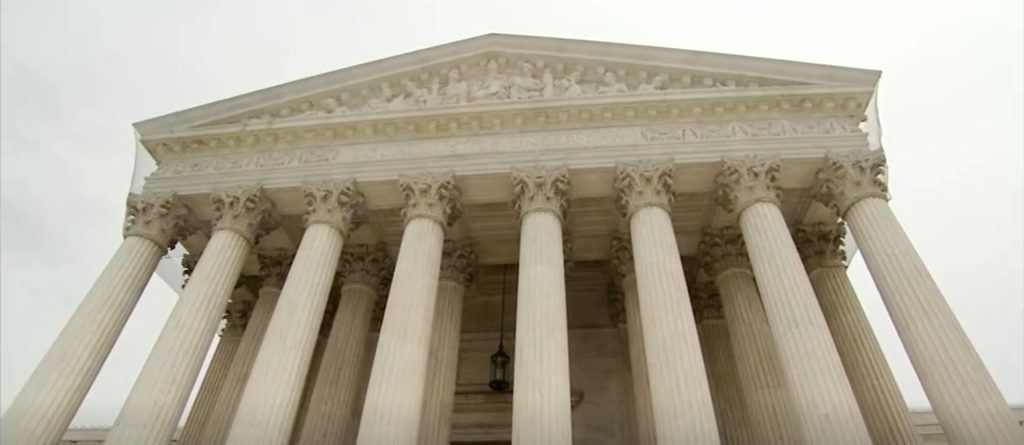
On February 7, 2025, Dellinger received an email saying that President Trump had terminated him effective immediately. Dellinger sued, arguing that Trump acted beyond his legal authority by firing him before the end of his term and without citing problems with his performance. Dellinger's suit cited §1211 of Title 5 of the United States Code, which states that the Special Counsel may be removed by the president "only for inefficiency, neglect of duty, or malfeasance in office". On February 10, a judge at the Federal District Court in Washington issued an order briefly reinstating Dellinger. On February 16, the Justice Department opened an emergency appeal with the Supreme Court seeking to lift the temporary order, arguing that it is an unacceptable intrusion on executive power, after the D.C. Circuit Court of Appeals refused to halt the order. The Supreme Court on June 29, 2026 issued a 6–3 decision in Trump v. Slaughter along the Court's ideological lines that the president had the power to remove independent agency heads at will, overturning the 90 year old precedent of Humphrey's Executor. This decision validated the termination of Dellinger, and changed 5 U.S.C. § 1211 to remove insulating protections passed by Congress to promote the political independence of the Office of Special Counsel. Dellinger, himself has now publicly advocated for the dissolution the office which he once lead, claiming it has lost the independence that is critical to its basic functions.[1]
List of acting and confirmed United States Special Counsels
Charles Baldis, (August 2026 – )
Jamieson Greer, Acting (April 1, 2025 – August 2026)
Doug Collins, Acting (March 5, 2025 – April 1, 2025)
Hampton Dellinger (March 6, 2024 – March 5, 2025)
Karen Gorman, Acting (October 23, 2023 – March 6, 2024)
Henry Kerner (October 30, 2017 – October 23, 2023) Confirmed by the 115th United States Senate (voice vote) on October 16, 2017. He graduated from Harvard Law School and spent 18 years working as a career prosecutor in California. In 2011, he joined the staff of the House Committee on Oversight and Government Reform, the chief investigative committee of the United States House of Representatives. Kerner was also the staff director under Ranking Member Sen. John McCain of the Senate Permanent Subcommittee on Investigations, the lead investigative committee of the Senate. He left in early 2016 and joined Cause of Action Institute as vice president for Investigations. The group is a nonpartisan oversight foundation committed to exposing waste, fraud and abuse in the federal government, which itself has worked with whistleblower and government groups throughout the country.
Tristan L. Leavitt, Acting (September – October 30, 2017)
Adam Miles, Acting (June – September 2017)
Carolyn N. Lerner (April 2011 – June 2017) – The United States Senate confirmed Carolyn Lerner as the 8th Special Counsel on April 14, 2011. Prior to her appointment as Special Counsel, Lerner was a partner in the Washington, D.C., civil rights and employment law firm Heller, Huron, Chertkof, Lerner, Simon & Salzman, where she represented individuals in discrimination and employment matters, as well as non-profit organizations on a wide variety of issues. She previously served as the federal court appointed monitor of the consent decree in Neal v. D.C. Department of Corrections, a sexual harassment and retaliation class action. Before becoming Special Counsel, Lerner taught mediation as an adjunct professor at George Washington University Law School, and was mediator for the United States District Court for the District of Columbia and the D.C. Office of Human Rights. When she was in private practice, Lerner was featured in Best Lawyers in America, with a specialty of civil rights law, and was one of Washingtonian magazine's top employment lawyers. Lerner earned her undergraduate degree from the honors program at the University of Michigan with high distinction and was selected to be a Truman Scholar. She received a diploma in general studies from the London School of Economics, and she earned her Juris Doctor degree from New York University (NYU) School of Law, where she was a Root-Tilden-Snow public interest scholar. After law school, she served for two years as a law clerk to the Honorable Julian Abele Cook, Jr., Chief U.S. District Court Judge for the Eastern District of Michigan.