



Thomas Alan Waits (born December 7, 1949) is an American singer, songwriter, composer and actor. His lyrics often focus on society's underbelly and are delivered in his trademark deep, gravelly voice. He began in the folk scene during the 1970s, but his music since the 1980s has reflected the influence of such diverse genres as rock, jazz, Delta blues, opera, vaudeville, cabaret, funk and experimental techniques verging on industrial music. Jim Fusilli calls him "A keen, sensitive and sympathetic chronicler of the adrift and downtrodden" who "creates three-dimensional characters who, even in their confusion and despair, are capable of insight and startling points of view." His unique voice was described by Daniel Durchholz as sounding "like it was soaked in a vat of bourbon, left hanging in the smokehouse for a few months, and then taken outside and run over with a car."
Tom Waits was born into a middle-class family in Pomona, California, who then moved to Whittier in 1949. His family lived on Kentucky Avenue (and briefly Pickering Avenue), a pivotal setting for his memories. Inspired by the work of Bob Dylan and the Beat Generation, he began singing on the San Diego folk circuit. He moved to Los Angeles in 1972, where he worked as a songwriter before signing a recording contract with Asylum Records. His debut album was Closing Time (1973), followed by The Heart of Saturday Night (1974) and Nighthawks at the Diner (1975). He toured the United States, Europe, and Japan, finding greater critical and commercial success with Small Change (1976), Blue Valentine (1978), and Heartattack and Vine (1980). In 1978, Waits entered the world of film, where he met Kathleen Brennan. He collaborated with Crystal Gayle on the soundtrack of Francis Ford Coppola's One From the Heart (1982) and made cameos in several Coppola films.
In 1980, Waits married Brennan, split from his manager and record label, and moved to New York City. With Brennan's encouragement and frequent collaboration, he pursued a more eclectic and experimental sound influenced by Harry Partch and Captain Beefheart, as heard on the loose trilogy Swordfishtrombones (1983), Rain Dogs (1985) and Franks Wild Years (1987). In 1990, he collaborated with theater director Robert Wilson on the musical The Black Rider, the songs for which were released on the album of the same name. Waits and Wilson reunited for the musicals Alice (1992) and Woyzeck (2000). In 2002, the songs from the two musicals were released on the albums Alice and Blood Money. Waits won Grammys for Best Alternative Music Album and Best Contemporary Folk Album for Bone Machine (1992) and Mule Variations (1999). Waits went on to release Real Gone (2004), the compilation Orphans: Brawlers, Bawlers & Bastards (2006), the live album Glitter and Doom Live (2009) and Bad as Me (2011). Waits has not toured since 2008 and has not issued a new album since 2011, though he continues to make isolated (and widely spaced) appearances guesting at concerts and special events. He also has published poetry and has continued his acting career, encompassing a range of offbeat character roles.
Waits has influenced many artists and gained an international cult following. His songs have been covered by Bruce Springsteen, Tori Amos, Rod Stewart, and the Eagles and he has written songs for Johnny Cash and Norah Jones among others. In 2011, he was inducted into the Rock and Roll Hall of Fame. Introducing him, Neil Young said "This next man is indescribable, and I'm here to describe him. He's sort of a performer, singer, actor, magician, spirit guide, changeling..." Accepting the honor, Waits mused: "They say that I have no hits and I'm difficult to work with. And they say that like it's a bad thing!"
Contents
Biography
Childhood and adolescence: 1949–1968
Thomas Alan Waits was born on December 7, 1949, in Pomona, California, in the Los Angeles County metropolitan area. He has one older and one younger sister. His father, Jesse Frank Waits, was a Texas native of Scots-Irish descent, and his mother, Alma Fern (née Johnson), hailed from Oregon and had Norwegian ancestry. Alma, a regular church-goer, managed the household. Jesse taught Spanish at a local school and was an alcoholic; Waits later related that his father was "a tough one, always an outsider." The family soon moved to nearby Whittier where Tom spent most of his childhood years. Waits once recounted from the stage in 1976:
I grew up on a street called Kentucky Avenue in Whittier, California. My dad was teaching night school at Montebello. I had a little tree fort and everything. I had my first cigarette when I was about seven years old. It was such a thrill. I used to pick 'em up right out of the gutter after it was raining. My dad smoked Kents. Now, I never liked Kents - I tried to get him to change brands. I used to repair everybody's bicycles in the neighborhood. I was the little neighborhood mechanic. There was a guy called Joey Navinski who played the trombone, and a guy called Dickie Faulkner whose nose was always running. And there was a woman called Mrs. Storm. She lived with her sister. She used to sit in her kitchen with her window open and a twelve-gauge shotgun [sticking] out of it ... so we took the long way around. (Live at the Apollo Theatre, London, UK. March 23, 1976.)
In a 1979 interview, Waits added in a more humorous vein:
I used to walk down Kentucky Avenue collecting cigarette butts. And I finally got me a paper route. I used to get up at 1 o' clock in the morning so I could deliver my papers and still have time to break the law ... He recalled having a "very middle-class" upbringing and "a pretty normal childhood". He attended Jordan Elementary School, where he was bullied. There, he learned to play the bugle and guitar. His father taught him to play the ukulele.
During the summers, he visited maternal relatives in Gridley and Marysville, both in California. He later recalled that it was an uncle's raspy, gravelly timbre that inspired his own singing voice. In 1959, his parents separated and his father moved away from the family home, a traumatic experience for the 10-year-old Waits. Alma took her children and relocated to Chula Vista, a middle-class suburb of San Diego. Jesse visited the family there, taking his children on trips to Tijuana. In nearby Southeast San Diego, Waits attended O'Farrell Community School, where he fronted a school band, the Systems, which he described as "white kids trying to get that Motown sound." He developed a love of R&B and soul singers like Ray Charles and Wilson Pickett, as well as country music and Roy Orbison. Bob Dylan later became an inspiration; Waits placed transcriptions of Dylan's lyrics on his bedroom walls.
Early musical career: 1969–1976
In 1969, he was hired as an occasional doorman for the Heritage coffeehouse, which held regular performances from folk musicians. He began to sing at the Heritage; his set initially consisted largely of covers of Dylan and Red Sovine's "Phantom 309".
In time, he performed his own material as well, often parodies of country songs or bittersweet ballads influenced by his relationships; these included early songs "Ol' 55" and "I Hope That I Don't Fall in Love With You". As his reputation grew, he played at other San Diego venues, supporting acts like Tim Buckley, Sonny Terry, Brownie McGhee, and his friend Jack Tempchin.
Aware that San Diego offered little opportunity for career progression, Waits began traveling into Los Angeles to play at the Troubadour in West Hollywood.
It was there, in the autumn of 1971, that Waits came to the attention of Herb Cohen, who signed him to publishing and recording contracts. The recordings that were produced under that recording agreement were eventually released in the early 1990s as The Early Years and The Early Years, Volume Two. In early 1972, after quitting his job at Napoleone's to concentrate on his songwriting career, Waits moved to an apartment in Silver Lake, Los Angeles, a poor neighborhood known for its Hispanic and bohemian communities.
He continued performing at the Troubadour and there met David Geffen, who gave Waits a recording contract with his Asylum Records. Jerry Yester was chosen to produce his first album, with the recording sessions taking place in Hollywood's Sunset Sound studios. The album, Closing Time, was released in March 1973 although it attracted little attention and did not sell well. Biographer Barney Hoskyns noted that Closing Time was "broadly in step with the singer-songwriter school of the early 1970s"; Waits had wanted to create a piano-led jazz album although Yester had pushed its sound in a more folk-oriented direction. Buckley covered "Martha" on his album Sefronia later that year. An Eagles recording of "Ol' 55" on their album On the Border brought Waits further money and recognition, although he regarded their version as "a little antiseptic".
To promote his debut, Waits and a three-piece band embarked on a U.S. tour, where he was the supporting act for more established artists. He supported Tom Rush at Washington D.C.'s The Cellar Door, Danny O'Keefe in Cambridge, Massachusetts's Club Passim, Charlie Rich at New York City's Max's Kansas City, Martha Reeves and the Vandellas in East Lansing, Michigan, and John P. Hammond in San Francisco.
Small Change and Foreign Affairs: 1976–1978
In July 1976, Waits recorded Small Change, again produced by Howe. He recalled it as a seminal episode in his development as a songwriter, the point when he became "completely confident in the craft". The album was critically well received and was his first release to break into the Billboard Top 100 Album List, peaking at 89. Per Bowman, Small Change "made it clear that Waits had evolved into a master storyteller, reflecting the influence of crime-noir writers such as Dashiell Hammett and John D. MacDonald. Arguably his first masterpiece, the album featured exquisite piano ballads such as "Tom Traubert's Blues" and "The Piano Has Been Drinking (Not Me)," the word-jazz of "Pasties and a G-String," and the tour-de-force tenor-sax-accompanied hucksterism of "Step Right Up". He received growing press attention, being profiled in Newsweek, Time, Vogue, and The New Yorker; he had begun to accrue a cult following. He went on tour to promote the new album, backed by the Nocturnal Emissions (Frank Vicari, Chip White and Fitz Jenkins). In reference to "Pasties and a G-String", a female stripper joined him onstage. He began 1977 by touring Japan for the first time.
Back in Los Angeles, he encountered various problems. One female fan, recently escaped from a mental health institution in Illinois, began stalking him and lurking outside his Tropicana apartment. In May 1977, Waits and close friend Chuck E. Weiss were arrested for fighting with police officers in a coffee shop. They were charged with two counts of disturbing the peace but were acquitted after the defense produced eight witnesses who refuted the police officers' account of the incident. In response, Waits sued the Los Angeles Police Department and five years later was awarded $7,500 in damages.
In July and August 1977, he recorded his fourth studio album, Foreign Affairs; Bob Alcivar had been employed as its arranger. The album included "I Never Talk to Strangers", a duet with Midler, with whom he was still in an intermittent relationship. She appeared with him at the Troubadour to sing the song; the next day he repaid the favor by performing at a gay rights benefit at the Hollywood Bowl that Midler was involved with. Foreign Affairs was not as well received by critics as its predecessor, and unlike Small Change failed to make the Billboard Top 100 album chart. That year, he began a relationship with the singer-songwriter Rickie Lee Jones; their work and styles influenced each other. In October 1977, he returned to touring with the Nocturnal Emissions; it was on this tour that he first began using props onstage, in this case a street lamp. Again, he found the tour exhausting. In March 1978, he embarked on his second tour of Japan.
Blue Valentine and Heartattack and Vine: 1978–1980
In July 1978, Waits began the recording sessions for Blue Valentine. Part way through the sessions, he replaced his musicians to create a less jazz-oriented sound; for the album, he switched from a piano to an electric guitar as his main instrument. For the album's back cover, Waits used a picture of himself and Jones leaning against his car, a 1964 Ford Thunderbird, taken by Elliot Gilbert. Per Bowman, "Waits gradually began writing about junkies and prostitutes instead of skid-row drunks. In songs such as 'Christmas Card From a Hooker in Minneapolis' and 'Red Shoes by the Drugstore,' his writing became ever more vivid, compact, and complex." From the album, Waits's first single, a cover of Leonard Bernstein and Stephen Sondheim's "Somewhere" from West Side Story, was released, but failed to chart. For his Blue Valentine tour, Waits assembled a new band; he also had a gas station built as a set for his performances. His support act on the tour was Leon Redbone. In April, he embarked on a European tour, there making television appearances and press interviews; in Austria he was the subject of a short documentary. From there, he flew to Australia for his first tour of that country before returning to Los Angeles in May.
Waits was dissatisfied with Elektra-Asylum, who he felt had lost interest in him as an artist in favor of their more commercially successful acts like the Eagles, Linda Ronstadt, Carly Simon and Queen. After a phone call with their mutual friend Chuck E. Weiss, Waits told Jones, "Chuck E.'s in love". This was the inspiration for her song "Chuck E.'s in Love". Jones's musical career was taking off; after an appearance on Saturday Night Live, "Chuck E.'s In Love" reached No. 4 on the singles chart, straining her relationship with Waits. Their relationship was further damaged by Jones's heroin addiction. Waits joined Jones for the first leg of her European tour, but then ended his relationship with her. Her grief at the breakup was channeled into the 1981 album Pirates. In September, Waits moved to Crenshaw Boulevard to be closer to his father, before relocating to New York City. He initially lived in the Chelsea Hotel before renting an apartment on West 26th Street. On arriving in the city, he told a reporter that he "just needed a new urban landscape. I've always wanted to live here. It's a good working atmosphere for me". He considered writing a Broadway musical based on Thornton Wilder's Our Town. A rotoscoped Waits performed "The One That Got Away" in the music video Tom Waits For No One (1979).
Francis Ford Coppola asked Waits to return to Los Angeles to write a soundtrack for his forthcoming film, One from the Heart. Waits was excited but conflicted by the prospect; Coppola wanted him to create music akin to his early work, a genre that he was trying to leave behind, and thus he characterized the project as an artistic "step backwards". He nevertheless returned to Los Angeles to work on the soundtrack in a room set aside for the purpose in Coppola's Hollywood studios. This style of working was new to Waits; he later recalled that he was "so insecure when I started ... I was sweating buckets". Waits was nominated for the 1982 Academy Award for Original Music Score.
Swordfishtrombones and New York City: 1980–1984
Returning to Los Angeles, Waits and Brennan moved into a Union Avenue apartment. Hoskyns noted that with Brennan, "Waits had found the stabilizing, nurturing companion he'd always wanted", and that she brought him "a sense of emotional security he had never known" before. At the same time, many of his old friends felt cut off after his marriage. Waits said of Brennan: "She rescued me. Maybe I rescued her too; that's often how it works. Upshot is that we both got into the same leaky boat. Maybe the weight drags it down, because now you've two people sitting in it. Sorry, baby! But on the other hand you've also got two peoples' imagination to patch it up again. Everybody knows she's the brains behind Pa, as Dylan might have said. I'm just the figurehead. She's the one who's steering the ship."
Recording of Waits's One from the Heart soundtrack began in October 1980 and continued until September 1981. A number of the tracks were recorded as duets with Crystal Gayle; Waits had initially planned to duet with Midler but she proved unavailable. The film was released in 1982 to largely poor reviews. Waits makes a small cameo as a trumpet player in a crowd scene. Waits's soundtrack album was released by Columbia Records in 1982. Waits had misgivings about the album, thinking it was over-produced. Humphries thought that working with Coppola was an important move in Waits's career: it "led directly to Waits moving from cult (i.e. largely unknown) artiste to center-stage."
Newly married and with his Elektra-Asylum contract completed, Waits decided that it was time to artistically reinvent himself. He wanted to move away from using Howe as his producer, although the two parted on good terms. With Brennan's help, he began the process of firing Cohen as his manager, with Waits and Brennan taking on managerial responsibilities themselves. He came to believe that Cohen had been swindling him out of much of his earnings, later relating that "I thought I was a millionaire and it turned out I had, like, twenty bucks." Waits credited Brennan with introducing him to much new music, most notably Captain Beefheart, a key influence on the direction in which he wanted to take his work. He later said that "once you've heard Beefheart it's hard to wash him out of your clothes. It stains, like coffee or blood." She also introduced him to Harry Partch, a composer who created his own instruments out of everyday materials. Waits began to use images rather than moods or characters as the basis for his songs.
Rain Dogs and Franks Wild Years: 1985–1988
Starting in the mid-'80s, Kurt Weill became an important influence on Waits's work. Bowman writes that "Waits had become interested in Weill's late-1920s and 1930s musical-theater works... Weill's slightly off-kilter, stylized cabaret approach to melody, rhythm, orchestration, and musical narrative permeated much of Waits' later work." Waits did the soundtrack for the documentary Streetwise, about homeless youth in Seattle; it was another influence on the subjects of his next album. Rain Dogs was recorded at the RCA Studios in mid 1985. Musically, Waits called the album "kind of an interaction between Appalachia and Nigeria". Keith Richards played on several tracks; Richards later acknowledged Waits's encouragement of his debut solo album, Talk is Cheap. Rain Dogs also marked Marc Ribot's debut as a session guitarist; he played on many later Waits albums. Jean-Baptiste Mondino directed a music video of "Downtown Train" featuring boxer Jake LaMotta. The song was subsequently covered by Patty Smyth in 1987, and later by Rod Stewart, where it reached the Top 5 in 1990. In 1985, Rolling Stone named Waits its "Songwriter of the Year". Arion Berger wrote that "With Rain Dogs, he dropped his bedraggled lounge-piano act and fused outsider influences–socialist decadence by way of Kurt Weill, pre-rock integrity from old dirty blues, the elegiac melancholy of New Orleans funeral brass–into a singularly idiosyncratic American style... The music is bony and menacingly beautiful, the desultory electric-guitar solo as cold as the rattle of marimbas in 'Clap Hands'. The evocative, elliptical rhymes describe scenes and characters with poetic precision but use atmosphere, not narrative, to connect them." NME named Rain Dogs the best album of the year.
In September 1985, his son Casey was born. Waits assembled a band and went on tour, kicking it off in Scotland in October before proceeding around Europe and then the U.S. He changed the setlist for each performance; most of the songs chosen were from his two Island albums. Returning to the U.S., he traveled to New Orleans to act in Jarmusch's Down by Law. Jarmusch wrote Down by Law with Waits and Lurie in mind. The film opened and closed with songs from Rain Dogs. Jarmusch noted that "Tom and I have a kindred aesthetic. An interest in unambitious people, marginal people." The pair developed a friendship; Waits called Jarmusch "Dr. Sullen", while Jarmusch called Waits "The Prince of Melancholy".
Waits had devised a musical, Franks Wild Years, loosely based on "Frank's Wild Years" from Swordfishtrombones. In late 1985, he reached an agreement that the play would be performed by the Steppenwolf Theatre Company in Chicago's Briar Street Theatre Waits starred as Frank, whom he described as Quite a guy. Grew up in a bird's eye frozen, oven-ready, rural American town where Bing, Bob, Dean, Wayne & Jerry are considered major constellations. Frank, mistakenly, thinks he can stuff himself into their shorts and present himself to an adoring world. He is a combination of Will Rogers and Mark Twain, playing accordion–but without the wisdom they possessed. He has a poet's heart and a boy's sense of wonder with the world. A legend in Rainville since he burned his house down and took off for the Big Time. Reviews were generally positive. He had initially considered a run in New York City but decided against it. The songs from the show were recorded for his ninth studio album, Franks Wild Years, and released by Island Records in 1987. NME ranked Franks Wild Years fifth on its list of albums of the year. The album was Waits's first collaboration with David Hidalgo, who played accordion on "Cold, Cold Ground" and "Train Song". After its release, Waits toured North America and Europe, his last full tour for two decades. Two of the performances were the basis for Chris Blum's concert film Big Time (1988).
The Black Rider, Bone Machine, and Alice: 1989–1998
In 1989, Waits began planning a collaboration with Robert Wilson, a theater director he had known throughout the 1980s. Their project was the "cowboy opera" The Black Rider. It was based on a German folk tale, the Freischütz, which had inspired Carl Maria von Weber's opera Der Freischütz (1821). In 2004, Waits related that "Wilson is my teacher. There's nobody that's affected me that much as an artist". Waits wrote the music and, at the suggestion of Allen Ginsberg, Waits and Wilson approached William S. Burroughs to pen the lyrics. They flew to Kansas to meet with Burroughs, who agreed to join the project. Waits traveled to Hamburg, Germany in May 1989 to work on the project, and was later joined there by Burroughs. The Black Rider debuted in Hamburg's Thalia Theater in March 1990. On completing its run at the Thalia, the play went on an international tour, with a second run of performances occurring in the mid-2000s.
In June 1989, Waits traveled to London to play a Punch and Judy puppeteer in Ann Guedes's film Bearskin: An Urban Fairytale. He proceeded to Ireland, where he was joined by Brennan and spent time with her family. In December 1989, he began a stint as Curly, a mobster's son, at the Los Angeles Theatre Center production of Thomas Babe's play Demon Wine. Over the next four years, he made seven film appearances. He nevertheless repeatedly told press that he did not see himself as an actor, but only as someone who did some acting. He made a brief appearance as a plainclothes cop in The Two Jakes (1990) and played a disabled war veteran in Terry Gilliam's The Fisher King (1991). He had a cameo in Steve Rash's Queens Logic (1991) and played a pilot-for-hire in Héctor Babenco's At Play in the Fields of the Lord (1991). He appeared as himself fishing with John Lurie on Fishing with John. He was Renfield in Coppola's Bram Stoker's Dracula (1992). Waits starred as Earl Piggot, an alcoholic limousine driver, in Robert Altman's Short Cuts (1993). Hoskyns said that this "may be the best performance Waits ever gave as an actor."
In 1991, Waits and his family moved to the outskirts of Sonoma. Waits's family later moved to a secluded house near Valley Ford after a bypass road was built near to their first Sonoma County house. Also in 1991, 13 of Waits's 1971 pre-Asylum Records recordings were released for the first time on the first volume of Tom Waits: The Early Years. Waits was angered at this, describing many of his early demos as "baby pictures" that he would not want released. A second volume with 13 more recordings from 1971 was released in 1993. In April 1992, Waits released the soundtrack album to Jarmusch's Night on Earth. Largely instrumental, it had been recorded at the Prairie Sun studio in Cotati. In 1992, Waits quit drinking alcohol and joined Alcoholics Anonymous. In the early 1990s he took part in several charitable causes. In 1990 he contributed a song to the HIV/AIDS benefit album Red Hot + Blue and later appeared at a Wiltern Theater fundraising show for the victims of the 1992 Los Angeles riots.
Mule Variations and Woyzeck: 1999–2003
After his contract with Island expired, Waits decided not to try to renew it, particularly as Blackwell had resigned from the company. He signed to a smaller record label, Anti-, recently launched as an offshoot of the punk-label Epitaph Records. He described the company as "a friendly place". The president of Anti-, Andy Kaulkin, said the label was "blown away that Tom would even consider us. We are huge fans." Waits himself praised the label: "Epitaph is a label run by and for artists and musicians, where it feels much more like a partnership than a plantation... We shook on the deal over a coffee in a truck stop. I know it's going to be an adventure."
In March 1999, Anti- released Mule Variations. Waits had been recording the tracks at Prairie Sun since June 1998. The tracks often dealt with themes involving rural life in the United States and were influenced by the early blues recordings made by Alan Lomax; Waits coined the term "surrural" ("surreal" and "rural") to describe the album's content. Mule Variations reached No. 30 on the U.S. Billboard 200, the highest showing of a Waits album. The album was well received, being named "Album of the Year" by Mojo. It won the Grammy Award for Best Contemporary Folk Album. On the categorization of the album as folk music, Waits said: "That's not a bad thing to be called if you've got to be in some kind of category."
Also in March 1999, Waits gave his first live show in three years at Paramount Theater, Austin, Texas as part of the South by Southwest festival. He then appeared in an episode of VH1 Storytellers. In the later part of the year he embarked on the Mule Variations tour, primarily in the U.S. but also featuring dates in Berlin. In October, he performed at Neil Young's annual Bridge School benefit concert. In 1999, he appeared in Kinka Usher's comic book spoof Mystery Men as Dr. A. Heller, an eccentric inventor living in an abandoned amusement park.
In 2000, Waits began writing songs for Wilson's adaptation of Georg Büchner's Woyzeck, which had earlier inspired Alban Berg's opera Wozzeck (1925). It was scheduled to start at the Betty Nansen Theater in Copenhagen in November 2000. He initially worked on the songs at home before traveling to Copenhagen for rehearsals in October. Waits said that he liked the play because it was "a proletariat story ... about a poor soldier who is manipulated by the government". He decided to then record the songs he had written for both Alice and Woyzeck, placing them on separate albums. For these recordings, he brought in a range of jazz and avant-garde musicians from San Francisco. The two albums, Alice and Blood Money, were released simultaneously in May 2002. Alice entered the U.S. album chart at No. 32 and Blood Money at No. 33, his highest charting positions at that time. Waits described Alice as being "more metaphysical or something, maybe more water, more feminine", while Blood Money was "more earthbound, more carnival, more the slaving meat-wheel that we're all on". Of the two, Alice was better received by critics.
Real Gone and Orphans: 2004–2011
In 2004, Waits released his fifteenth studio album, Real Gone. He had recorded it in an abandoned schoolhouse in Locke. Hoskyns called the album Waits' "roughest, most unkempt music to date". It incorporated Waits beatboxing, a technique he had picked up from his growing interest in hip-hop. Humphries characterized it as "the most overtly political album of Waits' career". It featured three political songs expressing Waits' anger at the presidency of George W. Bush and the Iraq War. He said: "I'm not a politician. I keep my mouth shut because I don't want to put my foot in it. But at a certain point, saying absolutely nothing is a political statement of its own." Real Gone received largely positive reviews. It made the Billboard Top 30 as well as the Top 10 in several European album charts, also earning him a nomination for Best International Male Solo Artist at the 2005 Brit Awards. In October 2004, he launched a tour in Vancouver before heading to Europe, where his shows were sell-outs: his only London gig saw 78,000 applications for around 3,700 available tickets. Per Bowman, "Much of Real Gone was built around oral-percussion home recordings that Waits made in his bathroom, using his mouth as a human beat-box. A superb example is the bed track underpinning the hellacious groove of 'Metropolitan Glide' that Waits aptly described as 'cubist funk.' In stark contrast, the album's closing track, 'Day After Tomorrow,' returned Waits to his singer-songwriter roots, and features a beautiful melody that sounds eerily similar to Dylan's early acoustic work."
After several years without film appearances, he played a gun-toting Seventh-day Adventist in Tony Scott's Domino (2005). Later in 2005, he traveled to Italy to appear in Benigni's The Tiger and the Snow. Next Waits was in Wristcutters: A Love Story (2007) performing as an angel posing as a tramp. In the summer of 2006, he embarked on his "Orphans" tour of southern and midwest states. His son Casey played in the band accompanying him on tour. In 2006, Waits issued Orphans: Brawlers, Bawlers & Bastards, a 54-song three-disc box set of rarities, unreleased tracks and new compositions; he said that the music is "songs that fell behind the stove while making dinner." The first disc, Brawlers, consists of raucous rock and blues-based numbers; the second, Bawlers, of melancholic country songs and ballads; the third, Bastards, of stories, spoken word pieces and other works not so easily categorized. Orphans made the top ten in several European charts. In 2006, Waits was a guest on The Daily Show with Jon Stewart, where he played "Day After Tomorrow".
In January 2008, Waits performed at a benefit for Bet Tzedek Legal Services—The House of Justice, a nonprofit poverty law center, in Los Angeles.
Bad as Me and later work: 2011–present
In 2010, Waits was reported to be working on a new stage musical with director and long-time collaborator Robert Wilson and playwright Martin McDonagh.
In early 2011, Waits completed a set of 23 poems, Seeds on Hard Ground, which were inspired by Michael O'Brien's portraits of the homeless in his book, Hard Ground. O'Brien's book included the poems alongside the portraits. In anticipation of the book release, Waits and Anti- printed limited edition chapbooks of the poems to raise money for Redwood Empire Food Bank, a homeless referral and family support service in Sonoma County, California. As of January 26, 2011, four editions, each limited to 1,000 copies, sold out, raising $90,000 for the food bank. On February 24, 2011, it was announced via Waits's official website that he had begun work on his next studio album. Waits said through his website that on August 23 he would "set the record straight" in regards to rumors of a new release. On August 23, the title of the new album was revealed to be Bad as Me, and the lead single and title track started being offered via Amazon.com and other sites.
In March 2011, Waits was inducted into the Rock and Roll Hall of Fame by Neil Young.
Since 2012, though not having made any formal announcement of retreating from a musical career, Waits has focused much of his artistic energy on poetry and acting. He has not toured as a musician or performed a full-length concert since 2008, and issued no new music after 2011, until he released a single, "Boots on the Ground" in 2026. However, Waits still performs music occasionally, as there have been a very few widely spaced appearances by Waits as a musical performer at various events in the 2010s and 2020s, wherein he typically performs between one and three songs.
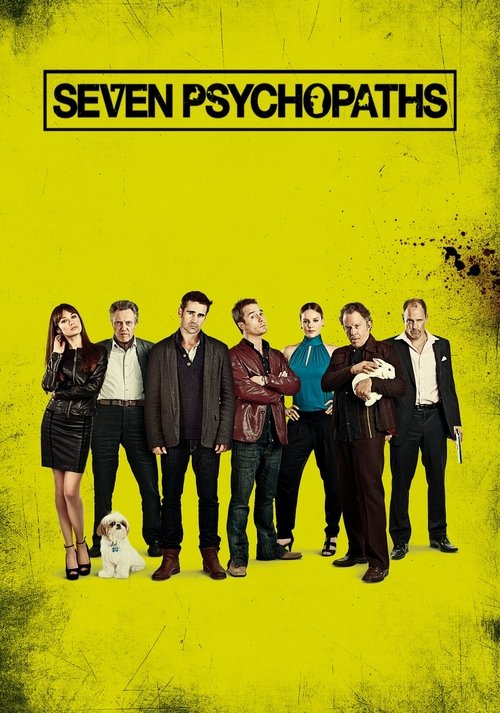
In 2012, Waits had a supporting role in McDonagh's crime comedy Seven Psychopaths as a retired serial killer. In 2013, he lent his voice to The Simpsons episode "Homer Goes to Prep School" as a survivalist. On May 5, 2013, he joined the Rolling Stones on stage at the Oracle Arena in Oakland, California, to duet with Mick Jagger on Willie Dixon's "Little Red Rooster". On October 27, 2013, Waits performed at the 27th annual Bridge School Benefit concert in Mountain View California; Rolling Stone called his performance a "triumph".
Musical style
Tom Waits has taken influence from a wide variety of different artists and styles from across time. In his early career, he took influence from Bob Dylan's folk music and the pre-war composers Irving Berlin, Cole Porter, and Hoagy Carmichael. Frank Sinatra and the 1940s and 1950s word-jazz and poetry of Beat and Beat-influenced writers such as Jack Kerouac, Lord Buckley and Charles Bukowski were a big influence on his albums in the 1970s. By 1982, his musical style shifted away from a lot of these earlier influences and took inspiration from a wider array of sources. Influences included the Rolling Stones, avant-garde composer Harry Partch, Howlin' Wolf and Captain Beefheart's late-1960s experimental rock.
In addition to Kerouac and Bukowski, literary influences include Nelson Algren, John Rechy and Hubert Selby Jr. Bowman notes the influence of crime writers like Dashiell Hammett and John D. Macdonald. Waits says that "for a songwriter, Dylan is as essential as a hammer and nails and saw are to a carpenter." Musical influences include Randy Newman and Dr. John. He has praised Merle Haggard: "Want to learn how to write songs? Listen to Merle Haggard." He is an opera lover; he recalls hearing Puccini's "Nessun dorma" "in the kitchen at Coppola's with Raul Julia one night, and it changed my life, that particular Aria. I had never heard it. He asked me if I had ever heard it, and I said no, and he was like, as if I said I've never had spaghetti and meatballs - 'Oh My God, Oh My God!'-and he grabbed me and he brought me into the jukebox (there was a jukebox in the kitchen) and he put that on and he just kind of left me there. It was like giving a cigar to a five-year old." A jazz influence is Thelonious Monk: "He almost sounded like a kid taking piano lessons. I could relate to that when I first started playing the piano, because he was decomposing the music while he was playing it." One of Waits's own favorite descriptions of his vocal style was "Louis Armstrong and Ethel Merman meeting in Hell."
He is known for his eclectic use of instruments, some of his own devising. On Swordfishtrombones, his orchestration included talking drums, bagpipes, banjo, bass marimba and glass harmonica; on Rain Dogs, accordion and harmonium; on Franks Wild Years, glockenspiel, Mellotron, Farfisa and Optigan; on Bone Machine and Mule Variations, the Chamberlin; on The Black Rider, the singing saw; on Alice, the Stroh violin; on Blood Money, a 57-whistle pneumatic calliope and an Indonesian seedpod.
Waits credits his wife with inspiration: "She's an opera buff and bug collector. And she's done a lot of things. And she has dreams like Hieronymus Bosch. She writes more from her dreams, I wrote more from the world, or from the newspaper ... And somehow it all works together." He credits her with helping him unify his eclectic musical interests: "it's really my wife that started helping me see that you can find the place where Lead Belly and Schoenberg overlap."
Personal life
During the 1970s, Waits had a brief relationship with comedian Elayne Boosler, an intermittent relationship with Bette Midler, and a relationship with Rickie Lee Jones.
In 1980, Waits married frequent collaborator Kathleen Brennan. They live in Sonoma County, California, and have three children: Kellesimone Wylder Waits (born 1983), Casey Waits (born 1985), and Sullivan Blake Waits (born 1993). After he married and had children, Waits became increasingly reclusive. Safeguarding the privacy of his family life became very important to him.
During interviews, he has deflected questions about his personal life and refused to sanction any biography. When Barney Hoskyns was researching his unauthorized 2009 biography, Lowside of the Road: A Life of Tom Waits, Waits and his wife asked people not to talk to him. Hoskyns believed that it was Brennan who was responsible for the "wall of inaccessibility" surrounding Waits. When asked about his religious beliefs, he said, "With the God stuff I don't know. I don't know what's out there any more than anyone else."
Stage persona
Waits has been determined to keep a distance between his public persona and his personal life. According to Hoskyns, Waits hides behind his persona, noting that "Tom Waits is as much of a character created for his fans as it is a real man." In Hoskyns's view, Waits's self-image is in part "a self-protective device, a screen to deflect attention." A few music journalists have gone so far as to suggest that Waits is a "poseur". Hoskyns regarded Waits's "persona of the skid-row boho/hobo, a young man out of time and place" as an "ongoing experiment in performance art." He goes on to say that Waits has adopted a "self-appointed role as the bard of the streets." Mick Brown, a music journalist from Sounds who interviewed Waits in the mid-1970s, noted that "he had immersed himself in this character to the point where it wasn't an act and had become an identity." Louie Lista, a friend of Waits' during the 1970s, said that the singer's general attitude was, "I'm an outsider, but I'll revel in being an outsider." Like Bob Dylan and Neil Young, Waits is known for cutting contact with figures he worked with in his past.
Another friend from that time, Troubadour-manager Robert Marchese, related that Waits cultivated "the whole mystique of this really funky dude and all that Charles Bukowski crap" to give "his impression of how funky poor folk really are," whereas in reality Waits was "basically a middle-class, San Diego mom-and-pop-schoolteacher kid." Humphries thought that there was a "conservative element" to Waits' persona, stating that behind his public image, "Waits has always been more of a white-picket-fence kind of guy than you might imagine."
Jarmusch described Waits as "a very contradictory character," stating that he is "potentially violent if he thinks someone is screwing with him, but he's gentle and kind too." Herbert Hardesty, who worked with Waits on Blue Valentine, called him "a very pleasant human being, a very nice person." Humphries referred to him as "an essentially reticent man ... reflective and surprisingly shy." Hoskyns said that Waits is "unequivocally—some would say almost gruffly—heterosexual."
Hoskyns suggested that Waits has had an "on-off affair with alcohol, never quite able to shake it off." During the 1970s, he was known as a heavy drinker and a smoker but avoided any drugs harder than cocaine. He told one interviewer, "I discovered alcohol at an early age, and that guided me a lot." Humphries suggested that Waits's use of alcohol as opposed to illicit drugs marked him out as being different from many of his contemporaries on the 1970s U.S. music scene.
Collaborations
Over the years, Waits has collaborated with various artists he admires. He toured with the saxophonist Teddy Edwards and played on his album Mississippi Lad (1991). Bruce Springsteen performed "Jersey Girl" with Waits on August 24, 1981, and included it on his retrospective "Live/1975–85". In 1987, he joined Springsteen, Elvis Costello, k.d. lang, and others in a tribute to Roy Orbison at Los Angeles's Ambassador Hotel, filmed as Roy Orbison and Friends: A Black and White Night. Waits and Brennan wrote "Strange Weather" for Marianne Faithfull, which she sang on her album Strange Weather in 1987. Keith Richards played on Rain Dogs, Bone Machine and Bad as Me, and Waits and Richards recorded "Shenandoah" for Son of Rogues Gallery: Pirate Ballads, Sea Songs & Chanteys (2013). Richards said of Waits: "Tom's music is so American. Probably more folk-American than anything, but somehow modern. He's a weird mixture of stuff; a great bunch of guys!" Waits wrote a poem, "Burnt Toast to Keith", for Richards's 80th birthday. Waits covered Kurt Weill's "What Keeps Mankind Alive?" from The Threepenny Opera for Hal Willner's Weill tribute album Lost in the Stars (1985) and "Heigh Ho" for his Disney-themed Stay Awake (1988). In 1991, he lent his voice to "Tommy the Cat" by Primus, and they appeared on Bone Machine and Mule Variations. Waits and Primus performed Jack Kerouac's song "On the Road" on Jack Kerouac Reads On the Road (1999). Gavin Bryars, and English composer, visited Waits in 1993 and Waits added vocals to a re-release of Bryars' Jesus' Blood Never Failed Me Yet, which was nominated for the Mercury Music Award. He sang with Ramblin' Jack Elliott on "Louise (Tell It To Me)" on his album Friends of Mine (1998). In 1998, Waits produced and funded Chuck E. Weiss's album Extremely Cool as a favor to his old friend. He produced John P. Hammond's Wicked Grin (2001) which consisted largely of covers of Waits songs, some written for the project. He covered "Return of Jackie & Judy" for We're a Happy Family: A Tribute to Ramones (2003). He appeared on Los Lobos's The Ride (2004), Eels's Blinking Lights and Other Revelations (2005) and Sparklehorse's Dreamt for Light Years in the Belly of a Mountain (2006). Ken Nordine, whose "word jazz" influenced Waits, performed "Circus" for a video with animation by Joe Coleman. Waits was one of many guests on Dan Hicks's Beatin' the Heat (2000).
Reception and legacy
Bowman writes that "At the dawn of the second decade of the 21st century, Waits's influence can be seen in the work of many of the most forward-thinking contemporary artists, including Beck, PJ Harvey, and Radiohead's Thom Yorke." Other musicians who have expressed admiration for Waits's work include Elvis Costello, Bruce Springsteen, Nanci Griffith, Joe Strummer of the Clash, Michael Stipe of R.E.M., Frank Black of Pixies, and James Hetfield of Metallica. Bob Dylan, a major influence on the young Waits, called Waits one of his "secret heroes". Humphries said that he is "one of America's finest post-Dylan singer-songwriters" and, along with Edward Hopper, "one of the two great depicters of American isolation." Hoskyns called him "as important an American artist as anyone the twentieth century has produced." He notes that by the end of the twentieth century, "Waits was an iconic alternative figure, not just to the fans who'd grown up with him but to subsequent generations of music geeks", coming to be "universally acknowledged as an elder statesman of 'alternative' rock." Karen Schoemer of Newsweek said that "to the postboomer generation, he's more Dylan than Dylan. [His] melting-pot approach to Americana, his brilliant narratives and his hardiness against commercial trends have made him the ultimate icon for the alternative-minded." Steve Vai said: "Tom Waits is my favorite artist now. I completely resonate deeply with his music, his voice and his lyrics; I buy everything he ever does. He's one of those guys who are totally at one with the creative element with no excuses or concerns about what's going on around him–totally uncompromising." When asked which song she wished she had written, Florence Welch of Florence and the Machine said: "'Green Grass' by Tom Waits... Really, anything by Tom Waits. I wish I was Tom Waits. His songs are so visceral and bloody. I just love his use of imagery." Bones Howe says: "I do a lot of seminars. Occasionally I'll do something for songwriters. They all say the same thing to me. 'All the great lyrics are done.' And I say, 'I'm going to give you a lyric that you never heard before'", the following from "Tom Traubert's Blues": "A battered old suitcase to a hotel someplace / And a wound that will never heal." Howe calls this "the work of an extremely talented lyricist, poet, whatever you want to say. That is brilliant, brilliant work. And he never mentions the person, but you see the person."
Various artists have covered his songs. In 1973, Tim Buckley covered "Martha", just like Meat Loaf did in 1995. The Eagles covered "Ol' 55" and Dion covered "Heart of Saturday Night" and "San Diego Serenade". Rod Stewart had success with covers of "Downtown Train" and "Tom Traubert's Blues"; Bob Seger covered "Blind Love", "New Coat of Paint", and "Downtown Train". Paul Young covered "Soldier's Things" on The Secret of Association (1985) and the Ramones covered "I Don't Wanna Grow Up" on their final album, ¡Adios Amigos! (1995). Johnny Cash sang "Down There by the Train", which Waits wrote for him, on American Recordings (1994), calling Waits "a very special writer, my kind of writer." Tori Amos covered "Time" on Strange Little Girls (2001); she performed it on the Late Show With David Letterman, the first musical performance on the show after 9/11. Willie Nelson covered "Picture in a Frame" on It Always Will Be (2004). Holly Cole released an album of Waits covers, Temptation (1995), as did Scarlett Johansson with Anywhere I Lay My Head (2008). Neko Case performed "Christmas Card from a Hooker in Minneapolis" on the tribute album New Coat of Paint (2000). Norah Jones included a song Waits wrote for her, "Long Way Home", on her album Feels Like Home (2004). Joan Baez covered his songs on Day After Tomorrow (2008) and Whistle Down the Wind (2018). Rosanne Cash, Aimee Mann, Phoebe Bridgers and others contributed to Come On Up to the House: Women Sing Waits (2019).