



Timothy Walter Burton (born August 25, 1958) is an American filmmaker, and former animator. He is known for pioneering goth subculture in Hollywood, with his films employing a distinctive style that blends gothic horror and dark fantasy aesthetics with whimsical and surreal elements. He has received numerous accolades, including one Emmy Award and nominations for two Academy Awards, a Golden Globe Award, and three BAFTA Awards. He was honored with the Venice International Film Festival's Golden Lion for Lifetime Achievement in 2007 and France's Order of Arts and Letters in 2010.
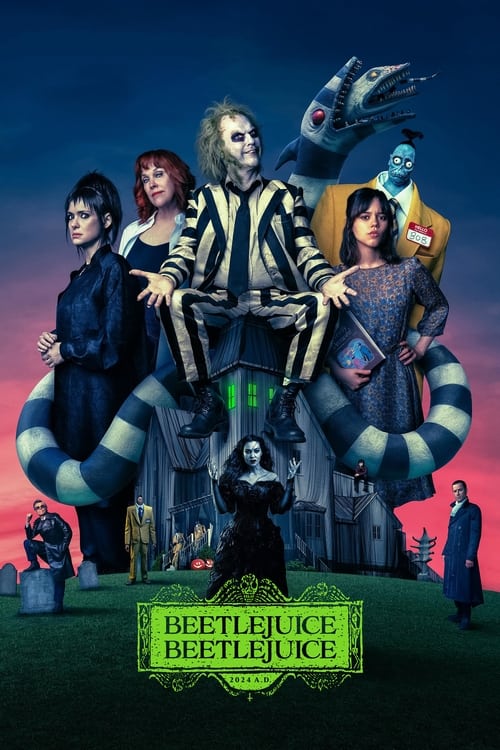
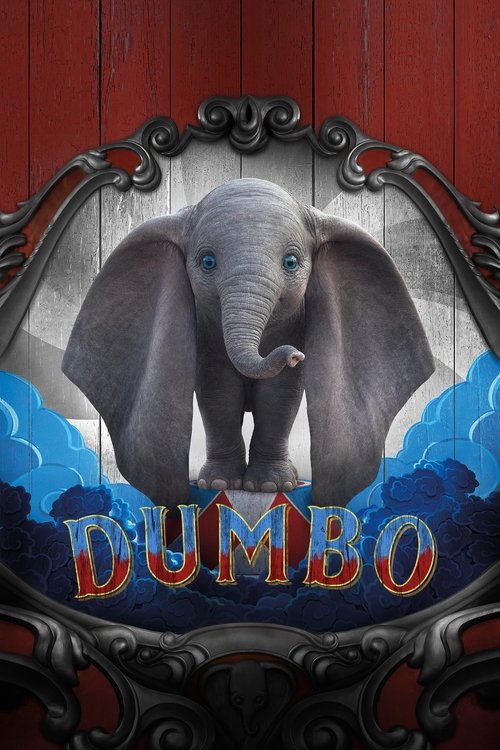
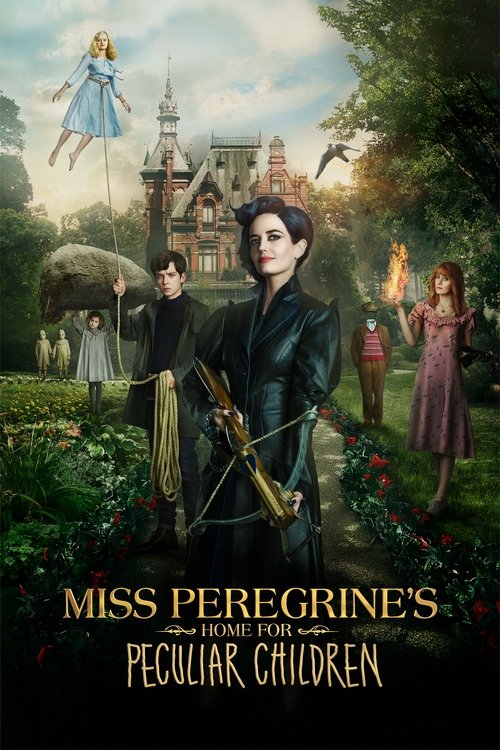
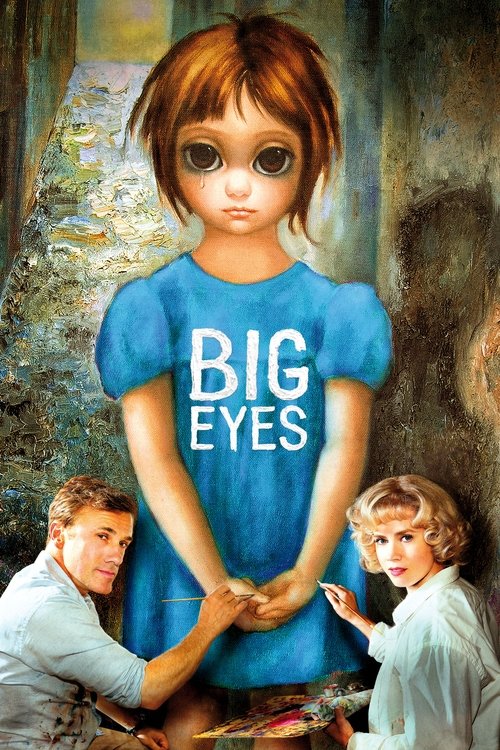
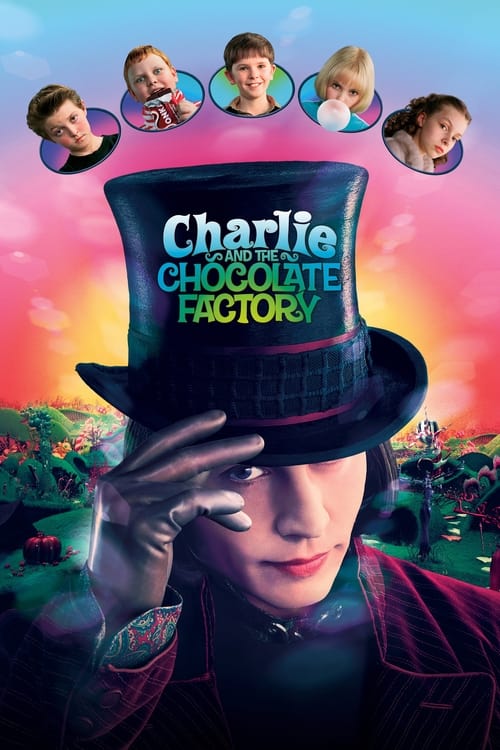
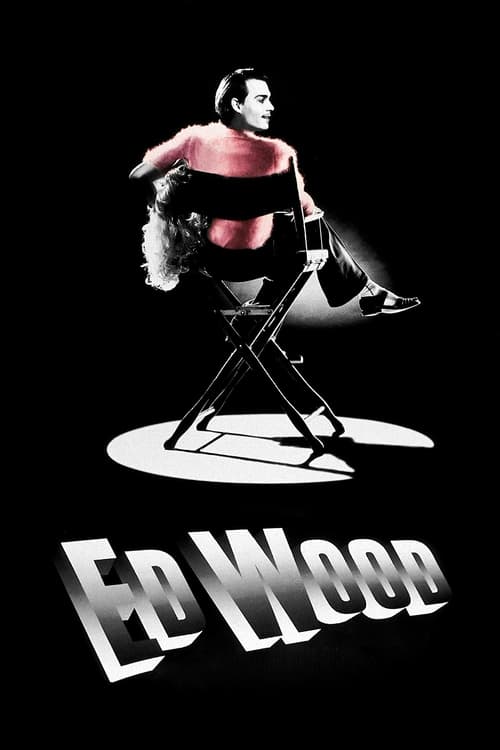
Burton made his directorial debut with the comedy film Pee-wee's Big Adventure (1985) and gained wider prominence for directing Beetlejuice (1988) and Edward Scissorhands (1990), as well as producing The Nightmare Before Christmas (1993), which was based on a poem he wrote. He had directed films spanning a variety of genres such as animation, biopic, drama, fantasy, musical, science fiction, superhero, and supernatural horror; these include Batman (1989), Batman Returns (1992), Ed Wood (1994), Mars Attacks! (1996), Sleepy Hollow (1999), Planet of the Apes (2001), Big Fish (2003), Charlie and the Chocolate Factory (2005), Corpse Bride (2005), Sweeney Todd: The Demon Barber of Fleet Street (2007), Alice in Wonderland (2010), Dark Shadows (2012), Frankenweenie (2012), Big Eyes (2014), Miss Peregrine's Home for Peculiar Children (2016), Dumbo (2019), and Beetlejuice Beetlejuice (2024).
Burton has directed several episodes of the Netflix series Wednesday (2022–present), for which he was nominated for the Primetime Emmy Award for Outstanding Directing for a Comedy Series. He frequently collaborates with musician Danny Elfman, who has scored all but three of his films. He has also released several books such as The Melancholy Death of Oyster Boy & Other Stories (1997).
Contents
Early life
Timothy Walter Burton was born in Burbank, California, on August 25, 1958, the son of Jean (née Erickson), who later owned a cat-themed gift shop, and William "Bill" Burton, a former minor league baseball player who worked for the Burbank Parks and Recreation Department. The baseball field at Burbank's Olive Recreation Center is named for Bill.
As a preteen, Burton made short films in his back yard, using crude stop motion animation techniques or shooting on 8 mm film without sound; one of his oldest known films, The Island of Doctor Agor, is an adaptation of the H. G. Wells novel The Island of Doctor Moreau which he made when he was 13 years old. He attended Providencia Elementary School, Luther Burbank Middle School, and Burbank High School, but was not a particularly good student. He played on the water polo team at Burbank High. After graduating in 1976, he attended the California Institute of the Arts in Valencia, Santa Clarita, studying character animation until 1979. As a student there, he made the short films Stalk of the Celery Monster and King and Octopus.
Burton was an introspective person who found pleasure in artwork, drawing, painting, and watching movies. His future work would be heavily influenced by the books of such childhood heroes as Dr. Seuss and Roald Dahl and the aesthetics of silent gothic horror films, Universal Monsters films such as Frankenstein (to which he would continuously pay homage throughout his career), Hammer Horror films starring Christopher Lee, and the horror films of Vincent Price; the latter two would both later star in his films, with Price being honored in his short film Vincent (1982). In a Hollywood Reporter article, Burton said, "I grew up watching the Universal horror movies, Japanese monster movies, and pretty much any kind of monster movie. That was my genre." He also said that his love of Ray Harryhausen's work got him interested in stop-motion animation at a young age.
Career
1981–1987: Early work and breakthrough
Stalk of the Celery Monster attracted the attention of Walt Disney Productions, who offered Burton an animator's apprenticeship at its animation division. He worked as an animator, storyboard artist, graphic designer, art director, and concept artist on films such as The Fox and the Hound (1981), Tron (1982), and The Black Cauldron (1985). His concept art never made it into the finished films.
While at Disney in 1982, Burton made his first short, Vincent, a six-minute black-and-white stop motion film based on a poem written by Burton, which depicts a young boy who fantasizes that he is his hero Vincent Price, with Price himself providing narration. The film was produced by Rick Heinrichs, whom Burton had befriended while working in the concept art department at Disney. The film was shown at the Chicago Film Festival and released, alongside the teen drama Tex, for two weeks in one Los Angeles cinema. This was followed by Burton's first live-action production, Hansel and Gretel, a Japanese-themed adaptation of the Brothers Grimm fairy tale for the Disney Channel, which climaxes in a kung fu fight between Hansel and Gretel and the witch. Having aired once in 1983 at 10:30 P.M. on Halloween and promptly shelved, prints of the film are extremely difficult to locate, fueling rumors that the project did not exist. The short would finally go on public display in 2009 at the Museum of Modern Art, and again in 2011 as part of the Tim Burton art exhibit at LACMA. It was again shown at the Seoul Museum of Art in 2012.
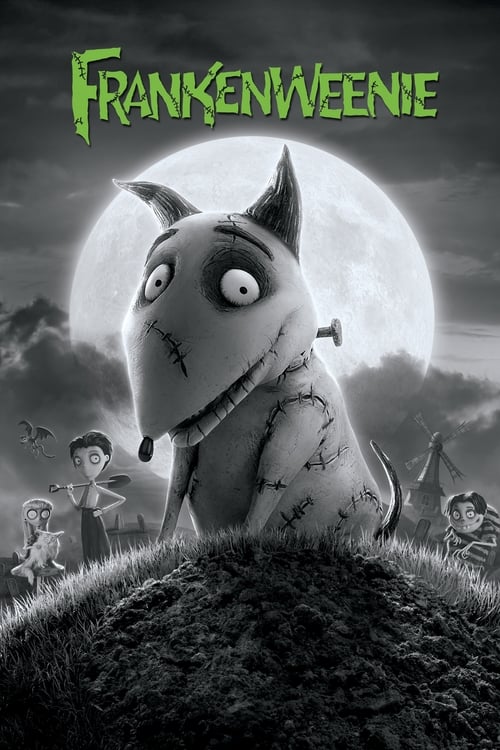
Burton's next live-action short film, Frankenweenie, was released in 1984. It tells the story of a young boy who tries to revive his dog after it is run over by a car. Filmed in black-and-white, it stars Barret Oliver, Shelley Duvall (with whom he would work again in 1986, directing an episode of her television series Faerie Tale Theatre), and Daniel Stern. After Frankenweenie was completed, Disney fired Burton, under the pretext of him spending the company's resources on a film that would be too dark and scary for children to see.
Actor Paul Reubens saw Frankenweenie and chose Burton to direct the cinematic spin-off of his popular character Pee-wee Herman, stating on the audio commentary of 2000 DVD release of Pee-wee's Big Adventure that as soon as the short began, he was sold on Burton's style. Pee-wee Herman gained mainstream popularity with a successful stage show at The Groundlings and the Roxy which was later turned into an HBO special. The film, Pee-wee's Big Adventure, was made on a budget of $8 million and grossed more than $40 million at the North American box office. Burton, a fan of the eccentric musical group Oingo Boingo, asked songwriter Danny Elfman to provide the music for the film. Since then, Elfman has scored every film that Tim Burton has directed, except for Ed Wood, Sweeney Todd: The Demon Barber of Fleet Street, and Miss Peregrine's Home for Peculiar Children.
1988–1994: Batman films and acclaim
Burton's next major film was Beetlejuice (1988), a supernatural comedy horror about a young couple forced to cope with life after death and the family of pretentious yuppies who invade their treasured New England home. Their teenage daughter, Lydia (Winona Ryder), has an obsession with death which allows her to see the deceased couple. Starring Alec Baldwin and Geena Davis, and featuring Michael Keaton as the title character, the film grossed $80 million on a relatively low budget and won the Academy Award for Best Makeup. It was later adapted into an animated TV series of the same name, with Burton playing a role as executive producer, that ran on ABC and later the Fox network.
Burton's ability to produce hit films with low budgets impressed studio executives, and he received his first big-budget film, Batman. The production was plagued with problems. Burton repeatedly clashed with the film's producers, Jon Peters and Peter Guber, but the most notable debacle involved casting. For the title role, Burton chose to cast Michael Keaton as Batman following their previous collaboration in Beetlejuice, despite Keaton's average physique, inexperience with action films, and reputation as a comic actor. Although Burton won in the end, the furor over the casting provoked enormous fan animosity, to the extent that Warner Brothers' share price slumped. Burton had considered it ridiculous to cast a "bulked-up" ultra-masculine man as Batman, insisting that Batman should be an ordinary man who dressed up in an elaborate bat costume to frighten criminals. Burton originally considered Brad Dourif for the Joker, but eventually cast Jack Nicholson, in a move that helped assuage fans' fears, as well as attracting older audiences not as interested in a superhero film. When the film opened in June 1989, it was backed by the biggest marketing and merchandising campaign in film history at the time, and became one of the biggest box office hits of all time, grossing over $250 million in the U.S. and $400 million worldwide (numbers not adjusted for inflation) and earning critical acclaim for the performances of both Keaton and Nicholson, as well as the film's production aspects, which won the Academy Award for Best Art Direction. The success of the film helped establish Burton as a profitable director, and it proved to be a huge influence on future superhero films, which eschewed the bright, all-American heroism of Richard Donner's Superman for a grittier, more realistic look and characters with more psychological depth. It also served as a major inspiration for the acclaimed TV series Batman: The Animated Series.
Burton claimed that the graphic novel Batman: The Killing Joke was a major influence on his film adaptation of Batman:
1995–2010: Established director
In 1996, Burton and Selick reunited for the musical fantasy James and the Giant Peach, based on the book by Roald Dahl. Burton, once again, served only as a producer due to his contributions to making Mars Attacks! (1996). The film, a combination of live action and stop motion footage, starred Richard Dreyfuss, Susan Sarandon, David Thewlis, Simon Callow and Jane Leeves among others, with Selick's animation direction. While a box office disappointment for Disney, the film was received well by critics for its story and visual aspects and was nominated for the Academy Award for Best Original Musical or Comedy Score (by Randy Newman).
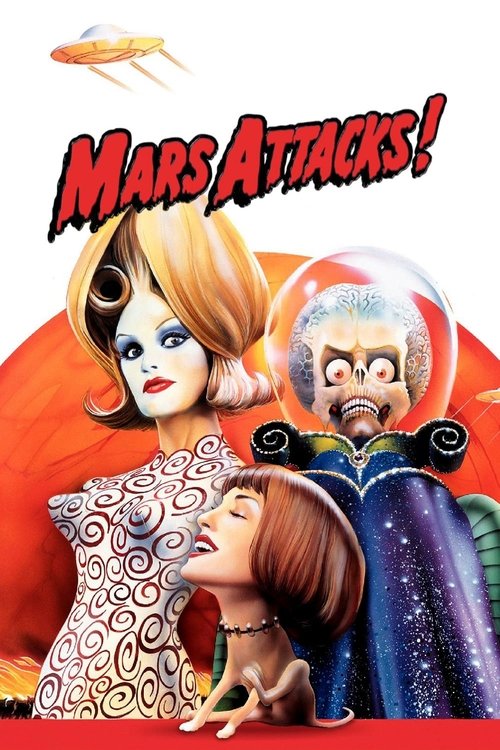
Elfman and Burton reunited for Mars Attacks!. Based on a popular science-fiction trading card series, the film was a hybrid of 1950s science fiction and 1970s all-star disaster films. The coincidence made it an inadvertent spoof of the blockbuster Independence Day, which had been released five months earlier. The film boasted an all-star cast, including Jack Nicholson, Glenn Close, Annette Bening, Danny DeVito, Pierce Brosnan, Michael J. Fox, Sarah Jessica Parker, Natalie Portman, Lukas Haas, Martin Short, Rod Steiger, Christina Applegate, and Jack Black.
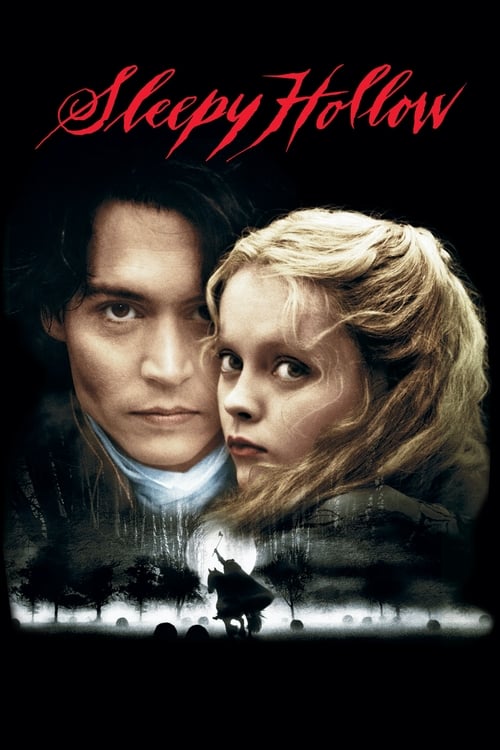
Sleepy Hollow, released in November 1999, had a supernatural setting and starred Johnny Depp as Ichabod Crane, a detective with an interest in forensic science rather than the schoolteacher of Washington Irving's original tale. With Sleepy Hollow, Burton paid homage to the horror films of the English company Hammer Films. Christopher Lee, one of Hammer's stars, was given a cameo role. A host of Burton regulars appeared in supporting roles (Michael Gough, Jeffrey Jones, and Christopher Walken, among others), and Christina Ricci was cast as Katrina van Tassel. A well-regarded supporting cast was headed by Miranda Richardson, Michael Gambon, Richard Griffiths and Ian McDiarmid. Mostly well received by critics, and with a special mention to Elfman's gothic score, the film grossed $207 million worldwide and won the Academy Award for Best Art Direction, as well as two BAFTAs for Best Costume Design and Best Production Design. A box office success, Sleepy Hollow was also a turning point for Burton. Along with the change in his personal life (separation from actress Lisa Marie), Burton changed radically in style for his next project, leaving the haunted forests and colorful outcasts behind to go on to directing Planet of the Apes which, as Burton had repeatedly noted, was "not a remake" of the earlier film.
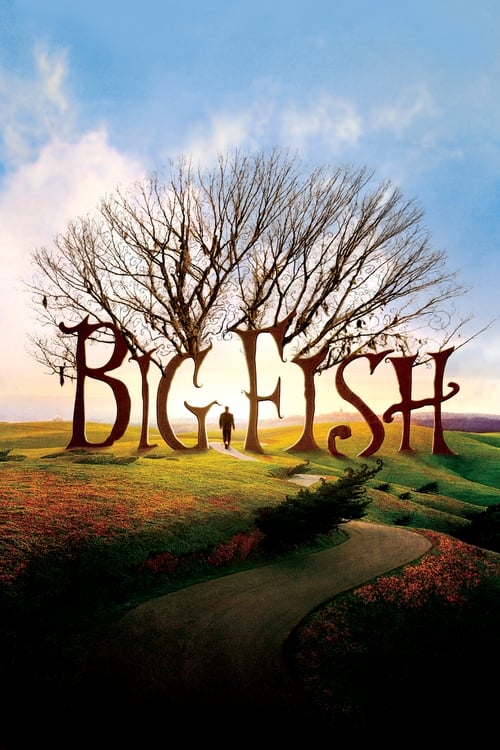
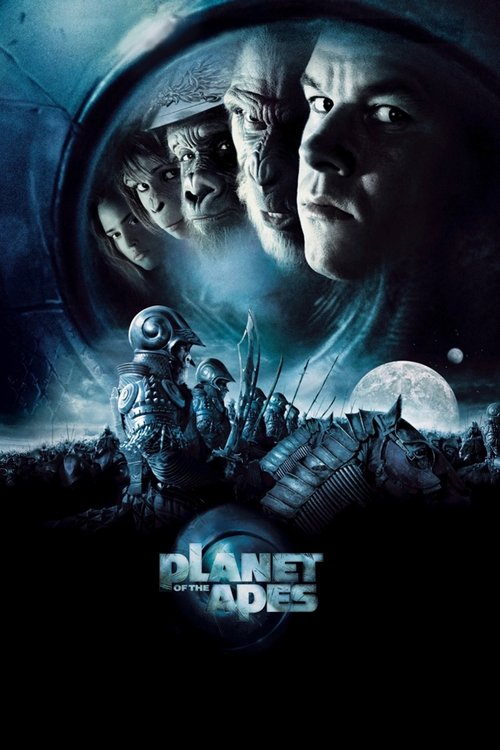
Planet of the Apes was a commercial success, grossing $68 million in its opening weekend and eventually earning $180 million in North America and $362 million total worldwide. The film however, received mixed reviews and is widely considered inferior to the first adaptation of the novel. In 2003, Burton directed Big Fish, based on the novel Big Fish: A Novel of Mythic Proportions by Daniel Wallace. The film is about a father telling the story of his life to his son using exaggeration and color. Starring Ewan McGregor as young Edward Bloom and Albert Finney as an older Edward Bloom, the film also stars Jessica Lange, Billy Crudup, Danny DeVito, Alison Lohman and Marion Cotillard. Big Fish received four Golden Globe nominations as well as an Academy Award nomination for Elfman's score. The film was also the second collaboration between Burton and Helena Bonham Carter, who played the characters of Jenny and the Witch, and Burton and Danny DeVito, who played circus ringleader Amos Calloway.
2011–2021: Career fluctuations
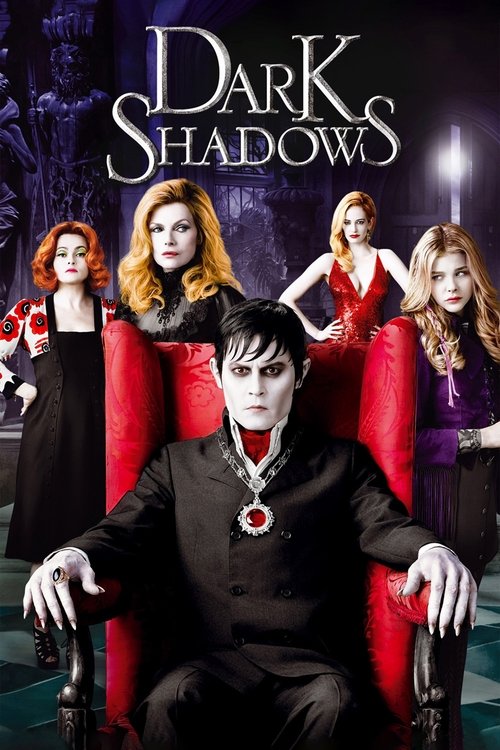
Burton began filming Dark Shadows, a feature film adaptation of the 1960s television series of the same name, in May 2011. In addition to starring Burton regulars Depp and Bonham Carter, the film saw Burton reunite with Batman Returns star Michelle Pfeiffer, while Burton once again collaborated with composer Danny Elfman, production designer Rick Heinrichs, and costume designer Colleen Atwood. The film was released on May 11, 2012, and grossed $245 million worldwide from a $150 million budget. Burton also co-produced Abraham Lincoln: Vampire Hunter with Timur Bekmambetov, who also served as director (they previously worked together in 9). The film, released on June 22, 2012, was based on the novel by screenwriter and novelist Seth Grahame-Smith, who wrote the film's screenplay and also authored Pride and Prejudice and Zombies. The film starred Benjamin Walker as Abraham Lincoln, Anthony Mackie as William H. Johnson, Joseph Mawle as Lincoln's father Thomas, Robin McLeavy as Lincoln's mother, Nancy, and Mary Elizabeth Winstead as Lincoln's love interest (and later wife), Mary Ann Todd. The film received mixed reviews and performed poorly at the box office. He then remade his 1984 short film Frankenweenie as a feature-length stop motion film, distributed by Walt Disney Pictures. Burton has said, "The film is based on a memory that I had when I was growing up and with my relationship with a dog that I had." The film was released on October 5, 2012, and met with positive reviews.
Burton directed the 2014 biographical drama film Big Eyes about American artist Margaret Keane (Amy Adams), whose work was fraudulently claimed in the 1950s and 1960s by her then-husband, Walter Keane (Christoph Waltz), and their heated divorce trial after Margaret accused Walter of stealing credit for her paintings. The script was written by the screenwriters behind Burton's Ed Wood, Scott Alexander and Larry Karaszewski. Filming began in Vancouver, British Columbia, in mid-2013. The film was distributed by The Weinstein Company and released in U.S. theaters on December 25, 2014. It received generally positive reviews from critics.
Burton entered talks to direct a film adaptation of the fantasy novel Miss Peregrine's Home for Peculiar Children, written by Ransom Riggs, in November 2011. The film, starring Asa Butterfield, Eva Green, and Samuel L. Jackson, was released in theatres by 20th Century Fox on September 30, 2016. Burton also directed a live-action adaptation of the Disney animated film Dumbo, released on March 29, 2019, with Colin Farrell, Danny DeVito, Eva Green, and Michael Keaton starring. The film grossed $353 million worldwide against a $170 million budget and combined production and advertising costs of $300 million, ultimately losing money.
2022–present: Wednesday and resurgence
In February 2021, it was announced that Burton would be directing and producing Wednesday, a series for Netflix based on the titular character from The Addams Family starring Jenna Ortega and Christina Ricci. This marked Burton's first foray into directing television since the 1980s. He helmed four episodes in the first season, which began production in September 2021 for a November 2022 release. The show was released to critical acclaim, and was renewed for a second season in January 2023, which premiered in August 2025.
In October 2022, Burton announced that he would probably never work with The Walt Disney Company again after Dumbo, due to his distinctive style and working approach not matching with what Disney is currently looking for, with its focus on Pixar, Marvel and Lucasfilm. He stated that "It's gotten to be very homogenized, very consolidated. There's less room for different types of things".
In July 2012, It was announced that Burton was working with Seth Grahame-Smith on Beetlejuice Beetlejuice, a project he had been considering making since 1990. Actor Michael Keaton also expressed interest in reprising his role as the title character along with Winona Ryder as Lydia Deetz. In October 2017, Deadline Hollywood reported that Mike Vukadinovich was hired to write a script in time for the film's 30th anniversary. In April 2019, Warner Bros. stated the sequel had been shelved. In February 2022, however, the sequel was announced again, with Brad Pitt's Plan B Entertainment producing alongside Warner Bros. Though Burton initially said that he was not involved, he later backtracked, and the sequel officially started shooting in London on May 10, 2023, with a release date of September 6, 2024, with Burton returning as director, Keaton, Ryder and Catherine O'Hara reprising their roles, and Ortega, Monica Bellucci, and Justin Theroux joining the cast. Beetlejuice Beetlejuice opened the 81st Venice International Film Festival and was theatrically released on September 6, 2024. The film received generally positive reviews from critics and grossed $452 million worldwide.
In 2025, it was announced that Burton would direct a remake of the 1958 science fiction film Attack of the 50 Foot Woman for Warner Bros. Multiple industry reports indicated that Margot Robbie was in early talks to produce and star in the project through her production company LuckyChap Entertainment. Originally, novelist and screenwriter Gillian Flynn was attached to write the first draft of the screenplay, but she exited the project due to other commitments by August 2025. In January 2026, it was announced that Danya Jimenez and Hannah McMehan would now write the screenplay.
Unreleased projects
After Kevin Smith had been hired to write a new Superman film, he suggested Burton to direct. Burton came on and Warner Bros. set a theatrical release date for the summer of 1998, the 60th anniversary of the character's debut in Action Comics. Nicolas Cage was signed on to play Superman, Burton hired Wesley Strick to rewrite Smith's script, and the film entered pre-production in June 1997. For budgetary reasons, Warner Bros. ordered another rewrite from Dan Gilroy, delayed the film, and ultimately put it on hold in April 1998. Burton then left to direct Sleepy Hollow. Burton has depicted the experience as a difficult one, citing differences with producer Jon Peters and the studio, stating, "I basically wasted a year. A year is a long time to be working with somebody that you don't really want to be working with."
In 2002, The Walt Disney Company began to consider producing a sequel to The Nightmare Before Christmas, but rather than using stop motion, Disney wanted to use computer animation. Burton convinced Disney to drop the idea. "I was always very protective of ['Nightmare'], not to do sequels or things of that kind," Burton explained. "You know, 'Jack visits Thanksgiving world' or other kinds of things, just because I felt the movie had a purity to it and the people that like it... Because it's a mass-market kind of thing, it was important to kind of keep that purity of it." Regardless, in 2009, Henry Selick stated that he could make a sequel to Nightmare if he and Burton could create a good story for it.
In 2012, Shane Acker confirmed that Burton would work with Valve to create his next animated feature film, Deep. Like 9, the film would take place in a post-apocalyptic world (although set in a different universe). Deep would be another darker animated film, as Shane Acker has expressed his interest in creating more PG-13 animated films. Since then, there have been no further mentions of Deep, with Acker focusing on another project announced in 2013 (Beasts of Burden).
Burton was briefly attached to direct Maleficent for Walt Disney Pictures in 2011, but chose to pursue Dark Shadows and Frankenweenie instead.
It was reported that Burton would direct a 3D stop motion animation adaptation of The Addams Family, which was confirmed by Chris Meledandri, but the project was scrapped on July 17, 2013. On July 19, 2010, Burton was announced as the director of the upcoming film adaptation of Monsterpocalypse.
Personal life
Burton was married to German artist Lena Gieseke from 1987 until their divorce in 1991. From 1992 to 2001, he dated American actress Lisa Marie, who appeared in his films during this time.
Burton began a relationship with English actress Helena Bonham Carter in 2001, having met her while filming Planet of the Apes, to which Marie—much to his dismay—responded in 2005 by holding an auction of personal belongings he had left behind. Together, Burton and Bonham Carter had a son (born 2003) and a daughter (born 2007) before it was revealed in December 2014 that they had amicably separated earlier that year. It was initially unclear whether or not they were married, as Bonham Carter described them as divorced, but other outlets stated that they were never married. In 2023, The Independent reported that they were indeed married for an undisclosed number of years before separating.
On March 15, 2010, Burton received the insignia of Chevalier of Arts and Letters from France's Minister of Culture Frédéric Mitterrand. The same year, he was the president of the jury for the 63rd Cannes Film Festival.
Burton began a relationship with Italian actress Monica Bellucci after they met at the Lumière Film Festival in October 2022, which became known in February 2023. Bellucci first spoke publicly about the relationship in June 2023. They separated in September 2025.
Exhibitions and books
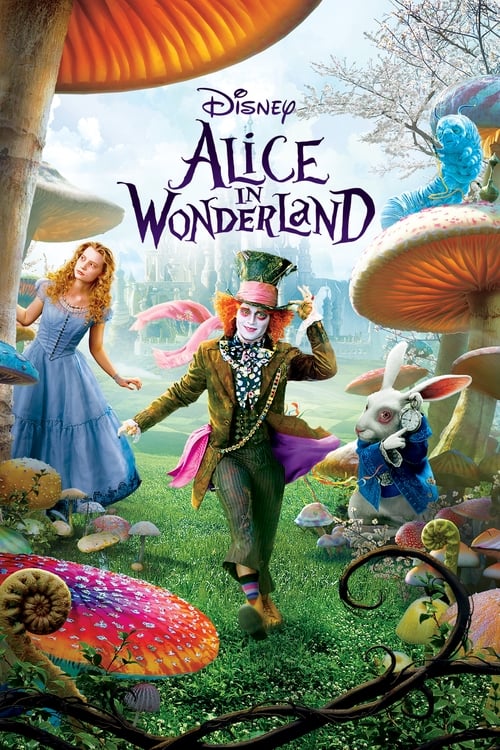
From November 22, 2009, to April 26, 2010, Burton had a retrospective at the MoMA in New York with over 700 "drawings, paintings, photographs, storyboards, moving-image works, puppets, maquettes, costumes and cinematic ephemera", including many from the filmmaker's personal collection. From MoMA, the "Tim Burton" exhibition traveled directly to Australian Centre for the Moving Image in Melbourne. Running from June 24 to October 10, 2010, the ACMI exhibition incorporated additional material from Burton's Alice in Wonderland, which was released in March 2010.
"The Art of Tim Burton" was exhibited at the Los Angeles County Museum of Art from May 29 to October 31, 2011, in the Museum's Resnick Pavilion. LACMA also featured six films of Tim Burton's idol, Vincent Price. "Tim Burton, the exhibition/Tim Burton, l'exposition" was exhibited at the Cinémathèque Française from March 7 to August 5, 2012, in Paris, France. All of Tim Burton's movies were shown during the exhibition.
"Tim Burton at Seoul Museum of Art" was exhibited as a promotion of Hyundai Card at Seoul Museum of Art from December 12, 2012, to April 15, 2013, in Seoul, South Korea. This exhibition featured 862 of Burton's works including drawings, paintings, short films, sculptures, music, and costumes that have been used in the making of his feature-length movies. The exhibition was divided into three parts: the first part, "Surviving Burbank", covered his younger years, from 1958 to 1976. The second, "Beautifying Burbank", covers 1977 to 1984, including his time with CalArts and Walt Disney. The last segment, "Beyond Burbank", covers 1985 onward.
"Tim Burton and His World" was exhibited at the Stone Bell House from March 3 to August 8, 2014, in Prague, Czech Republic. The exhibition later premiered at the Museu da Imagem e do Som in São Paulo, Brazil, on February 4, 2016, and lasted until June 5. The exhibition was later held in Artis Tree in Taikoo Place, Hong Kong, from November 5, 2016, to January 23, 2017. The exhibition returned to Brazil from May 28 to August 11, 2019, being held at the Centro Cultural Banco do Brasil in Brasília.
Burton's first exhibition in the United States in nearly a decade, Lost Vegas: Tim Burton, opened in October 2019 at The Neon Museum in Las Vegas.
Awards and nominations for Burton films
Directed Academy Award performancesUnder Burton's direction, these actors have received Academy Award nominations (and one win) for their performances in their respective roles.