Reception
Rotten Tomatoes, a review aggregator, reports that 88% of 56 surveyed critics gave the film a positive review, and the average rating was 7.4/10; the site's consensus is: "This post-Watergate thriller captures the paranoid tenor of the times, thanks to Sydney Pollack's taut direction and excellent performances from Robert Redford and Faye Dunaway." On Metacritic, the film has a weighted average of 63 out of 100 based on 11 reviews, indicating "generally favorable" reviews.
When first released, the film was reviewed positively by Vincent Canby, critic for The New York Times, who wrote that the film "is no match for stories in your local newspaper", but it benefits from good acting and directing. Variety called it a B movie that was given a big budget despite its lack of substance. Roger Ebert wrote, "Three Days of the Condor is a well-made thriller, tense and involving, and the scary thing, in these months after Watergate, is that it's all too believable."
John Simon wrote how the film differed from the book:
That the action has been relocated from sleepy Washington to furious New York City, almost all names have been changed, that the plot has been vastly over-complicated, is of lesser interest than a straight genre film, has been overloaded into an elegy of private, political, and finally, cosmic pessimism, a kind of national, if not metaphysical, guilt film to enchant the disenchanted.
French philosopher Jean Baudrillard lists the film as an example of a new genre of "retro cinema" in his essay on history in the now influential book, Simulacra and Simulation (1981):
In the 'real' as in cinema, there was history but there isn't any anymore. Today, the history that is 'given back' to us (precisely because it was taken from us) has no more of a relation to a 'historical real' than neofiguration in painting does to the classical figuration of the real...All, but not only, those historical films whose very perfection is disquieting: Chinatown, Three Days of the Condor, Barry Lyndon, 1900, All the President's Men, etc. One has the impression of it being a question of perfect remakes, of extraordinary montages that emerge more from a combinatory culture (or McLuhanesque mosaic), of large photo-, kino-, historicosynthesis machines, etc., rather than one of veritable films."
Some critics described the film as a piece of political propaganda, as it was released soon after the "Family Jewels" scandal came to light in December 1974, which exposed a variety of CIA "dirty tricks". In an interview with Jump Cut, Pollack explained that the film was written solely to be a spy thriller and that production on the film was nearly over by the time the Family Jewels revelations were made, so even if they had wanted to take advantage of them, it was far too late in the filmmaking process to do so. Despite both he and Redford being well-known political liberals, Pollack said they were only interested in making the film because an espionage thriller was a genre neither of them had previously explored.
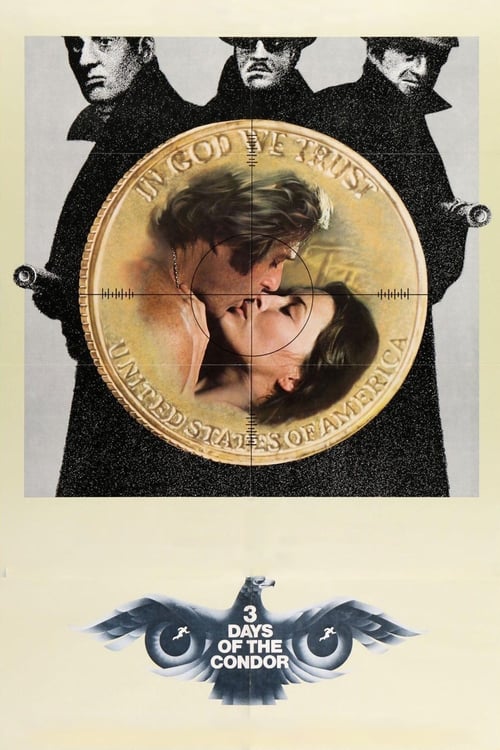
I didn't want this picture to be judged; it's a movie. I intended it always as a movie. I never had any pretensions about the picture and it's making me very angry that I'm getting pretensions stuck on me like tails on a donkey. If I wanted to be pretentious, I'd take the CIA seal and advertise this movie and really take advantage of the headlines. Central Intelligence Agency, United States of America, Robert Redford, Faye Dunaway. And don't think it wasn't suggested — obviously, that's what advertising people do. We really put our foot down — Redford and I — to absolutely stop that.