



Thomas Ian Griffith (born c. 1960 or 1961) is an American actor, screenwriter and producer. His best-known roles include Terry Silver in John G. Avildsen's 1989 martial arts film The Karate Kid Part III, which he later reprised in the fourth through sixth and final season of the Netflix television series Cobra Kai (2021–2025), as well as voicing his character in the video game Cobra Kai 2: Dojos Rising (2022); head vampire Jan Valek in John Carpenter's 1998 neo-Western action horror film Vampires; warrior Taligaro in Raffaella De Laurentiis' 1997 sword and sorcery picture Kull the Conqueror; recurring character Larry Sawyer in the first season of The WB's teen drama series One Tree Hill (2004); and Catlin Ewing in NBC's soap opera Another World from 1984–1987. He also portrayed screen legend Rock Hudson in ABC's 1990 television biopic Rock Hudson, and serial killer Doug Clark in CBS's 2000 television biopic A Vision of Murder: The Story of Donielle.
Griffith wrote, story edited, co-produced, or supervised produced over sixty episodes of NBC's fantasy police procedural drama horror program Grimm from its second through sixth and final season (2012–2017), and has written, supervised producer, or co-executive produced over thirty episodes of Netflix's romantic drama series Virgin River during its fifth through seventh seasons (2023–2025). He and his wife, Mary Page Keller, formed the independent film production company Ian Page Productions in the late 1980s, through which they produced a handful of films, including Night of the Warrior (1991), Ulterior Motives (1991), Excessive Force (1992), and Avalanche (1999).
During the early 1990s, he was positioned to be one of Hollywood's next big action stars. From critics and journalists, he received frequent comparisons to actors like Jean Claude van Damme, Steven Seagal, Chuck Norris, Jeff Speakman, Sylvester Stallone, Arnold Schwarzenegger, Dolph Lundgren, and even Clint Eastwood, Harrison Ford, and Mickey Rourke. Writing for the New York Daily News in 1992, Nancy Stedman offered, "He's being touted as a better-looking version of Arnold Schwarzenegger or Jean-Claude Van Damme. But with a difference: Muscles are a sideline with Griffith; he has spent years acting in theater." At the eighth annual ShowEast film industry conference held in Atlantic City, New Jersey, in October 1992, Griffith received the Star of Tomorrow Award.
Contents
Early life
Birth and family background
Thomas Ian Griffith was born in Hartford, Connecticut, the son of Irish-American Hartford natives Mary Ann (née O'Neil; 1934–1990) and Dr. Thomas Joseph Griffith (1927–2017). His maternal grandfather, John J. O'Neil, was born in Killorglin, County Kerry, Ireland, and emigrated to Hartford in the 1920s. His maternal grandmother, Margaret (née Galvin), was also born in County Kerry, Ireland and spent most of her life in Hartford. His paternal grandparents, Michael J. Griffith and Mary Agnes (née Radigan), were both born in County Mayo, Ireland, and emigrated (separately) to Hartford in the 1910s.
Griffith's mother, who was voted Mrs. Connecticut of 1964, was the founder and director of the noted Irish dancing academy, The Griffith Academy of Dance in Wethersfield, Connecticut. She was a graduate of the University of Hartford, and received a Master's degree in counseling from St. Joseph College. She was also accredited by the An Coimisiún Le Rincí Gaelacha (The Irish Dancing Commission) as a Teagascóir Coimisiún Le Rinci Gaelacha - an official Irish dance teacher. His paternal grandmother, Mary Agnes, was also a member of The Irish Dancing Commission. His father served in the Navy during World War II and later hosted a weekly Sunday radio show, The Irish Hour (produced by his brother William E. Griffith). He earned a Bachelor of Science degree in Engineering from the University of Hartford and went on to earn three Master of Science degrees and a PhD in Education from Boston University. He was an assistant professor in business administration at the University of Hartford, before moving to Florida to teach at Lynn University in Boca Raton and Broward College in Davie.
Griffith has an older sister, Colleen Marie, and a younger sister, Mary Beth, both of whom continued in their mother's footsteps and teach at The Griffith Academy. His family's dancing background and the taking over of the academy by his sister after his mother's passing would later be developed by Griffith into a television program, The Dunnings.
Education and early plays (1962–1980)
Griffith grew up in Wethersfield, Connecticut. During the 1960s, he was part of the youth Irish dancing group The Griffith Dancers, under the direction of his mother. The dancing group traveled around the United States, Canada, United Kingdom, and Ireland, performing and taking part in competitions. In addition to learning various forms of dancing (such as Irish step-dancing, Celtic folk-dancing, and hornpipe dancing) from his mother, he also learned to sing and play several instruments, including the piano and the accordion. He was so proficient on the accordion that he won United States and Connecticut State championships. At certain shows he would dance a jig and play his accordion, and would usually accompany The Griffith Dancers on the instrument. Of his dancing, he later said "I never had a formal dance lesson in my life, I picked up tap dancing while playing the piano for allowance money as a child in Hartford, Connecticut." Griffith also juggled and wrote songs.
He attended South Catholic High School in Hartford, graduating with the class of 1978, where he was Treasurer his junior year, Vice-President his senior year, and also co-editor of the school's yearbook, the Canticle. He won awards in algebra, biology, and chemistry, and was a member of the State Creative Youth. He focused on sports his freshman year, playing football and basketball, but was later drawn into music and theater, as a member of the school's madigral and glee club. His sophomore year, he joined the school's drama club, The South Catholic Players, when it needed a last-minute replacement piano accompanist for a production of You're a Good Man, Charlie Brown. As a way to meet girls who acted in the plays, Griffith also wound up acting in the school's productions. His senior year, under the direction of John Kiely, he played the lead, Albert Peterson, in a March 31–April 1, 1978 production of the musical comedy Bye Bye Birdie. The play also starred Marie Fischetti, Steve Dolin, and Ellen Smith.
Griffith became obsessed with taekwondo when he was 12, studying at the S.K. Tae Kwon Do Academy in Hartford, and earned a black belt when he was 18. He later earned a black belt in American Kenpo while studying the sport in New York under Hyung Yup Chung. After moving to Los Angeles in the late 1980s, he studied with Jun Chong. In the 1990s, he picked up boxing under Benny Urquidez. He is also trained in kickboxing, wrestling, fencing, and stage combat.
Griffith attended the College of the Holy Cross in Worcester, Massachusetts, where he was a dean's list student. As an undergraduate at Holy Cross, he majored in English literature and music, and played on its lacrosse team. Griffith later mentioned taking part in the college's plays. In a 2021 interview, Griffith stated that he later transferred to New York University between his sophomore and junior year after he was cast in The Best Little Whorehouse in Texas.
Career
Theater and soap operas (1980–1987)
In the summer of 1980, between his sophomore and junior year at the College of the Holy Cross, Griffith made his Broadway debut when he replaced featured player Tom Cashin in the musical The Best Little Whorehouse in Texas, under the direction of Peter Masterson and Tommy Tune at the 46th Street Theatre. In a 1984 interview with the Los Angeles Times, the actor confided that Tune (for whom he audition) hired him more for his physique and dancing skills than his acting abilities. He later told The Star-Ledger in 1992, "They noticed 'Celtic step dancing' on my resume, and I was asked if I could demonstrate. So I cranked out a little step. They loved it." Griffith performed various roles in the play, including a stage manager, a cameraman, and a football player named Aggie #12 who does a specialty tap-dance. He remained with the play for about a year. Having a steady role in the play allowed the actor to move from Yonkers into an apartment in Manhattan, and he transferred to New York University, which he attended during the day. He also studied the Michael Chekhov acting technique in New York City during this time.
The next year, he landed another role in the Broadway sports musical The First, which dramatized events from the life of Jackie Robinson, the first African-American to play Major League Baseball. In that play, which ran from October 19 to December 12, 1981, under the direction of Martin Charnin at the Martin Beck Theatre, Griffith also played various parts (including Thurman the Brooklyn Eagle photographer, a passenger, a Brooklyn Dodgers rookie, and a Pittsburgh Pirates player). He also appeared in off-Broadway productions.
He was hired and cast in the 1983–1984 season of the Guthrie Theater in Minneapolis, Minnesota, appearing in the first two plays, The Threepenny Opera (which ran from June 10 to July 17, 1983, directed by Liviu Ciulei) and Guys and Dolls (which ran from July 29 to September 18, 1983, directed by Garland Wright). The theater's production of The Threepenny Opera starred Theodore Bikel, while Guys and Dolls' starred Roy Thinnes, Jerry Stiller, Barbara Sharma, and Mike Mazurki (Griffith had a small part as one of the craps-shooters, which had a couple of singing numbers). Griffith was scheduled to appear in five other productions at the Guthrie Theater that season, The Entertainer (September 23 to October 23, 1983), The Seagull (October 28 to November 20, 1983), A Christmas Carol (November 24, 1983 to January 1, 1984), The Importance of Being Ernest (January 6 to February 12, 1984), and Hedda Gabler (February 17 to March 11, 1984), but he departed for New York.
Hollywood and Ian Page Productions (1987–1993)
After leaving Another World in 1985, his girlfriend Keller moved from their Upper West Side, Manhattan cooperative apartment (which they shared with an actress and a choreographer) to Los Angeles, California (she was a native of Monterey, California); Griffith remained behind as Another World was mostly filmed in Brooklyn, but he joined her in early 1987, when his contract expired. There, they made their home and formed an independent film production company, initially named A Place to Hide Productions but later renamed Ian Page Productions, after the couple's middle names, and he began writing the screenplay for A Place to Hide (later filmed as Night of the Warrior). He also appeared in a production of the Gianni Schicchi opera at the University of Southern California.
In 1988, Griffith had a guest role on NBC's prime-time television crime drama series In the Heat of the Night; he appeared in the Peter Levin-directed two-part season two premiere episode "Don't Look Back," which aired on December 4, 1988. Griffith plays the role of Luke Potter, a transient carnival worker suspected of committing a murder with voodoo connections, one that has the same modus operandi as an unsolved murder from twenty years prior.
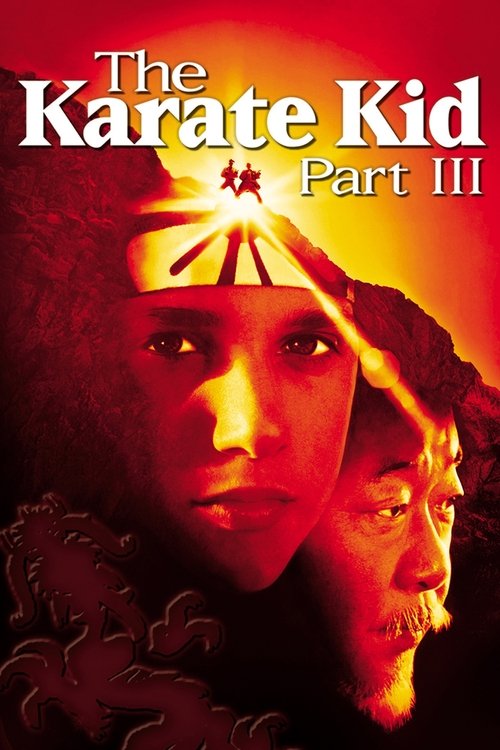
In late 1988, Griffith landed his theatrical film debut when he was cast as the lead villain in The Karate Kid Part III (released in June 1989). In the film, he portrays Terry Silver, a rival martial arts expert who influences Daniel LaRusso against his friend and mentor, Mr. Miyagi. Although many reporters assumed that he won the role of Silver because of his knowledge of martial arts, Griffith explained that he landed the part solely because of his acting experience as the character of Silver, as originally written when he auditioned, didn't have much fighting in the film. The plot initially revolved around Silver torturing LaRusso and plotting his demise, but once the film's fight choreographer, Pat Johnson, discovered Griffith's expertise with martial arts, he recommended that the actor approach director John G. Avildsen for new scenes to be written. Avildsen was excited about expanding Silver's parts and reworked the script to make the character an equal nemesis.
Despite being offered similar martial arts roles following The Karate Kid Part III, the actor did not want to be typecast. When interviewed by Black Belt magazine, Griffith explained he wanted to keep his roles balanced, and that although he loved doing action and martial arts films, he was also driven to keep playing straight drama parts, and was interested in going back to plays and doing Shakespeare. He also told the New York Daily News "I'm hoping that in between the big action films there will be something more soulful."
Starring roles in foreign productions (1993–1997)
Griffith was next cast to co-star alongside Christopher Plummer and Nastassja Kinski in the Canadian action film Crackerjack, which was directed by Michael Mazo and filmed in Vancouver, British Columbia between September–November 1993. The film deals with Jack Wild (Griffith), a burnt-out cop who is taken to a mountain resort by his brother, sister-in-law, and newborn child to help him recover emotionally from the death of his wife. There, he befriends a tour guide (Kinski), but the entire resort is soon held hostage by a master criminal (Plummer) and his henchmen, who threaten to bury it under an avalanche using explosives. Crackerjack was produced by North American Releasing and was distributed theatrically in the United States by Worldvision Enterprises and had its world premiere at the American Film Market on February 25, 1994. A sequel was produced in 1995, Crackerjack 2, but with Judge Reinhold taking over Griffith's role; a third film was produced in 1999, Crackerjack 3, but with no relation to the first two movies.
He then starred in Nu Image's suspense-action production Blood of the Innocent, which was filmed on location in Nieborów, Czerwińsk nad Wisłą, and Warsaw, Poland between August and September 1994, as a co-production with Poland's Mondofin. The film's working title was Angel of Death and it co-starred John Rhys-Davies and Rutger Hauer. The movie follows Chicago cop Frank Wusharsky (Griffith) who travels to Poland to find the hoods who killed his brother. Aided by the local police captain (Rhys-Davies), he discovers that his sibling was murdered by the Russian mafia, who are killing local peasants and selling their organs on the black market after a doctor (Hauer) dismembers them. The film premiered on Showtime in December 1994, and was later released on VHS via Republic Pictures in 1995, under the alternative title Beyond Forgiveness.
He was again cast by Nu Image in Hollow Point, an action-comedy film co-produced with Canada's Astral Programming Enterprises, Phoenician Films, and Filmline International. Though some stock footage of Boston's landscape was used during the opening, and the police cars bared that city's name, the movie was shot entirely in Montreal, Quebec during seven weeks between April and May 1995. Hollow Point was directed by Sidney J. Furie and co-starred Tia Carrere, John Lithgow, and Donald Sutherland. Griffith (who shows off his operatic singing during several scenes) stars as Max Parrish, a DEA agent who teams up with an FBI agent (Carrere) and a flamboyant hitman (Sutherland) to take down a criminal syndicate led by a financial adviser (Lithgow). The film premiered on HBO in June 1996. Vidmark Entertainment released the film on VHS in the United States, Sterling Entertainment Group released it on DVD in the United States, while TVA Films issued it on DVD in Canada.
Transition to co-starring roles (1997–1999)
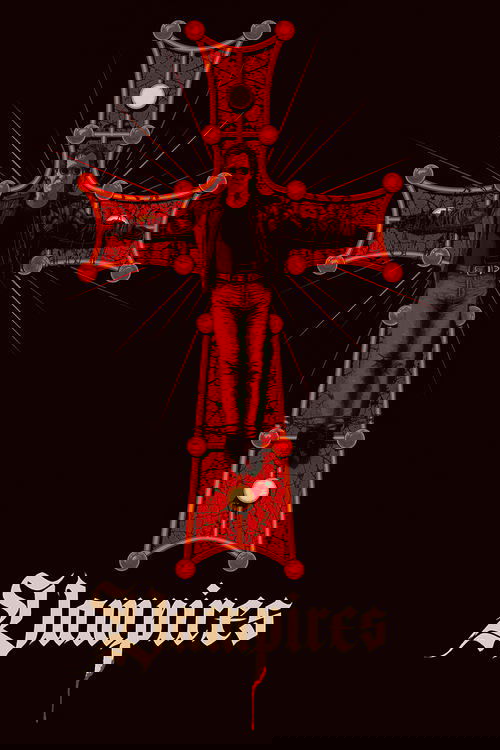
Griffith was next cast as a co-star in director John Carpenter's neo-Western action horror film Vampires, playing the role of head vampire Jan Valek. The movie starred James Woods, Daniel Baldwin, and Sheryl Lee, and was shot from June to August 1997 in New Mexico. The plot deals with a modern-day vampire hunter (Woods) and his partner (Baldwin), hunting for the world's first vampire (Griffith) in the American south, using his latest victim (Lee) to track him down. The film, which was produced through Spooky Tooth Productions and Storm King Production was distributed via Largo Entertainment, and released through Columbia Pictures in October 1998.
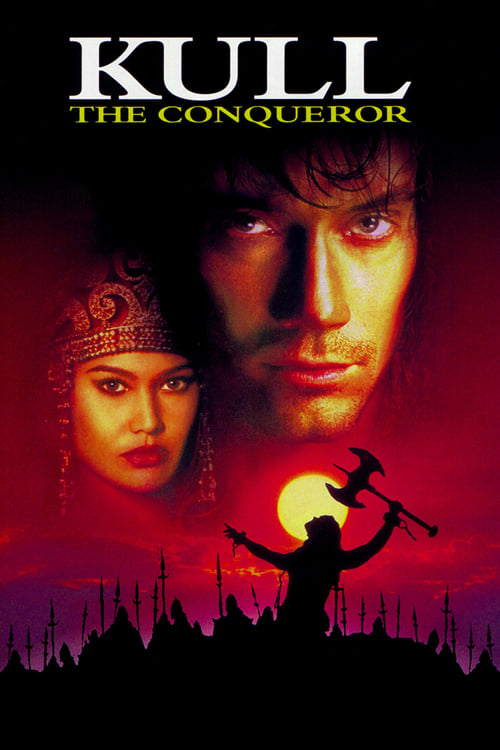
In The First Vampire, a bonus feature included on Vampires' collector's edition Blu-ray, Griffith recalls coming into the production through an audition with Carpenter's wife, producer Sandy King, before going to the Philippines to film Behind Enemy Lines. While filming Behind Enemy Lines, Griffith received news from his agent that he got the part in Vampires. When King and Carpenter first met with Griffith, his hair was still long from his role in Kull the Conqueror, but he had since cut his hair short for the war picture; this gave the producers the idea of giving Valek long hair and sent Griffith in for extensions. Carpenter also instructed Griffith not to take part in pre-production rehearsals with the other actors so that his character would be intentionally detached and emotionless. Griffith would show up to film scenes having never met his co-stars, and often found it difficult not to laugh at Woods' comical improvised lines.
The actor next co-starred in The Unexpected Mrs. Pollifax a spy-mystery for Corymore Productions (in co-production with Scripps Howard Productions), owned by actress Angela Lansbury and her producer husband Peter Shaw. The movie was directed by their son, Anthony Pullen Shaw, and was filmed between November and December 1997, on location in Ireland, France, and Morocco. The story follows Emily Pollifax (Landsbury), a sexagenarian widow who applies to become a CIA agent, and through a mix-up is mistaken for a real agent and sent on a foreign mission. The CIA sends their agent Jack Farrell (Griffith) to shadow her and see that nothing happens to her, but he is caught up in the action. The Unexpected Mrs. Pollifax aired on CBS in May 1999, and the network hoped it would lead to additional Emily Pollifax films.
Griffith next starred in the action-disaster film Avalanche, which he co-produced through Ian Page Productions, in co-operation with producers Richard Pepin and Joseph Merhi's PM Entertainment Group, Greg Mellott, and writer-director Steve Kroschel's Kroschel Films. Griffith also helped with the script. The film was shot at Hatcher Pass, Knik Glacier, and Anchorage, Alaska from October to December 1998, and includes footage of real avalanches, which Kroschel had spent four years documenting and filming beforehand. Co-starring in the movie are Caroleen Feeney, R. Lee Ermey, John Ashton, and C. Thomas Howell. The film's plot deals with a helicopter pilot, Neal Meekin (Griffith), who helps an EPA employee (Feeney) try to prevent an oil company's new pipeline from causing a major avalanche. The film premiered at the Cannes Film Festival in May 1999, out of competition, and had its North American television premiere on UPN in January 2001. It received numerous home media releases, notably a VHS in the United Kingdom by Entertainment In Video in 1999, and a VHS and DVD by First Look Home Entertainment in April 2002, under the alternative title Escape from Alaska. It was later re-issued on DVD by Echo Bridge Home Entertainment in 2017, also under its alternative title.
Final starring roles (2000)
In February 2000, Griffith signed with the Metropolitan Talent Agency, where he was represented by Chris Barrett and Karen Forman. He was also managed by Himber Entertainment. That same month, it was announced that he would star in Hilltop Entertainment's thriller film Heart of Gold for producer Harel Goldstein and director Yakov Bentsvi. Variety described the plot as "Based on a true story, life on the streets becomes a nightmare when a bodyguard to L.A.'s top call girls falls in love with one of his charges." The film was never made.
The actor was next scooped up by a group of Canadian-British-Italian co-producers to star in two modern adventure films shot back-to-back in 2000: High Adventure and The Sea Wolf. Both films were co-executive produced by British-Canadian Harry Alan Towers' Towers of London (with his wife Maria Rohm), Canadian Gary Howsam's Greenlight Film and Television Entertainment (GFT Entertainment), and Italian Fulvio Lucisano's Italian International Film. They were also both directed by Mark Roper, produced by Canadian Lewin Webb (who worked for Howsam at GFT Entertainment), and written by Peter Welbeck (Towers' pen name) and Peter Jobin.
High Adventure was filmed first during the summer of 2000 in Bulgaria, as a co-production with Evgeni Mihailov's Boyana Film Company. The plot deals with Chris Quatermain (Griffith), grandson of famed explorer and adventurer Allan Quatermain, who teams up with a German archaeologist, Hope Gruner (Anja Kling), and an Englishman, Johnny Ford (Harry Peacock), to find Alexander the Great's lost treasure. High Adventure was picked up for limited distribution in North America by Canadian company Prophecy Entertainment, and in the United Kingdom by British financing company Future Film Group. It had a two-day premiere screening in February 2001 at the AMC Theater in Santa Monica, California. However, the film was released on DVD only in Europe; for its German release by E-M-S in October 2001 it was retitled Quatermain - Der Schatz der Könige (Quatermain - The Treasure of Kings), while in France it was retitled Les aventuriers du trésor perdu (Adventurers of the Lost Treasure).
The Sea Wolf was next filmed in the fall of 2000 in Cuba, as a co-production with Camilo Vives' Productora Cinematografica Instituto Cubano del Arte e Industria Cinematográficos (ICAIC). Griffith was not the producers' original choice for the role, who had initially cast Mark Dacascos, when the film was to be co-produced by another financier, Amco Entertainment Group. The plot deals with boat Capitan Jeffery Thorpe (Griffith), an ex-United States Navy and self-proclaimed pirate, who comes across a map of Montezuma's treasure shown to him by a mysterious Columbian woman, Helena (Gerit Kling, who also plays her twin sister Marlena), and the two must find it before The Colonel (Barry Flatman) claims it for his own. The Sea Wolf was also picked up for limited distribution in North America by Canadian company Prophecy Entertainment, and in the United Kingdom by British financing company Future Film Group in 2001. It was later distributed by Canadian company Cinemavault Releasing, which arranged for a television premiere in January 2003, and a VHS and DVD release under the alternative title SeaWolf: The Pirate's Curse via The Asylum in July 2003. It was later re-issued on DVD by Echo Bridge Home Entertainment in 2004, also under its alternative title.
Continued co-starring roles and return to theater (2000–2002)
Griffith had a co-starring role in Laura Ingalls Wilder's biopic sequel Beyond the Prairie II: The True Story of Laura Ingalls Wilder Continues, which was produced by Dori Weiss' D.W. Productions and financed by CBS. In the movie, Griffith plays the role of a drifter, Cornelius Loudermilk, who is offered work on Wilder's (portrayed by Meredith Monroe) farm when her husband, Almanzo Wilder (portrayed by Walton Goggins) gets sick. The teleplay, written and produced by Stephen Harrigan, was directed by Marcus Cole and filmed around Austin, Texas (including Spicewood, Texas) in March–April 2001. Beyond the Prairie II: The True Story of Laura Ingalls Wilder Continues was scheduled to air in November 2001, but it was postponed due to the Emmys' broadcast on CBS; it finally aired four months later in March 2002.
With Greg Mellott, he co-wrote the psychological thriller Black Point, in which he also co-starred; the film starred David Caruso and Susan Haskell, and also co-starred Miguel Sandoval and Gordon Tootoosis. Filmed from April to May 2001 in Victoria, Deep Cove, Fernwood, and Brentwood Bay, British Columbia (standing in for Washington), the plot deals with John Hawkins (Caruso), a divorced father whose life has been derailed when his daughter went missing years prior. He befriends and falls in love with Natalie Travis (Haskell), a woman who has moved into the little coastal town in which he lives, but soon learns that her partner is Gus Travis (Griffith), a criminal who is physically abusive to her. Through a series of double-cross and deception, Natalie uses Hawkins to get rid of Travis and get away with the money he is laundering for mobster Malcolm (Sandoval).
Black Point was directed by David Mackay, produced by Canadian producer Raymond Massey (grandson of actor Raymond Massey) through Massey Productions and Black Point Films, and had financing and distribution via Promark Entertainment Group/Das Werk AG Company and HBO. Although announced as a television film, it was screened at several festivals and events starting in October 2001. At the fifth annual Marco Island Film Festival in October 2002, the film won the Best Feature Thriller award. It was eventually released on VHS and DVD in 2002, in Canada via Videal/Universal Studios/Remstar, and in the United States via CityHeat Productions/Artisan Entertainment.
Griffith was then hired by producer Edgar Lansbury to co-star in Cohort Productions' drama film Italian Lessons, which was planned to be shot during the summer of 2001. The film was described by the production company as "a witty drama of a Brooklyn youth confronting his origins and growing up." The financing and distribution were to come from Moonstone and Overseas Film Group, but it fell through and the film was never made.
Periodic supporting roles in television and theater (2002–2007)
After filming wrapped for Timecop 2: The Berlin Decision in April 2002, Griffith took a year-and-a-half hiatus from acting. From then on, he only sporadically appeared in television and theater productions. In late 2003, he landed a semi-recurring role in the first season of The WB's teen drama series One Tree Hill, portraying Peyton Sawyer's (played by Hilarie Burton) adoptive father, Larry Sawyer. In the series, Sawyer was often away due to working on a boat, so his character only appeared in a sparse five episodes during the first season: "The Living Years" (which aired in January 2004), "Crash Course in Polite Conversations" (February 2004), "Spirit in the Night" (April 2004), "To Wish Impossible Things" (April 2004), and "The Leaving Song" (May 2004). The character was omitted from the series second season because the writers felt that Griffith and Burton's on-screen chemistry and energy came off as "too flirty". When the character was re-introduced in the third season, Griffith was replaced by Kevin Kilner.
In January 2004, he again returned to stage work to appear in a one-night-only revival of the musical I'm Getting My Act Together and Taking It on the Road at the Freud Playhouse in Los Angeles (the play went on January 26, the night before his first episode of One Tree Hill aired). Directed by Kay Cole for Reprise! Theatre Company's Marvelous Musical Monday series, the play starred Sharon Lawrence as Heather, a middle-aged woman who wants to make a comeback musical show of her own material but is discouraged by her manager, Joe Epstein (Griffith).
In October 2004, Tobinworld published the cookbook Recipes from the Stars Cookbook, which included one recipe each from Griffith and Keller, along with fun anecdotes, facts, and pictures from each of the nearly one hundred contributors. The book was in development since 1996, and was put together as a fund raiser to benefit Tobinworld, a non-profit special education school for autistic and other special needs children and adults in Glendale, California.
After another year-and-a-half off, he appeared in a guest supporting role on TNT's prime-time police procedural television series The Closer, in the first season episode "The Butler Did It." The episode was directed by Tawnia McKiernan and aired on August 15, 2005. Griffith played the role of Deputy District Attorney Thomas Yates who joins an investigation into the apparent suicide of an affluent family's butler, on trial for murder, when the police department and district attorney's office are not convinced of his guilt.
Focus on writing and producing (2007–2020)
After appearing in Chess in September 2007, Griffith retired from acting to focus on writing. In addition to his credited screenplays, he had also done a number of uncredited re-writes over the years and wanted to settle down as a writer and spend more time with his sons. In 2007, he began working on a film vehicle for comedian George Lopez, Brownie Master. The plot involves the comedian as a workaholic and widowed single father, who takes his teenage daughter to Brownie camp and gets involved with the outdoors. The movie was produced through Lopez's Encanto Enterprises, directed by William Dear, and filmed at the YMCA Camp Howdy in Port Moody, British Columbia, Canada in September 2008. Briefly retitled to Operation Troop Master, then to Mr. Troop Mom, the film premiered on Nickelodeon on June 19, 2009, and was released and distributed via Warner Home Video on DVD and Blu-ray on June 23, 2009.
In the mid 2000s, Griffith went to see John Carpenter and his wife, producer Sandy King, at their Storm King Productions office to pitch an idea for a new project. He proposed a story about a defrocked priest who has the gift of discernment - someone with the ability to see pure innocence and true evil, take the latter into themselves, and dissolve it - but with the added catch that while the evil is inside him, he becomes that demon/evil before it is dissolved. Carpenter and King were impressed with the premise, as it was not something they had seen used in film before, and King felt it gave a new twist to the Dr. Jekyll and Mr. Hyde character and story. The three of them continued developing the plot together, with Griffith and King taking on the job of writing a pilot episode to pitch to networks as a new television series titled Asylum. King also suggested splitting up the priest's role into two characters for dramatic effect: one as the former priest with the gift of discernment, and another as a Los Angeles Police Department Detective to help with the investigation and who internalizes the demon before it is dissolved. After coming up with the several story arcs, characters, and settings, taking much inspiration from the Book of Revelation and the Bible, the trio proposed the Asylum pilot to television network executives but were turned down because it was deemed too dark. The project was shelved for several years.
In April 2011, Carpenter, King, and Griffith decided to tempt the networks again with their supernatural horror series Asylum, since they felt that other shows being produced at the time had broken new grounds. They formed a new partnership, Storm Tiger Enterprises, an imprint of Storm King Productions. To help convey their vision with the network executives, King and Griffith had elaborate storyboards created which illustrated scenes that looked similar to a comic book. Although several major studios showed initial interest in the series, King later stated she felt they were more interested in using Carpenter's name for publicity and had no intention of respecting the artistic integrity and vision of the project. During a development meeting with a major television network which had agreed to co-produce the series, an assistant executive insisted that the show be filmed in a sleepy little town in the Carolinas, instead of the planned Los Angeles, so that it would cost less money by using non-union film workers. King was adamant about filming on location in Los Angeles because of the city's Santa Ana winds, which make the city's skies look as if it is on fire, and because of the tongue-in-cheek reference to Lucifer being loose in "the city of angels." When the same assistant pushed that the cinematography of the show did not need to match that of the storyboards and art pieces provided because they were not making a comic book, King became disenchanted with the television prospect, and ended the meeting.
Return to acting and continued writing and producing (2021–present)
On December 21, 2020, Griffith took part of the Reunited Apart videocast that included most cast members of The Karate Kid series. In 2021, Griffith came out of his retirement from acting to reprise the role of Terry Silver in the fourth, fifth, and sixth seasons of Cobra Kai. He also voiced his character in the 2022 video game Cobra Kai 2: Dojos Rising.
Griffith and Keller reunited with Dolly Parton's Heartstrings producer Patrick Sean Smith in 2022, who had been named new showrunner for the upcoming fifth season of Netflix's romantic drama series Virgin River. Griffith and Keller were brought in as supervising producers (working on all twelve episodes of the season), and also co-wrote the episode "Heroes Rise," which was directed by Martin Wood. The series is filmed in and around Vancouver, British Columbia, Canada; filming for the fifth season began on July 18 and concluded on November 21, 2022, but was only released a year later on September 7, 2023. In April 2023, Griffith and Keller were promoted to co-executive producers for the show's sixth season, which was filmed between February 22 and May 31, 2024. Season six was released on December 19, 2024, and includes another episode penned by the couple, "Love Story," directed by Felipe Rodriguez. Griffith and Keller have been announced as writing and co-executive producing the ten episodes for season seven, which will be released in March 2026.
Personal life
Griffith started dating his Another World co-star Mary Page Keller in late 1984, and the couple eventually married on November 16, 1991. The pair have two sons together.