



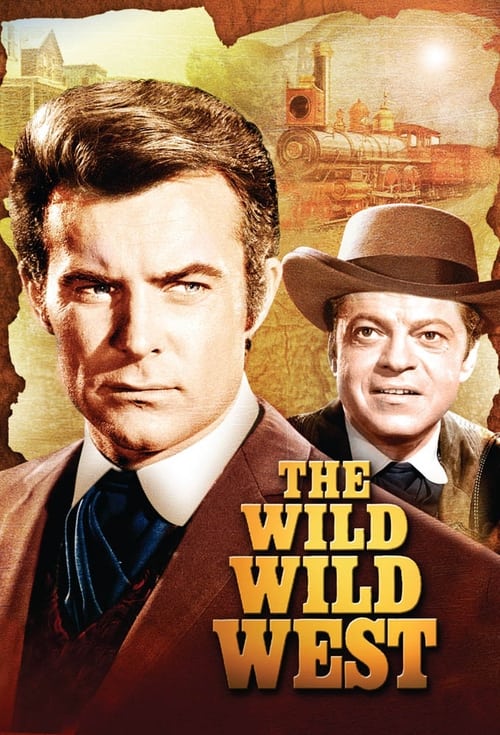
The Wild Wild West is an American Western, spy, and science fiction television series that ran on the CBS television network for four seasons from September 17, 1965, to April 11, 1969. Two satirical comedy television film sequels were made with the original stars in 1979 and 1980 and the series was adapted for a theatrical film in 1999.
Developed at a time when the television Western was losing ground to the spy genre, this show was conceived by its creator, Michael Garrison, as "James Bond on horseback." Set during the administration of President Ulysses S. Grant (1869–1877), the series followed Secret Service agents James West (Robert Conrad) and Artemus Gordon (Ross Martin) as they foiled the plans of megalomaniacal villains to take over part or all of the United States, protected the President, and solved crimes. The show featured a number of fantasy elements, such as the technologically advanced devices used by the agents and their adversaries. The combination of the Victorian era time-frame and the use of Vernean technology has led several steampunk web sites to cite the show as a pioneering influence on the genre. This aspect was accentuated even more in the 1999 film adaptation.
Despite high ratings, the series was cancelled near the end of its fourth season as a concession to Congress over television violence.
Contents
Concept
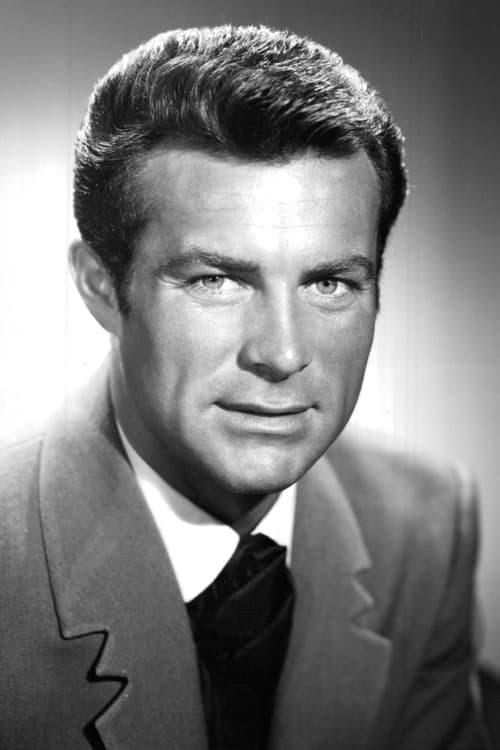
The Wild Wild West told the story of two Secret Service agents: the fearless and handsome James West (played by Robert Conrad), and Artemus Gordon (played by Ross Martin), a brilliant gadgeteer and master of disguise. Their mission was to protect President Ulysses S. Grant and the United States from all manner of dangerous threats. The agents traveled in luxury aboard their own train, the Wanderer, equipped with everything from a stable car to a laboratory. James West had served as an intelligence and cavalry officer in the American Civil War (1861–1865) on Grant's staff; his "cover", at least in the pilot episode, is that of "a dandy, a high-roller from the East". Thereafter, however, there is no pretense, and his reputation as the foremost Secret Service agent often precedes him. According to the later TV movies, West retires from the Service by 1880 and lives on a ranch in Mexico. When he retires, Gordon, who was a captain in the Civil War, returns to show business as the head of a troupe of traveling Shakespeare players.
The show incorporated classic Western elements with an espionage thriller, science fiction/alternate history ideas (in a vein similar to what would later be called steampunk), in one case horror ("The Night of the Man Eating House") and humor. Episodes were also inspired by Edgar Allan Poe, H. G. Wells and Jules Verne. In the tradition of James Bond, there were always beautiful women, clever gadgets and delusional arch-enemies with half-insane plots to take over the country or the world.
The title of each episode begins with "The Night" (except for "Night of the Casual Killer" in the first season). This followed other idiosyncratic naming conventions established by shows such as Wagon Train (1957–1965), where nearly every episode was titled "The (Name) Story" or "The Story of (Name)"; Rawhide (1959–1965), in which a majority of episode titles began with "Incident"; and The Man from U.N.C.L.E. (1964–1968), whose episodes were titled "The (Blank) Affair".
Characters
Villains
The show's most memorable recurring arch-villain was Dr. Miguelito Quixote Loveless, a brilliant but petulant and megalomaniacal dwarf portrayed by Michael Dunn. Initially he had two companions: the towering 7-foot-2-inch (2.18 m) Voltaire, played by Richard Kiel; and the beautiful Antoinette, played by Dunn's real-life singing partner, Phoebe Dorin. Voltaire disappeared without explanation after his third episode, but Kiel returned in a different role in "The Night of the Simian Terror". Antoinette vanished after her sixth episode due to demands by Dunn's jealous real-life wife.
According to the television film The Wild Wild West Revisited, Loveless eventually dies in 1880 from ulcers, brought on by the frustration of having his plans consistently foiled by West and Gordon. (His son, played by Paul Williams in the TV film, subsequently seeks revenge on the agents.)
Although several actors appeared in different villainous roles, only one other character had a second encounter with West and Gordon: Count Manzeppi, played flamboyantly by Victor Buono. Manzeppi was a diabolical genius of "black magic" and crime, who—like Dr. Loveless—had an escape plan at the end. Buono played a different villain in the pilot episode, and also returned in More Wild Wild West as "Dr. Henry Messenger", a parody of Henry Kissinger.
Agnes Moorehead won an Emmy for her role as Emma Valentine in "The Night of the Vicious Valentine". Other villains were portrayed by Ed Asner, Christopher Cary, Yvonne Craig, Robert Duvall, Anthony Eisley, Boris Karloff, Harvey Korman, Martin Landau, Delphi Lawrence, Robert Loggia, Ida Lupino, Burgess Meredith, Ricardo Montalbán, Leslie Nielsen, Ramon Novarro, Carroll O'Connor, Susan Oliver, Percy Rodrigues, Jo Van Fleet, Sam Wanamaker, William Windom, and H. M. Wynant.
While the show's writers created their fair share of villains, they often started with the nefarious, stylized and sometimes anachronistic inventions of these madmen (or madwomen) and then wrote the episodes around the devices. Henry Sharp, the series' story consultant, would sketch the preliminaries of the designs (eccentrically numbering every sketch "fig. 37"), and give the sketch to a writer, who would build a story around it.
Recurring characters
Dr. Miguelito Quixote Loveless (Michael Dunn), ten episodes. The agents' nemesis.
Colonel Richmond (Douglas Henderson), ten episodes. West and Gordon's control officer in the Secret Service.
President Ulysses S. Grant (James Gregory in the pilot; Roy Engel thereafter), seven episodes.
Antoinette (Phoebe Dorin), six appearances. Loveless' female companion, often seen playing a piano or string instrument and singing duet with Loveless. Dorin and Dunn (Loveless) had a real-life nightclub act, "Michael Dunn and Phoebe", in which they sang and exchanged banter. According to Dorin, while filming the episode "The Night of the Murderous Spring", her costume became entangled in the machinery used to pull the boat she and Dunn were in underwater. Dunn did not hesitate to follow her down and help her escape.
Jeremy Pike (Charles Aidman), four episodes. One of several agents paired with Jim during Artemus' absence in the fourth season. Appears in the final Loveless episode, "The Night of Miguelito's Revenge".
Tennyson (Charles Davis), three episodes. West's butler/valet. Seen randomly in the first season because the episodes were not always broadcast in production order.
Voltaire (Richard Kiel), three episodes. Loveless' mostly silent, giant bodyguard. (Kiel also played Dimos Buckley in "The Night of the Simian Terror".)
Count Carlos Mario Vincenzo Robespierre Manzeppi (Victor Buono), two appearances. A master of dark magic and leader of a handpicked teams of assassins. (Buono also played Juan Manolo in the pilot episode, "The Night of the Inferno", and Henry Messenger in More Wild Wild West, the final production.)
Frank Harper (William Schallert): Another agent paired with Jim in the fourth season. He appears in the series' only two-part episode, "The Night of the Winged Terror". (Schallert played different characters in two other episodes.)
Production
Casting and lead actors
Before The Wild Wild West, Robert Conrad played private detective Tom Lopaka in ABC's Hawaiian Eye for four seasons (1959–63). In November 1964, he was making the film Young Dillinger (1965) with Nick Adams, Victor Buono and John Ashley (all of whom would later guest star on The Wild Wild West) when his agent sent him to CBS to audition for the West role. Conrad claimed to be the 17th actor to test for the part. Others tested included Robert Horton, Ray Danton and James "Skip" Ward. Conrad also claimed that John Derek left the audition without testing.
Conrad performed nearly all of his own stunts in the series. "For the first few episodes we tried stuntmen," Conrad explained, "but the setup time slowed production down, so I volunteered. Things started moving quicker when I took the jumps and the spills. We started meeting the budget." Early on, he was doubled by Louie Elias or Chuck O'Brien.
On January 24, 1968, however, during filming of "The Night of the Fugitives" near the end of the third season, Conrad fell from a chandelier onto the stage floor and suffered a concussion. "A little gymnastics — chandelier work," he later explained. "I didn't chalk up properly and I went 15 feet to the concrete and fractured my skull. I was in intensive care for 72 hours, with a six-inch lineal fracture of the skull and a high temporal concussion." As a result, production of the series ended two weeks early. Conrad spent weeks in the hospital and had a long convalescence slowed by constant dizziness. The episode was eventually completed and aired early in the fourth season, with footage of the fall left in. Conrad later told Percy Shain of the Boston Globe, "I have the whole scene on film. It's a constant reminder to be careful. It also bolstered my determination to make this my last year with the series. Four seasons are enough of this sort of thing." Thereafter, Conrad was doubled for the dangerous stunts, but still participated in fight scenes.
Prior to The Wild Wild West, Ross Martin co-starred in the CBS series Mr. Lucky from 1959 to 1960, portraying Mr. Lucky's sidekick, Andamo. The series was created by Blake Edwards, who also cast Martin as villains in his films Experiment in Terror (1962) and The Great Race (1965).
Martin once called his role as Artemus Gordon "a show-off's showcase" because it allowed him to portray over 100 different characters and perform dozens of different dialects during the course of the series. He sketched his ideas for his characterizations and worked with the makeup artists to execute the final look. Martin told Percy Shain of the Boston Globe, "In the three years of the show, I have run a wider gamut than even those acknowledged masters of disguise, Paul Muni and Lon Chaney. Sometimes I feel like a one man repertory company. I think I've proven to myself and to the industry that I am the No. 1 character lead in films today." The industry acknowledged Martin's work with an Emmy nomination in 1969.
Creation, writing and filming
In 1954, director/producer Gregory Ratoff purchased the film rights to Ian Fleming's first James Bond novel, Casino Royale, for $600. CBS, meanwhile, bought the TV rights for $1,000, and on October 21, 1954, the network broadcast an hour-long adaptation on its Climax! series, with Barry Nelson playing American agent "Jimmy Bond" and Peter Lorre playing the villain, Le Chiffre. CBS also approached Fleming about developing a Bond TV series. Fleming later contributed ideas to NBC's The Man from U.N.C.L.E..
In 1955, Ratoff and Michael Garrison formed a production company to make a Casino Royale film, with Ratoff set to direct and 20th Century Fox set to distribute. Production stalled when Ratoff and Garrison could not obtain financing. In 1960, Hedda Hopper reported that Ratoff's film would star Peter Finch as Bond. But Ratoff died that December and his widow sold the film rights to producer Charles K. Feldman for $75,000. Feldman and director Howard Hawks were interested in making Casino Royale with Cary Grant as Bond. Eventually Feldman was offered $500,000 and a percentage of the profits to let Harry Saltzman and Cubby Broccoli make the film with Sean Connery. Feldman turned them down, and eventually produced the spoof Casino Royale in 1967. By then, Garrison and CBS had brought James Bond to television in a unique way.
The series' pilot episode, "The Night of the Inferno", was filmed in December 1964. It was produced by Garrison and, according to Robert Conrad, cost $685,000. The episode was scripted by Gilbert Ralston, who had written for numerous episodic TV series in the 1950s and 1960s. (Western novelist and screenwriter Clair Huffaker also worked on the concept.) In a later deposition, Ralston explained that he was approached by Michael Garrison, who "said he had an idea for a series, good commercial idea, and wanted to know if I could glue the idea of a western hero and a James Bond type together in the same show." Ralston said he then created the Civil War characters, the format, the story outline and nine drafts of the pilot script that was the basis for the television series. It was his idea, for example, to have a secret agent named Jim West who would perform secret missions for President Ulysses S. Grant. Ralston later sued Warner Bros. over the 1999 theatrical film Wild Wild West, which was based on the series.
As indicated by Robert Conrad on his DVD commentary, the show went through several producers in its first season. This was apparently due to conflicts between the network and Garrison, who had no experience producing for television and had trouble staying on budget. At first, Ben Brady was named producer, but he was shifted to Rawhide, which had its own crisis when star Eric Fleming quit at the end of the 1964–65 season. Rawhide lasted another 13 episodes before it was cancelled by CBS.
Train
For the pilot episode, "The Night of the Inferno", the producers used Sierra Railroad No. 3, a 4-6-0 locomotive that was, fittingly, an anachronism: Sierra No. 3 was built in 1891, 15 to 20 years after the series was set. Footage of this train, with a 5 replacing the 3 on its number plate, was shot in Jamestown, California. Best known for its role as the Hooterville Cannonball in the CBS series Petticoat Junction, Sierra No. 3 probably appeared in more films and TV shows than any other locomotive in history. It was built by the Rogers Locomotive and Machine Works in Paterson, New Jersey.
When The Wild Wild West went into series production, however, an entirely different train was employed. The locomotive, a 4-4-0 named the Inyo, was built in 1875 by the Baldwin Locomotive Works in Philadelphia. Originally a wood-burner, the Inyo was converted to oil in 1910. The Inyo, as well as the express car and the passenger car, originally served the Virginia and Truckee Railroad in Nevada. They were among the V&T cars sold to Paramount Pictures in 1937–38. The Inyo appears in numerous films including High, Wide and Handsome (1938), Union Pacific (1939), the Marx Brothers' Go West (1940), Meet Me in St. Louis (1944), Red River (1948), Disney's The Great Locomotive Chase (1956) and McLintock! (1963). For The Wild Wild West, Inyo's original number plate was temporarily changed from No. 22 to No. 8 so that footage of the train could be flopped horizontally without the number appearing reversed. Footage of the Inyo in motion and idling was shot around Menifee, California, and reused in virtually every episode. Stock footage of Sierra No. 3 occasionally resurfaced as well.
These trains were used only for exterior shots. The luxurious interior of the passenger car was constructed on Stage 6 at CBS Studio Center. Designed by art director Albert Heschong, the set reportedly cost $35,000 in 1965 (over $290,000 in 2021 dollars). The interior was redesigned with lighter wood when the show switched to color for the 1966–67 season.
The train interior was also used in at least one episode of Gunsmoke ("Death Train", aired January 27, 1967) and in at least two episodes of The Big Valley ("Last Train to the Fair", aired April 27, 1966, and "Days of Wrath", aired January 8, 1968). All three series were filmed at CBS Studio Center and shared other exterior and interior sets. Additionally, the train interior was used for an episode of Get Smart ("The King Lives?", aired January 6, 1968) and the short-lived Barbary Coast ("Funny Money", aired September 8, 1975).
Theme music
The main title theme was written by Richard Markowitz, who previously composed the theme for the TV series The Rebel. He was brought in after the producers rejected two attempts by film composer Dimitri Tiomkin.
In an interview by Susan Kesler (for her book The Wild Wild West: The Series) included in the first season DVD boxed set, Markowitz recalled that the original Tiomkin theme "was very, kind of, traditional, it just seemed wrong." Markowitz explained his own approach: "By combining jazz with Americana, I think that's what nailed it. That took it away from the serious kind of thing that Tiomkin was trying to do...What I did essentially was write two themes: the rhythmic, contemporary theme, Fender bass and brushes, that vamp, for the cartoon effects and for West's getting himself out of trouble, and the heraldic western outdoor theme over that, so that the two worked together."
Session musicians who played on the theme were Tommy Morgan (harmonica); Bud Shank, Ronnie Lang, Plas Johnson and Gene Cipriano (woodwinds); Vince DeRosa and Henry Sigismonti (French horns); Uan Rasey, Ollie Mitchell and Tony Terran (trumpets); Dick Nash, Lloyd Ulyate, Chauncey Welsch and Kenny Shroyer (trombones); Tommy Tedesco and Bill Pitman (guitars); Carol Kaye (Fender bass); Joe Porcaro (brushes) and Gene Estes, Larry Bunker and Emil Richards (timpani, percussion).
Markowitz, however, was never credited for his theme in any episode; it is believed that this was due to legal difficulties between CBS and Tiomkin over the rejection of the latter's work. Markowitz did receive "music composed and conducted by" credits for episodes he had scored (such as "The Night of the Bars of Hell" and "The Night of the Raven") or where he supplied the majority of tracked-in cues (such as "The Night of the Grand Emir" and "The Night of the Gypsy Peril"). He finally received "theme by" credit on both of the TV movies, which were scored by Jeff Alexander rather than Markowitz (few personnel from the series were involved with the TV movies).
Graphics
The animated title sequence was another unique element of the series. Created by Michael Garrison Productions and DePatie-Freleng Enterprises, it was directed by Isadore "Friz" Freleng and animated by Ken Mundie, who designed the titles for the film The Great Race and the TV series Secret Agent, I Spy, Rawhide and Death Valley Days.
The screen was divided into four corner panels abutting a narrow central panel that contained a cartoon "hero". The hero looked more like a traditional cowboy than either West or Gordon, and from each corner panel encountered cliché western characters and situations that never appeared in the show. In the three seasons shot in color, the overall backdrop was an abstracted wash of the flag of the United States, with the upper left panel colored blue and the others containing horizontal red stripes.
The original animation sequence is:
The hero strikes a match, lights a cigar, and begins walking in profile to the right.
Behind the hero, in the lower left panel, a bandito backs out of a bank; the hero subdues him with a karate chop to the back.
In the upper right panel, a cardsharp tries to pull an ace of spades from his boot, but the hero draws his gun and the cardsharp drops the ace.
In the upper left panel, a gunman picks up and points a six-shooter at the hero, who drops his gun and puts his hands up. The hero shoots the gunman with his sleeve Derringer; the gunman's hand falls limp. The hero then quickly retrieves his own gun and puts it back in his holster.
A woman in the lower right panel taps the hero on the hat with her parasol. He pulls her close and kisses her. She draws a knife but, mesmerized by his kiss, turns away and slumps against the side of the frame. He tips his hat and walks away with his back to the camera. There were two versions of this vignette; this one appears during the first season. When the show switched to color, the hero knocked the woman down with a right cross to the jaw. This variant also appears in the original pilot episode (included on the DVD release) when the series was titled The Wild West. Despite this, James West never hit a woman in any episode, although he grappled with many. The closest he came was when he slammed a door against the shotgun-holding evil Countess Zorana in "The Night of the Iron Fist". In "The Night of the Running Death", he slugged a woman named Miss Tyler, but "she" was a man in drag (actor T. C. Jones). The original animation, with the hero winning the woman over with a kiss, was a more accurate representation of West's methods than the right cross.
Dates given in the series
The series is generally set during the presidency of Ulysses S. Grant from 1869 to 1877; occasional episodes indicate a more precise date:
"The Night of the Glowing Corpse" (S1E7) is set during the Franco-Prussian War of July 19, 1870 – May 10, 1871.
"The Night of the Eccentrics" (S2E1) takes place four years after the execution in 1867 of Emperor Maximilian I of Mexico, i.e. 1871. This is supported by a reference to President Benito Juárez, who stepped down in 1872.
In "The Night of the Eccentrics", Count Manzeppi hums "Ride of the Valkyries" which was first performed on June 26, 1870.
"The Night of the Man Eating House" (S2E12) states that Liston Day has been in solitary confinement for 30 years and later that he was arrested April 23, 1836. This would put it around 1866, three years before the Grant presidency began.
In "The Night of the Brain" (S2E21), Artemus Gordon shows James West a newspaper dated July 12, 1872. West states, "July 12, that's an interesting date, but it happens to be tomorrow." After the events described happen, they again get tomorrow's newspaper and we see the date: July 14, 1872.
"The Night of the Lord of Limbo" (S2E15) takes place seven years after the end of the Civil War, making it 1872.
"The Night of the Tartar" (S2E19) takes place five years after the 1867 purchase of Alaska [i.e., 1872]
"The Night of the Whirring Death" (S1E20) opens with the caption San Francisco 1874.
"The Night of the Returning Death" is set 13 years after the start of the Civil War [i.e., 1874]
Cancellation
Some episodes were considered violent for their time and that, rather than low ratings, ultimately was the series' downfall. In addition to gunplay, there were usually two fight sequences per episode. These were choreographed by stuntman and bit player Whitey Hughes and Conrad and performed by Conrad and a stock company of stuntmen, including Red West, Dick Cangey and Bob Herron (who doubled for Ross Martin).
After Conrad suffered a concussion falling from a chandelier in "The Night of the Fugitives", the network insisted that he defer to a stunt double (his chair on the set was newly inscribed: "Robert Conrad, ex-stuntman, retired by CBS, Jan. 24, 1968"). "[W]hen I came back for the fourth season, I was limited to what I could do for insurance reasons," Conrad explained. "So I agreed and gradually I did all the fights but couldn't do anything five feet off the ground and of course that went out the window." He was doubled by Jimmy George. Often, George would start a stunt, such as a high fall or a dive through a window, then land behind boxes or off-camera where Conrad was hidden and waiting to seamlessly complete the action. This common stunt technique, known by filmmakers as "the Texas Switch", was often used by Ross Martin and his double, Bob Herron.
It was hazardous work. Hughes recalled, "We had a lot of crashes. We used to say, 'Roll the cameras and call the ambulances!'" Conrad recalled in 1994, "The injuries started at the top. Robert Conrad: 6-inch fracture of the skull, high temporal concussion, partial paralysis. Ross Martin: broken leg. A broken skull for Red West. Broken leg for Jimmy George. Broken arm for Jack Skelly. And Michael Dunn: head injury and a spinal sprain. He did his own stunts. And on and on."
As a result of the April 1968 assassination of Martin Luther King and the June 1968 assassination of Robert F. Kennedy, President Johnson created the U.S. National Commission on the Causes and Prevention of Violence. One of the questions it tackled was whether violence on television, including graphic news coverage of the Vietnam War, was a contributing factor to violence in American society. The television networks, anticipating these allegations, moved to curtail violence on their entertainment programs before the September start of the 1968–69 television season. Television reporter Cynthia Lowrey, in an article published in August 1968, wrote that The Wild Wild West "is one of the action series being watched by network censors for scenes of excessive violence, even if the violence is all in fun."
Domestic and foreign syndication
The series was shown in the United Kingdom on the ITV network starting May 5, 1968. It was reasonably popular but has not been seen on British terrestrial television since the early 1980s. In France, the series was known locally as Les Mystères de l'Ouest, where it was successful since all four seasons were released in a DVD boxed set there before they were released in the U.S.
In the summer of 1970, CBS reran several episodes of The Wild Wild West on Mondays at 10 p.m. as a summer replacement for The Carol Burnett Show. These episodes were "The Night of the Bleak Island" (aired July 6); "The Night of the Big Blackmail" (July 13); "The Night of the Kraken" (July 20); "The Night of the Diva" (July 27); "The Night of the Simian Terror" (August 3); "The Night of the Bubbling Death" (August 11); "The Night of the Returning Dead" (August 17); "The Night of the Falcon" (August 24); "The Night of the Underground Terror" (August 31); and "The Night of the Sedgewick Curse" (September 7). Curiously, none of these featured the most frequent and popular villain, Dr. Loveless.
TV critic Lawrence Laurent wrote, "The return of Wild Wild West even for a summer re-run isn't surprising. CBS-TV was never really very eager to cancel this series, since over a four-year run that began in 1965 the Wild Wild West had been a solid winner in the ratings. Cancellation came mainly because CBS officials were concerned about the criticism over televised violence and to a lesser degree because Robert Conrad had grown slightly weary of the role of James West. Ever since last fall's ratings started rolling in, CBS has wished that it had kept Wild Wild West. None of the replacements have done nearly as well and, as a result, all of the Friday programs suffered."
That fall, CBS put the program into syndication, giving it new life on local stations across the country. This further antagonized the anti-violence lobby, since the program was now broadcast weekdays and often after school. One group, The Foundation to Improve Television (FIT), filed a suit on November 12, 1970, to prevent WTOP in Washington, D.C., from airing The Wild Wild West weekday afternoons at 4 pm. The suit was brought in Washington, D.C., specifically to gain government and media attention. The suit said the series "contains fictionalized violence and horror harmful to the mental health and well-being of minor children", and should not air before 9 pm. WTOP's vice president and general manager, John R. Corporan, was quoted as saying, "Since programs directed specifically at children are broadcast in the late afternoon by three other TV stations, it is our purpose to counter-program with programming not directed specifically at children." U.S. District Court Judge John J. Sirica, who later presided over the trial of the Watergate burglars and ordered U.S. President Richard Nixon to turn over White House recordings, dismissed the lawsuit in January 1971, referring FIT to take their complaint to the FCC. FIT appealed, but a year and a half later the U.S. Court of Appeals upheld the district court decision dismissing the suit on the grounds that FIT had not exhausted the administrative remedies available to them. By then, WTOP had stopped broadcasting the series altogether. At that time, the show was in reruns on about 57 other local stations across the country, including WOR in New York and WFLD in Chicago.
Television films
Conrad and Martin reunited for two satirical comedy television film sequels, The Wild Wild West Revisited (broadcast May 9, 1979) and More Wild Wild West (broadcast October 7, 1980). Revisited introduced Paul Williams as Miguelito Loveless Jr., the son of the agents' nemesis. Loveless planned to substitute clones for the crowned heads of Europe and the President of the United States. This plot is similar to the second-season episode "The Night of the Brain", which featured a different villain.
Most of the exteriors were filmed at Old Tucson Studios in Arizona, where there are Western sets and a functioning steam train and tracks. Interiors were shot at CBS Studio Center. Ross Martin said, "We worked on a lot of the same sets at the studio, including the interiors of the old train. We used the same guns and gimmicks and wardrobes – with the waistlines let out a little bit. The script, unlike the old shows, is played strictly for comedy. It calls for us to be ten years older than when we were last seen. There are a lot more laughs than adventure."
More Wild Wild West was initially conceived as a rematch between the agents and Miguelito Jr., but Williams was on tour and unavailable for the film; his character was changed to Albert Paradine II and played by Jonathan Winters. This explains why the story begins with various clones of Paradine being murdered; the first film ends with word that Loveless had cloned himself five times. Paradine planned world conquest using a formula for invisibility, recalling the first-season episode "The Night of the Burning Diamond".
Both TV films were campier than the TV series, although Conrad and Martin played their roles straight. Both films were directed by veteran comedy Western director Burt Kennedy and written by William Bowers (in the latter case with Tony Kayden, from a story by Bowers); neither Kennedy nor Bowers had worked on the original series. The Wild Wild West Revisited takes the agents to a town called Wagon Gap. This was a nod to the Abbott and Costello film, The Wistful Widow of Wagon Gap (1947), which was based on a treatment by Bowers and D. D. Beauchamp of a short story by Beauchamp.
Conrad once revealed that CBS intended to do yearly TV revivals of The Wild Wild West. Variety, in its review of the first TV movie, concurred: "A couple of more movies in this vein, sensibly spaced, could work in the future." Ross Martin's death in 1981, however, put an end to the idea. Conrad was later quoted in Cinefantastique about these films: "We all got along fine with each other when we did these, but I wasn't happy with them only because CBS imposed a lot of restrictions on us. They never came up to the level of what we had done before."
Home media
The first season of The Wild Wild West was released on DVD in North America on June 6, 2006, by CBS Home Entertainment (distributed by Paramount Home Entertainment). Although it was touted as a special 40th anniversary edition, it appeared 41 years after the show's 1965 debut. Robert Conrad recorded audio introductions for all 28 first-season episodes, plus a commentary track for the pilot. The set also featured audio interviews by Susan Kesler (for her book, The Wild Wild West: The Series), and 1970s era footage of Conrad and Martin on a daytime talk show. The second season was released on DVD on March 20, 2007; the third season was released on November 20, 2007; and the fourth and final season was released on March 18, 2008. None of the later season sets contained bonus material.
A 27-disc complete series set was released on November 4, 2008. It contains all 104 episodes of the series, as well as both reunion telefilms.
On May 12, 2015, CBS Home Entertainment released a repackaged version of the complete series set, at a lower price, but did not include the bonus disc that was part of the original complete series set. On June 13, 2016, the bonus disc was released as a standalone item.
In France, where the series (known locally as Les Mystères de l'Ouest) was a big hit, all four seasons were released in a DVD boxed set before their American release. The French set, released by TF1 Video, includes many of the extras on the American season 1 set and many others. "The Night of the Inferno" is presented twice – as a regular episode in English with Conrad's audio commentary, and in a French-dubbed version. All of the episodes are presented in English with French subtitles, and several episode titles differ in translation from the original English titles. For example, "The Night of the Gypsy Peril", "The Night of the Simian Terror" and "The Night of Jack O'Diamonds" respectively translate as "The Night of the White Elephant", "The Night of the Beast" and "The Night of the Thoroughbred". Both TV movies are included as extras, but only in French-dubbed versions. The set also features a 1999 interview with Robert Conrad at the Mirande Country Music Festival in France.
Theatrical film adaptation
Warner Bros. optioned the film rights to The Wild Wild West in 1992. Mel Gibson was cast as James West, with Richard Donner set to direct from a screenplay by Shane Black (Donner had directed three episodes of the original series). In 1997, as the film was still being developed with other directors, writers and stars, Gilbert Ralston, who wrote the TV pilot, sued Warner Bros. over the upcoming feature film based on the series he helped create. Ralston died in 1999 before his suit was settled; however, Warner Bros. paid his family between $600,000 and $1.5 million.
In 1999, a theatrical feature-length film co-produced and directed by Barry Sonnenfeld was released as Wild Wild West (without the definite article used in the series title). Loosely based on the original series, the film re-imagined James West as a Black man (played by Will Smith), and Artemus Gordon (played by Kevin Kline) was portrayed as egotistical and bitterly competitive with West. Significant changes were also made to Dr. Loveless (played by Kenneth Branagh). No longer a dwarf, he was portrayed as a legless double amputee confined to a steam-powered wheelchair (similar to that employed by the villain in the episode "The Night of the Brain"). Loveless, whose first name was changed from Miguelito to Arliss, was a bitter Southerner who sought revenge on the North after the American Civil War.
Robert Conrad was reportedly offered a cameo as President Grant, but turned it down when the producers wanted him to read for the part. He was outspoken in his criticism of the film, which was now a comedic showcase for Will Smith with little in common with the original series. He was not opposed to casting a Black actor as Jim West: "The African-American casting of that role is probable and should not be an issue," Conrad said. "I think the casting of (Will) Smith is the issue. I appreciate his popularity. However, I'd prefer an actor with more athletic prowess. He's a good comedian but just not my choice to play my role. Best would be a Wesley Snipes body with a Denzel Washington head." Conrad was also offended by the racial overtones of the film. "There is a reference in it to a racial slur," Conrad said. "I hope it's not in the final version. I said, 'Why are we going in this direction. Why not just play James West black without explaining it?' He also criticized the casting of Branagh as a double amputee, rather than a little-person actor, in the role of Loveless. "Michael Dunn did such a great job playing Dr. Loveless, and he was by far the best villain on the show," Conrad said. "There are so many talented dwarfs but they wanted Kenneth Branagh." In a New York Post interview (July 3, 1999), Conrad stated that he disliked the film and that contractually he was owed a share of money on merchandising that he was not paid. He also had a long-standing feud with producer Jon Peters. "He was dating my 17-year-old daughter," Conrad explained, "saying he was divorced when he wasn't."
In other media
The series spawned several merchandising spin-offs, including a seven-issue comic book series by Gold Key Comics, and a paperback novel, Richard Wormser's The Wild Wild West, published in 1966 by Signet (ISBN 0-451-02836-8), which adapted the episode "The Night of the Double-Edged Knife".
Books
In 1988, Arnett Press published The Wild Wild West: The Series by Susan E. Kesler (ISBN 0-929360-00-1), a thorough production history and episode guide.
In 1998, Berkeley Books published three novels by author Robert Vaughan – The Wild Wild West (ISBN 0-425-16372-5), The Night of the Death Train (ISBN 0-425-16449-7), and The Night of the Assassin (ISBN 0-425-16517-5).
In 2019, Epic Press published a new novel by Joseph Covino Jr, paying tribute to the series with a novel faithful in both style and spirit, Night of the Nobility Cult: A Wild, Wild Western.
Comics
In 1990, Millennium Publications produced a four-issue comic book miniseries ("The Night of the Iron Tyrants") scripted by Mark Ellis with art by Darryl Banks. A sequel to the TV series, it involved Dr. Loveless in a conspiracy to assassinate President Grant and the President of Brazil and put the Knights of the Golden Circle into power. The characters of Voltaire and Antoinette were prominent here, despite their respective early departures from Dr. Loveless' side in the original series. A review from the Mile High Comics site states: "This mini-series perfectly captures the fun mixture of western and spy action that marked the ground-breaking 1960s TV series." The storyline of the comics miniseries was optioned for motion picture development.
In the 75th volume of the Belgian comic book series Lucky Luke (L'Homme de Washington), published in 2008, both James West and Artemus Gordon have a minor guest appearance, albeit the names have been changed to "James East" and "Artémius Gin".
Television
When Robert Conrad hosted Saturday Night Live on NBC (January 23, 1982), he appeared in a parody of The Wild Wild West. President Lincoln states his famous quip that, if General U.S. Grant is a drunk, he should send whatever he is drinking to his other, less successful generals. Lincoln dispatches West and Gordon (Joe Piscopo) to find out what Grant drinks. They discover that Grant is held captive by Velvet Jones (Eddie Murphy).
Soundtrack album
On July 11, 2017, La-La Land Records released a limited edition 4-disc set of music from the series, featuring Richard Markowitz's theme, episode scores by Markowitz, Robert Drasnin, Dave Grusin, Richard Shores, Harry Geller, Walter Scharf, Jack Pleis and Fred Steiner and Dimitri Tiomkin's unused theme music.
Contemporary merchandise
Like many television series, The Wild Wild West had several merchandise tie-ins during its run:
Notes
^[a] This item was not marketed with the series' name. However, The Wild Wild West was the only television series at the time that featured the item.
The Lunch Box had two scenes. One showed West and Gordon riding horses to stop a train hijacked by outlaws. The other side showed West swinging on a trapline over a burning chasm to kick a gun out of a villain's hand while Gordon was trapped on the other side of the chasm.
Marx produced a James West 12" action figure, intended as a western/cowboy competitor to GI Joe, but licensing issues caused them to scuttle their plans; the James West heads were used subsequently for their Captain Maddox figure, and the James West bodies were used for their Sam Cobra figures. An actual GI Joe figure dressed as James West on an oversized chess board was used in the episode “The Night of the Brain”.
Proposed revivals
After the success of the first TV movie, CBS planned to revive the show as a series of yearly specials. The death of Ross Martin in 1981 ended that discussion. On October 5, 2010, Entertainment Weekly reported that Ronald D. Moore and Naren Shankar were developing a remake of The Wild Wild West for television, but the project apparently stalled. In December 2013, Moore told Wired that "Wild Wild West and Star Trek were two of my great loves. I watched both in syndication in the '70s. Wild Wild West was really interesting, that combination of genres—a Western and secret agent, and they dabbled in the occult and paranormal. I really wanted to do a new version for CBS. I still think it's a great property. Someday I hope to go back to it."
A pastiche webseries titled Back to the Wild Wild West began production in November 2011, but apparently has been stalled.