



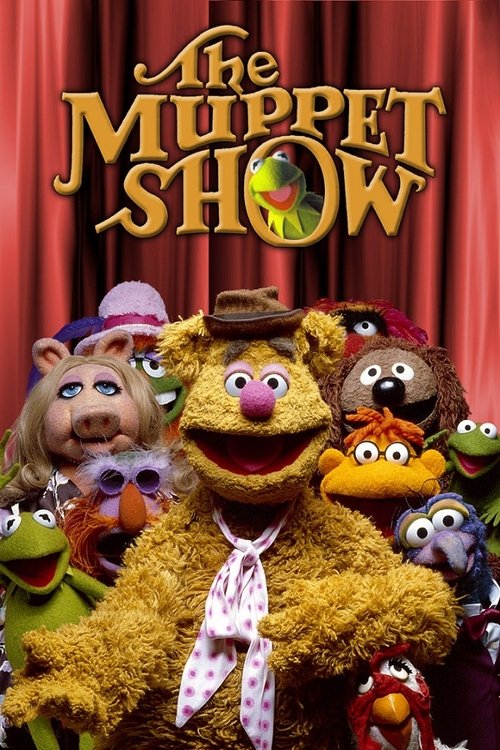

The Muppet Show is a variety sketch comedy family television series created by Jim Henson and starring the Muppets. It is presented as a variety show, featuring recurring sketches and musical numbers interspersed with ongoing plot-lines with running gags taking place backstage and in other areas of the venue.
The Muppet Show is known for its uniquely designed characters, burlesque nature, slapstick, sometimes absurdist and surreal humour, and parodies. Within its context, Kermit the Frog (performed by Henson) acts as showrunner and host, who tries to maintain control of the overwhelming antics of the other Muppet characters as well as appease the rotating slate of guest stars. As The Muppet Show became popular, many celebrities were eager to perform with the Muppets on television and in subsequent films.
Henson produced two pilot episodes for ABC in 1974 and 1975, but neither went forward as a series. While other networks in the United States rejected Henson's proposals, British producer Lew Grade expressed enthusiasm for the project and agreed to co-produce The Muppet Show for ATV, part of the UK ITV network. The Muppet Show was produced by ITC Entertainment and Henson Associates with programmes produced and recorded at the ATV Elstree Studios in Borehamwood, Hertfordshire.
The series was premiered in the UK on 5 September 1976 and ended on 15 March 1981. Five seasons, totalling 120 episodes, were broadcast on ATV and other ITV franchises in the UK and in first-run syndication in the United States from 1976 to 1981.
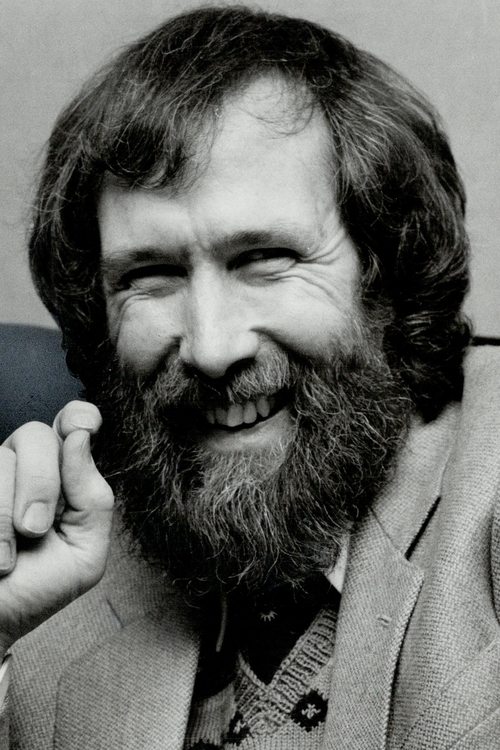
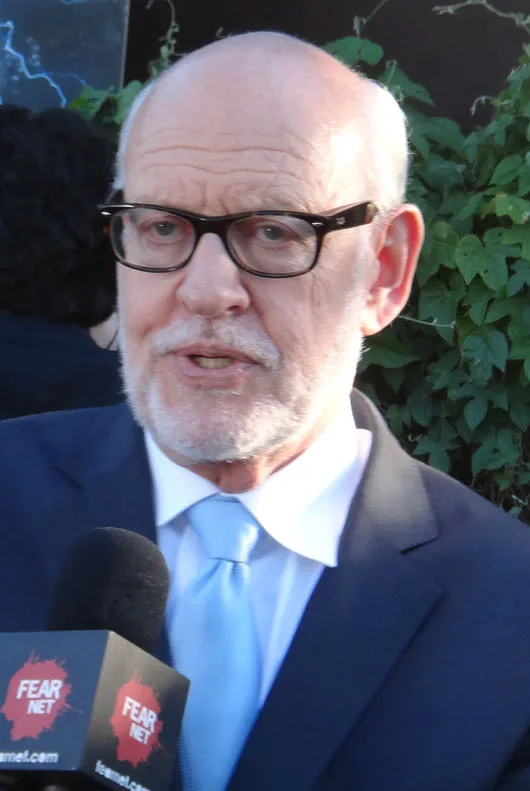
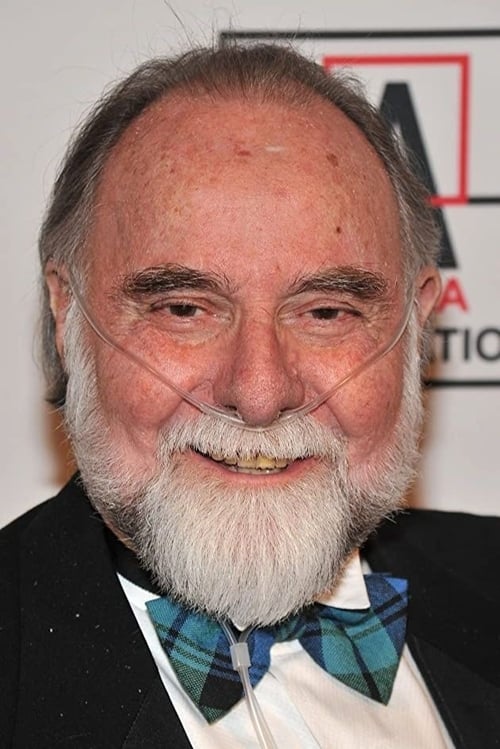
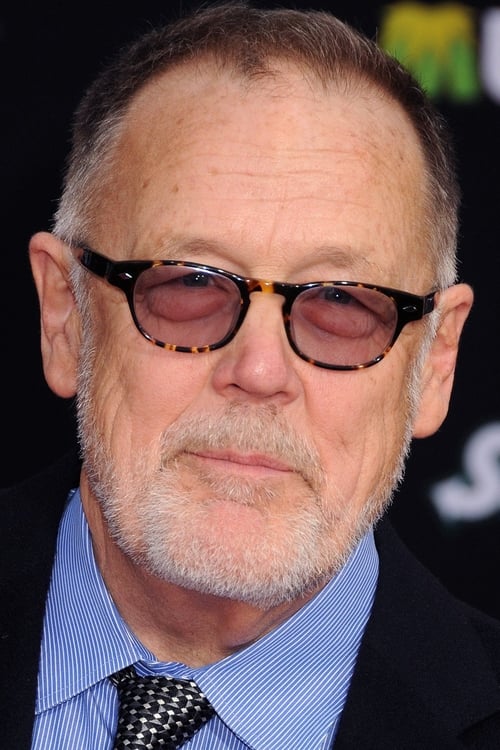
The cast of performers over the course of the series included Henson, Frank Oz (credited as featured performer as well as creative consultant), Jerry Nelson, Richard Hunt, Dave Goelz, Steve Whitmire, Fran Brill, Eren Özker, Louise Gold, Kathryn Mullen, Karen Prell, Brian Muehl, Bob Payne, John Lovelady, Jane Henson, Peter Friedman, Betsy Baytos, and dancer Graham Fletcher. Many of the performers also worked on Sesame Street, whose characters made sporadic appearances on The Muppet Show. Jack Burns served as the head writer for the first season, before Jerry Juhl became the head writer from the second season. The music was performed by ATV's musical director Jack Parnell and his orchestra.
The rights to the series have been owned by the Muppets Studio (a division of the Walt Disney Company) since the Muppets were acquired from the Jim Henson Company in 2004.
Contents
History
Since its debut in 1969, Sesame Street had given Jim Henson's Muppet characters exposure. However, he began to perceive that he was becoming typecast as a children's entertainer. Subsequently, he began to conceive a programme for a more adult audience. Two television specials, The Muppets Valentine Show (1974) and The Muppet Show: Sex and Violence (1975), were produced for ABC and are considered pilots for The Muppet Show. Neither of them were ordered to series. However, the prime-time access rule had been recently enacted, moving the 7:30 to 8 pm ET slot from the networks to their affiliates. CBS became interested in Henson's series proposals and expressed intent to broadcast it weekly on its owned and operated stations. According to Henson's pitch reel, George Schlatter was originally involved.
Lew Grade, the proprietor of the British commercial station ATV, was familiar with puppet television programmes, having underwritten the various works of Gerry Anderson, while also producing two specials with Henson: Julie on Sesame Street and a special on Herb Alpert & the Tijuana Brass. Grade offered Henson a deal that resulted in the latter's programme being produced at the ATV Elstree Studios. ATV, as part of the ITV network, would broadcast the programme to other ITV stations in the United Kingdom, and its distribution arm, ITC Entertainment, would handle international broadcasts. Henson set aside his misgivings about syndication and accepted.
Meanwhile, Henson's Muppets were featured in The Land of Gorch skits during the first season (1975–76) of the American comedy television programme Saturday Night Live. Although they did not last due to conflicts with the show's writers and producers, Henson and his team gained institutional knowledge about adapting and quickly creating a television programme within a seven-day period. Henson also gained friendships with multiple celebrities through his work on Saturday Night Live. Henson and his team were later able to use these skills and relationships on The Muppet Show.
The Muppet Show was first aired in September 1976 in the UK and by December the series had around 14 million viewers tuning in on Sunday evenings. In January 1977, over 100 countries had either acquired the series or were making offers, which had resulted in over £6 million in overseas sales and by its third season in 1978 it had a weekly worldwide audience of 235 million.
Overview
Opening and closing sequences
"The Muppet Show Theme" (written by Henson and Sam Pottle in 1976) is the show's theme song. While the opening sequence changed from season to season, the overall concept remained the same. Each episode began with "The Muppet Show" logo on a title card. The centre of the "O" then opened to reveal host Kermit the Frog, who announced, "It's The Muppet Show, with our very special guest star, [name of guest star]!" usually cheering afterwards.
During the first season, the theme song contained a joke from Fozzie Bear and featured Kermit introducing the guest star ("To introduce our guest star, that's what I'm here to do, so it really makes me happy to introduce to you..."). At the song's end, Gonzo the Great appeared in front of the "Muppet Show" banner, attempting to play the "O" in "Show" like a gong, with various comical results.
From the second to fourth seasons, the joke and Kermit's introduction were replaced by a short quip from Statler and Waldorf, then a shot of the audience singing "Why don't they get things started?" The fifth season version had an extra verse from the hecklers ("Why do we always come here? I guess we'll never know. It's like a kind of torture to have to watch the show!"). At the end of the song, Gonzo appeared inside the "O" in "Show" to play the final note on a trumpet; again, with various comical results.
Each episode ended with an extended instrumental performance of "The Muppet Show Theme" by the Muppet orchestra before Statler and Waldorf gave their last comment of the night, followed by Zoot playing an off-key final note on his saxophone. These last comment sequences would sometimes include other Muppets on the balcony.
Every season, the TV version of the song was presented with re-worked lyrics. While the opening sequence evolved visually over the show's five seasons, the musical composition remained essentially the same. Over the years, the song has become a staple of the Muppets franchise as a whole.
Muppet Theater
The Muppet Theater is the setting for The Muppet Show, a grand old vaudeville house that has seen better days. In a 1976 episode guest starring Jim Nabors, Kermit identifies the name of the theatre as The Benny Vandergast Memorial Theater, although other episodes identify it as "the Muppet Theater". Locations seen in the Muppet Theater include backstage left (which includes Kermit's desk), the dressing rooms, the attic, the canteen, the prop room, the stage, Statler and Waldorf's box, the auditorium, reception, the recording studio, the stage door lobby and the boiler room. Scooter's uncle J.P. Grosse owns the theatre and rents it to the Muppets.
Characters and performers
Many of the characters who appeared on The Muppet Show have appeared in previous and subsequent Muppet productions.
Guest stars
No guest star ever appeared twice on The Muppet Show. Originally, the producers had to call on their personal contacts to appeal to them to appear, considering that doing so required an overseas trip to Britain. However, the situation changed when the ballet dancer Rudolf Nureyev offered to appear; after his performance in a Season 2 episode produced favourable publicity, celebrities sought to appear in the series.
Many episodes featured actors, such as Gilda Radner, Steve Martin, Harvey Korman, Sylvester Stallone, Julie Andrews, Carol Burnett, Liza Minnelli, Christopher Reeve, Raquel Welch, Joel Grey and Dom DeLuise; some had veteran performers like Ethel Merman, Bob Hope, Danny Kaye, Don Knotts, Liberace, Peter Ustinov, James Coburn, Lena Horne, Zero Mostel and Vincent Price, and others had well-known pop singers, including Elton John, Diana Ross, Harry Belafonte, Kenny Rogers, Linda Ronstadt, Alice Cooper, Paul Simon, Helen Reddy, Twiggy, Debbie Harry, Buddy Rich, and Leo Sayer. Sayer's show used his hit song "The Show Must Go On" with slightly changed lyrics in the second verse, from "I wish I could tear down the walls of this theatre" to "I wish I could tear down the walls of this Muppet Theatre". Some guest stars, such as the Monty Python star John Cleese, co-wrote much of their own episodes. The second-to-last episode, in 1981, had the then-James Bond actor Roger Moore, while the final episode to be taped guest-starred the actor and dancer Gene Kelly. Mark Hamill appeared in one episode as both himself and Luke Skywalker, his role in the Star Wars film series. Two of Henson's childhood idols, Edgar Bergen and Milton Berle, also guest-starred during the second season.
In 1977, Rita Moreno won the Primetime Emmy Award for Outstanding Individual Performance in a Variety or Music Program for her appearance. The next year, Peter Sellers — who chose not to appear as himself, instead appearing in a variety of characters — and Bernadette Peters earned nominations for the same award. One 1981 episode had the staff writer Chris Langham (who wrote some episodes of the show, starting in the third season) guest-starring when Richard Pryor was unable to make the taping of the episode at the last minute.
An early tradition was to present the guest star with a Muppet likeness of themselves as a parting gift at the end of the show. This lasted for the first two episodes produced, with Connie Stevens and Juliet Prowse. The high cost and effort of creating these unique Muppets, scheduling conflicts, and potential legal issues contributed to the decline of this practice, although Muppet caricatures and parodies continued to appear.
Recurring sketches
"At the Dance" – The sketch was a regular during the first season but was used less frequently from the second season onward. Muppet characters (some of them being Whatnots) circulated on a semi-formal dance floor offering rapid fire one-liner jokes and come-backs as the couples passed in front of the camera. Debuted in The Muppet Show: Sex and Violence, and played a large role in the plot for a season five episode.
"Bear on Patrol" – Fozzie Bear is a luckless police officer named Patrol Bear and Link Hogthrob is the incompetent chief of police who are always in the silliest situations with the criminals brought in. The voice of the announcer was performed by Jerry Nelson. Debuted in the third season.
"Blackouts" – Short, comic sketches with the show's guest star traditional to vaudeville that end with the lights turning off or a quick closing of the curtain. Only appeared in the first season.
"Cold Openings" – The Cold Openings appeared at the beginning of each episode and officially introduced the guest star. During the first season, Kermit introduced the guest star during the opening theme. His introduction was followed by a clip of the guest star, usually surrounded by a group of Muppets. Beginning in the second season, the Cold Openings appeared before the opening theme song. Scooter visited the guest star in their dressing room, usually saying "Fifteen seconds to curtain". This was then followed by a brief joke. In the fifth season, the guest star entered the Muppet Theatre and was greeted by Pops the Doorman. Pops always said, "Who are you?" as soon as he saw the guest star. After the guest star introduced themself to Pops, a joke would follow.
"An Editorial by Sam the Eagle" – Sam the Eagle gives an editorial on a specific topic which ends up occurring during the editorial. Only appeared in the second season.
"The Electric Mayhem" – A variety of musical sketches featuring Dr. Teeth and the Electric Mayhem.
"Fozzie Bear's Act" – Fozzie Bear goes on stage and tells jokes. Statler and Waldorf heckle him in a perpetual rivalry. The sketches became less frequent as Fozzie's off-stage presence became more prevalent. In one first-season episode, however, Fozzie, with help from Bruce Forsyth, turned the tables on Statler and Waldorf who waved a white flag in surrender. It mainly appeared during the first season, but made occasional appearances in later seasons.
Cast
The Muppets Performers
Jim Henson (Pilot 1-2 & Series 1-15)
Frank Oz
Jerry Nelson
Richard Hunt
Dave Goelz
Steve Whitmire (Seasons 3-5)
Louise Gold
Kathryn Mullen
Eren Ozker
John Lovelady (Seasons 1-2)
Fran Brill
Jane Henson
Brian Muehl
Peter Friedman
Episodes
The Muppet Show ran for five seasons, with minor alterations taking place each season.
Awards and nominations
The Muppet Show was nominated for nine BAFTA Awards during its run, winning three. It was nominated for 22 Primetime Emmy Awards, winning four, including the 1978 award for Outstanding Comedy-Variety or Music Series. It was presented with a Peabody Award in 1978. Also in 1978, the show received the Television Award of Merit from the Mary Washington Colonial Chapter of the National Society of the Daughters of the American Revolution.
The series also won the top Variety Prize in the Golden Rose of Montreux international Contest in May 1977.
Home media
Compilation releases
In 1985, Playhouse Video released a collection of video compilations under the Jim Henson's Muppet Video banner. Ten videos were released, featuring original linking material in addition to clips from the show.
Videos included:
The Muppet Revue (titled Kermit and Fozzie's Favourite Moments in the UK) – Hosted by Kermit and Fozzie as they clean up the attic, with guest stars Linda Ronstadt, Paul Williams, Harry Belafonte, and Rita Moreno
The Kermit and Piggy Story – Hosted by Kermit and Miss Piggy as they reminisce over their moments on the show, with guest stars Raquel Welch, Tony Randall, Cheryl Ladd, and Loretta Swit
Children's Songs and Stories with the Muppets – Hosted by Scooter as he looks through a scrapbook of children's songs from the show, with interruptions by other Muppet characters (all voiced by Jim Henson) as he constantly tries to introduce his favorite song, "Six String Orchestra", with guest stars Julie Andrews, John Denver, Twiggy, Brooke Shields, Judy Collins, and Charles Aznavour
Rock Music with the Muppets – Hosted by Dr. Teeth with assistance by Beaker in a recording studio, with guest stars Debbie Harry, Linda Ronstadt, Alice Cooper, Ben Vereen, Helen Reddy, Leo Sayer, Loretta Swit, and Paul Simon
Muppet Treasures – Hosted by Kermit and Fozzie as they once again clean out the attic, with guest stars Zero Mostel, Loretta Lynn, Paul Simon, Buddy Rich, Peter Sellers, and Ethel Merman
Gonzo Presents Muppet Weird Stuff – Hosted by Gonzo and Camilla at Gonzo's trailer home, which Gonzo tries to pass off as a mansion, with guest stars John Cleese, Jean Stapleton, Dom DeLuise, Julie Andrews, Vincent Price, and Madeline Kahn
Country Music with the Muppets – Hosted by Rowlf at a barnyard radio station, with guest stars Mac Davis, John Denver, Crystal Gayle, Loretta Lynn, Roger Miller, Roy Clark, Johnny Cash, Roy Rogers, and Dale Evans
Series releases
In 1994, Buena Vista Home Video under the Jim Henson Video imprint released The Muppet Show: Monster Laughs with Vincent Price, featuring the episodes with Vincent Price and Alice Cooper. Both episodes were edited. In addition to replacing the first series opening and the ending logos with Zoot, the Vincent Price episode was edited to remove the songs "I'm Looking Through You" and "You've Got a Friend" (the latter of which would be cut again when released on the first series DVD) as well as a sketch with the Talking Houses, while the Alice Cooper episode removed Robin the Frog's performance of "Somewhere Over the Rainbow".
Time-Life and Jim Henson Home Entertainment began marketing "best of" volumes of The Muppet Show for mail-order in 2000, with six initial volumes with three episodes on each VHS and DVD. Unique to each episode was an introduction by Jim Henson's son, Brian. Nine more volumes were added for 2001, the series' 25th anniversary. The collection was available for retail in 2002 via Columbia TriStar Home Entertainment and Jim Henson Home Entertainment by which time Time-Life had released its tenth volume.
Buena Vista Home Entertainment released the first three seasons on DVD between 2005 and 2008. The rights to the episodes and characters used in The Muppet Show, and subsequent film outings, were bought in February 2004 by The Walt Disney Company.
Several songs were cut from the series 1 DVD release due to music licensing issues. There have also been some cuts in the intro sequence, and backstage scenes leading up to these songs. However, episodes that used Disney music remained unaltered (for example, episode 14 of series 1 used "Never Smile at a Crocodile" from Disney Animation's 1953 film Peter Pan).
"Stormy Weather" (Joel Grey episode) sung by Wayne and Wanda
"Gone with the Wind" (Jim Nabors episode) sung by Jim Nabors
"The Danceros" (Jim Nabors episode) sung by The Danceros
"All of Me" (Paul Williams episode) sung by Two Monsters
Streaming
The Muppet Show was released for streaming on Disney+ on 19 February 2021. However, two episodes featuring guests Brooke Shields and Chris Langham are omitted from the streaming service. In several European countries, the episode with John Denver is omitted as well. A content advisory was attached to several episodes describing "negative depictions and/or mistreatment of people or cultures".
In other media
2001: The Muppet Show Live!
During the 2001 MuppetFest celebration, The Muppet Show Live was staged at the Hollywood Palace in Hollywood, Los Angeles on 9 December 2001. The performance featured Steve Whitmire, Brian Henson, Bill Barretta, Kevin Clash, John Kennedy, John Henson, and Julianne Buescher.
Additional puppeteers including Allan Trautman, Bruce Lanoil, Drew Massey, Karen Prell and Mike Quinn.
2026: Revival special
On 17 September 2025, Disney announced that an untitled "event special" for The Muppet Show was being produced for Disney+, to premiere on 4 February 2026 to coincide with the show's 50th anniversary, and would also serve as a backdoor pilot for a potential revival/reboot of the original series. The special was described as "Kermit the Frog, Miss Piggy, Fozzie Bear, Gonzo and the gang as they return to the Muppet Theatre to produce a variety show." The special starred Muppet performers Bill Barretta, Dave Goelz, Eric Jacobson, Peter Linz, David Rudman and Matt Vogel performing the majority of the Muppet characters, alongside a supporting cast of additional performers; Goelz reprised most of the same character roles he originated during the show's original 1976–1981 run. The special was directed by Alex Timbers and featured special guest stars Sabrina Carpenter, Maya Rudolph and Seth Rogen. In addition, Carpenter and Rogen also served as executive producers alongside Evan Goldberg, Vogel, Jacobson, David Lightbody, Leigh Slaughter, Michael Steinbach, Albertina Rizzo, James Weaver and Alex McAtee.
The special was co-produced by 20th Television, Disney Branded Television, The Muppets Studio, and Point Grey Pictures.