




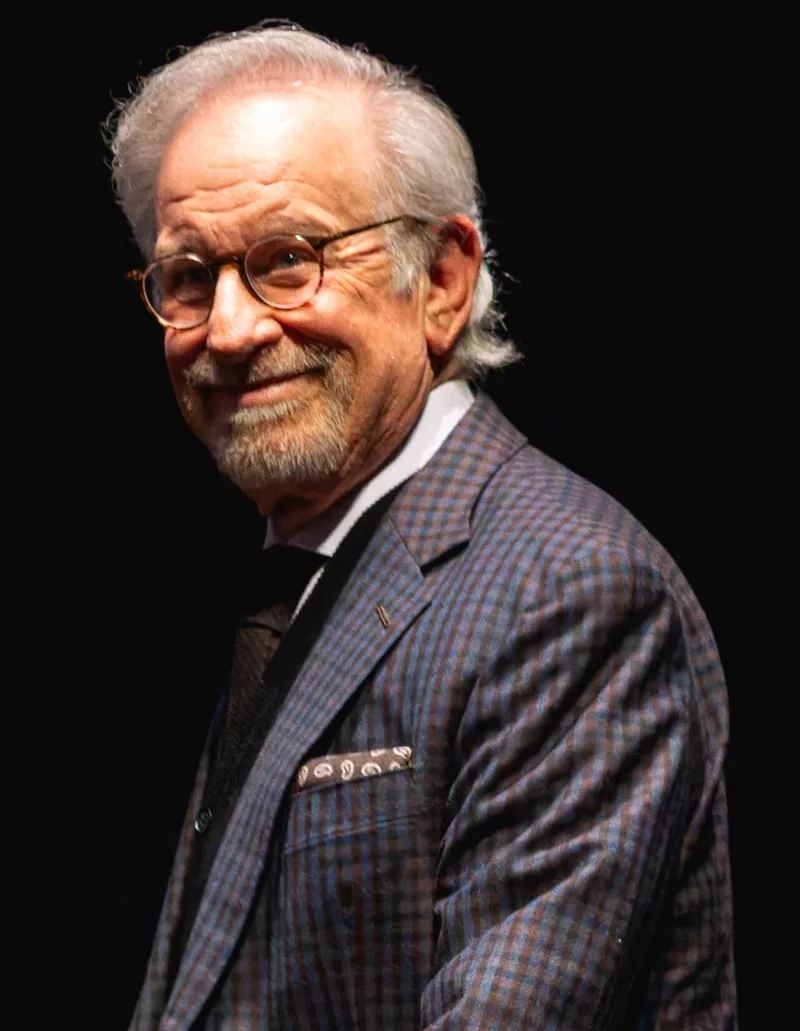


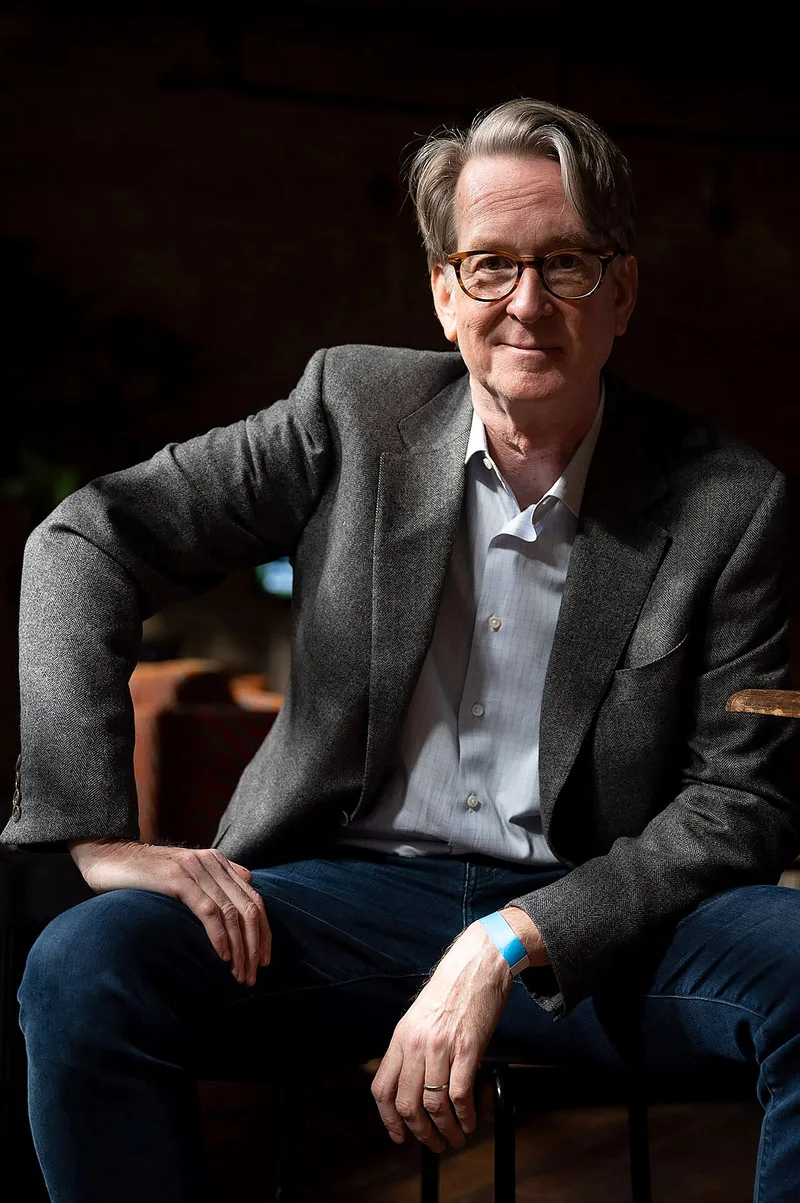
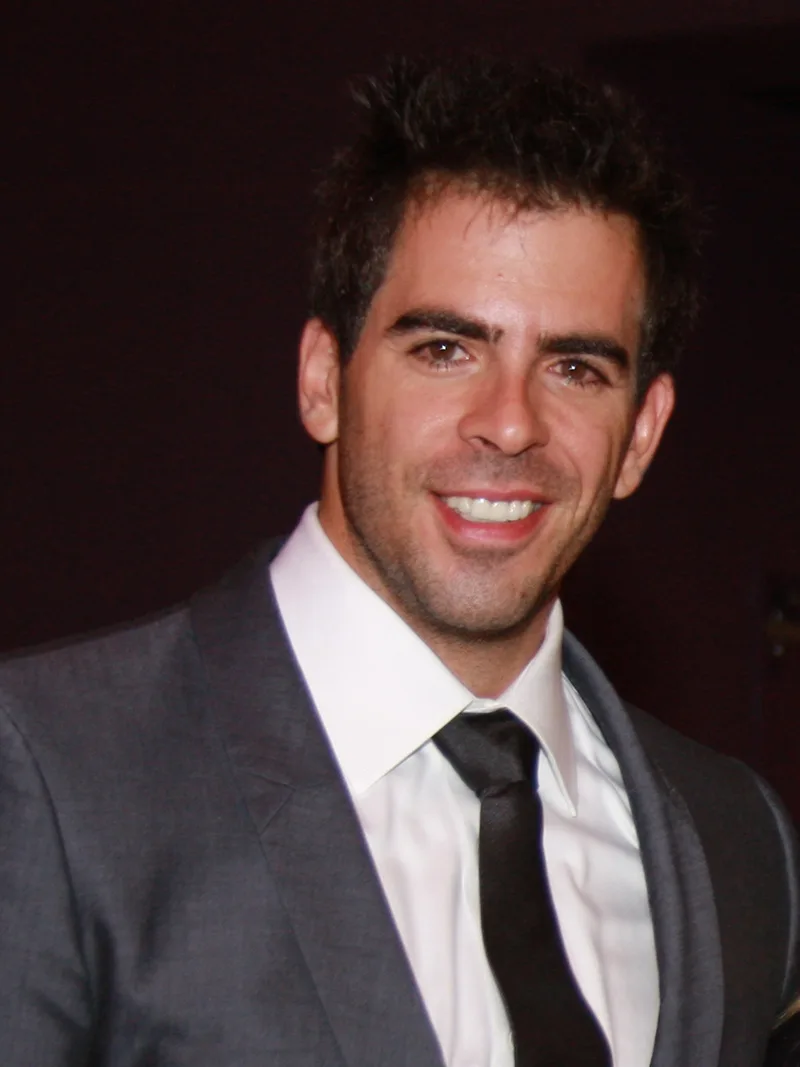
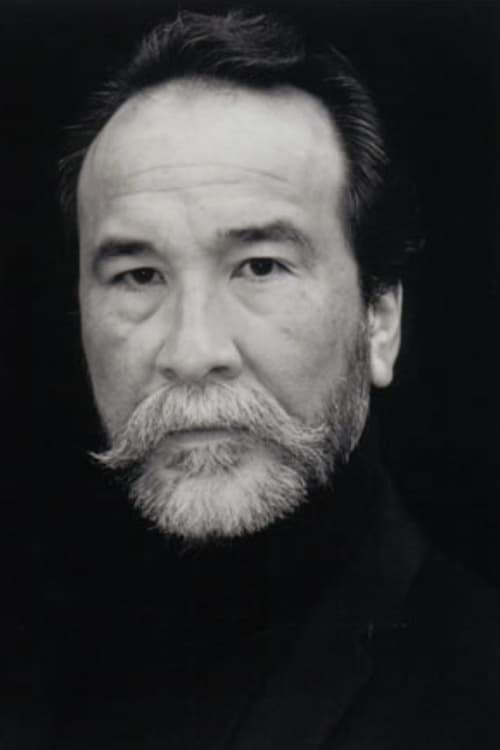
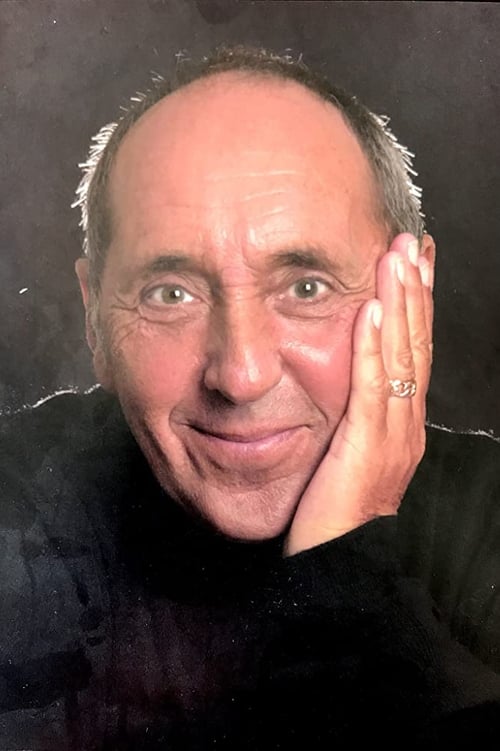
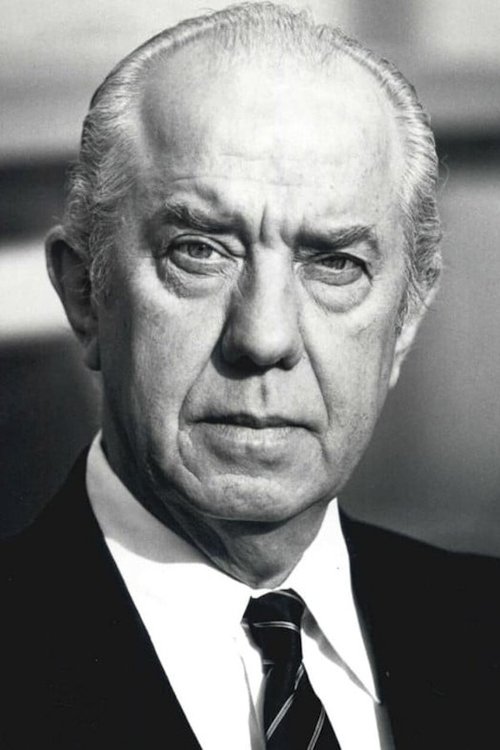





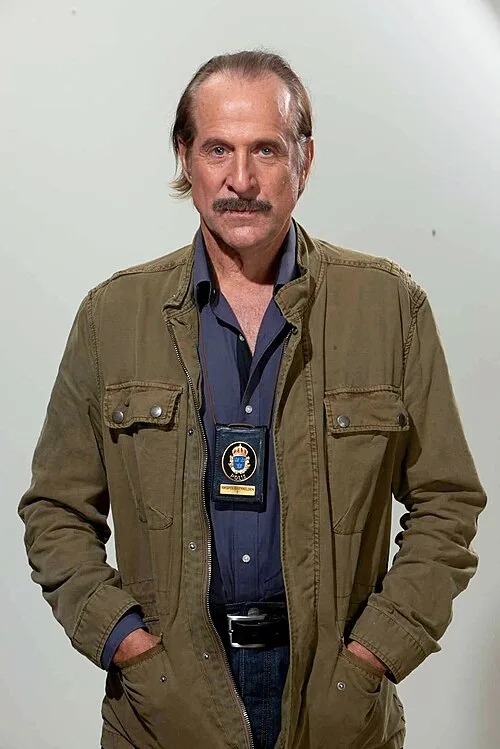


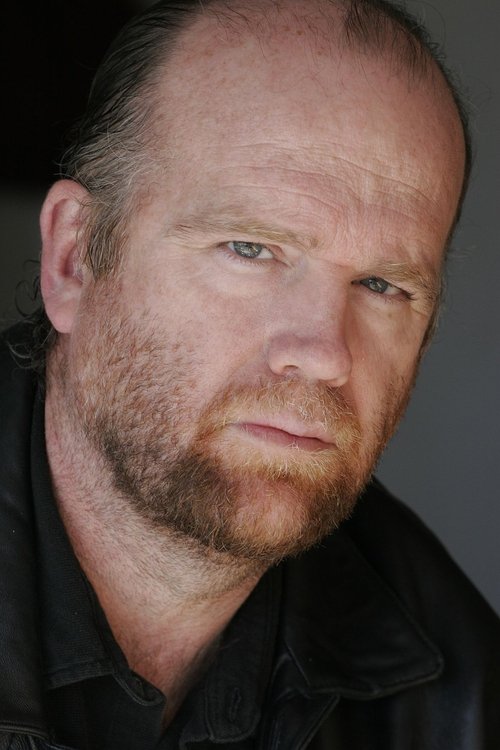
The Lost World: Jurassic Park is a 1997 American science fiction action film directed by Steven Spielberg from a screenplay by David Koepp. It is the second film in the Jurassic Park franchise and the original Jurassic Park trilogy, and is loosely based on Michael Crichton's 1995 novel The Lost World. Jeff Goldblum, Richard Attenborough, Joseph Mazzello and Ariana Richards reprise their roles from the original film with Julianne Moore, Pete Postlethwaite and Arliss Howard joining the cast.
Four years after the original film, John Hammond (Attenborough) loses control of his company InGen to his nephew, Peter Ludlow (Howard). On the verge of bankruptcy, Ludlow intends to exploit dinosaurs from InGen's second island, Isla Sorna with plans for a new dinosaur theme park in San Diego. Hammond sends a team, led by the eccentric chaos theorist and mathematician Ian Malcolm (Goldblum), to the island to document the dinosaurs and encourage non-interference, although the two groups eventually come into conflict.
After the original novel's release and the first film's success, fans pressured Crichton for a sequel. Following the book's publication in 1995, production began on a film sequel. Filming took place from September to December 1996, primarily in California with a shoot in Kauai, Hawaii, where the first film was shot. The Lost World's plot and imagery is substantially darker than Jurassic Park. It makes more extensive use of CGI to depict the dinosaurs, along with life-sized animatronics.
Among the most anticipated films of the year, The Lost World was accompanied by a $250 million marketing campaign, which included video games, comic books, and toys. Released on May 23, 1997 by Universal Pictures, the film received mixed reviews from critics, who praised the action set pieces and visual effects but criticized the character development and the film, ever since its original 1997 release, has been compared unfavorably with many other Spielberg-directed films (including the 1993 original film) with a small number of critics even believing it to be Spielberg's worst film effort as a director. Spielberg also expressed disappointment with the film, stating he had become increasingly disenchanted with it during production. It grossed $618.6 million worldwide, becoming the second-highest-grossing film of 1997 (behind Titanic) and was nominated for numerous awards, including an Academy Award nomination for Best Visual Effects but lost the award to Titanic. A sequel, Jurassic Park III, was released in 2001. Goldblum later reprised his role as Malcolm in Jurassic World: Fallen Kingdom (2018) and Jurassic World Dominion (2022).
Contents
Plot
Four years after the events on Isla Nublar, a British family anchors their yacht off a beach on Isla Sorna and comes ashore, unaware of the genetically engineered dinosaurs on the island. Their daughter, Cathy Bowman, wanders off and is attacked by a pack of Compsognathus but survives the encounter.
Peter Ludlow, nephew of Dr. John Hammond, uses the incident to oust Hammond and gain control of InGen. The company's second facility, "Site B" on Isla Sorna, was where the dinosaurs were cloned before moving them to the park in Nublar, but the island was abandoned during a hurricane several years earlier. Ludlow plans to exploit Isla Sorna's dinosaurs to save InGen, prompting Hammond to request Dr. Ian Malcolm's help in documenting the creatures to promote a non-interference policy. Ian's girlfriend, paleontologist Dr. Sarah Harding, is already on Isla Sorna, leading Ian to reluctantly agree to go, but only to retrieve her. Ian travels to Isla Sorna with equipment specialist and engineer Eddie Carr and video documentarian and activist Nick Van Owen. They find Sarah and discover that Ian's daughter Kelly has stowed away in their research trailer. Ludlow and a mercenary team arrive on the island to capture dinosaurs, with help from big-game hunters Roland Tembo and Ajay Sidhu.
Ian's group realizes that Ludlow intends to ship the captured specimens to San Diego for a new Jurassic Park, using a nearly finished amphitheater that Hammond abandoned in favor of the Isla Nublar site. Nick and Sarah free the captured dinosaurs, and the animals wreak havoc on the InGen team's camp. On the way back to the trailer, Nick rescues an injured Tyrannosaurus rex infant that Roland used as bait to hunt its father. Knowing this will bring the baby's parents to them, Ian takes Kelly to safety and returns to the trailer to warn Sarah and Nick. They successfully treat the infant, but the parents arrive, having tracked the infant's scent. The adult Tyrannosaurs reclaim their infant and destroy the trailer by overturning and pushing it partially over the cliff before leaving the area. Eddie arrives with a rope to rescue them and attempts to pull the trailer back up with his SUV, but the engine noise attracts the attention of both Tyrannosaur adults again, where they tear Eddie's SUV apart, and devour him.
Ian, Sarah, and Nick are rescued by Ludlow's team and forced to work together since both groups lost all their communication equipment in separate attacks. They decide to travel to an abandoned InGen base to call for help. After the team sets up a camp, they are ambushed by the Tyrannosaurus adults, who were led to the camp by the scent of the infant tyrannosaurus' blood on Sarah's jacket. The party flees into a field of long grass where a pack of Velociraptors ambush them, killing Ajay and most of the team. Ian's group reaches the InGen base, fights off the Velociraptors, and successfully radios for helicopter extraction. Nick reveals that he stole Roland's bullets to prevent him from killing his trophy. However, Roland has sedated the male Tyrannosaurus with tranquilizers. As InGen personnel arrive to secure the male and infant, Roland declines Ludlow's job offer at the San Diego park, reflecting on Ajay's death and the morality of Ludlow's scheme.
Production
After the release of the novel Jurassic Park in 1990, author Michael Crichton was pressured by fans for a sequel. Having never written one, he initially refused. While shooting the novel's 1993 film adaptation, director Steven Spielberg believed that if a sequel film were made, it would involve the retrieval of a canister that contained dinosaur DNA lost during the events of the first film. Talk of a sequel began after the release of the first film, which was a financial success. Spielberg held discussions with David Koepp and Crichton, who both wrote the previous film, to talk about possible ideas for a sequel. The production schedule for a second Jurassic Park film was dependent on whether Crichton would write a sequel to the first novel.
In March 1994, Crichton said he had a story idea for another book, which would then be adapted into a film. At the time, Spielberg had not committed to directing the new novel's film adaptation, as he planned to take a year off from directing. In March 1995, Crichton was nearly finished writing the second novel, scheduled for release later that year. Spielberg had signed on to produce the film adaptation, with filming to begin in 1996 for release the following year. Spielberg was busy with his new DreamWorks studio and had not decided if he would direct the film, saying, "I'd love to direct it, but I just have to see. My life is changing".
A production team was assembled by mid-1995, as Crichton was finishing the second novel, titled The Lost World; simultaneously, Spielberg and Koepp were developing their own ideas for the screenplay. Crichton's novel was published that September, and Spielberg was announced as director two months later. Spielberg and Crichton agreed to forego upfront fees for a share of the back-end. Koepp's deal was said to be the most lucrative for an adaptation at the time, with a fee in the region of $1.5 to $2 million. Joe Johnston had offered to direct the film, and eventually helmed the 2001 sequel Jurassic Park III.
The storyboarding process had begun in June 1995. Like with previous Spielberg films, storyboards were heavily utilized early on to help develop sequences as well as the overall plot. As the year went on, Spielberg continued to brainstorm ideas and made rough sketches to help illustrate his vision. The Lost World: Jurassic Park had nearly 1,500 storyboards, which aided in the precise planning needed to shoot scenes involving action, dinosaurs, and special effects. The pre-production process began in January 1996. Within three months, the scenes represented in storyboards were numerous enough to create a four-hour film, necessitating the need for cuts. The InGen village on Isla Sorna was among elements of the film that underwent many design changes early on.
Writing
After the film adaptation of The Lost World was announced, Koepp received letters of advice from interested children. According to Koepp, one letter read: "As long as you have the T. rex and the Velociraptor, everything else is fine. But, whatever you do, don't have a long boring part at the beginning that has nothing to do with the island". Koepp retained the letter as "sort of a reminder". He also took a suggestion from the letter to add Stegosaurus into the script. Koepp began writing the screenplay in September 1995, after wrapping principal photography on his directorial debut, the 1996 film The Trigger Effect. He proceeded to work in post-production on that film while simultaneously writing The Lost World, completing the first draft in January 1996.
Koepp noted that the first Jurassic Park film was philosophical about bringing dinosaurs back to life and how they would impact humanity: "We had thoroughly explored those questions in the first movie, so I didn't want to return to them. The Lost World is less philosophical and more about basic survival". During an early meeting with Koepp, Spielberg noted that the original film provided a contrast between herbivorous and carnivorous dinosaurs. Spielberg determined that the new sequel should additionally focus on humans who are "gatherers" (observers of the dinosaurs) and "hunters" (who capture the dinosaurs for a zoo). Koepp said the plot of the 1962 film Hatari! – about African animals being captured for zoos – had "a big influence" on The Lost World's script.
The character of Robert Burke is based on paleontologist Robert Bakker, who believes that T. rex was a predator. Rival paleontologist Jack Horner, the film's technical advisor, viewed the dinosaur as being protective and not inherently aggressive. Horner requested that the character of Burke be eaten by the T. rex, although Bakker enjoyed the scene and believed that it vindicated his theory that T. rex was a predator.
The Lost World: Jurassic Park features several previously un-filmed scenes from the first novel. The death of Dieter Stark to Compsognathus was inspired by John Hammond's death in the novel, where Procompsognathus kill him. The film's opening scene came from an early chapter, in which a Procompsognathus bites a girl on a beach. The first novel also included a scene where characters hide behind a waterfall from a T. rex; this was re-used in The Lost World: Jurassic Park, for the scene in which a T. rex eats Burke.
Casting
In November 1994, Richard Attenborough said he would reprise his role as Hammond from the first film. Jeff Goldblum was also signed early on to return as Malcolm. Early casting efforts for the new characters began in February 1996, and fully took off a month later. In April 1996, Julianne Moore was in discussions to star alongside Goldblum, taking the role of Sarah Harding, one of the characters from the novel. Spielberg had admired Moore's performance in the 1993 film The Fugitive, and met with her shortly thereafter about appearing in one of his future films. He encouraged Koepp to write Sarah with Moore in mind for the role.
Spielberg had met Vanessa Lee Chester at the 1995 premiere of A Little Princess, in which she appeared. Chester later recalled: "As I was signing an autograph for him, he told me one day he'd put me in a film". Spielberg met with Chester the following year to discuss The Lost World: Jurassic Park, eventually casting her as Malcolm's daughter, Kelly. Pete Postlethwaite was cast after Spielberg saw his performance in the 1993 film In the Name of the Father. In June 1996, Peter Stormare was in final negotiations to join the project, after Spielberg saw him in the film Fargo, released earlier that year.
Vince Vaughn would also join the cast. Spielberg was impressed with Vaughn's performance in the 1996 film Swingers, which he saw after the filmmakers asked his permission to use music from his earlier film, Jaws. After meeting with Spielberg, Vaughn was cast without having to do a screen test. Art Malik turned down a role in the film. Indian actor M. R. Gopakumar was initially cast as Ajay Sidhu in August 1996, but was unable to participate in the project because of trouble acquiring a work visa in time for filming. He was one of six people considered for the role, which ultimately went to actor Harvey Jason.
Richard Schiff had initially auditioned for High Incident, a television series that was executive-produced by Spielberg. After viewing his audition tape, Spielberg decided to cast him in The Lost World. While filming, Spielberg came to like the character so much, he considered keeping him alive for the film. However, Schiff convinced Spielberg to go forward with the death scene: "I went, 'Well, no, I think it's better to kill me off, because then all bets are off. If you like my character, then Jeff Goldblum might be next. You never know'".
Filming
The Lost World: Jurassic Park was shot on a budget of $73–75 million. Spielberg did not allow for cast rehearsals: "You want to capture the actors when they taste the words for the first time, when they look at each other for the first time – that's the sort of magic you can only get on a first or second take". Koepp tried to be available on-set for script revisions. He also served as the film's second unit director, having volunteered for the position in hopes of gaining more directorial experience. Second unit work included establishing shots, such as people marching across Isla Sorna, and helicopter shots, in addition to a scene featuring Malcolm on a subway.
Many crew members from the first film returned for the sequel. Spielberg wanted Dean Cundey, his long-time cinematographer, to return as well, but he was busy preparing to direct Honey, We Shrunk Ourselves. Spielberg instead chose Janusz Kamiński, who worked with him on the 1993 film Schindler's List. Kamiński gave The Lost World a darker, more artistic look over its predecessor, leading to a "more elegant and rich" approach focused on contrast and shadow. Much of the film takes place at night, and Kamiński looked at the films Alien and Blade Runner for visual reference.
Although the first film was partially shot in Kauai, Hawaii, the filmmakers wanted to shoot the sequel in a different location with new scenery. Production designer Rick Carter had initially scouted Hawaii, then Puerto Rico, New Zealand, and Australia, as possible filming locations. Although the film is set near Costa Rica, the country was never considered because filming would have occurred during the rainy season. However, the film did use tropical sound effects recorded there.
By February 1996, northern New Zealand had been chosen as a filming location. The country was believed to better represent a real dinosaur environment, and was to be used for the film's opening beach sequence, the dinosaur roundup led by the InGen hunters, and establishing shots. New Zealand was eventually deemed too costly; filming there was drastically scaled back in August 1996, in favor of Humboldt County, California, which offered financial incentives that would keep production costs low. Oregon had also been considered as an alternative to New Zealand.
Filming began on September 4, 1996, at Fern Canyon, part of Prairie Creek Redwoods State Park. Dieter's death was among the scenes shot there. Production continued in Humboldt County for two weeks at locations such as Patrick's Point State Park, and private property in Fieldbrook, both used for the dinosaur roundup. Other filming sites included the redwood forests of Eureka. This location was picked because research indicated dinosaurs did not live in tropical habitats, but forests like the ones in Eureka.
Creatures on screen
While Jurassic Park featured mostly the animatronic dinosaurs built by Stan Winston's team, The Lost World relied more on the computer-generated imagery (CGI) of Industrial Light & Magic (ILM). This meant the film featured larger shots that offered plenty of space for the digital artists to add the dinosaurs. Film editing began on the first day of principal photography, and both processes continued simultaneously. This allowed ILM to get an early start on the CGI animals. The film features 75 computer-generated shots. A scene in which the hunters round up a group of dinosaurs was made almost entirely with computer-generated creatures. An exception was a handful of Pachycephalosaurus shots.
Spielberg followed Horner's advice to help keep the dinosaurs scientifically accurate, with some exceptions. The Winston design team closely modelled the dinosaurs based on paleontological facts, or theories in certain cases where facts were not definitively known. In addition to animatronics, Winston's team also painted maquettes of dinosaurs that would subsequently be created through CGI. ILM animators went to Marine World/Africa USA to videotape elephants, reptiles, and rhinos, to determine how to make the dinosaurs appear more like living animals. Although technology had not progressed much since the release of the first film, Spielberg noted that "the artistry of the creative computer people" had advanced: "There's better detail, much better lighting, better muscle tone and movement in the animals. When a dinosaur transfers weight from his left side to his right, the whole movement of fat and sinew is smoother, more physiologically correct". All of the dinosaurs used servo control for facial movements.
While the first film showed that dinosaurs could be adequately recreated through special effects, the sequel raised the question of what could be done with the dinosaurs. Winston said: "I wanted to show the world what they didn't see in Jurassic Park: more dinosaurs and more dinosaur action. 'More, bigger, better' was our motto". Some of the animatronics cost $1 million and weighed nine and a half tons. Lantieri, the special effects supervisor, said: "The big T. rex robot can pull two Gs of force when it's moving from right to left. If you hit someone with that, you'd kill them. So, in a sense, we did treat the dinosaurs as living, dangerous creatures".
Winston's team had only a year to design and build the animatronic dinosaurs, one year less than with the original film. The animatronics in both films used foam latex, which deteriorates quickly. Animatronics of the T. rex and raptors were reused from the first film, with new skin made from molds that had been kept from the previous installment.
Soundtrack
For the sequel, composer John Williams avoided using most of the previous film's main themes, writing a more action-oriented score. The soundtrack was released on May 20, 1997. It, along with the soundtrack to the first film, was remastered and re-released on November 29, 2016.
Marketing
In February 1997, Universal announced a $250 million marketing campaign with 70 promotional partners. It was even more extensive than that of Jurassic Park. Inspired by how Jurassic Park featured the Ford Explorer, Mercedes-Benz signed an endorsement deal for the sequel to introduce its first sports utility vehicle, the ML 320 (W163). Other leading partners were Burger King, which was already promoting Universal's other dinosaur franchise, The Land Before Time; JVC, which also has product placement in the movie; and Timberland Co., making its first film tie-in. Another partner was Tropicana Products, a then-sister company of Universal under Seagram. Other promotional partners included Hamburger Helper and Betty Crocker, while General Mills introduced Jurassic Park Crunch cereal. Derivative works included various video games, a pinball machine, and a four-part comic series released by Topps Comics.
Other promotional items included a toy line of action figures by Kenner and remote-controlled vehicles by Tyco, as well as a board game by Milton Bradley Company. Also produced were Hershey's chocolate bars that featured holographic dinosaur patterns. Universal hoped for promotional profits to exceed $1 billion.
On December 13, 1996, a special version of the film's teaser trailer debuted at 42 theaters in the United States and Canada, at a cost of $14,000 for each theater; the trailer used synchronized strobe lights that mimicked lightning during a rain scene. The film's first trailer was aired on January 26, 1997, during Super Bowl XXXI. A travelling exhibition, The Lost World: The Life and Death of Dinosaurs, went on tour in May 1997, coinciding with the film's release. The exhibit was produced in connection with the film, and its centerpiece was a 70-foot-long recreation of a Mamenchisaurus.
A detailed website for the film was also created, and provided backstory for characters and events not referenced in the film. Shortly after the film's release, hackers broke into the website and briefly changed the film's logo to feature a duck instead of a T. rex. The film's title in the logo was also temporarily changed to The Duck World: Jurassic Pond. Universal denied that the hacking was a publicity stunt to promote the film, stating that it was traced to a "16-year-old hacker kid from back East". The website was still online as of 2017.
Release
Theatrical
The Lost World: Jurassic Park premiered on May 19, 1997, at the Cineplex Odeon theater in Universal City, California. The Los Angeles Times called the premiere "low-key". The film opened on May 23, 1997, with previews commencing at 10 p.m. the night before. It received the widest release for a film to date, opening in 3,281 theaters, surpassing the record held by the 1996 film Mission: Impossible. The film expanded to 3,565 theaters in its fourth weekend. It was the first film to use the 1997-2012 Universal Pictures logo, accompanied by its fanfare by Jerry Goldsmith. It was the first US film to be widely distributed in India, being released in 155 cinemas on September 5, 1997.
Home media
The Lost World: Jurassic Park made its home video debut on THX certified VHS and LaserDisc releases on November 4, 1997, accompanied by a $50 million promotional campaign.
Fox paid $80 million for the broadcasting rights of The Lost World: Jurassic Park, which debuted on November 1, 1998. The television version was expanded with deleted scenes, including Hammond's ouster by InGen executives.
The Lost World: Jurassic Park was released on a Collector's Edition DVD on October 10, 2000, in both Widescreen (1.85:1) and Full Screen (1.33:1) versions, in a box set with its predecessor Jurassic Park. The films were also featured in a deluxe limited edition box set featuring both DVDs, soundtrack albums, two lenticulars, stills from both films, and a certificate of authenticity signed by the set's producers, inside a collector case. After the release of sequel Jurassic Park III, box sets including all three movies were also made available, as Jurassic Park Trilogy on December 11, 2001, and as the Jurassic Park Adventure Pack on November 29, 2005. The Lost World was first made available on Blu-ray on October 25, 2011, as part of a trilogy release. The entire Jurassic Park film series was released on 4K UHD Blu-Ray on May 22, 2018.
Reception
Box office
The Lost World took in $72.1 million on its opening weekend ($92.7 million for the four-day Memorial Day holiday, including $2.6 million from Thursday night previews) in the U.S., which was the biggest opening weekend up to that point, beating Batman Forever. This made it the first film to reach the $70 million mark during an opening weekend. For four and a half years, the film held that record until the release of Harry Potter and the Sorcerer's Stone in November 2001.
The film also had the biggest May and Memorial Day opening weekends respectively, surpassing the previous records held by Mission: Impossible. It would hold the May opening weekend record until 2002 when Spider-Man replaced it. As for the Memorial Day weekend record, it would be beaten by Shrek 2 in 2004, although the opening weekend record was given to X-Men: The Last Stand two years later in 2006. Furthermore, the film had the highest opening weekend for a Spielberg film, and retained this record for a decade before being dethroned by Indiana Jones and the Kingdom of the Crystal Skull in 2008. A year later, Fast & Furious surpassed The Lost World to have the largest opening weekend for any Universal film.
The Lost World broke several other box office records as well. The film made $21.6 million on its Friday opening and $24.4 million on its second day, making it the highest Friday and Saturday grosses respectively. While the Friday record was taken by Toy Story 2 in 1999, the film continued to hold the Saturday record for two more years until The Mummy Returns surpassed it. It also took the record for highest single-day box office take of $26.1 million on May 25, a record held until the release of Star Wars: Episode I – The Phantom Menace in 1999. During its opening weekend, the film reached the number one spot at the box office, topping The Fifth Element and Addicted to Love. It became the fastest film to pass the $100 million mark, achieving the feat in just six days and beating out Independence Day. This was also Spielberg's fastest film to cross this mark, holding that record until War of the Worlds overtook it in 2005, taking five days to do so.
Despite these records, its total box office gross fell below the total of the original film. Ticket sales dropped 62% by its second weekend. The film made $34.1 million during its second weekend, making it the fourth-highest-grossing second weekend of all time, after its predecessor Jurassic Park, Twister and Independence Day. Over the next few weeks, The Lost World went on to compete against other blockbuster films released during that summer such as Hercules, Face/Off, Men in Black, Con Air, George of the Jungle, Batman & Robin and Speed 2: Cruise Control. In Thailand, The Lost World became the country's highest-grossing film of all time. It ultimately grossed $229.1 million in the U.S. and $389.5 million internationally, for a total of $618.6 million worldwide, becoming the second highest-grossing film of 1997 behind Titanic. The film sold an estimated 49,910,000 tickets in North America.
Critical response
The Lost World: Jurassic Park was released to mixed reviews. On review aggregation website Rotten Tomatoes, the film holds an approval rating of 57% based on 152 reviews and an average rating of 5.70/10. The site's critical consensus reads: "The Lost World demonstrates how far CG effects have come in the four years since Jurassic Park; unfortunately, it also proves how difficult it can be to put together a truly compelling sequel." On Metacritic, the film has a weighted average rating of 59 out of 100, based on 18 critics, indicating "mixed or average reviews". Audiences polled by CinemaScore gave the film an average grade of "B+" on an A+ to F scale.
Roger Ebert, who gave the first film three stars, gave The Lost World only two, writing: "It can be said that the creatures in this film transcend any visible signs of special effects and seem to walk the earth, but the same realism isn't brought to the human characters, who are bound by plot conventions and action formulas". Gene Siskel of the Chicago Tribune also gave the film two stars and said: "I was disappointed as much as I was thrilled because 'The Lost World' lacks a staple of Steven Spielberg's adventure films: exciting characters. [...] Even in the original 'Jurassic Park', the dinosaurs – not to mention the human beings – had more distinct personalities than they have here. Save for superior special effects, 'The Lost World' comes off as recycled material".
Kevin Thomas of the Los Angeles Times saw improved character development over the original: "It seemed such a mistake in Jurassic Park to sideline early on its most interesting character, the brilliant, free-thinking and outspoken theorist Ian Malcolm (Jeff Goldblum) with a broken leg, but in its most inspired stroke, The Lost World brings back Malcolm and places him front and center", calling it "a pleasure to watch such wily pros as Goldblum and Attenborough spar with each other with wit and assurance". Stephen Holden of The New York Times wrote, "The Lost World, unlike Jurassic Park, humanizes its monsters in a way that E.T. would understand". Owen Gleiberman of Entertainment Weekly gave the film a B grade; he remarked, "Mr. T-Rex was cool in the first Spielberg flick, sure, but it wasn't until [it was in] San Diego that things got crazy-cool. It's the old 'tree falling in the woods' conundrum: Unless your giant monster is causing massive property damage, can you really call it a giant monster?"
Spielberg said that during production he became increasingly disenchanted with the film:
Sequel
A third film, Jurassic Park III, was released in 2001. It was directed by Joe Johnston, with Spielberg as executive producer.