Critical response
Reviewers and fans of the first three seasons noted similarities and borrowed elements from David Lynch's TV series Twin Peaks and the follow-up film Twin Peaks: Fire Walk with Me, and compared and contrasted Sud and Lynch's works.
The series premiere was praised by most critics. Metacritic gave it a score of 84/100 based on reviews from 29 critics, indicating "universal acclaim". Rotten Tomatoes gave it a 94% approval rating with an average rating of 8.5/10, based on 36 critic reviews; the website's critics consensus reads, "The Killing is a slow burning mystery with an eerie, multi-dimensional story propelled by thoughtful writing, believable characters, and realistic horror, even if its season finale was unsatisfying."
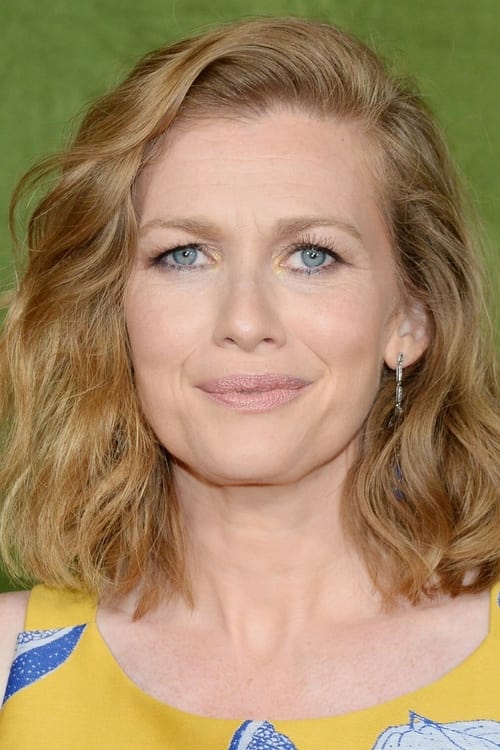
Tim Goodman of The Hollywood Reporter gave the series a very positive review, calling it "excellent, absorbing and addictive. When each episode ends, you long for the next—a hallmark of great dramas." Goodman also praised Mireille Enos's performance as the lead character Sarah, saying, "It's not until you watch Enos play Sarah for a while that it sinks in—there hasn't been a female American character like her probably ever."
Entertainment Weekly's Ken Tucker gave it a B+, saying, "The acting is strikingly good" and that "[s]ome viewers may find The Killing a little too cold and deliberate, but give it time. Its intensity builds steadily, giving the series unexpected power." Alex Strachan of The Vancouver Sun said the series "is soaked in atmosphere and steeped in the stark realism of Scandinavian crime novelists Henning Mankell and Stieg Larsson" and that it "is not as much about a young girl's murder as it is a psychological study of what happens afterward, how a tight-knit community tries to recover and how a dead child's mother, father and siblings learn to deal with their pain in their own private ways." Matt Roush of TV Guide applauded the series, calling the acting "tremendous" and saying that he "was instantly hooked by the moody atmosphere of this season-long murder mystery set in Seattle." He went on to say, "What really stands out for me, in this age of cookie-cutter procedurals, is how The Killing dramatizes the devastation a violent death has on a family, a community, on the people involved in the investigation. Nothing about this show is routine."
Subsequent episodes were met with lesser praise by some critics, criticizing the show's reliance upon increasingly implausible red herrings to drive each episode and the withholding of details about each character's background, especially Rosie's, thus making them difficult to relate to or empathize with.
The first-season finale was met with negative reviews from some critics. The Los Angeles Times called it "one of the most frustrating finales in TV history," with Alan Sepinwall of HitFix.com calling the end "insulting." Finally, Maureen Ryan of AOL TV said that the finale "killed off any interest I had in ever watching the show again." "[The show] began last spring looking like the smartest, most stylish pilot in years," complained Heather Havrilevsky in The New York Times Magazine. "Fast-forward to the finale, in which we learn that what we've been watching is actually a 26-hour-long episode of Law & Order, and we're only halfway through it."
The early seasonal episodes received generally favorable reviews from critics, with Metacritic giving it a score of 68/100 based on reviews from 23 critics. Rotten Tomatoes gave it a 67% approval rating with an average rating of 7.0/10, based on 30 critic reviews; the website's critics consensus reads, "The Killing's second season feels a bit tedious and unsure of where it wants to go, but it succeeds in keeping the audience on its toes, thanks to consistently fantastic acting and some strategic storytelling."
Lori Rackl of the Chicago Sun-Times stated: "Few television shows are as addictive as this pensive, wonderfully paced suspenser." The Washington Post's Hank Stuever stated: "My own enjoyment of The Killing begins and ends with the gloom so brilliantly conveyed by its pace and performances." Brian Lowry of Variety stated the series remained "compelling," adding that "the writers... are adept at overcoming the stodgy pace by dangling tantalizing clues near each hour's end, creating a strong pull to see what transpires next." HitFix's Alan Sepinwall compared this season to the first and called it "better." He added: "The performances are still good, and now the characterization is a bit better. When you add that to the fine atmosphere... and you view the mystery itself as a kind of necessary evil that allows you to see the parts of the show that do work, then it's not bad."
The season finale, "What I Know," received mixed reviews. Sepinwall stated: "I'd like to say that season 2 of The Killing was an improvement on season 1, and in some ways, it probably was. The second season certainly did a better job of doing what Veena Sud claimed to be doing last year, in that it took advantage of the extra time to sketch in some of the characters... I honestly feel like any kinder feelings I have for the second season came from the complete lack of investment I had in it." Sean McKenna of TV Fanatic rated the finale 4.7 out of 5 stars, but, upon first viewing, "wasn't sure what to feel. I wasn't elated. I wasn't excited" but after watching it again was "sucked into the world, mesmerized not by the victory of our hero cops... but by the gut-wrenching moments that unfolded." CraveOnline's William Bibbiani called the finale "an odd duck." After citing Jamie's early revelation as "melodramatic silliness," Bibbiani added: "The rest of the episode gets its job done, with one major, glaring flaw. The characters end up more or less where they need to be, but some nearly ridiculous loose ends remain." Brandon Nowalk of The A.V. Club rated this finale a C−, calling it "so unconvincing," adding "I couldn't believe how little all this resolution affected me after The Killing so thrillingly took my grudging engagement for a ride a few weeks ago. This is the same show that delivered Richmond’s hospital nightmare, the hunt for Holder, the anti-Western standoff "Sayonara, Hiawatha," and the crazy train of the last two weeks? No, this is the full-circle episode, the one that takes the show back to its roots. Wah wah."
Rotten Tomatoes gave it a 67% approval rating with an average rating of 7.3/10, based on 30 critic reviews; the website's critics consensus reads, "Though The Killing's third season doesn't do anything much differently than before, it continues to benefit from strong acting, and new viewers should be able to jump right in with ease." On Metacritic, the season has a score of 69/100 based on 22 reviews, indicating "generally favorable reviews".
Rotten Tomatoes gave it a 47% approval rating with an average rating of 6.5/10, based on 19 critic reviews; the website's critics consensus reads, "While its characters still intrigue and its atmosphere remains absorbingly dark, The Killing succumbs to silliness in its fourth season, straying into distractingly overwrought territory." On Metacritic, the season has a score of 53/100 based on 13 reviews, indicating "mixed or average reviews".