Critical response
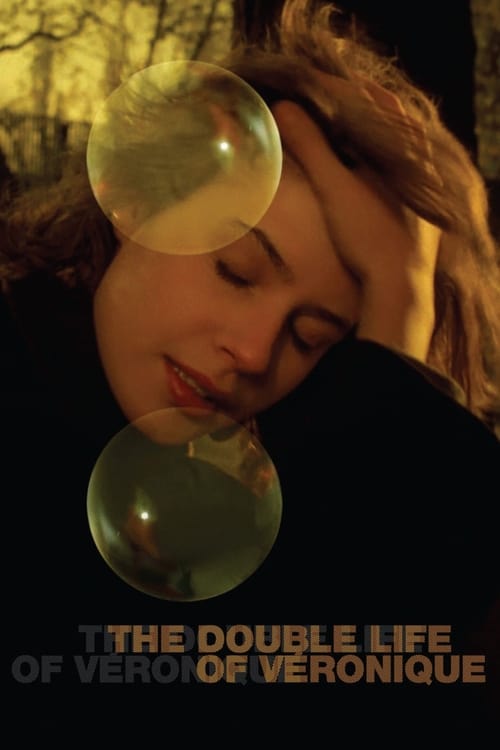
The Double Life of Veronique received mostly positive reviews. In her review in Not Coming to a Theater Near You, Jenny Jediny wrote, "In many ways, The Double Life of Veronique is a small miracle of cinema; ... Kieslowski's strong, if largely post-mortem reputation among the art house audience has elevated a film that makes little to no sense on paper, while its emotional tone strikes a singular—perhaps perfect—key."
In his review in The Washington Post, Hal Hinson called the film "a mesmerizing poetic work composed in an eerie minor key." Noting that the effect on the viewer is subtle but very real, Hinson concluded, "The film takes us completely into its world, and in doing so, it leaves us with the impression that our own world, once we return to it, is far richer and portentous than we had imagined." Hinson was particularly impressed with Jacob's performance:
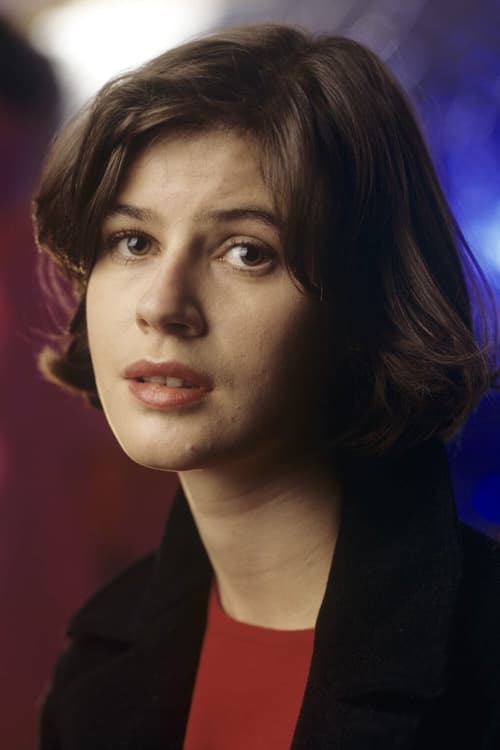
This is an actress with an uncanny openness and vulnerability to the camera. She's beautiful, but in a completely unconventional way, and she has such changeable features that our interest is never exhausted. What's remarkable about her performance is how quiet it is; as an actress, she seems to work almost off the decibel scale. And yet she is remarkably alive on screen, remarkably present. She's a rare combination—a sexy yet soulful actress.
In her review in The New York Times, Caryn James wrote, "Veronique is poetic in the truest sense, relying on images that can't be turned into prosaic statements without losing something of their essence. The film suggests mysterious connections of personality and emotion, but it was never meant to yield any neat, summary idea about the two women's lives."
In his review in the Chicago Sun-Times, Roger Ebert wrote, "The movie has a hypnotic effect. We are drawn into the character, not kept at arm's length with a plot." Ebert singled out Sławomir Idziak's innovative use of color and cinematography:
This is one of the most beautiful films I've seen. The cinematographer, Slawomir Idziak, finds a glow in Irene Jacob's pre-Raphaelite beauty. He uses a rich palette, including insistent reds and greens that don't "stand" for anything but have the effect of underlining the other colors. The other color, blending with both, is golden yellow, and then there are the skin tones. Jacob, who was 24 when the film was made, has a flawless complexion that the camera lingers near to. Her face is a template waiting for experience to be added.
In 2009, Ebert added The Double Life of Veronique to his Great Movies list. Krzysztof Kieślowski's Dekalog and The Three Colours Trilogy are also on the list.
In his review for Empire magazine, David Parkinson called it "a film of great fragility and beauty, with the delicacy of the puppet theatre." He thought the film was "divinely photographed" by Slawomir Idziak, and praised Irène Jacob's performance as "simply sublime and thoroughly merited the Best Actress prize at Cannes." Parkinson viewed the film as "compelling, challenging and irresistibly beautiful" and a "metaphysical masterpiece."
Elbert Ventura of AllMovie rated the film four out of five stars, calling it Kieślowski's "most ravishing film" and writing, "With its oblique story line, cryptic rhyming patterns, and focus on mood and tone, this elusive movie is more poem than narrative." In a five-star review of the DVD release of The Double Life of Veronique, Ivana Redwine of About.com described the film as "[c]aptivating" and "mesmerizing", while praising Jacob's performance as "superb". At BBC, Matthew Leyland gave the film three stars out of five and wrote, "It's a ravishingly pretty piece, but it may tax viewers searching for answers that remain out of reach." Peter Bradshaw of The Guardian gave the film five stars out of five.
On the review aggregator website Rotten Tomatoes, the film holds an approval rating of 86% based on 36 reviews, with an average rating of 7.7/10.