




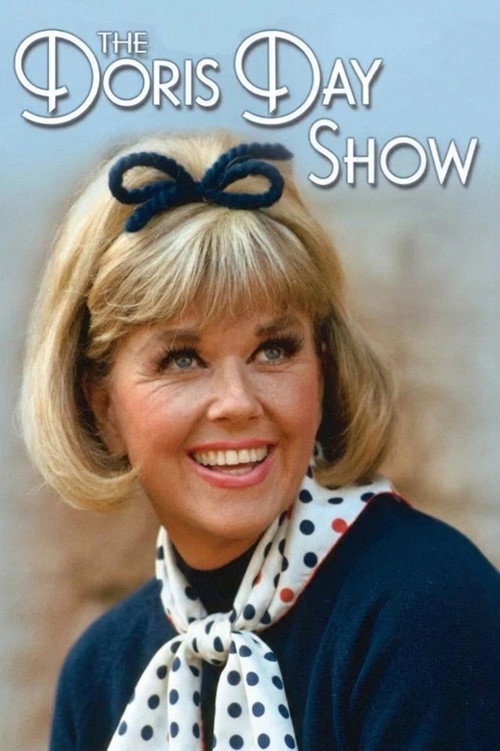


The Doris Day Show is an American television sitcom that aired on CBS from September 24, 1968, to March 12, 1973, remaining on the air for five seasons and 128 episodes.
The series is remembered for its multiple format and cast changes over its five-year run. The show is also notable for Day's statement, in her autobiography Doris Day: Her Own Story (1976), that her husband Martin M. Melcher had signed her to do the series without her knowledge, a fact she only discovered after he died shortly before production began.
Contents
Series run
Season 1 (1968–1969)
Day portrays Doris Martin, a widowed mother of young sons Billy and Toby (Philip Brown and Todd Starke, credited as Tod Starke). As the series begins, she has moved from New York City, where she worked as a writer for a women's magazine, to her father's farm in the fictional town of Cotina, California; the farm is later described as located at 32 Mill Valley Road in Mill Valley, north of San Francisco via the Golden Gate Bridge. Other regular characters include Doris's father, Buck Webb (Denver Pyle, who was actually just two years older than Day); their naïve hired ranch hand, LeRoy B. Simpson (James Hampton); and their housekeeper Aggie Thompson (Fran Ryan). After Ryan quit the show to replace Barbara Pepper as Doris Ziffel in Green Acres), the character of Aggie was replaced by Juanita (Naomi Stevens). Lord Nelson, the family's sheepdog, who appears in the first three seasons, is credited only in this one. Storylines focus on Doris's efforts to solve the everyday problems of her family and community as she adjusts to her new life on the farm.
Season 2 (1969–1970)
Doris begins to commute from the farm to San Francisco, where she becomes an executive secretary at Today's World magazine. New workplace characters are added: Today's World managing editor Michael Nicholson (McLean Stevenson), also referred to as Nick, is Doris's boss; Ron Harvey (Paul Smith) is associate editor; and Myrna Gibbons (Rose Marie) is Ron's secretary and Doris's best friend. LeRoy, now married and the owner of a gas station in Mill Valley, appears in only one episode. Storylines focus on Doris's struggles as a working mother; she also becomes involved in articles that the magazine is publishing and enters the dating world as well. Exterior establishing shots of the Today's World building actually show the Hartford Building, a 34-story high-rise located at 650 California Street in San Francisco.
Season 3 (1970–1971)
Tiring of her commute to work, Doris moves with her sons and dog to San Francisco, where they rent an apartment above an Italian restaurant named Pallucci's, located at the fictional address of 965 Jasper Street (later identified as 965 North Parkway, Apt. 207). The building and restaurant are owned by married couple Louie and Angie Pallucci (Bernie Kopell and Kaye Ballard). At first Louie is angry with Angie for renting the apartment to a widow with two boys and a large dog, but he eventually cherishes their new tenants after Billy and Toby praise his pizza. Angie becomes one of Doris's best friends. Doris begins writing articles for the magazine, but is still mainly a secretary. Buck appears in only two episodes; LeRoy, who now lives in Montana and travels the rodeo circuit to raise money to buy his own ranch, appears in only one. Doris's nemesis, efficiency expert Willard Jarvis (Billy De Wolfe), first seen in season 2, moves in next door, causing trouble for her in a few episodes. The season's last episode, which features Doris's niece April (Meredith Baxter) and her husband Peter (Michael Burns) struggling to adapt to life as a newly married couple, is a backdoor pilot for a series that was never picked up. It aired independently on CBS on May 24, 1974 as Young Love.
Seasons 4–5 (1971–1973)
The fourth season sees a radical change in the series. Doris's family and coworkers from the previous season disappear without explanation, and she becomes a single career woman. Still working for Today's World, her new boss is Cyril (Cy) Bennett (John Dehner), with whom she frequently spars, and she herself is now an associate editor who reports her own stories. Cy's secretary Jackie Parker (Jackie Joseph) is also Doris's friend. Angie appears in a few episodes, but Louie is in only one. Doris has several romances, including with Italian artist Carlo Benedetti (Cesare Danova), detective Sgt. Bill Winston (Robert Lansing), English author Sir Robert Kingsley (Jon Cypher), and musician Johnny Reb (Paul Hampton). In season 4, she begins a relationship with Dr. Peter Lawrence (Peter Lawford), which lasts until late into season 5. That relationship is followed by one with former boyfriend Jonathan Rusk (Patrick O'Neal), a television reporter who at one point runs for Congress. In season 5, Jarvis becomes the owner of Doris's building.
Cast
Main cast
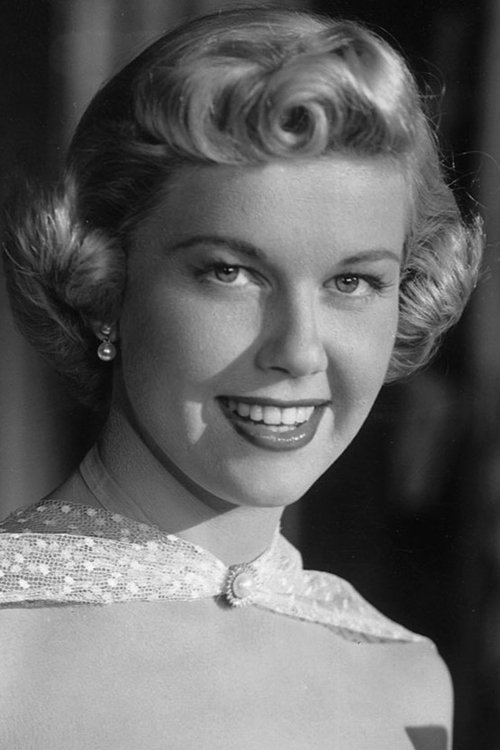
Doris Day as Doris Martin
Philip Brown as Billy Martin (Seasons 1–3)
Todd Starke as Toby Martin (Seasons 1–3)
Denver Pyle as Buck Webb (Seasons 1–2, recurring Season 3)
Lord Nelson as Ralph the Dog (Seasons 1–2, recurring Season 3)
James Hampton as LeRoy B. Simpson (Season 1, recurring Seasons 2–3)
Fran Ryan as Aggie Thompson (first ten episodes of Season 1)
Naomi Stevens as Juanita (last eighteen episodes of Season 1)
McLean Stevenson as Michael 'Nick' Nicholson (Seasons 2–3)
Rose Marie as Myrna Gibbons (Seasons 2–3)
Paul Smith as Ron Harvey (Seasons 2–3)
Bernie Kopell as Louie Pallucci (Season 3, recurring Season 4)
Kaye Ballard as Angie Pallucci (Season 3, recurring Season 4)
Billy DeWolfe as Willard Jarvis (recurring Seasons 2–5)
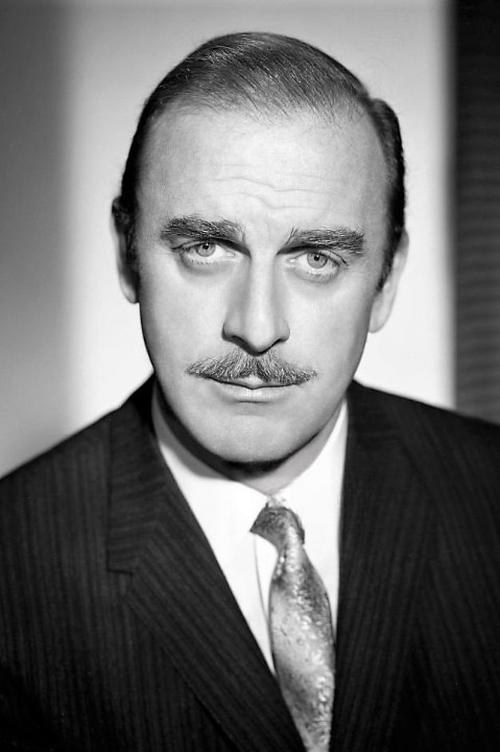
John Dehner as Cyril Bennett (Seasons 4–5)
Jackie Joseph as Jackie Parker (Seasons 4–5)
Peter Lawford as Dr. Peter Lawrence (recurring Seasons 4–5)
Other notable cast
A number of other actors appeared in notable storylines covering several episodes sometimes over multiple seasons.
Strother Martin as Tyrone Lovey (Season 1), an unscrupulous poacher and junk dealer
Edward Andrews as Colonel Fairburn (Seasons 2–5), publisher of Today's World
Larry Storch as Duke Farentino (Seasons 2–3), a boxer turned wannabe nightclub headliner
Lew Ayres as William Tyler (Seasons 2–3), a reclusive billionaire businessman
Johnny Haymer as Montagne (Seasons 2–3), a Parisian couturier
Carol Worthington as Ethel Weber (Season 3), Doris's kooky friend who often acted as Billy and Toby's sitter (Worthington portrayed several other minor characters in the series prior to the Ethel Weber character)
Richard Ely as Clifford Fairburn Jr. (Season 3), son of Colonel Fairburn
Van Johnson as Charlie Webb (Seasons 3–4), Doris's free-spirited cousin
Jon Cypher as Sir Robert Kingsley (Seasons 4–5), a British knight and author, who was one of Doris's love interests
Patrick O'Neal as Jonathan Rusk (Season 5), Doris's old boyfriend, aspiring politician, fellow journalist and another of her current love interests
Production
Development
Doris Day first found fame as a singer and then as one of the most popular film actresses of her generation. In 1951 she married her agent, Martin M. Melcher, who would come to control virtually every aspect of her career, including her finances. The following year the two formed a production company named Arwin Productions as a vehicle for projects to be produced by Melcher. In the late 1950s, he began a business relationship with attorney Jerome B. Rosenthal. After Day granted Melcher a general power of attorney, he increasingly signed her to projects without her prior consent and directed her income to Rosenthal, who invested it in a series of disastrous ventures. After Melcher died in 1968, Day learned that he had signed her to a five-year commitment to star in The Doris Day Show without her knowledge and that he and Rosenthal had not only lost all of her earnings, but had left her in debt. She fired Rosenthal and sued him for fraud and malpractice. In September 1974, Los Angeles Superior Court Judge Lester E. Olson granted her a judgment for $23,835,646. In an hour-long oral decision, he condemned Rosenthal, but also admonished Day for "being too busy making movies to pay attention to her own affairs." Rosenthal's appeal dragged on until October 1985, when the California Supreme Court rejected it, finally ending the case. Ultimately, the actress only recovered a fraction of her losses. Day's 1968 decision to fulfill her television commitment directly stemmed from her sense of honor and her desire to pay her debt and restore her financial security.
Before The Doris Day Show premiered, Day had appeared on television infrequently—mostly on variety, game, and awards shows. In the mid-1960s Melcher tried to persuade her to star in a television series because he believed the films she made had no place in the New Hollywood, which emphasized anti-establishment themes, morally ambiguous heroes, and explicit sex and violence. In fact, she turned down the role of Mrs. Robinson in The Graduate because it offended her values. Yet, she told Melcher she had no interest in television. Nevertheless, in 1966 Melcher and CBS discussed developing an hourlong anthology series for her. CBS was courting her because it sought celebrities to replenish its aging and depleted supply of star talent—specifically, to replace Lucille Ball, who was threatening to end The Lucy Show. Following in the footsteps of celebrities like Shirley Booth, who had achieved success in the early 1960s with the sitcom Hazel, Day was one of several film stars turning to television, and she would become the most successful by far.
In February 1967 Melcher told the Los Angeles Times he was negotiating with CBS for a television deal for Day, as well as a separate feature film deal. The television deal focused on a sitcom to be produced by Richard Dorso and Bob Sweeney under Arwin Productions. Fifteen script outlines were ready, and filming was scheduled to begin as soon as Day finished her then-current film project. Dorso was one of Melcher's copartners in their former agency, Century Artists; Sweeney was a director who had directed for The Andy Griffith Show. The Times also stated that the show would star Day as a widow named Doris Martin, who moves with her two sons to her father's farm after her husband dies (the name "Martin" may be a reference to Melcher). Melcher commented that Day would "stand for morality. Everything will be wholesome, as it is in her movies.'" In a later article, Dorso reinforced this perspective: "there's a little moral in each episode, and Doris, like she always is, is on the side of the angels." The television deal was finalized by May. According to its terms, Day would star in a sitcom for the 1968–1969 season without a pilot. Each episode would have a $120,000 budget, and Melcher would own the negatives and control the rerun rights. In addition, Day would be obligated to make two television films, later revised to two variety specials.
Filming
Initial casting for the first season of The Doris Day Show was completed in April 1968, and filming began at Golden West Studios in Hollywood in early June 1968. Bruce Bilson, Gary Nelson, and Sweeney directed most of the episodes. The show was filmed with one camera rather than three by the cinematographer Richard L. Rawlings, who often used filters on close-ups of Day, as was the practice in many of her 1960s films. There was no studio audience. Filming was challenging for Day, who was playing the role of a widow shortly after she had lost her own husband. Sometimes she would burst out crying during a scene, and filming would have to pause until she composed herself, which led to production delays. In response, the writers tried to write around her character. In addition, her grueling schedule and her efforts to deal with the aftermath of her husband's death prevented her from becoming closely involved in production.
Initially, the show was to fill the Monday night slot occupied by The Lucy Show. However, when Ball decided not to leave CBS but to launch a new sitcom titled Here's Lucy, the network scheduled The Doris Day Show on Tuesdays at 9:30 pm. It followed The Red Skelton Hour and preceded 60 Minutes, which premiered that season as well. Its competition was ABC's N.Y.P.D., a half-hour crime drama, and NBC Tuesday Night at the Movies, which featured a combination of recent theatrical and new made-for-television films. The series premiere on September 24, 1968, was the eighth most viewed show for the week ending September 29 according to the Nielsen Multi-Network Area (MNA) ratings. Ratings steadily declined, however, and the show ranked at number 30 for the season. In addition, critical reviews were generally negative. One reporter even wrote that the show was "virtually a flop."
As filming for the first season concluded, Day realized she had to take charge of production and make major changes for the second season. Doris Martin becomes a working mother employed as a secretary at Today's World magazine in San Francisco, and the show's focus shifts from the farm to the city. Day replaced producers Sweeney and Dorso with Jack Elinson and Norman Paul. Coby Ruskin, Denver Pyle (whose role as an actor in the series was being reduced), and Frederick De Cordova directed most of the episodes. New writers and new supporting actors were added. Filming relocated to CBS Studio City, which Day preferred. She remarks in her memoir: "I emphasized that I didn't like joke comedy that relied on funny dialogue; I much prefer situation comedy, like Pillow Talk. I worked with the writers, set designers, costume designers, makeup, music—there wasn't an aspect of the show that I didn't get into. For the first time in my career I saw all the daily rushes and even involved myself in editing." She made these changes after examining the show critically and incorporating viewers' feedback.The show also moved to a new time slot: Mondays at 9:30 p.m., after Gunsmoke, Here's Lucy, and Mayberry R.F.D. and before The Carol Burnett Show (it remained in this slot for the rest of its run, although the shows that preceded and followed it shifted). Ratings improved dramatically.
Conclusion
In March 1973, shortly after the last episode of the fifth season aired, and after she had completed her five-year contract, Day announced she was ending the series: "I'm tired. Doing a film series is extremely hard work and I feel that five years is enough. There are so may other things to be done and said, and doing a situation comedy week after week is no longer fulfilling for me. It's time to go on to something else. … Entertainment is a valuable and worthwhile commodity. It has provided me with a good living for many years. But it is not the alpha and omega of the world. … I just don't think that another year of 'The Doris Day Show' in its present form is going to lead anybody anywhere, except maybe to the bank.'"
Syndication
Worldvision Enterprises Inc. offered The Doris Day Show for syndication for the first time in September 1976. However, the show's success in syndication was negatively affected by the fact that it was not syndicated sooner. It aired on CBN (Christian Broadcasting Network) in the 1980s.
Opening title and credits
The original opening title and credits sequence of The Doris Day Show was created by Remi Kramer. The soundtrack consists of Day singing offscreen a rerecorded version of the Livingston & Evans song, "Qué Será, Será (Whatever Will Be, Will Be)." Day had introduced this song in the 1956 Alfred Hitchcock suspense film The Man Who Knew Too Much, in which she costarred with James Stewart. As the montage of images accompanying the song changes from season to season, so does the song's arrangement: A more family-oriented version, with a children's chorus, is used in the first season, while a more adult contemporary version with a stronger beat is used in the fourth and fifth seasons.
In the opening sequence for the first season, all of the regular cast members are portrayed in a bucolic environment that appears to be the family's farm. According to Philip Brown, who played Billy, this sequence was filmed at Golden Oak Ranch, also known as Disney Ranch, near Los Angeles.
For the second season, Doris, wearing a bright yellow overcoat and rain hat, leaves the farm in her red convertible as Buck and the boys see her off. She drives along a country highway, over the Golden Gate Bridge, and finally down a hill to her office building at 650 California Street in San Francisco's Financial District. A brief montage of shots of the city, some including Doris, is followed by the cast credits, with Buck and the boys shown at the farm and Mr. Nicholson and Myrna in the Today's World offices. There are also images of Doris, wearing a red raincoat, hopping off of a cable car and of Doris, again wearing her yellow overcoat, holding her hat on her head as she scurries across California Street to her office; the woman in these shots is actually Day's stunt double, Julie Ann Johnson, who had served as Day's double since the film Caprice. This version of the opening sequence foreshadows the opening sequence of The Mary Tyler Moore Show, which features Mary Richards driving from her hometown to Minneapolis to start her new life.
The opening sequence for the third season opens with Doris, wearing a yellow pantsuit, descending the spiral staircase in her apartment, followed by an iconic overhead view of San Francisco, over which the show's title is superimposed. The rest of the sequence is similar to the second season's, except that the Today's World staff members (featuring Myrna, Ron, and Mr. Nicholson, in that order) appear before Doris's sons, who are now seen playing in an urban playground instead of on the farm. Despite being frequent cast members, the Palluccis and Jarvis are not included.
Reception
Reviews
Initial reviews of The Doris Day Show were mixed. The Hollywood Reporter predicted the show would be a hit: "Miss Day is encapsulated by a production company and a supporting cast which are flawless. Their output is not be faulted in its delivery, although some critics may gag on the syrupdipity of the theme." Variety also praised the show: "Premiere this week showed promise …. As in films, Miss Day here displays her unusual talent for somehow squeezing the corn juice out of a square role. She is evocative and believable, and, in fact the whole show is well cast …. Bob Sweeney's direction set a nice mood and pace, and Dick Bensfield's script was firstrate for the genre." The Los Angeles Times was complimentary, but mocked the show's wholesomeness: "CBS's new Doris Day Show … is three parts Donna Reed, two parts Father (or Mother) Knows Best, a dash of Petticoat Junction and sprinkled lightly with 'America the Beautiful.' … It was predictable and thoroughly wholesome. The dialog, however, wasn't bad, and the production values were excellent. It was nonviolent too. The Doris Day Show will make Family Affair look like a meeting of the mafia." In his full-page review for TV Guide, however, Cleveland Amory was less enthusiastic. Although he refrained from criticizing Day's performance, he commented that she "is photographed through so many filters that you feel she is not on TV but on your radio." In addition, he described the show as void of ideas, stocked with irritating supporting characters, and burdened by plots "buried under so many layers of cotton-candy writing, not to mention the thunderous laugh track, that they deserve better. … Not only is this show no more interesting than anyone's everyday life, it's a good deal less so."
In a review of the second-season premiere, Variety responded positively to the show's shift in format, concluding that the show "arouses empathy in the viewer to immediately place it several notches above and probably into what CBS publicists call 'the winner's circle.'" It also correctly predicted that the "show shapes up as a Nielsen favorite." Its review of the third-season review was much more negative: "'The Doris Day Show' should get the nod for sheer grit if for nothing else. Since its unspectacular first season, it has survived two theme changes and now places the star in an urban setting (San Francisco) at the tail end of CBS's Monday night western-rural axis." It continued: "The preemer struck no bright sparks with the exception of Kaye Ballard's florid portrayal as Miss Day's new Italian landlady. Miss Day is still essentially a one-note (poignancy) actress, and producer-writers Jack Elinson and Norman Paul did very little to enlarge upon her talents. The storyline was thin and episodic and ran down to a predictable conclusion. Miss Day could use stronger character support." The Los Angeles Times also gave the first two episodes of the third season a tepid review. While it noted that the second episode has "a good uncluttered script" and offered Day "a chance to be funny by knocking militant feminists," offering "a ray of hope" for the show, it also remarked: "Day is a pro at projecting babbling, innocent covered-up sex appeal. There wasn't a thought or joke in either episode that would have gone over the heads of most eight-year-olds."
Awards
The Doris Day Show received no Emmy Award nominations during its five-year run. It did, however, receive two Golden Globe nominations in 1969: The show was nominated for Best Television Series, and Day was nominated for Best Actress in a Television Series. Also in 1969, the sheepdog Lord Nelson, who played the role of Doris Martin's pet during the show's first three seasons, was nominated for a PATSY Award, presented by the American Humane Association.
Home media
MPI Home Video has released all five seasons of The Doris Day Show on DVD in Region 1. Each DVD release contains extensive special features. In Region 2, Turbine Medien has released all 18 available German episodes of the first and second seasons on DVD in Germany, with extensive special features. In Region 4, Umbrella Entertainment has released all five seasons on DVD in Australia. In 2009, all five seasons were rereleased with slimmer packaging.
Themes and analysis
Although Day did not want to star in a television series, The Doris Day Show revitalized her career and brought her financial security as her lawsuit against her former attorney Jerome B. Rosenthal made its way through the courts. When the show premiered in September 1968, it was what her biographer Tom Santopietro described as "comfort food television" at one of the most tumultuous times in US history. During this year, the Vietnam War and protests against it escalated, Martin Luther King Jr. and Robert F. Kennedy were assassinated, thousands of people were injured during riots at the Democratic National Convention in Chicago, and a contentious election took place. By contrast, the problems that Doris Martin faced were minor in comparison and always happily resolved by the end of each episode. As Santopietro observed, the show presented "a successful one-woman battle to uphold an optimistic vision of everyday life in America, one without vulgarity, and with humor arising out of situations rather than increasingly cynical one liners." He analyzes each season of the show in depth in his biography of Day, while Patrick Pierre and Garry McGee's Que Sera, Sera: The Magic of Doris Day Through Television: Special Interviews with Doris Day and Friends includes a detailed episode guide and other features.
The Doris Day Show's popular fashion show episodes exemplify the sitcom's status as comfort food television. Day loved fashion. Beginning with Pillow Talk, she began to cultivate an image in her films as a successful career woman who wears the most fashionable clothes. She carried her interest in fashion over to The Doris Day Show. Most of the clothes she wore were purchased by her costumer, Connie Edney, off the rack from the high-end department store Joseph Magnin in Los Angeles, which closed in the 1980s. In response to comments from some viewers that her outfits looked too expensive for a secretary (later an associate editor) to afford, she stated many of them cost only $39.95. Beginning in the show's second season, after Doris Martin begins commuting to San Francisco, each season features an episode that works into the storyline a fashion show, in which she models all the clothes. The fashion shows became more elaborate each year, culminating with a fifth-season episode in which Doris Martin models 19 outfits in a series of vignettes with a male model made up as a mannequin, choreographed to songs from Day's films. In 1971 Day told a reporter: "It's certainly my favorite thing we do all year, because I really love clothes. Apparently the audience likes it too, because it's always the highest-rated segment we do." She further commented: "If we keep it up for ten years, you could play back the fashion history of an entire decade in about twenty minutes." In 1972, Day was presented with the National Fashion Wagon Week Award to the American Working Girl for portraying a stylish working woman who "symbolizes the modern woman in the world of business."