





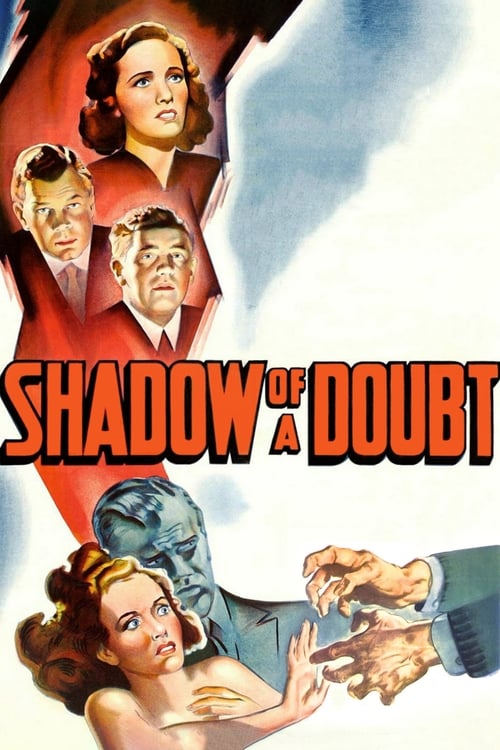

Muriel Teresa Wright (October 27, 1918 – March 6, 2005) was an American actress. She won the 1942 Academy Award for Best Supporting Actress for her role as Carol Beldon in Mrs. Miniver. She was nominated for the same award in 1941 for her debut work in The Little Foxes. Also in 1942, she received a nomination for the Academy Award for Best Actress for her performance in The Pride of the Yankees, opposite Gary Cooper. She is also known for her performances in Alfred Hitchcock's Shadow of a Doubt (1943), and in William Wyler's The Best Years of Our Lives (1946). Wright received five Photoplay Awards, two National Board of Review Awards, and two Hollywood Walk of Fame Stars for her contributions to motion pictures and television.
Wright received three Emmy Award nominations for her performances in the original Playhouse 90 television version of The Miracle Worker (1957), in the NBC Sunday Showcase feature The Margaret Bourke-White Story (1959), and in the CBS drama series Dolphin Cove (1989). She earned the acclaim of top film directors, including William Wyler, who called her the most promising actress he had directed, and Alfred Hitchcock, who admired her thorough preparation and quiet professionalism.
Contents
Early life
Muriel Teresa Wright was born on October 27, 1918, in New York City, the daughter of Martha Espy and Arthur Hendricksen Wright, an insurance agent. Her parents separated when she was young. She grew up in Maplewood, New Jersey, where she attended Columbia High School. After seeing Helen Hayes star in Victoria Regina at the Broadhurst Theatre in New York City in 1936, Wright took an interest in acting and began playing leading roles in school plays.
Wright earned a scholarship to the Wharf Theater in Provincetown, Massachusetts, where she was an apprentice for two summers. Following her high school graduation in 1938, she went to New York, shortened her name to "Teresa Wright", and was hired as understudy to Dorothy McGuire and Martha Scott for the role of Emily in Thornton Wilder's stage production of Our Town at Henry Miller's Theatre. Wright took over the role when Scott left for Hollywood to film the on-screen version of the play.
Acting career
In autumn 1939, Wright began a two-year appearance in the stage play Life with Father, playing the role of Mary Skinner. It was there that she was discovered by Samuel Goldwyn, who came to see her in the show she had been appearing in for almost a year. Goldwyn would later recall his first encounter with her backstage:
Miss Wright was seated at her dressing table, and looked for all the world like a little girl experimenting with her mother's cosmetics. I had discovered in her from the first sight, you might say, an unaffected genuineness and appeal.
Goldwyn immediately hired the young actress for the role of Bette Davis' naive and idealistic daughter in the 1941 adaptation of Lillian Hellman's The Little Foxes, signing her to a five-year Hollywood contract with the Goldwyn Studios. Asserting her seriousness as an actress, Wright insisted her contract contain unique clauses by Hollywood standards:
The aforementioned Teresa Wright shall not be required to pose for photographs in a bathing suit unless she is in the water. Neither may she be photographed running on the beach with her hair flying in the wind. Nor may she pose in any of the following situations: In shorts, playing with a cocker spaniel; digging in a garden; whipping up a meal; attired in firecrackers and holding skyrockets for the Fourth of July; looking insinuatingly at a turkey for Thanksgiving; wearing a bunny cap with long ears for Easter; twinkling on prop snow in a skiing outfit while a fan blows her scarf; assuming an athletic stance while pretending to hit something with a bow and arrow.
In 1941, Wright was nominated for the Academy Award for Best Supporting Actress for The Little Foxes. The following year, she was nominated again, this time for Best Actress, for her role as Lou Gehrig's wife in The Pride of the Yankees opposite Gary Cooper. The same year, she won the Academy Award for Best Supporting Actress as the courageous daughter-in-law of Greer Garson's character in Mrs. Miniver. Wright is the second (Fay Bainter, 1938 being the first) of only 12 actors who have been nominated in both categories in the same year. Her three Academy Award nominations and one Academy Award in her first three films is unique. She is one of only two performers to have received Academy Award nominations for their first three films, the other being Glenn Close.
Personal life
Wright was married to writer Niven Busch from 1942 to 1952. They had two children: a son, Niven Terence Busch, born December 2, 1944; and a daughter, Mary-Kelly Busch, born September 12, 1947. She married playwright Robert Anderson in 1959. They divorced in 1978, but maintained a close relationship until the end of her life.
In her last decade, Wright lived quietly in her New England home in the town of Bridgewater, Connecticut, in Litchfield County, appearing occasionally at film festivals and forums and at events associated with the New York Yankees. In 1996, she reminisced about Alfred Hitchcock at the Edinburgh International Film Festival, and in 2003, she appeared on the Academy Awards show in a segment honoring previous Oscar-winners.
Her daughter, Mary-Kelly, is an author of books for children and young adults. Wright has two grandchildren, one of whom, Jonah Smith, co-produced Darren Aronofsky's films Pi (1998) and Requiem for a Dream (2000). In 1998, Smith accompanied Wright on her first visit to Yankee Stadium when she was invited to throw the ceremonial first pitch. Her appearance in Pride of the Yankees had sparked an interest in baseball and led her to become a Yankees fan.
Death and legacy
Teresa Wright died on March 6, 2005 after suffering a heart attack at age 86 in Yale-New Haven Hospital in Connecticut. She donated her body to Yale School of Medicine before being buried at Evergreen Cemetery in New Haven.
When the roll call of former Yankees who had died was announced at Old Timer's Day on July 5, 2005, Wright's name was read among the ballplayers and members of the Yankees family.
A Girl's Got to Breathe: The Life of Teresa Wright by Donald Spoto was published in February 2016. Spoto was a close friend to Wright for more than 30 years, and was given exclusive access by her family to her papers and correspondence.