




Theodore Robert Bundy (né Cowell; November 24, 1946 – January 24, 1989) was an American serial killer who kidnapped, raped and murdered dozens of young women and girls between 1974 and 1978. His modus operandi typically consisted of convincing his target that he was in need of assistance or duping them into believing he was an authority figure. He would then lure his victim to his vehicle, at which point he would bludgeon them unconscious, then restrain them with handcuffs before driving them to a remote location to be sexually assaulted and killed.
Bundy killed his first definitively-known victim in February 1974 in Washington, and his later crimes stretched to Oregon, Colorado, Utah, Idaho, and Florida. He frequently revisited the bodies of his victims, grooming and performing sex acts on the corpses until decomposition and destruction by wild animals made further interactions impossible. Along with the murders, Bundy was also a prolific burglar, and on a few occasions he broke into homes at night and bludgeoned, maimed, strangled and sexually assaulted his victims in their sleep.
In 1975, Bundy was arrested and jailed in Utah for aggravated kidnapping and attempted criminal assault. He then became a suspect in a progressively longer list of unsolved homicides in several states. Facing murder charges in Colorado, Bundy engineered two dramatic escapes and committed further assaults in Florida, including three murders, before being recaptured in 1978. For the Florida homicides, he received three death sentences in two trials and was executed in the electric chair at Florida State Prison on January 24, 1989.
Biographer Ann Rule characterized Bundy as "a sadistic sociopath who took pleasure from another human's pain and the control he had over his victims, to the point of death and even after." He once described himself as "the most cold-hearted son of a bitch you'll ever meet," a statement with which attorney Polly Nelson, a member of his last defense team, agreed. She wrote that "Ted was the very definition of heartless evil."
Contents
Early life
Childhood
Bundy was born Theodore Robert Cowell on November 24, 1946, to Eleanor Louise Cowell at the Elizabeth Lund Home for Unwed Mothers in Burlington, Vermont. His biological father's identity has never been confirmed; his original birth certificate apparently assigns paternity to a salesman and United States Air Force veteran named Lloyd Marshall, though a copy of it listed his father as unknown. Louise claimed she met a war veteran named Jack Worthington, who abandoned her after she became pregnant. Louise's younger sister Audrey described him as someone who appeared to be a "nice reputable person" but who refused to pay child support. Census records reveal that several men by the name of John Worthington and Lloyd Marshall lived near Louise when Bundy was conceived. Some family members expressed suspicions that Bundy was sired by Louise's own father, Samuel Cowell. In the 2020 documentary film Crazy, Not Insane, psychiatrist Dorothy Otnow Lewis claimed she received a sample of Bundy's blood and that a DNA test had confirmed that he was not the product of incest.
For the first three years of his life, Bundy lived in the Roxborough neighborhood of Philadelphia with his maternal grandparents, Samuel Knecht Cowell (1898–1983) and Eleanor Miriam Longstreet (1895–1971). The couple raised him as their son to avoid the social stigma that accompanied childbirth outside of wedlock at that time. Family, friends and young Bundy were told that his grandparents were his parents and that his mother was his older sister. Bundy eventually discovered the truth. Accounts of the circumstances varied; he told a girlfriend that a cousin showed him a copy of his birth certificate after calling him a "bastard," but he told biographers Stephen Michaud and Hugh Aynesworth that he had found the certificate himself. Prison psychologist Al Carlisle said that Bundy found his birth certificate at age 14. Biographer and true crime writer Ann Rule, who knew Bundy personally, wrote that he did not find out about his true parentage until 1969, when he located his original birth record in Vermont. Bundy expressed a lifelong resentment toward his mother for never telling him about his real father, and for leaving him to discover the truth about his paternity for himself.
In some interviews, Bundy spoke warmly of his grandparents and told Rule that he "identified with," "respected" and "clung to" his grandfather Samuel. Later, in 1987, he and other family members told attorneys that Samuel was a tyrannical bully who beat his wife and dog, swung neighborhood cats by their tails and expressed racist and xenophobic attitudes. In one instance, Samuel reportedly threw his daughter Julia down a flight of stairs for oversleeping. He would sometimes speak aloud to unseen presences, and at least once flew into a violent rage when the question of Bundy's paternity was raised. Bundy described his grandmother as a timid and obedient woman who periodically underwent electroconvulsive therapy for depression and suffered from agoraphobia toward the end of her life.
University years
After graduating from high school in 1965, Bundy attended the University of Puget Sound (UPS) for one year before transferring to the University of Washington (UW) to study Chinese. In 1967, he became romantically involved with a UW classmate, Diane Edwards (identified in Bundy biographies by several pseudonyms, most commonly "Stephanie Brooks"). Bundy later described Edwards as "the only woman I ever really loved." In the summer, Bundy worked at a yacht club where he befriended an older employee who suspected him of stealing from drunk patrons and sneaking girls into the club’s "crow’s nest" for "hanky-panky".
In early 1968, Bundy dropped out of college and worked a series of minimum-wage jobs. He also volunteered at the Seattle office of Nelson Rockefeller's presidential campaign and became Arthur Fletcher's driver and bodyguard during Fletcher's campaign for Lieutenant Governor of Washington State. Diane Edwards graduated in the spring of 1968 and left Washington for San Francisco. Bundy visited her later that year after he earned a scholarship to study Chinese at Stanford University that summer.
In August, Bundy attended the 1968 Republican National Convention in Miami. Shortly thereafter, Edwards ended their relationship and returned to her family home in California, frustrated by what she described as Bundy's immaturity and lack of ambition. Lewis would later pinpoint this crisis as "probably the pivotal time in his development." Devastated by the breakup, Bundy traveled to Colorado and then farther east, visiting relatives in Arkansas and Philadelphia and enrolling for one semester at Temple University to be closer to his grandfather. During his studies, he frequently visited New York City, where he was drawn to pornography. He immersed himself in violent pornographic literature while nursing his wounds from the breakup. It was also at this time, Rule believed, that Bundy discovered his true parentage in Vermont.
Bundy returned to Washington in the fall of 1969, when he met Elizabeth Kloepfer (identified in Bundy literature as "Meg Anders," "Beth Archer" or "Liz Kendall"), a single mother from Ogden, Utah, who worked as a secretary at the UW School of Medicine. Their tumultuous relationship would continue well past his initial incarceration in Utah in 1976. Bundy became a father figure to Kloepfer's daughter Molly, who was three years old when he started dating her mother; he remained in her life until she was aged 10, after he had been arrested. As an adult, Molly wrote of incidents beginning at age 7 in which Bundy was abusive or sexually inappropriate with her. Her accounts include Bundy hitting her in the face, knocking her down, putting her at risk of drowning, indecent exposure and sexual touching disguised as accidents or "games."
First murders
There is no consensus as to when or where Bundy began killing women. He told different stories to different people and refused to divulge the specifics of his earliest crimes, even as he confessed in graphic detail to dozens of later murders in the days preceding his execution. Bundy told Nelson that he attempted his first kidnapping in Ocean City, New Jersey, in 1969, but did not kill anyone until some time in 1971 in Seattle. He told psychologist Art Norman that he killed two women in Atlantic City while visiting family in Philadelphia in 1969. Bundy hinted to homicide detective Robert D. Keppel that he committed a murder in Seattle in 1972 and another murder in 1973 that involved a hitchhiker near Tumwater, but he refused to elaborate. Rule and Keppel both believed that he might have started killing as a teenager. Bundy's earliest documented homicides were committed in 1974, when he was 27. By his own admission, he had by then mastered the necessary skills – in the era before DNA profiling – to leave minimal incriminating forensic evidence at crime scenes.
Murder spree in the Western states
Washington, Oregon
Shortly after midnight on January 4, 1974, around the time that he terminated his relationship with Edwards, Bundy entered the basement apartment of 18-year-old Karen Sparks (often identified as "Joni Lenz," "Mary Adams" and "Terri Caldwell" in Bundy literature), a dancer and student at UW in Seattle's University District. After bludgeoning Sparks with a metal rod from her bed frame, he sexually assaulted her with the same rod causing extensive internal injuries and rupturing her bladder. Sparks remained unconscious in the hospital for ten days and although she survived, she was left with permanent brain damage with significant loss to her vision and hearing. In the early morning hours of February 1, Bundy broke into the basement room of 21-year-old Lynda Ann Healy, a UW undergraduate who broadcast morning radio weather reports for skiers. He beat her unconscious, dressed her in blue jeans, a white blouse and boots, and carried her away. He later stated that he drove Healy to a secluded area, where he raped and murdered her before dumping her body.
During the first half of 1974, female college students disappeared at the rate of about one per month. On March 12, Donna Gail Manson, a 19-year-old student at Evergreen State College in Olympia, 60 miles (95 km) southwest of Seattle, left her dormitory to attend a jazz concert on campus but never arrived. Bundy claimed that he burned Manson's skull in his girlfriend's fireplace "down to the last ash" in "a fit of ... paranoia and cleanliness." On April 17, 18-year-old Susan Elaine Rancourt disappeared while on her way to her dorm room after an evening advisors' meeting at Central Washington State College in Ellensburg, 110 miles (175 km) southeast of Seattle. Two female Central Washington students later came forward to report encounters—one on the night of Rancourt's disappearance, the other three nights earlier—with a man wearing a sling, who was asking for help carrying a load of books to his brown or tan Volkswagen Beetle.
On May 6, Roberta Kathleen Parks, aged 20, left her dormitory at Oregon State University in Corvallis, 260 miles (420 km) south of Seattle, to have coffee with friends at the Memorial Union, but never arrived. Bundy claimed that he spotted Parks in the cafeteria and persuaded her to go with him to a bar. After they got into his car, he tied and gagged Parks and drove her back to Washington to be killed, raping her twice on the way. On June 1, Brenda Carol Ball, aged 22, disappeared after leaving the Flame Tavern in Burien, near Seattle–Tacoma International Airport. She was last seen in the parking lot, talking to a brown-haired man with his arm in a sling. Bundy later stated he brought Ball back to his residence where they had a "consensual" sexual encounter before he strangled her while she was sleeping; although this failed to explain the damage done to her skull. Investigators from Seattle and King County grew increasingly concerned. There was no significant physical evidence, and the missing women had little in common apart from similar appearance: young, attractive, white college students with long hair parted in the middle.
Idaho, Utah, Colorado
In August 1974, Bundy received a second acceptance from the University of Utah Law School and moved to Salt Lake City, Utah, leaving Kloepfer in Seattle. While he called Kloepfer often, he dated "at least a dozen" other women. As he studied the first-year law curriculum a second time, Bundy was devastated to find out that the other students "had something, some intellectual capacity" that he did not. He found the classes completely incomprehensible. "It was a great disappointment to me," he said. A new string of homicides began the following month, including two that would remain undiscovered until Bundy confessed to them shortly before his execution.
On September 2, Bundy raped and strangled a still-unidentified hitchhiker in Idaho, then returned the next day to photograph and dismember the corpse before disposing of the remains in a nearby river. On October 2, he abducted 16-year-old Nancy Wilcox in Holladay, Utah, a suburb of Salt Lake City. Bundy stated that Wilcox was walking on a poorly lit "main roadway" when he parked his car and forced her into an orchard at knifepoint. He then restrained her, put her into his vehicle and drove back to his apartment, where he allegedly kept her for 24 hours. Bundy informed investigators that her remains were buried near Capitol Reef National Park, some 200 miles (320 km) south of Holladay, but they were never found.
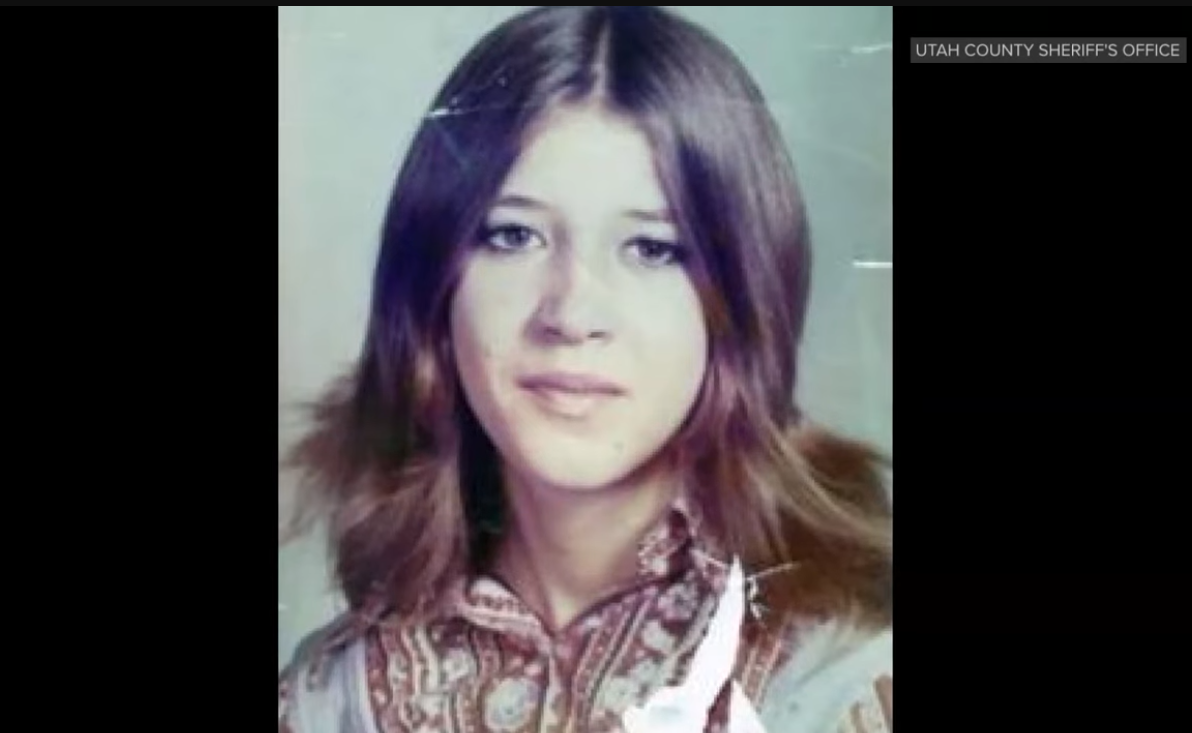
On October 18, Melissa Anne Smith—the 17-year-old daughter of the police chief of Midvale, another Salt Lake City suburb—disappeared after leaving a pizza parlor at around 9:30 p.m. Her nude body was found in a nearby mountainous area nine days later; post-mortem examination indicated that she may have remained alive for up to seven days following her disappearance. On October 31, Laura Ann Aime, also aged 17, disappeared in Lehi, 25 miles (40 km) south of Salt Lake City, after leaving a Halloween party by herself just after midnight; she was last seen trying to hitchhike. Her nude body was found by hikers 9 miles (14 km) to the northeast in American Fork Canyon on Thanksgiving Day. The medical examiner estimated that Aime had died on November 20; twenty days after her disappearance. Even though Bundy confessed to the killing of Aime, it wasn't until 2026 that her murder was confirmed to be a victim of Bundy by forensic DNA testing. Both Smith and Aime had been beaten, raped, sodomized and strangled with nylon stockings. Years later, Bundy described his post-mortem rituals with the corpses of Smith and Aime, including hair shampooing and application of makeup.
In the late afternoon of November 8, Bundy approached 18-year-old telephone operator Carol DaRonch at Fashion Place Mall in Murray, less than a mile from the Midvale restaurant where Smith was last seen. He identified himself as "Officer Roseland" of the Murray Police Department, told DaRonch that someone had attempted to break into her car and asked her to accompany him to the station to file a complaint. When DaRonch pointed out to Bundy that he was driving on a road that did not lead to the police station, he immediately pulled onto the shoulder and attempted to handcuff her. During their struggle, he inadvertently fastened both handcuffs to the same wrist, and DaRonch was able to open the car door and escape.
Arrest and first trial
On August 16, 1975, Bundy was arrested by Utah Highway Patrol officer Bob Hayward in Granger, another Salt Lake City suburb. Hayward observed Bundy cruising a residential area in his Volkswagen Beetle during the pre-dawn hours, and fleeing at high speed after seeing the patrol car. He also noticed that the Volkswagen's front passenger seat had been removed and placed on the rear seats. Searching the car, Hayward found a ski mask, a second mask fashioned from pantyhose, a crowbar, handcuffs, trash bags, a coil of rope, an ice pick and other items initially assumed to be burglary tools. Bundy explained that the ski mask was for skiing, he had found the handcuffs in a dumpster and the rest were common household items. However, Detective Jerry Thompson remembered a similar suspect and car description from the DaRonch kidnapping in November 1974, and Bundy's name from Kloepfer's phone call a month later. In a search of Bundy's apartment, police found a guide to Colorado ski resorts with a checkmark by the Wildwood Inn, and a brochure that advertised the Viewmont High School play in Bountiful, where Kent had disappeared. Police did not have sufficient evidence to detain Bundy, so he was released on his own recognizance. Bundy later said that searchers missed a hidden collection of Polaroid photographs of his victims, which he destroyed after he was released.
Salt Lake City police placed Bundy on 24-hour surveillance, and Thompson flew to Seattle with two other detectives to interview Kloepfer. She told them that in the year prior to Bundy's move to Utah, she had discovered objects that she "couldn't understand" in her house and in Bundy's apartment. These items included crutches, a bag of plaster of Paris that he admitted stealing from a medical supply house and a meat cleaver that was never used for cooking. Additional objects included surgical gloves, an Oriental knife in a wooden case that he kept in his glove compartment and a sack full of women's clothing. Bundy was perpetually in debt, and Kloepfer suspected that he had stolen almost everything of significant value that he possessed. When she confronted him over a new TV and stereo, he warned her, "If you tell anyone, I'll break your fucking neck." She said Bundy became "very upset" whenever she considered cutting her hair, which was long and parted in the middle. She would sometimes awaken in the middle of the night to find him under the bed covers with a flashlight, examining her body. He kept a lug wrench, taped halfway up the handle, in the trunk of her car—another Volkswagen Beetle, which he often borrowed—"for protection." The detectives confirmed that Bundy had not been with Kloepfer on any of the nights during which the Pacific Northwest victims had vanished, nor on the day Ott and Naslund were abducted from Lake Sammamish State Park. Shortly thereafter, Kloepfer was interviewed by Seattle homicide detective Kathy McChesney, and learned of the existence of Edwards and her brief engagement to Bundy around Christmas 1973.
Escapes
On June 7, 1977, Bundy was transported 40 miles (64 km) from the Garfield County jail in Glenwood Springs to Pitkin County Courthouse in Aspen for a preliminary hearing. He had elected to serve as his own attorney, and as such was excused by the judge from wearing handcuffs or leg shackles. During a recess, Bundy asked to visit the courthouse's law library to research his case. While shielded from his guards' view behind a bookcase, he opened a window and jumped to the ground from the second story, injuring his right ankle as he landed.
After shedding an outer layer of clothing, Bundy limped through Aspen as roadblocks were being set up on its outskirts, then hiked south onto Aspen Mountain. Near its summit he broke into a hunting cabin and stole food, clothing and a rifle. The following day, Bundy left the cabin and continued south toward the town of Crested Butte, but became lost in the forest. For two days he wandered aimlessly on the mountain, missing two trails that led downward to his intended destination. On June 10, Bundy broke into a camping trailer on Maroon Lake, 10 miles (16 km) south of Aspen, taking food and a ski parka; however, instead of continuing southward, he walked back north toward Aspen, eluding roadblocks and search parties along the way. Three days later, he stole a car at the edge of an Aspen golf course. Cold, sleep-deprived and in constant pain from his sprained ankle, Bundy drove back into Aspen, where two police officers noticed his car weaving in and out of its lane and pulled him over. He had been a fugitive for six days. In the car were maps of the mountain area around Aspen that prosecutors were using to demonstrate the location of Campbell's body (as his own attorney, Bundy had rights of discovery), indicating that his escape had been planned.
Back in jail in Glenwood Springs, Bundy ignored the advice of friends and legal advisors to stay put. The case against him, already weak at best, was deteriorating steadily as pretrial motions consistently resolved in Bundy's favor and significant pieces of evidence were ruled inadmissible. "A more rational defendant might have realized that he stood a good chance of acquittal, and that beating the murder charge in Colorado would probably have dissuaded other prosecutors ... with as little as a year and a half to serve on the DaRonch conviction, had Ted persevered, he could have been a free man." Instead, Bundy assembled a new escape plan. He acquired a detailed floor plan of the Garfield County jail and a hacksaw blade from other inmates. He accumulated $500 in cash, smuggled in over a six-month period by visitors, Boone in particular. During the evenings, while other prisoners were showering, Bundy sawed a hole about one square foot (0.093 m2) between the steel reinforcing bars in his cell's ceiling. Having lost 35 pounds (16 kg), he was able to wriggle through and explore the crawl space above in the weeks that followed. Multiple reports from an informant of movement within the ceiling during the night were not investigated.
Florida murders and rearrest
From Chicago, Bundy traveled by train to Ann Arbor, Michigan, where he was present in a local tavern on January 2. Five days later, he stole a car and drove south to Atlanta, where he boarded a bus and arrived in Tallahassee, Florida, on the morning of January 8. He stayed for one night at a hotel before renting a room under the alias "Chris Hagen" at a boarding house near the Florida State University (FSU) campus. Bundy later said that he initially resolved to find legitimate employment and refrain from further criminal activity, knowing he could probably remain free and undetected in Florida indefinitely as long as he did not attract the attention of police; but his lone job application, at a construction site, had to be abandoned when he was asked to produce identification. He reverted to his old habits of shoplifting and stealing money and credit cards from women's wallets left in shopping carts at local grocery stores.
Chi Omega murders
In the early hours of January 15, 1978—one week after his arrival in Tallahassee—Bundy entered FSU's Chi Omega sorority house through a rear door with a faulty locking mechanism. Beginning at about 2:45 a.m. he bludgeoned Margaret Elizabeth Bowman, aged 21, with a piece of oak firewood as she slept, then garroted her with a nylon stocking. He then entered the bedroom of 20-year-old Lisa Janet Levy and beat her unconscious, strangled her, tore one of her nipples, bit deeply into her left buttock and sexually assaulted her with a hair mist bottle. In an adjoining bedroom he attacked Kathy Kleiner, aged 21, breaking her jaw and deeply lacerating her shoulder; and Karen Chandler, aged 21, who suffered a concussion, broken jaw, loss of teeth and a crushed finger. Chandler and Kleiner survived the attack; Kleiner attributed their survival to automobile headlights illuminating the interior of their room and frightening away the attacker.
Tallahassee detectives determined that the four attacks took place in a total of less than 15 minutes, within earshot of more than 30 witnesses who heard nothing. After leaving the sorority house, Bundy broke into a basement apartment eight blocks away and attacked 21-year-old FSU student Cheryl Thomas, dislocating her shoulder and fracturing her jaw and skull in five places. She was left with permanent deafness in her left ear and equilibrium damage that ended her dance career. On Thomas' bed, police found a semen stain and a pantyhose "mask" containing two hairs "similar to Bundy's in class and characteristic."
Murder of Kimberly Leach
On February 8, Bundy drove 150 miles (240 km) east to Jacksonville in a stolen FSU van. In a parking lot he approached 14-year-old Leslie Parmenter, the daughter of the Jacksonville Police Department's chief of detectives, identifying himself as "Richard Burton, Fire Department," but retreated when Parmenter's older brother arrived and confronted him. That afternoon, he backtracked 60 miles (97 km) westward to Lake City. At Lake City Junior High School the following morning, 12-year-old Kimberly Dianne Leach was summoned to her homeroom by a teacher to retrieve a forgotten purse; she never returned to class. Seven weeks later, after an intensive search, her partially mummified remains were found in a pig farrowing shed near Suwannee River State Park, 35 miles (56 km) northwest of Lake City. Forensic experts surmised that Leach had been sexually assaulted before having her throat cut and her genitals mutilated with a knife.
On February 12, with insufficient cash to pay his overdue rent and a growing suspicion that police were closing in on him, Bundy stole a car and fled Tallahassee, driving westward across the Florida Panhandle. Three days later, at around 1:00 a.m., he was stopped by Pensacola police officer David Lee near the Alabama state line after a "wants and warrants" check showed his Volkswagen Beetle was stolen. When told he was under arrest, Bundy kicked Lee's legs out from under him and took off running. Lee fired two warning shots, then gave chase and tackled him. The two struggled over Lee's gun before the officer finally subdued and arrested Bundy. In the stolen vehicle were three sets of IDs belonging to female FSU students, 21 stolen credit cards and a stolen television set. Also found were a pair of dark-rimmed non-prescription glasses and a pair of plaid slacks, later identified as the disguise worn by "Richard Burton, Fire Department" in Jacksonville. As Lee transported his suspect to jail, unaware that he had just arrested one of the FBI's Ten Most Wanted Fugitives, he heard Bundy say, "I wish you had killed me."
Subsequent trials and marriage
In May 1978, a Florida grand jury indicted Bundy on charges of first-degree murder, attempted first-degree murder and burglary for the Chi Omega killings and assaults. He stood trial in June 1979 in the Florida Circuit Court for Dade County, with judge Edward Cowart presiding. The trial was covered by 250 reporters from five continents and was the first to be televised nationally in the United States. Despite the presence of five court-appointed attorneys, Bundy again handled much of his own defense. From the beginning, he "sabotaged the entire defense effort out of spite, distrust, and grandiose delusion," Nelson later wrote. "Ted [was] facing murder charges, with a possible death sentence, and all that mattered to him apparently was that he be in charge."
According to Mike Minerva, a Tallahassee public defender and member of the defense team, a pre-trial plea bargain was negotiated in which Bundy would plead guilty to killing Levy, Bowman and Leach in exchange for a firm 75-year prison sentence. Prosecutors were amenable to a deal, by one account, because "prospects of losing at trial were very good." Bundy, on the other hand, saw the plea bargain not only as a means of avoiding the death penalty, but also as a "tactical move": he could enter his plea, then wait a few years for evidence to disintegrate or become lost and for witnesses to die, move on or retract their testimony. Once the case against him had deteriorated beyond repair, he could file a post-conviction motion to set aside the plea and secure an acquittal. At the last minute, however, Bundy refused the deal. "It made him realize he was going to have to stand up in front of the whole world and say he was guilty," Minerva said. "He just couldn't do it."
At trial, crucial testimony came from Chi Omega sorority members Connie Hastings, who placed Bundy in the vicinity of the sorority house that evening, and Nita Neary, who saw him leaving the house clutching the murder weapon. Incriminating physical evidence included impressions of the bite wounds Bundy had inflicted on Levy's left buttock, which forensic odontologists Richard Souviron and Lowell Levine matched to castings of Bundy's teeth. The jury was also allowed to hear details of DaRonch's previous kidnapping, and finally deliberated for less than seven hours before convicting Bundy on July 24, 1979, of the Bowman and Levy murders, three counts of attempted first-degree murder for the assaults on Kleiner, Chandler and Thomas and two counts of burglary. Trial judge Edward Cowart imposed death sentences for the murder convictions. Bundy appealed his conviction and death sentence to the Supreme Court of Florida, but it affirmed them.
Death row, confessions and execution
Shortly after the conclusion of the Leach trial and the beginning of the long appeals process that followed, Bundy initiated a series of interviews with Stephen Michaud and Hugh Aynesworth. Speaking mostly in third person to avoid "the stigma of confession," he began for the first time to divulge details of his crimes and thought processes. Bundy recounted his career as a thief, confirming Kloepfer's long-time suspicion that he had shoplifted virtually everything of substance that he owned. "The big payoff for me," he said, "was actually possessing whatever it was I had stolen. I really enjoyed having something ... that I had wanted and gone out and taken." Possession proved to be an important motive for rape and murder as well. Sexual assault, he said, fulfilled his need to "totally possess" his victims. At first, Bundy killed his victims "as a matter of expediency ... to eliminate the possibility of [being] caught"; but later, murder became part of the "adventure." "The ultimate possession was, in fact, the taking of the life," he said. "And then ... the physical possession of the remains."
Bundy also confided in Special Agent William Hagmaier of the FBI Behavioral Analysis Unit. Hagmaier was struck by the "deep, almost mystical satisfaction" that Bundy took in murder. "He said that after a while, murder is not just a crime of lust or violence," Hagmaier related. "It becomes possession. They are part of you ... [the victim] becomes a part of you, and you [two] are forever one ... and the grounds where you kill them or leave them become sacred to you, and you will always be drawn back to them." Bundy told Hagmaier that he considered himself to be an "amateur," an "impulsive" killer in his early years, before moving into what he termed his "prime" or "predator" phase at about the time of Healy's murder in 1974. This implied that he began killing well before 1974—although he never explicitly admitted having done so.
In July 1984, prison guards found two hacksaw blades hidden in Bundy's cell. A steel bar in one of the cell's windows had been sawed completely through at the top and bottom and glued back into place with a homemade soap-based adhesive. Several months later, Bundy was moved to a different cell after guards found an unauthorized mirror. Shortly thereafter, he was charged with a disciplinary infraction for unauthorized correspondence with another high-profile criminal, John Hinckley Jr.
In October 1984, Bundy contacted Keppel and offered to share his self-proclaimed expertise in serial killer psychology in the ongoing hunt in Washington for the "Green River Killer," later identified as Gary Ridgway. Keppel and Green River Task Force Detective Dave Reichert interviewed Bundy, but Ridgway remained at large for a further seventeen years. Keppel published a detailed documentation of the Green River interviews, and later collaborated with Michaud on another examination of the interview material.
Modus operandi and victim profiles
Bundy was an unusually organized and calculating criminal who used his extensive knowledge of law enforcement methodologies to elude identification and capture for years. His crime scenes were distributed over large geographic areas; his victim count had risen to at least 20 before it became clear that numerous investigators in widely disparate jurisdictions were hunting the same man. Bundy's assault methods of choice were blunt trauma and strangulation, two relatively silent techniques that could be accomplished with common household items. He deliberately avoided firearms due to the noise they made and the ballistic evidence they left behind. He was a "meticulous researcher" who explored his surroundings in minute detail, looking for safe sites to seize and dispose of victims. He was unusually skilled at minimizing physical evidence. Bundy's fingerprints were never found at a crime scene, nor any other incontrovertible evidence of his guilt, a fact he repeated often during the years in which he attempted to maintain his innocence.
Other significant obstacles for law enforcement were Bundy's generic, essentially anonymous physical features, and a curious chameleon-like ability to change his appearance. Early on, police complained of the futility of showing his photograph to witnesses; he looked different in virtually every photo ever taken of him. In person, "his expression would so change his whole appearance that there were moments that you weren't even sure you were looking at the same person," said Stewart Hanson Jr., the judge in the DaRonch trial. "He [was] really a changeling." Bundy was well aware of this unusual quality and he exploited it, using subtle modifications of facial hair or hairstyle to significantly alter his appearance as necessary. He concealed his one distinctive identifying mark, a dark mole on his neck, with turtleneck shirts and sweaters. Even his Volkswagen Beetle proved difficult to pin down; its color was variously described by witnesses as metallic or non-metallic, tan or bronze, light brown or dark brown.
Bundy's modus operandi evolved in organization and sophistication over time, as is typical of serial killers, according to FBI experts. Early on, it consisted of forcible late-night entry followed by a violent attack with a blunt weapon on a sleeping victim. As his methodology evolved, he became progressively more organized in his choice of victims and crime scenes. He would employ various ruses designed to lure his victim to the vicinity of his vehicle where he had pre-positioned a weapon, usually a crowbar. In many cases he wore a plaster cast on one leg or a sling on one arm, and sometimes hobbled on crutches, then requested assistance in carrying something to his vehicle. Bundy was regarded as handsome and charismatic, traits he exploited to win the confidence of his victims and the people around him in his daily life. "Ted lured females," Michaud wrote, "the way a lifeless silk flower can dupe a honey bee." He would sometimes approach females pretending to be an authority figure or firefighter.
Pathology
Bundy underwent multiple psychiatric examinations; the experts' conclusions varied. Dorothy Otnow Lewis, a professor of psychiatry at the New York University School of Medicine and an authority on violent behavior, initially made a diagnosis of bipolar disorder, but later changed her impression more than once. She also suggested the possibility of a multiple personality disorder, based on behaviors described in interviews and court testimony; a great-aunt witnessed an episode during which Bundy "seemed to turn into another, unrecognizable person ... [she] suddenly, inexplicably found herself afraid of her favorite nephew as they waited together at a dusk-darkened train station. He had turned into a stranger." Lewis recounted a prison official in Tallahassee describing a similar transformation: "He said, 'He became weird on me.' He did a metamorphosis, a body and facial change, and he felt there was almost an odor emitting from him. He said, 'Almost a complete change of personality ... that was the day I was afraid of him.'"
While experts found Bundy's precise diagnosis elusive, the majority of evidence pointed away from bipolar disorder or psychosis, and toward antisocial personality disorder (ASPD). Bundy displayed many personality traits typically found in ASPD patients, such as outward charm and charisma with little true personality or genuine insight beneath the facade; the ability to distinguish right from wrong, but with minimal effect on behavior; and an absence of guilt or remorse. "Guilt doesn't solve anything, really," Bundy said in 1981. "It hurts you ... I guess I am in the enviable position of not having to deal with guilt." There was also evidence of narcissism, poor judgment and manipulative behavior. Upon assessment using the Psychopathy Checklist–revised (PCL-R), Bundy was reportedly evaluated as 39/40. Prosecutor George Dekle wrote, "Sociopaths are egotistical manipulators who think they can con anybody." "Sometimes he manipulates even me," admitted one psychiatrist. In the end, Lewis agreed with the majority: "I always tell my graduate students that if they can find me a real, true psychopath, I'll buy them dinner," she told Nelson. "I never thought they existed ... but I think Ted may have been one, a true psychopath, without any remorse or empathy at all." Narcissistic personality disorder (NPD) and its subtype malignant narcissism have both been proposed as alternative diagnoses in at least one subsequent retrospective analysis.
On the afternoon before he was executed, Bundy granted a videotaped interview to James Dobson, a psychologist and founder of the Christian evangelical organization Focus on the Family. He used the opportunity to make new claims about violence in the media and the pornographic "roots" of his crimes. "It happened in stages, gradually," he said. "My experience with ... pornography that deals on a violent level with sexuality, is once you become addicted to it ... I would keep looking for more potent, more explicit, more graphic kinds of material. Until you reach a point where the pornography only goes so far ... where you begin to wonder if maybe actually doing it would give that which is beyond just reading it or looking at it." Violence in the media, he said, "particularly sexualized violence," sent boys "down the road to being Ted Bundys." The FBI, he suggested, should stake out adult movie houses and follow patrons as they leave. "You are going to kill me," he said, "and that will protect society from me. But out there are many, many more people who are addicted to pornography, and you are doing nothing about that."
Victims
Confirmed
The night before his execution, Bundy confessed to 30 homicides, but the true total remains unknown and Bundy occasionally made cryptic comments to encourage speculation. He told Aynesworth in 1980 that for every murder "publicized," there "could be one that was not." When FBI agents proposed a total tally of 36, Bundy responded, "Add one digit to that, and you'll have it." Years later he told Nelson that the common estimate of 35 was accurate, but Keppel wrote that "[Ted] and I both knew [the total] was much higher." In an interview, Keppel stated his belief that Bundy had killed "at least 50, and maybe 75."
John Henry Browne, a lawyer for Bundy, would later claim "that the first person he killed was a young boy when they were playing some kind of sex game in the woods. And so he must have been only 12, 13, 14." Browne also said that "Ted told me in that interview that he killed over 100 people." "I told Ted Bundy that we now have the evidence to charge him with both cases," Leon County Sheriff Kenneth Katsaris recalled, referring to the Chi Omega murders and the slaying of Leach. "He looked at me and said, 'When you find the person that committed these crimes that you think I committed, that person is going to be wanted for murders of women in the three digits in six states.'" "I don't think even he knew ... how many he killed, or why he killed them," said Reverend Fred Lawrence, the Methodist clergyman who administered Bundy's last rites. "That was my impression, my strong impression."
On the evening before his execution, Bundy reviewed his victim tally with Hagmaier on a state-by-state basis for a total of 30 homicides:
in Washington, 11 (including Parks, abducted in Oregon but killed in Washington; and including 3 unidentified)
in Utah, 8 (3 unidentified)
in Colorado, 3
in Florida, 3
in Oregon, 2 (both unidentified)
in Idaho, 2 (1 unidentified)
in California, 1 (unidentified)
1974
January 4: Karen Sparks (18) – Bludgeoned and sexually assaulted in her bed as she slept in the University District of Seattle; survived but the extent of her injuries resulted in permanent brain damage.
February 1: Lynda Ann Healy (21) – Bludgeoned while asleep and abducted from her basement bedroom in Seattle and was then decapitated and dismembered post-mortem; mandible recovered at Taylor Mountain site in 1975.
March 12: Donna Gail Manson (19) – Abducted while walking to a concert at Evergreen State College; body left according to Bundy at Taylor Mountain site, but never found. However, there is speculation that the partial remains of an unidentified female discovered near Eatonville, Washington, on August 29, 1978, could have belonged to Manson. Remains and clothing were reportedly destroyed on May 10, 1985, before a positive forensic identification could be made.
April 17: Susan Elaine Rancourt (18) – Disappeared after attending an evening advisors' meeting at Central Washington State College; skull and mandible recovered at Taylor Mountain site in 1975. Both had been severely fractured.
May 6: Roberta Kathleen Parks (22) – Vanished from Oregon State University in Corvallis, Oregon; skull and mandible recovered at Taylor Mountain site in 1975. She had been bludgeoned to death.
June 1: Brenda Carol Ball (22) – Disappeared after leaving the Flame Tavern in Burien, and was last seen in the parking lot, talking to a man with his arm in a sling; skull and mandible recovered at Taylor Mountain site in 1975. Her skull had been fractured.
June 11: Georgann Hawkins (18) – Abducted from an alley behind her sorority house; skeletal remains identified by Bundy as those of Hawkins recovered at Issaquah site. Hawkins remains listed as a missing person.
July 14: Janice Ann Ott (23) – Abducted from Lake Sammamish State Park in broad daylight and was last seen leaving the park with Bundy who had asked her for assistance with putting his sailboat on his car; skeletal remains recovered at Issaquah site in 1974.
1975
January 12: Caryn Eileen Campbell (23) – Disappeared from a hotel hallway in Snowmass Village, Colorado; body discovered on a dirt road near the hotel with skull fractures and knife wounds on February 17.
March 15: Julie Lyle Cunningham (26) – Disappeared from Vail, Colorado, after she left her apartment in the Apollo Park neighborhood to visit a local tavern; body buried according to Bundy near Rifle, 90 miles (140 km) west of Vail, but never found.
April 6: Denise Lynn Oliverson (24) – Abducted while cycling to her parents' house in Grand Junction, Colorado; body thrown according to Bundy into the Colorado River 5 miles (8.0 km) west of Grand Junction, but never found.
May 6: Lynette Dawn Culver (12) – Abducted from Pocatello, Idaho, after she left Alameda Junior High School for her lunch break; body thrown according to Bundy into what authorities believe to be the Snake River, but never found.
June 28: Susan Curtis (15) – Disappeared during a youth conference at Brigham Young University when she left her friends to walk back to her dormitory and brush her teeth; body buried according to Bundy along a highway near Price, 75 miles (121 km) southeast of Provo, but never found.
1978
January 15: Margaret Elizabeth Bowman (21) – Bludgeoned and strangled as she slept at the Chi Omega sorority at Florida State University (no secondary crime scene).
January 15: Lisa Janet Levy (20) – Bludgeoned, strangled, bitten and sexually assaulted as she slept at the Chi Omega sorority at Florida State University (no secondary crime scene).
January 15: Karen Chandler (21) – Bludgeoned as she slept at the Chi Omega sorority; survived, although her skull was fractured, and her jaw, right arm and fingers were crushed.
January 15: Kathy Kleiner (21) – Bludgeoned as she slept at the Chi Omega sorority, resulting in her jaw being shattered and her right cheek being ripped open; survived.
January 15: Cheryl Thomas (21) – Bludgeoned as she slept, eight blocks from Chi Omega; survived after having a fractured jaw and skull which left her with permanent deafness in her left ear and equilibrium damage.
February 9: Kimberly Dianne Leach (12) – Abducted from Lake City Junior High School in Lake City, Florida, and was last seen being led to a white van by a man who was later identified as Bundy; mummified remains found near Suwannee River State Park, 43 miles (69 km) west of Lake City, with "homicidal violence about the neck region."
Unconfirmed
Bundy remains a suspect in several unsolved homicides and disappearances, and is likely responsible for others that may never be identified; in 1987, he confided to Keppel that there were "some murders" that he would "never talk about," because they were committed "too close to home," "too close to family" or involved "victims who were very young." Minutes before his execution, Hagmaier queried Bundy about unsolved homicides in New Jersey, Vermont, Illinois, Texas and Florida. Bundy provided directions—later proven inaccurate—to Curtis' burial site in Utah, but denied involvement in any of the open cases. In 2011, Bundy's complete DNA profile, obtained from a vial of his blood found in an evidence vault, was added to the FBI's DNA database for future reference in these and other unsolved murder cases:
Ann Marie Burr, 8, vanished from her Tacoma residence on August 31, 1961, when Bundy was aged 14. An unknown tennis shoe imprint was found by the overturned bench used to enter her house. Due to the small size of the shoe, police believed the perpetrator was a teenager or youth. The Burr house was on Bundy's newspaper delivery route and Burr's father was certain that he saw Bundy in a ditch at a construction site on the nearby UPS campus the morning his daughter disappeared. Other circumstantial evidence implicates Bundy as well, but detectives familiar with the case have never agreed on the likelihood of his involvement. Bundy repeatedly denied culpability and wrote a letter of denial to the Burr family in 1986. However, Keppel has observed that the Burr case fits all three categories of murders Bundy would "never talk about": "too close to home," "too close to family" and "very young." Forensic testing of material evidence from the Burr crime scene in 2011 yielded insufficient intact DNA sequences for comparison with Bundy's, and as such his involvement remains speculative.
Flight attendants Lisa Wick and Lonnie Ree Trumbull, both 20, were bludgeoned with a piece of lumber as they slept in their basement apartment in Seattle's Queen Anne neighborhood in the early morning hours of June 23, 1966. An autopsy concluded that Trumbull had died at approximately midnight from a blow to the head she had received about an hour earlier. In retrospect, Keppel noted many similarities to the Chi Omega crime scene. The crime was also similarly comparable to Bundy's earlier verifiable assaults on women, who were bludgeoned while in their beds in Seattle basement apartments. Wick, who suffered permanent memory loss as a result of the attack, later contacted Rule: "I know that it was Ted Bundy who did that to us," she wrote, "but I can't tell you how I know." Police records state that when Bundy's fingerprints were compared in January 1977 to those left at the crime scene, they did not match, although many people were allowed into the unsecured crime scene and may have left their fingerprints, thereby causing unwanted alteration of evidence. Bundy's involvement remains unconfirmed.
In media
Books
Rule, Ann (1980). The Stranger Beside Me. W.W. Norton and Company Inc. ISBN 978-1-938402-78-4
Kendall, Elizabeth (1981). The Phantom Prince: My Life with Ted Bundy. Abrams & Chronicle Books. ISBN 978-1419744853
Michaud, Stephen G., and Hugh Aynesworth (2000). Ted Bundy: Conversations with a Killer. Authorlink Press. ISBN 978-1928704-17-1
Sullivan, Kevin M (2009). The Bundy Murders: A Comprehensive History. McFarland and Company Inc. ISBN 978-0-786444-26-7
Michaud, Stephen G., and Hugh Aynesworth (2012). The Only Living Witness: The True Story of Serial Sex Killer Ted Bundy. Authorlink. ISBN 978-1928704119
Carlisle, Al (2017). Violent Mind: The 1976 Psychological Assessment of Ted Bundy. Genius Book Publishing. ISBN 978-0998297-37-8
Nelson, Polly (2019). Defending the Devil: My Story as Ted Bundy's Last Lawyer. Echo Point Books & Media. ISBN 978-1635617-91-7
Kleiner Rubin, Kathy, and Emilie Le Beau Lucchesi (2023), A Light in the Dark: Surviving More Than Ted Bundy. Chicago Review Press. ISBN 978-1641608-68-8
Knoll, Jessica. (2023). Bright Young Women. Marysue Rucci Books. ISBN 1501153226
Fraser, Caroline. (2025). Murderland: Crime and Bloodlust in the Time of Serial Killers. Penguin Press. ISBN 9780593657225
Film
Ted Bundy (2002), played by Michael Reilly Burke
The Stranger Beside Me (2003), played by Billy Campbell
The Riverman (2004), played by Cary Elwes
Bundy: An American Icon (2008), played by Corin Nemec
Extremely Wicked, Shockingly Evil and Vile (2019), played by Zac Efron
Ted Bundy: American Boogeyman (2021), played by Chad Michael Murray
No Man of God (2021), played by Luke Kirby
Music
The song "Ted, Just Admit it..." by Jane's Addiction
The song "Lotta True Crime" by Penelope Scott references Bundy
The song "Video Crimes" by Tin Machine references Bundy
The song "Blow" by Tyler, The Creator
The song "epaR" by Earl Sweatshirt and Vince Staples references Bundy
The song "Ted Bundy" by Theory of a Deadman
Television
The Deliberate Stranger (1986), played by Mark Harmon
The Capture of the Green River Killer (2008), played by James Marsters
Ted Bundy: Devil in Disguise (2017)
Ted Bundy: An American Monster (2017)
Ted Bundy: What Happened (2017)
Conversations with a Killer: The Ted Bundy Tapes (2019)
Ted Bundy: Falling for a Killer (2020)
Monster: The Ed Gein Story, season 3, episode 8 (2025), played by John T. O'Brien