




Henry St. Claire Fredericks Jr. (born May 17, 1942), better known by his stage name Taj Mahal, is an American blues musician. He plays the guitar, piano, banjo, harmonica, and many other instruments along with singing and whistling, often incorporating elements of world music into his work. Mahal has done much to reshape the definition and scope of blues music over the course of his more than 50-year career by fusing it with nontraditional forms, including sounds from the Caribbean, Africa, India, Hawaii, and the South Pacific.
Contents
Early life
Mahal was born Henry St. Claire Fredericks Jr. on May 17, 1942, in Harlem, New York. Growing up in Springfield, Massachusetts, he was raised in a musical environment: his mother was a member of a local gospel choir and his father, Henry Saint Claire Fredericks Sr., was an Afro-Caribbean jazz arranger and piano player.
The family owned a shortwave radio which received music broadcasts from around the world, exposing him at an early age to world music. Early in childhood he recognized the stark differences between the popular music of his day and the music that was played in his home. He also became interested in jazz, enjoying the works of musicians such as Charles Mingus, Thelonious Monk and Milt Jackson. His parents came of age during the Harlem Renaissance, instilling in their son a sense of pride in his Caribbean and African ancestry through their stories.
Because his father was a musician, his home frequently hosted other musicians from the Caribbean, Africa, and the US. His father was called "The Genius" by Ella Fitzgerald before starting his family. Early on, Henry Jr. developed an interest in African music, which he studied assiduously as a young man. His parents encouraged him to pursue music, starting him out with classical piano lessons. He also studied the clarinet, trombone and harmonica.
When Henry Jr. was eleven years old, his father was killed in an accident at his construction company, crushed by a tractor when it flipped. It was an extremely traumatic experience for the boy. Henry Jr's mother remarried, and his stepfather owned a guitar which he began using at the age of 13 or 14. His first lessons were from a new neighbor from North Carolina of his own age who played acoustic blues guitar. This neighbor, Lynwood Perry, was the nephew of the famous bluesman Arthur "Big Boy" Crudup. In high school Henry Jr. sang in a doo-wop group.
For some time, Henry thought of pursuing farming over music. His passion began on a dairy farm in Palmer, Massachusetts, not far from Springfield, at the age of 16. By the time he was 19, he had become farm foreman. "I milked anywhere between thirty-five and seventy cows a day. I clipped udders. I grew corn. I grew Tennessee redtop clover. Alfalfa." Mahal believes in growing one's own food, saying, "You have a whole generation of kids who think everything comes out of a box and a can, and they don't know you can grow most of your food." Because of his personal support of the family farm, Mahal regularly performs at Farm Aid concerts.
Henry chose his stage name, Taj Mahal, from dreams he had about Mahatma Gandhi, India, and social tolerance. Henry started using the stage name in 1959 or 1961—around the same time he began attending the University of Massachusetts. Despite having attended a vocational agriculture school, becoming a member of the National FFA Organization, and majoring in animal husbandry and minoring in veterinary science and agronomy, Mahal decided to pursue music instead of farming. In college, he led a rhythm and blues band called Taj Mahal & The Elektras. Before heading for the US West Coast, he was also part of a duo with Jessie Lee Kincaid.
Career
Mahal moved to Santa Monica, California, in 1964 and formed Rising Sons with fellow blues rock musicians Ry Cooder, Jessie Lee Kincaid and future Byrds drummer Kevin Kelley, landing a record deal with Columbia Records soon after. After the Rising Sons disbanded, Jesse Ed Davis, a Kiowa native from Oklahoma, joined Taj Mahal and played guitar and piano on Mahal's first four albums. The group was one of the first interracial bands of the period, which may have hampered their commercial viability. However, Rising Sons bassist Gary Marker later recalled the band's members had come to a creative impasse and were unable to reconcile their musical and personal differences even with the guidance of veteran producer Terry Melcher. They recorded enough songs for a full-length album, but released only a single and the band soon broke up. However, Jesse Ed Davis would continue playing with Taj in his live bands into the early 70s. Legacy Records did release The Rising Sons Featuring Taj Mahal and Ry Cooder in 1992 with material from that period. During this time Mahal was also working with other musicians like Howlin' Wolf, Buddy Guy, Lightnin' Hopkins, and Muddy Waters.
Mahal stayed with Columbia for his solo career, releasing the self-titled Taj Mahal and The Natch'l Blues in 1968. His track "Statesboro Blues" was featured on side 2 of the very successful Columbia/CBS sampler album, The Rock Machine Turns You On, giving a huge early impetus to his career. Giant Step/De Old Folks at Home with session musician Jesse Ed Davis followed in 1969. During this time he and Cooder worked with the Rolling Stones, with whom he has performed at various times throughout his career. In 1968, he performed in the film The Rolling Stones Rock and Roll Circus. In 1969, he performed at the Gold Rush rock music festival in Amador County.
Mahal recorded a total of twelve albums for Columbia from the late 1960s into the 1970s. His work of the 1970s was especially important, in that his releases began incorporating West Indian and Caribbean music, jazz and reggae into the mix. In 1972, he acted in and wrote the film score for the movie Sounder, which starred Cicely Tyson. He reprised his role and returned as composer in the sequel, Part 2, Sounder.
In 1976 Mahal left Columbia and signed with Warner Bros. Records, recording three albums for them. One of these was another film score for 1977's Brothers; the album shares the same name. After his time with Warner Bros., he struggled to find another record contract, this being the era of heavy metal and disco music.
Personal life
Mahal's first marriage was to Anna de Leon. He refers to Anna in the song "Texas Woman Blues" with the spoken words "Señorita de Leon, escucha mi canción". That marriage produced one daughter, the novelist and professor Aya de Leon. Taj Mahal married Inshirah Geter on January 23, 1976, and together they have six children. His daughter Deva Mahal appeared on one episode of Dating Around.
Musical style
Mahal leads with his thumb and middle finger when fingerpicking, rather than with his index finger as the majority of guitar players do. "I play with a flatpick," he says, "when I do a lot of blues leads." Early in his musical career Mahal studied the various styles of his favorite blues singers, including musicians like Jimmy Reed, Son House, Sleepy John Estes, Big Mama Thornton, Howlin' Wolf, Mississippi John Hurt, and Sonny Terry. He describes his hanging out at clubs like Club 47 in Massachusetts and Ash Grove in Los Angeles as "basic building blocks in the development of his music." Considered to be a scholar of blues music, his studies of ethnomusicology at the University of Massachusetts Amherst would come to introduce him further to the folk music of the Caribbean and West Africa. Over time he incorporated more and more African roots music into his musical palette, embracing elements of reggae, calypso, jazz, zydeco, R&B, gospel music, and the country blues—each of which having "served as the foundation of his unique sound." According to The Rough Guide to Rock, "It has been said that Taj Mahal was one of the first major artists, if not the first, to pursue the possibilities of world music. Even the blues he was playing in the early 70s – Recycling The Blues & Other Related Stuff (1972), Mo' Roots (1974) – showed an aptitude for spicing the mix with flavours that always kept him a yard or so distant from being an out-and-out blues performer." Concerning his voice, author David Evans writes that Mahal has "an extraordinary voice that ranges from gruff and gritty to smooth and sultry."
Taj Mahal believes that his 1999 album Kulanjan, which features him playing with the kora master of Mali's Griot tradition Toumani Diabaté, "embodies his musical and cultural spirit arriving full circle." To him it was an experience that allowed him to reconnect with his African heritage, striking him with a sense of coming home. He even changed his name to Dadi Kouyate, the first jali name, to drive this point home. Speaking of the experience and demonstrating the breadth of his eclecticism, he has said:
The microphones are listening in on a conversation between a 350-year-old orphan and its long-lost birth parents. I've got so much other music to play. But the point is that after recording with these Africans, basically if I don't play guitar for the rest of my life, that's fine with me....With Kulanjan, I think that Afro-Americans have the opportunity to not only see the instruments and the musicians, but they also see more about their culture and recognize the faces, the walks, the hands, the voices, and the sounds that are not the blues. Afro-American audiences had their eyes really opened for the first time. This was exciting for them to make this connection and pay a little more attention to this music than before.
Awards
Taj Mahal has received five Grammy Awards (seventeen nominations) over his career.
1997 (Grammy Award) Best Contemporary Blues Album for Señor Blues
2000 (Grammy Award) Best Contemporary Blues Album for Shoutin' in Key
2006 (Blues Music Awards) Historical Album of the Year for The Essential Taj Mahal
2008 (Grammy Nomination) Best Contemporary Blues Album for Maestro
2018 (Grammy Award) Best Contemporary Blues Album for TajMo
2022 (Grammy Award) Best Traditional Blues Album for Get on Board
2025 (Grammy Award) Best Traditional Blues Album for Swingin' Live at the Church in Tulsa
On February 8, 2006, Taj Mahal was designated the official Blues Artist of the Commonwealth of Massachusetts.
In March 2006, Taj Mahal, along with his sister, the late Carole Fredericks, received the Foreign Language Advocacy Award from the Northeast Conference on the Teaching of Foreign Languages in recognition of their commitment to shine a spotlight on the vast potential of music to foster genuine intercultural communication.
On May 22, 2011, Taj Mahal received an honorary Doctor of Humanities degree from Wofford College in Spartanburg, South Carolina. He also made brief remarks and performed three songs. A video of the performance can be found online.
In 2014, Taj Mahal received the Americana Music Association's Lifetime Achievement award.
Discography
Filmography
Live DVDs
2002 – Live at Ronnie Scott's 1988
2006 – Taj Mahal/Phantom Blues Band Live at St. Lucia
2011 – Play The Blues Live From Lincoln Jazz Center – with Wynton Marsalis and Eric Clapton, playing on "Just a Closer Walk With Thee" and "Corrine, Corrina"
Movies
1967 - Festival as himself
1972 – Sounder as Ike Phillips
1976 – Part 2, Sounder as Ike Phillips
1977 – Scott Joplin as Poor Alfred
1977 – Brothers (composer)
1987 – The Man Who Broke 1,000 Chains as Bones
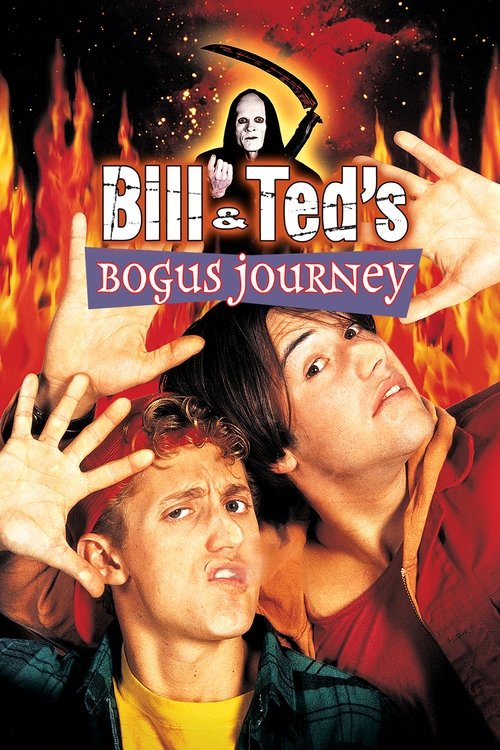
1991 – Bill & Ted's Bogus Journey as Gatekeeper
1992 – Zebrahead (composer)
1995 – Once Upon a Time... When We Were Colored as Mr. Will
1996 – Blind Willie's Blues (documentary film) Featured Interview
1996 – The Rolling Stones Rock and Roll Circus as himself
1998 – Outside Ozona as Dix Mayal
1998 – Six Days, Seven Nights as Entertainer
2000 – Songcatcher as Dexter Speaks