



Stewart Granger (born James Lablache Stewart; 6 May 1913 – 16 August 1993) was a British film actor, mainly associated with heroic and romantic leading roles. He was a popular leading man from the 1940s to the early 1960s, rising to fame through his appearances in the Gainsborough melodramas.
Contents
Early life
He was born James Lablache Stewart in Old Brompton Road, Kensington, west London, the only son of Major James Stewart, OBE and his wife Frederica Eliza (née Lablache). Granger was educated at Epsom College and the Webber Douglas Academy of Dramatic Art in South Kensington. He was the great-great-grandson of the Italian-French-Irish opera singer Luigi Lablache and the grandson of the actor Luigi Lablache. He had one sibling, an elder sister named Iris Elizabeth Lablache Stewart, who was married three times (Fisher, Hoar, and Harrison). She had one daughter, Carolyn Fisher, later known as Antiques Roadshow expert Bunny Campione. Granger lived in Bournemouth at 57 Grove Road; his mother owned the property now called East Cliff Cottage Hotel until 1979.
When he became an actor, he was advised to change his name in order to avoid being confused with American film star James Stewart. "Granger" was his Scottish grandmother's maiden name. Offscreen friends and colleagues continued to call him Jimmy for the rest of his life, but to the general public he became Stewart Granger.
Career
Early work: 1933–1940
Granger made his film debut as an extra in 1933, starting with The Song You Gave Me (1933). He can also be glimpsed in Give Her a Ring (1933), Over the Garden Wall (1934) and A Southern Maid (1934). It was at this time that he met the actor Michael Wilding, and they remained friends until Wilding's death in 1979.
Years of theatre work followed, initially at Hull Repertory Theatre and then, after a pay dispute, at Birmingham Repertory Theatre. Here he met Elspeth March, a leading actress with the company, who became his first wife. His productions at Birmingham included The Courageous Sex and Victoria, Queen and Empress; he also acted at the Malvern Festival in The Millionairess and The Apple Cart and was in the movie Under Secret Orders (1937).
Granger began to get work on stage in London. He appeared in The Sun Never Sets (1938) at the Drury Lane Theatre and in Serena Blandish (1938) opposite Vivien Leigh. At the Buxton Festival, he played Tybalt in a production of Romeo and Juliet opposite Robert Donat and Constance Cummings. He also acted opposite them in The Good Natured Man. In London he was in Autumn with Flora Robson and The House in the Square (1940). Granger had small roles in the movies So This Is London (1939) and Convoy (1940).
At the outbreak of the Second World War, Granger enlisted in the Gordon Highlanders, then transferred to the Black Watch with the rank of second lieutenant. However he suffered from stomach ulcers and was invalided out of the army in 1942.
Granger had a small role in the war movie Secret Mission (1942) and a bigger one in a comedy, Thursday's Child (1943). He was in a stage production of Rebecca when he was asked to audition for the film that turned him into a star. Granger had been recommended by Donat, who most recently worked with Granger on stage in To Dream Again.
Stardom
Granger's first starring film role was as the acid-tongued Rokeby in the Gainsborough Pictures period melodrama The Man in Grey (1943), a movie that helped to make him and his three co-stars – James Mason, Phyllis Calvert and Margaret Lockwood – box-office names in Britain.
Granger followed it with The Lamp Still Burns (1943), playing the love interest of nurse Rosamund John. More popular was Fanny by Gaslight (1944), another for Gainsborough Pictures, which reunited him with Calvert and Mason, and added Jean Kent. The New York Times reported that Granger "is a young man worth watching. The customers... like his dark looks and his dash; he puts them in mind, they say of Cary Grant." It was the second most popular movie at the British box office in 1944.
Another hit was Love Story (1944), where he plays a blind pilot who falls in love with terminally ill Margaret Lockwood, with Patricia Roc co-starring. Granger filmed this at the same time as Waterloo Road (1945), playing his first villain, a "spiv" who has run off with the wife of the John Mills character. This movie was popular too, and it was one of Granger's favourites. He was too busy to accept a role offered in The Way to the Stars.
Madonna of the Seven Moons (1945), with Calvert and Roc, was more Gainsborough melodrama, and another hit. Also popular was Caesar and Cleopatra, supporting Claude Rains and Vivien Leigh; this movie lost money because of its high production cost but was widely seen, and was the first of Granger's movies to be a hit in the U.S. At the end of 1945 British exhibitors voted Granger the second most popular British film star, and the ninth most popular overall. The Times reported that "this six-foot black-visaged ex-soldier from the Black Watch is England's Number One pin up boy. Only Bing Crosby can match him for popularity."
Caravan (1946), starring Granger and Kent, was the sixth most popular movie at the British box office in 1946. Also well liked was The Magic Bow (1946), with Calvert and Kent, where Granger played Niccolò Paganini. That year he was voted the third most popular British star, and the sixth most popular overall. James Mason wrote about Granger in his memoir, saying "although he seemed to get as much fun from a spot of producer-baiting as anyone I ever worked with, he was deeply conscientious and had a load of theatrical talent. He should have made himself a producer and/or director."
American career
In 1949 Granger made his move; MGM was looking for someone to play H. Rider Haggard's hero Allan Quatermain in a movie version of King Solomon's Mines. Errol Flynn was offered the role but turned it down; Granger's signing was announced in August 1949.
On the basis of the huge success of this movie, released in 1950 and co-starring Deborah Kerr and Richard Carlson, he was offered a seven-year contract by MGM. He signed it in May 1950, and MGM announced three vehicles for him: Robinson Crusoe, a remake of Scaramouche and an adaptation of Soldiers Three.
His first movie under the new arrangement was an action comedy, Soldiers Three (1951). Granger followed it with location work for Constable Pedley in Canada. This was put on hold so Granger could make a light comedy, The Light Touch, in a role meant for Cary Grant. It was a box office disappointment. However filming resumed on Constable Pedley which became The Wild North (1953) and that was a big hit.
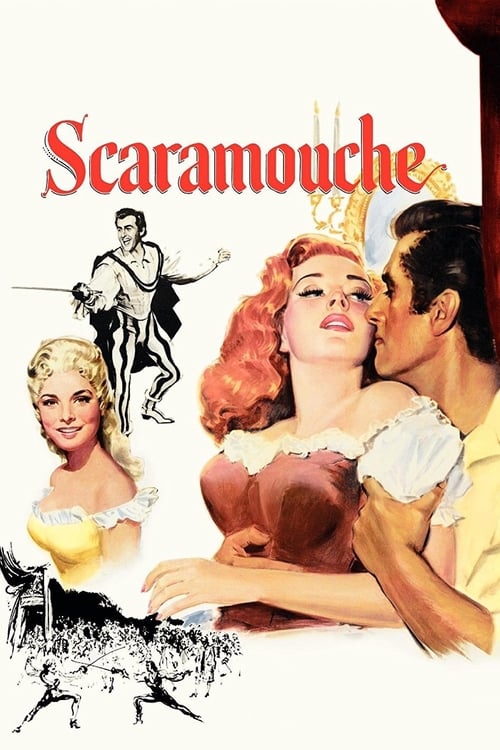
In 1952, Granger starred in Scaramouche in the role of Andre Moreau, the bastard son of a French nobleman, a part Ramón Novarro had played in the 1923 version of Rafael Sabatini's novel. Granger's co-star Eleanor Parker said Granger was the only actor she did not get along with during her entire career. "Everyone disliked this man...Stewart Granger was a dreadful person, rude...just awful. Just being in his presence was bad. I thought at one point the crew was going to kill him." However, the resulting movie was a notable critical and commercial success.
After this came the remake of The Prisoner of Zenda (1952), for which his theatrical voice, stature (6'2") and dignified profile made him a natural. It too was popular.
In 1952 he and Jean Simmons sued Howard Hughes for $250,000 damages arising from an alleged breach of contract. The case was settled out of court.
Columbia borrowed him to play the love interest of Rita Hayworth in Salome (1953), another big hit. Back at MGM he co-starred with his wife in Young Bess (1953), playing Thomas Seymour. The movie was popular, though it did not recover its cost, and it remained a favourite of Granger's.
Later career
In June 1960, Granger announced he would appear in The Leopard; two movies for MGM in Britain, one of which was I Thank a Fool alongside Susan Hayward; Pontius Pilate for Hugo Fregonese; and The Tumbled House for John Farrow. The role in The Leopard ultimately went to Burt Lancaster, the one in I Thank a Fool to Peter Finch, and the Fregonese and Farrow movies were never made. Granger did go to Britain to appear in the thriller The Secret Partner (1961) for MGM.
He went to Italy and played Lot in Robert Aldrich's Sodom and Gomorrah (1962), filmed in Rome. When Sodom and Gomorrah started filming, Granger announced he had signed a three-picture deal with MGM, which would include I Thank a Fool, Swordsman of Siena and a third movie for Jacques Bar. He also announced he had reactivated his production company, Tracy Productions, which was scheduled to make Dark Memory by Jonathan Latimer. Granger did not appear in I Thank a Fool, and Dark Memory was not made. Instead Granger stayed in Italy to make Commando (1962), an action movie and Swordsman of Siena (1963), a swashbuckler. Granger was in the war movie The Secret Invasion (1964) for Roger Corman, shot in Yugoslavia.
In West Germany, Granger acted in the role of Old Surehand in three Western movies adapted from novels by German author Karl May, with French actor Pierre Brice (playing the fictional Indian chief Winnetou), in Among Vultures (1964), with Elke Sommer; The Oil Prince (1965) (Rampage at Apache Wells) (1965), shot in Yugoslavia; and Old Surehand (Flaming Frontier) (1965). He was teamed with Brice and Lex Barker, also a hero of Karl May movies, in the crime movie Killer's Carnival (1966).
Granger starred in several Eurospy movies such as Red Dragon (1965), a West German-Italian movie shot in Hong Kong; and Requiem for a Secret Agent (1966). He did The Crooked Road (1965), with Robert Ryan under the direction of Don Chaffey in Yugoslavia; Target for Killing (1966), a crime movie with Karin Dor; and The Trygon Factor (1966), a British co-production based on a novel by Edgar Wallace.
Granger's last studio picture was The Last Safari (1967), shot in Africa and directed by Henry Hathaway. Granger was billed under Kaz Garas. He later called this "my last real film...the worst film ever made in Africa!"
U.S. television
Granger returned to the U.S. and made a TV movie, Any Second Now (1969).
In 1970, he appeared as Colonel Mackenzie on The Men from Shiloh, a re-tooling of the long-running NBC Western series The Virginian. Wardrobes and hairstyles were updated, Doug McClure grew a mustache, as did Lee Majors (who joined the show along with Granger), making the actors more dashing and realistic for the time. Granger followed Lee J. Cobb, Charles Bickford, and John McIntire as the new owner of the Shiloh ranch on prime-time TV for its ninth season (1971). Granger said he accepted the role for the money and because it "seemed like it could be a lot of fun", but was disappointed at what he perceived as a lack of character development for his role. He went on to play Sherlock Holmes in a poorly received 1972 TV film version of The Hound of the Baskervilles.
Retirement
In the 1970s, Granger retired from acting and went to live in southern Spain, where he invested in real estate and resided in Estepona, Málaga. While living there, he became a friend and business partner of former barrister and television producer James Todesco (Eldorado TV series). Together they were involved in real estate investment and development.
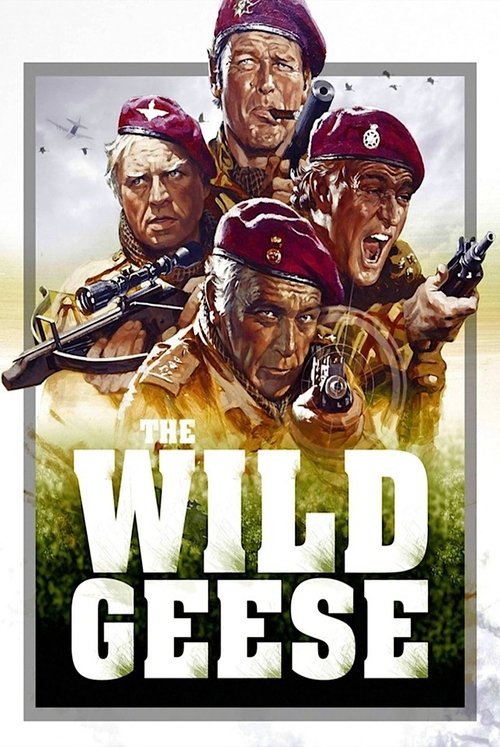
He appeared in his last major film, the 1978 hit The Wild Geese, as an unscrupulous banker who hires a unit of mercenary soldiers including (Richard Harris, Roger Moore, and Richard Burton) to stage a military coup in an African nation. His character then makes a deal with the existing government, and betrays the mercenaries.
In 1980, he was diagnosed with lung cancer and was told he had three months to live. Granger later said, "I was 67 and had smoked 60 cigarettes a day for 40 years, but the doctor said if I had an operation there might be a chance of two to four more years of life. So I said, 'Who the hell needs that? But you better give me three months to put my house in order'." Granger underwent the operation, having a lung and a rib removed, only to be informed he did not have cancer after all but tuberculosis.
He was the subject of This Is Your Life in 1980 when he was surprised by Eamonn Andrews at the New London Theatre.
Return to acting
Granger returned to acting in 1981 with the publication of his autobiography Sparks Fly Upward, claiming he was bored. Granger spent the last decade of his life appearing on stage and television including playing Prince Philip in The Royal Romance of Charles and Diana (1982), a guest role in the hit TV series The Fall Guy with his Men From Shiloh co-star Lee Majors, and as a suspect in Murder She Wrote in 1985. He starred in a German soap-opera, Das Erbe der Guldenburgs (The Guldenburg Heritage) (1987).
He moved to Pacific Palisades, California.
One of his later roles was in the 1989–1990 Broadway production of The Circle by W. Somerset Maugham, opposite Glynis Johns and Rex Harrison in Harrison's final role. The production opened at Duke University for a three-week run, followed by performances in Baltimore and Boston, then opened on 14 November 1989 on Broadway.
In 1990 he toured Europe in The Circle, opposite Ian Carmichael and Rosemary Harris.
Personal life, death, and honours
Granger was married three times and had four children:
Elspeth March (married 1938–1948); two children, Jamie and Lindsay
Jean Simmons (married 1950–1960), (with whom he had starred in Adam and Evelyne, Young Bess and Footsteps in the Fog); one daughter, Tracy
Caroline LeCerf (married 1964–1969); one daughter, Samantha.
Granger wrote in his autobiography that Deborah Kerr approached him romantically in the back of his chauffeur-driven car at the time he was making Caesar and Cleopatra. Although he was married to Elspeth March, he stated that he and Kerr went on to have an affair. When asked about this revelation, Kerr's response was, "What a gallant man he is."
In 1956, Granger became a naturalized citizen of the United States.
A 1985 biographical book about Richard Burton, Burton: The Man Behind the Myth, written by Penny Junor, claimed that Burton had an affair with Jean Simmons during her marriage to Granger, alleging that Burton seduced Simmons in the residence she shared with Granger, while Granger was asleep in another room. In 1987, Granger, having sued the author and publisher of the book, was awarded damages by London's High Court.
Granger died in Santa Monica, California on August 16, 1993, from prostate and bone cancer at the age of 80.
His niece is Antiques Roadshow appraiser Bunny Campione (born Carolyn Elizabeth Fisher), the daughter of his sister Iris.
There is a street named after Granger in San Antonio, Texas.
Appraisal
In 1970, Granger said, "Stewart Granger was quite a successful film star, but I don't think he was an actor's actor."
Among the movies that Granger was announced to star in but went on to be made with other actors were Ivanhoe (1952), Mogambo (1953), The King's Thief (1955), and Man of the West (1958).
Complete filmography
Unmade films
In 1944 it was reported Granger's ambition was to play Rob Roy – J. Arthur Rank announced he was interested in a Rob Roy project in 1945 but it was never made.
Digger's Republic for Leslie Arliss as Stafford Parker (1946) – this became Diamond City with David Farrar in the role instead.
Self-Made Man (1947) from a script by Alan Campbell about a cocky type who comes out of the RAF and makes and loses a million dollars
Richard Burton claimed Granger turned down the leading role in Odd Man Out (1947), which made an international star of James Mason.
Christopher Columbus in the title role (1947) – the film was eventually made with Fredric March
Pursuit of Love for producer Davis Lewis at Enterprise Studios (1947)
Treacher (1947) produced by Nunnally Johnson for Universal
The Saxon Charm (1947)
Reported as testing for John Huston in Quo Vadis (1949)
The House by the Sea based on book by Jon Godden, with Granger as producer (1949)
The Donnybrook Fighter (1952)
Robinson Crusoe (early 1950s)
Highland Fling (1957)
Ever the Twain (1958)
biography of Miguel de Cervantes for his own production company (1958)
Box-office ranking
At the peak of his career, exhibitors voted Granger among the top stars at the box office:
1945 – 9th biggest star in Britain (2nd most popular British star)
1946 – 6th biggest star in Britain (3rd most popular British star)
1947 – 5th most popular British star in Britain
1948 – 5th most popular British star in Britain.
1949 – 7th most popular British star in Britain.
1951 – most popular star in Britain according to Kinematograph Weekly
1952 – 19th most popular star in the US
1953 – 21st most popular star in the US and 8th most popular in Britain
Partial television credits
The Virginian The Men from Shiloh (1970–71) – Starred in 11 of 24 episodes as Col. Alan MacKenzie. Episodes 1 "The West v Colonel MacKenzie", 5 "The Mysterious Mr Tate", 7 "Crooked Corner", 9 "The Price of the Hanging", 11 "Follow the Leader", 12 "Last of the Comencharos", 14 "Nan Allen", 19 "Flight from Memory", 21 "The Regimental Line", 23 "Wolf Track", and 24 "Jump Up".
Hotel – episodes "Glass People", "Blackout" (1983–1987) as Anthony Sheridan / Tony Fielding
The Fall Guy – episode "Manhunter" (1983) as James Caldwell
Murder, She Wrote – episode "Paint Me a Murder" (1985) as Sir John Landry
The Love Boat – episode "Call Me Grandma/A Gentleman of Discretion/The Perfect Divorce/Letting Go" (1985) as General Thomas Preston
The Wizard – episode "The Aztec Dagger" (1987) as Jake Saunders
Das Erbe der Guldenburgs (1987) – two episodes as Jack Brinkley
Pros and Cons (1991) – episode "It's the Pictures That Got Small" (final television appearance)
Partial theatre credits
The Courageous Sex by Mary D. Sheridan – Birmingham, May 1937
The Millionairess by George Bernard Shaw – Malvern Festival, July 1937 – with Elspeth March
The Apple Cart – Malvern Festival, August 1937 – with Elspeth March
Victoria, Queen and Empress – Birmingham Repertory, September 1937 – as Gladstone
The Sun Never Sets – Drury Lane Theatre, London, 1938
Serena Blandish – 1938 – with Vivien Leigh
Romeo and Juliet – Buxton Festival, September 1939 – with Robert Donat and Constance Cummings, as Tybalt
The Good Natured Man by Oliver Goldsmith – Buxton Festival, September 1939 – with Robert Donat and Constance Cummings
Autumn – with Flora Robson
House in the Square – St Martins Theatre, London, April 1940
To Dream Again – Theatre Royal, August 1942
Rebecca
wartime tour of Gaslight with Deborah Kerr
The Power of Darkness adapted from by Peter Glenville from the story by Leo Tolstoy – March–April 1949 – with Jean Simmons
The Circle – 1989 – with Rex Harrison and Glynis Johns
The Circle - 1990 - with Ian Carmichael and Rosemary Harris
Partial radio performances
Continuous Performance – the Film, BBC (December 1946)
Lux Radio Theatre, King Solomon's Mines (1952)