Legacy
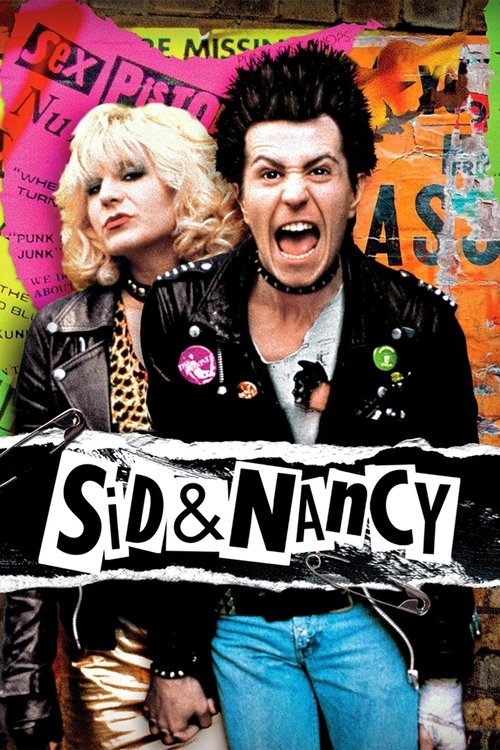
When Sid and Nancy was re-released to British cinemas for its thirtieth anniversary in 2016, Peter Bradshaw of The Guardian described the film as "Alex Cox's Beckettian masterpiece" and "a welcome corrective to bland punk nostalgia" and Ryan Gilbey of the New Statesman stated, "I have to say, on the evidence of how well it stands up 30 years after it was released, that Sid and Nancy has some claim on being the finest British film of the 1980s." Writing about the re-release of Sid and Nancy, Wendy Ide of The Observer stated, "Here is film-making as abrasive, bratty and antisocial as the characters it follows. And as such, it's a timely reminder of just how much the dangerous idea of punk has been defanged as it has been appropriated into the mainstream. Fascinating as a time capsule and as a showcase for the early work of the great cinematographer Roger Deakins, this love triangle between Sid, Nancy and the heroin that destroyed them both remains a gruellingly tough watch."
A more ambivalent assessment was made by David Jenkins of Little White Lies, who wrote in 2016,
It's strange that a movie about the band who embodied the filth and the fury of the punk movement should be a relatively clean-cut affair. Sure, Gary Oldman...brings as much as he can to the role of [Sid Vicious], but there's something just a little affected about his turn. The rivers of gob and the tipsy stumbling feel too much like a trained actor mimicking a real person, and then dialling a specific set of mannerisms up to as-yet-untested levels. Sure, it's compelling in the same way as watching a drunk man climb a scaffold is, but it's a distancing, revolting performance, a horror show of self-involved wretchedness which borders on the inhuman... [Sid's] sparring partner and bleach-blonde lovergirl is Nancy Spungen (Chloe Webb), potentially the most aggressively shrill character ever to be captured on film. Her regular Noo Yoik shrieks of "Siiiiiiid!!!" are like nails running down a blackboard while a hound-dog yelps in unison. It's quite a feat, as Spungen is presented as almost wholly unpleasant from the very first scene where she's seen as willing to do anything it takes for some drug money… There is a genuine fondness for the period recreation and the punk scene itself, but...Cox's film is best is as a hushed tale of lethargic amour fou... It's a solid film, and definitely interesting as biography. Yet it's the sequences where Cox allows his mind to wander – such as a dream sequence where Sid sings "My Way" and blast holes in the applauding audience – where the film comes into its own.
Interviewed in 2016, Alex Cox complimented "Some very good work by the actors, the cinematographers, the art department, and my co-author Abbe Wool," but described the film as "too long and the end feels bogus... We opted for a touchy-feely way out." Cox also admitted, "Looking back on it now I'm more sympathetic to [John] Lydon's point of view than ever," adding,
Film is a work of art. It should have freedom and liberty. I like the film when it deviates from the true story, for example: the depiction of the concerts. The concerts were never like that. When punks were playing in London the gigs were sparsely attended. There would be some skinny guys doing the punk pogo, but we recreated it like the mosh pits of Southern California: massive crowds of people in there, wading about, because that was what I was used to...
Asked what he would do differently had he remade Sid and Nancy, Cox stated,
I wouldn't have the happy ending, you know, the taxi to heaven stuff, because I think that's very compromised. It's sentimental and dishonest, because we were trying to make a film that condemned Sid and Nancy for their decadence. The punk movement was essentially a positive movement that was supposed to be forward-looking. You can't do that if you're a junkie rock star in a hotel room. The scene in the film that was the important one for my co-writer, Abbe Wool, and I was the scene where they go to the methadone clinic, and the character played by Sy Richardson gives them a lecture. He won't give them the methadone until he tells them that they've completely betrayed the movement and they've betrayed themselves. That was the point of the film, but I think that gets forgotten, and gets undercut by the quasi-happy ending. If I was to remake it, I would end it with Sid dying in a pool of his own vomit.