



Sharon Marie Tate Polanski (January 24, 1943 – August 9, 1969) was an American actress and model. During the 1960s, she appeared in advertisements and small television roles before appearing in films as well as working as a model. After receiving positive reviews for her comedic and dramatic acting performances, Tate was hailed as one of Hollywood's most promising newcomers, being compared favorably with Marilyn Monroe.
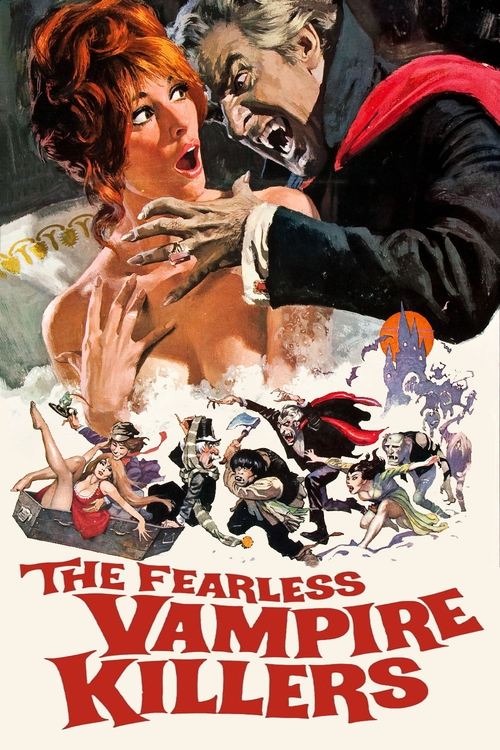
She made her film debut in 1961 as an extra in Barabbas with Anthony Quinn. She next appeared in the British mystery horror film Eye of the Devil (1966) and co-starred in the 1967 film Don't Make Waves. Her first major role was as Jennifer North in the 1967 American drama film Valley of the Dolls, which earned her a Golden Globe Award nomination. The role would help her to become a rising sex symbol of Hollywood, appearing in a Playboy photoshoot by filmmaker Roman Polanski, whom she went on to marry. That year, she also performed in the comedy horror film The Fearless Vampire Killers, directed by Polanski. Tate's last completed film, 12+1, was released posthumously in 1969.
On August 9, 1969, Tate and four others were murdered by members of the Manson Family, a cult, in the home she shared with Polanski, while he was away. She was eight-and-a-half months pregnant.
Contents
Biography
1943–1964: Childhood and early acting career
Sharon Marie Tate was born on January 24, 1943, in Dallas, Texas, the eldest of three daughters to Colonel Paul James Tate, a United States Army intelligence officer, and his wife, Doris Gwendolyn (née Willett). At six months of age, Tate won the "Miss Tiny Tot of Dallas Pageant", but her parents had no show business ambitions for their daughter. Paul Tate was promoted and transferred several times. By the age of 16, Tate had lived in six cities and reportedly found it difficult to maintain friendships. Her family described her as shy and lacking in self-confidence. As an adult, Tate commented that people would misinterpret her shyness as aloofness until they knew her better.
Tate attended South Shaver Elementary School in Pasadena, Texas, through 1955, Chief Joseph Junior High School (later a middle school) from September 1955 to June 1958, and Columbia High School in Richland, Washington, from September 1958 to October 1959. In El Paso, Texas, she attended Irvin High School from late fall 1959 to April 1960 and then Vicenza American High School in Vicenza, Italy, from April 1960 to graduation in June 1961.
As she matured, people commented on Tate's appearance; she began entering beauty pageants, winning the title of "Miss Richland" in Washington in 1959 at age sixteen. She spoke of her ambition to study psychiatry and her intention to compete in the "Miss Washington" pageant in 1960; however, before she could do either, her father was transferred to Italy. With her family relocating to Verona, Tate learned that she had become a local celebrity owing to the publication of a photograph of her in a swimsuit on the cover of the military newspaper Stars and Stripes. She discovered a kinship with other students at the American school she attended in nearby Vicenza, recognizing that their backgrounds and feelings of separation were similar to her own, and, for the first time in her life, began to form lasting friendships.
Tate and her friends became interested in the filming of Hemingway's Adventures of a Young Man, which was being made nearby with Paul Newman, Susan Strasberg and Richard Beymer, and obtained parts as film extras. Beymer noticed Tate in the crowd and introduced himself, and the two dated during the production of the film, with Beymer encouraging Tate to pursue a film career. In 1960, Tate was employed by the singer Pat Boone and appeared with him in an episode of the television series The Pat Boone Chevy Showroom which was filmed in Venice.
1964–1967: Hollywood recognition and Valley of the Dolls
In 1964, Tate made a screen test for Sam Peckinpah opposite Steve McQueen for the film The Cincinnati Kid. Ransohoff and Peckinpah agreed that Tate's timidity and lack of experience would cause her to flounder in such a large part, and she was rejected in favor of Tuesday Weld. She continued to gain experience with minor television appearances and, after she auditioned unsuccessfully for the role of Liesl in the film version of The Sound of Music, Ransohoff gave Tate walk-on roles in two motion pictures in which he was the producer: The Americanization of Emily and The Sandpiper. In late 1965, Ransohoff finally gave Tate her first major role in a motion picture in the film Eye of the Devil, costarring David Niven, Deborah Kerr, Donald Pleasence and David Hemmings.
Tate and Sebring traveled to London to prepare for filming, where she met the Alexandrian Wiccan High Priest and High Priestess Alex and Maxine Sanders. Meanwhile, as part of Ransohoff's promotion of Tate, he arranged the production of a short documentary called All Eyes on Sharon Tate, to be released at the same time as Eye of the Devil. It included an interview with Eye of the Devil director J. Lee Thompson, who expressed his initial doubts about Tate's potential with the comment, "We even agreed that if after the first two weeks Sharon was not quite making it, we would put her back in cold storage", but added that he soon realized Tate was "tremendously exciting".
Tate played Odile, a witch who exerts a mysterious power over a landowner, played by Niven, and his wife, played by Kerr. Although she did not have as many lines as the other actors, Tate's performance was considered crucial to the film, and she was required, more than the other cast members, to set an ethereal tone. Niven described her as a "great discovery", and Kerr said that, with "a reasonable amount of luck", Tate would be a great success. In interviews, Tate commented on her good fortune in working with such professionals in her first film and said that she had learned a lot about acting simply by watching Kerr at work. Much of the filming took place in France, and Sebring returned to Los Angeles to fulfill his business obligations. After filming, Tate remained in London, where she immersed herself in the fashion world and nightclubs. Around this time, she met Roman Polanski.
Tate and Polanski later agreed that neither of them had been impressed by the other when they first met. Polanski was planning The Fearless Vampire Killers, which was being coproduced by Ransohoff, and had decided that he wanted the red-headed actress Jill St. John for the female lead. Ransohoff insisted that Polanski cast Tate and, after meeting with her, Polanski agreed that she would be suitable on the condition that she wore a red wig during filming. The company traveled to Italy for filming, where Tate's fluent Italian proved useful in communicating with the local crew members. A perfectionist, Polanski had little patience with the inexperienced Tate and said in an interview that one scene had required 70 takes before he was satisfied. In addition to directing, Polanski also played one of the main characters, a guileless young man who is intrigued by Tate's character and begins a romance with her. As filming progressed, Polanski praised her performances and her confidence grew. They began a relationship and Tate moved into Polanski's London apartment after filming ended. Jay Sebring traveled to London, where he insisted on meeting Polanski. Although friends later said he was devastated, he befriended Polanski and remained Tate's closest confidant. Polanski later commented that Sebring was a lonely and isolated person, who viewed Tate and himself as his family.
1968–1969: Marriage to Roman Polanski and final films
In late 1967, Tate and Polanski returned to London and were frequent subjects of newspaper and magazine articles. She was depicted as being untraditional and modern, and was quoted as saying that couples should live together before marrying. They were married in Chelsea, London, on January 20, 1968 (four days before Tate's 25th birthday), with considerable publicity. Polanski was dressed in "Edwardian finery" while Tate was attired in an off-white taffeta minidress. The couple moved into Polanski's mews house off Eaton Square in Belgravia, London.
Photographer Peter Evans described them as "the imperfect couple. They were the Douglas Fairbanks/Mary Pickford of our time…. Cool, nomadic, talented, and nicely shocking." Tate reportedly wanted a traditional marriage but Polanski remained promiscuous and described her attitude to his infidelity as "Sharon's big hang-up". He reminded her that she had promised not to change him. Tate accepted his conditions, though she confided to friends that she hoped that he would change. Peter Evans quoted Tate as saying, "We have a good arrangement. Roman lies to me and I pretend to believe him."
Polanski urged Tate to end her association with Martin Ransohoff, and she began to place less importance on her career until Polanski told her that he wanted to be married to "a hippie, not a housewife". The couple returned to Los Angeles and quickly became part of a social group that included some of the most successful young people in the film industry, including Warren Beatty, Jacqueline Bisset, Leslie Caron, Joan Collins, Mia Farrow, Jane Fonda, Peter Fonda, Laurence Harvey, Steve McQueen, Joanna Pettet and Peter Sellers; older film stars such as Yul Brynner, Kirk Douglas, Henry Fonda and Danny Kaye; musicians such as Jim Morrison and the Mamas & the Papas; and record producer Terry Melcher and his girlfriend Candice Bergen. Jay Sebring remained one of the couple's more frequent companions. Polanski's friends included Wojciech Frykowski, whom Polanski had known since his youth in Poland, and Frykowski's girlfriend Abigail Folger, the coffee heiress. Tate and Polanski moved into the Chateau Marmont in Los Angeles for a few months until they arranged to lease Patty Duke's home on Summit Ridge Drive in Beverly Hills during the latter part of 1968. The Polanski house was often full of strangers, and Tate regarded the casual atmosphere as part of the "free spirit" of the times, saying that she did not mind who came into her home as her motto was "live and let live". Her close friend Leslie Caron commented that the Polanskis were too trusting, "to the point of recklessness", and that she had been alarmed by it.
Murder, funeral and trial
On August 8, 1969, Tate entertained actress Joanna Pettet for lunch at her home, confiding in her disappointment at Polanski's delay in returning from London. Polanski telephoned her that day. Her younger sister Debra also called, to ask if she, her boyfriend and another friend could pick up a saddle that Sharon had bought for Debra in Europe. Tate declined, offering to have them over another time. Later that evening, she reportedly dined at El Coyote Cafe with Jay Sebring, Wojciech Frykowski, and Abigail Folger, returning at about 10:30 p.m.
Shortly after midnight, Sebring, Frykowski, Folger, and Tate and her unborn son were murdered by members of the Manson Family cult. Tate was the last of the victims to die, despite her pleas that the Family take her with them so that she could give birth. Their bodies were discovered the following morning by Tate's housekeeper Winifred Chapman. Police arrived at the scene to find a young man shot dead in his car in the driveway, later identified as Steven Parent. Inside the house, the bodies of Tate and Sebring were found with a long rope which had been thrown over a beam and then tied around each of their necks, connecting them. On the front lawn lay the bodies of Frykowski and Folger. All of the victims except Parent had been stabbed numerous times. The coroner's report for Tate noted that she had been stabbed 16 times and that "five of the wounds were in and of themselves fatal". In addition, the coroner's inquest found that Tate was still alive when she was hanged with the rope, but she died immediately from a "massive hemorrhage".
Police took the only survivor at the address – the property's caretaker William Garretson – in for questioning. Garretson lived in the guest house that was located on the property a short distance from the house. He was questioned and submitted to a polygraph test and stated that Parent had visited him at approximately 11:30 p.m. and left shortly after. He told police that he had no involvement in the murders and did not know anything that could help the investigation, and he was subsequently released.
Polanski was informed of the murders and returned to Los Angeles where police questioned him about his wife and her friends. On Wednesday, August 13, Tate was interred in the Holy Cross Cemetery, Culver City, California, together with her unborn son, who was posthumously named Paul Richard Polanski. Sebring's funeral took place later the same day; the funerals were scheduled several hours apart to allow friends of Tate and Sebring to attend both.
Legacy
In the early 1980s, Stephen Kay, who had worked for the prosecution in the trial, became alarmed that Manson Family member Leslie Van Houten had gathered 900 signatures on a petition for her parole. He contacted Tate's mother, Doris, who said that she was sure she could do better, and the two mounted a publicity campaign, collecting over 350,000 signatures supporting the denial of parole. Although Van Houten had been seen as the most likely of the killers to be paroled, her petition was denied after the efforts of Kay and Tate. Doris Tate became a vocal advocate for victims' rights and, in discussing her daughter's murder and meeting other crime victims, assumed the role of counselor, using her profile to encourage public discussion and criticism of the corrections system.
For the rest of her life she strongly campaigned against the parole of each of the Manson killers and worked closely with other victims of violent crime. Several times she confronted Charles "Tex" Watson and Susan Atkins at parole hearings, explaining, "I feel that Sharon has to be represented in that hearing room. If they're [the killers] pleading for their lives then I have to be there representing her." She addressed Tex Watson directly during her victim impact statement in 1990: "What mercy, sir, did you show my daughter when she was begging for her life? What mercy did you show my daughter when she said, 'Give me two weeks to have my baby and then you can kill me'? ... When will Sharon come up for parole? Will these seven victims and possibly more walk out of their graves if you get paroled? You cannot be trusted."
In 1992 President George Bush recognized Doris Tate as one of his "thousand points of light" for her volunteer work on behalf of victims' rights. By this time Doris Tate had been diagnosed with a malignant brain tumor and her health and strength were failing; her meeting with Bush marked her final public appearance. When she died later that year, her youngest daughter, Patricia Gay Tate, known as Patti, continued her work. She contributed to the 1993 foundation of the Doris Tate Crime Victims Bureau, a nonprofit organization that aims to influence crime legislation throughout the United States and to give greater rights and protection to victims of violent crime. In 1995, the Doris Tate Crime Victims Foundation was founded as a nonprofit organization to promote public awareness of the judicial system and to provide support to the victims of violent crime.
Patti Tate confronted David Geffen and board members of Geffen Records in 1993 over plans to include a song written by Charles Manson on the Guns N' Roses album "The Spaghetti Incident?" She commented to a journalist that the record company was "putting Manson up on a pedestal for young people who don't know who he is to worship like an idol".
Character and public image
Tate had a habit of nail biting and going barefoot in public. When she went to restaurants with a "No Shoes, No Service" rule, she would frequently put rubber bands around her ankles to pretend that she was wearing sandals. Both these traits were featured in Once Upon a Time in Hollywood.
Tate had an interest in martial arts, and was a close friend and a student of Bruce Lee, who taught her Kung fu. Lee also helped her do martial-arts training for the American spy comedy film, The Wrecking Crew, in 1968.
In popular culture
In 2009, American contemporary artist Jeremy Corbell presented a comprehensive mixed media art exhibition titled ICON: Life Love & Style of Sharon Tate in honor of the 40th anniversary of Tate's death. With the blessing of the Tate family, Corbell created a 350-piece historic art exhibition celebrating Tate's style and life. The art and fashion-based presentation showcased images of Tate's never-before-revealed wardrobe by designers such as Christian Dior, Thea Porter, Ossie Clark and Yves Saint Laurent.
Tate has also been portrayed by multiple actresses in the decades since her death, mostly in projects that either reference, or are explicitly about, the Manson Family and the murders of 1969. Among the actresses who have played her are:
Whitney Dylan in Helter Skelter, a 2004 television film based on the non-fiction book of the same name by Manson prosecutor Vincent Bugliosi and writer Curt Gentry.
Amanda Brooks in Aquarius, a crime TV show set in the late 1960s, which aired for two seasons from 2015 to 2016.
Katie Cassidy in the 2016 horror film Wolves at the Door, loosely based on the Manson Family's murders.
Rachel Roberts in the seventh season of American Horror Story in 2017.
Grace Van Dien in the 2018 film Charlie Says.
Hilary Duff in The Haunting of Sharon Tate in 2019.
Margot Robbie in the 2019 film Once Upon a Time in Hollywood, directed by Quentin Tarantino, which is an alternative interpretation of the Manson murders. In this alternate timeline, Tate lives as her death is inadvertently prevented. Tate also appears as a character in Tarantino's 2021 debut novel Once Upon a Time in Hollywood, an expansion of the story in his film of the same name.