Tenure
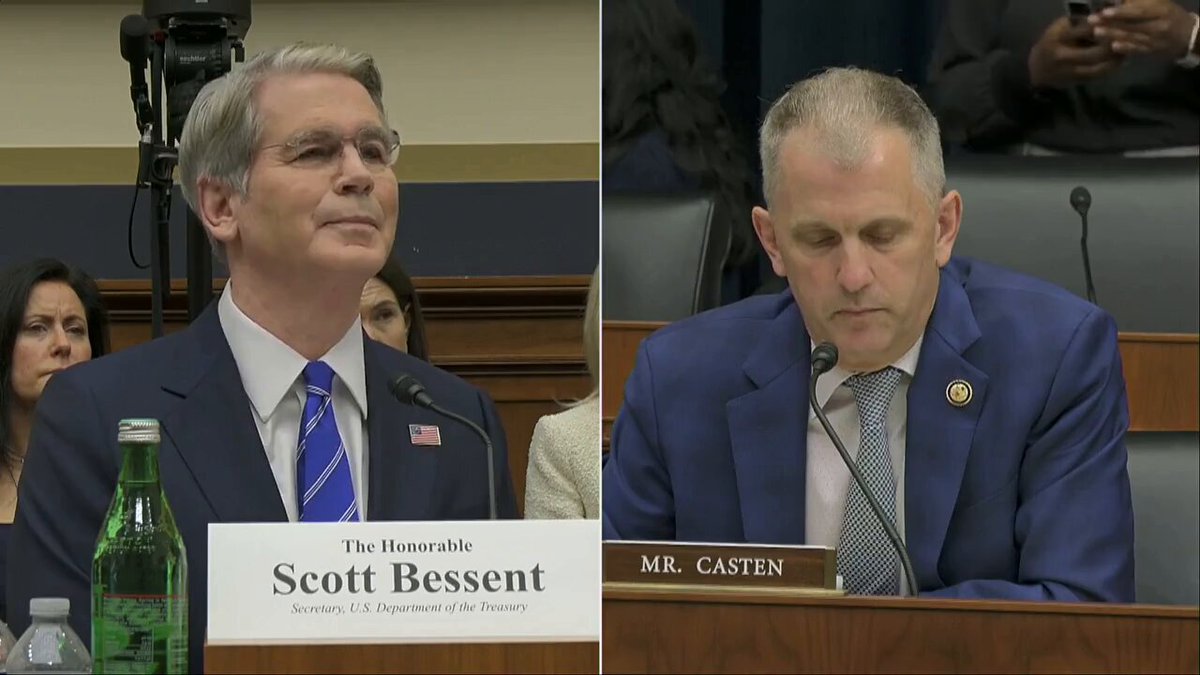
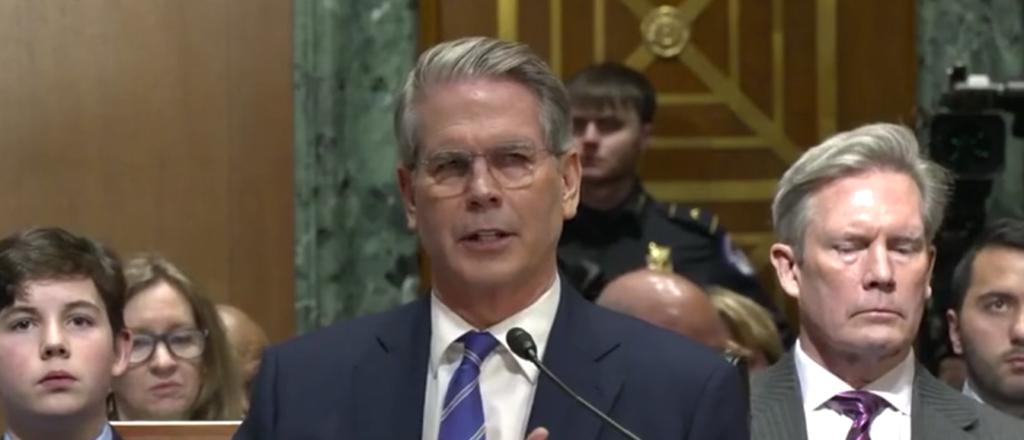
On January 28, 2025, Bessent was sworn in as the 79th secretary of the treasury by U.S. Supreme Court justice Brett Kavanaugh. Bessent became the first openly gay person to lead the U.S. Treasury Department, the first openly gay U.S. Senate-confirmed Cabinet member in a Republican administration, and the second openly gay U.S. Senate-confirmed Cabinet secretary.
On January 31, 2025, Bessent granted the Department of Government Efficiency team access to the Treasury Department's payment system. On February 3, 2025, he was named the acting director of the Consumer Financial Protection Bureau; he immediately ordered the agency to halt all work.
In February 2025, Bessent and acting United States Secretary of Commerce Jeremy Pelter were tasked with implementing a United States sovereign wealth fund.
In August 2025, the Office of Government Ethics notified Senate Committee on Finance chair Mike Crapo that Bessent "has failed to timely comply with certain terms of the ethics agreement he signed".
On October 15, 2025, Bessent said the U.S. would work to create a strategic mineral reserve, potentially with JPMorgan Chase. He added that the U.S. would set price floors across multiple industries, and potentially take equity stakes in other rare-earth element companies to reduce reliance on China, as the U.S. Department of Defense did in July 2025 with MP Materials.
On November 28, after the 2025 Washington, D.C., National Guard shooting, Bessent announced that the Treasury Department would move to reclassify certain tax credits as federal public benefits so as to "cut off federal benefits to illegal aliens and preserve them for U.S. citizens". Affected tax credits include the American Opportunity Tax Credit and the earned income tax credit, among others.
On January 26, 2026, Bessent announced that the Treasury would terminate 31 government contracts with Booz Allen Hamilton, due in part to the actions of Charles E. Littlejohn.
In August 2026, with Bessent's support, the Treasury repealed its implementation of the Corporate Transparency Act, which contained numerous anti-money laundering provisions. The move effectively re-legalized anonymous shell corporations.
In mid-August 2026, Bessent said he had a "big toolkit" to tackle problems with the U.S. government bond market amid rising yields for long-dated bonds, and announced the Treasury would "at least" double bond buybacks from September onward.
In August 2026, Bessent defended the Treasury Department's intervention in the Japanese yen after Elizabeth Warren questioned the transaction, saying that Treasury had exchanged existing foreign-currency assets from the Exchange Stabilization Fund for yen and that Japan had not borrowed from Treasury.
On September 24, 2025, Bessent announced a planned $20 billion economic lifeline to Argentina to purchase government bonds and help stabilize the nation's economy. The purchase was finalized on October 9. On October 15, Bessent said he was negotiating deals for the private sector to give Argentina another $20 billion, adding that several banks and sovereign wealth funds had expressed interest. On January 9, 2026, Bessent said that Argentina had fully repaid its currency draw, estimated by local newspapers at $2.5 billion of the potential $20 billion. He added that since the swap, the Exchange Stabilization Fund now holds no Argentine pesos.
On October 22, 2025, the U.S. imposed sanctions on Russian energy companies Rosneft and Lukoil over continued fighting in Ukraine. Bessent wrote in a statement: "Given President Putin's refusal to end this senseless war, Treasury is sanctioning Russia's two largest oil companies that fund the Kremlin's war machine. We encourage our allies to join us in and adhere to these sanctions."
In November 2025, Bessent voiced his support for the sale of F-35 Lightning II fighter jets to Saudi Arabia. In January 2026, the Treasury Department imposed sanctions on Iranian officials in response to Iran's crackdown on protesters. Bessent wrote: "U.S. Treasury knows, that like rats on a sinking ship, you are frantically wiring funds stolen from Iranian families to banks and financial institutions around the world. Rest assured, we will track them and you."
At a July 31 meeting of Trump's cabinet at Camp David, Bessent inadvertently revealed his to-do list to a photographer. It contained plans for the U.S. to buy between $5 billion and $10 billion worth of Japanese yen.
In response to the 2025–2026 Iranian protests, Bessent said that Iran's economic collapse was partly due to U.S. sanctions and said, "the Iranian economy is on the ropes". He also said the U.S. had triggered a dollar shortage in Iran, causing the Iranian rial to collapse. During the 2026 Iran War, Bessent said the U.S. had seized roughly $1 billion in Iranian crypto assets, frozen Iranian bank accounts, and pressured foreign governments to cut ties with Iran.
On August 5, 2026, the Treasury Department lifted sanctions on the Iraqi airline Fly Baghdad that were imposed in 2024 due to reported changes in behavior related to the Quds Force.
On August 7, the Treasury Department imposed new sanctions on two crypto exchanges, Shelbit and Aban Tether due to links to the Islamic Republic of Iran. This was part of the wider Economic Fury campaign against Iran
In August 2026, Bessent announced the US would impose "the toughest sanctions in history" against Iran amid its refusal to reopen the Strait of Hormuz. Later that month, Bessent announced an economic campaign, Operation Economic Outcast, that will involve imposing sanctions on countries that continue to trade with Iran in an attempt to decimate the Iranian economy and pivot away from the kinetic campaign earlier in the year.
In February 2025, shortly before the Trump–Zelenskyy Oval Office meeting, Bessent reportedly urged Trump to not host Ukrainian President Volodymyr Zelenskyy at the White House. According to Maggie Haberman's book Regime Change, Bessent called Zelenskyy a "little fucker" and "like the special-needs child for the Europeans...like Mr. Bean on crack". Bessent had previously met with Zelenskyy to negotiate the Ukraine–United States Mineral Resources Agreement, which led to a 45-minute shouting match between the men.
In April 2025, Trump initially named Gary Shapley as Commissioner of Internal Revenue, but Shapley was soon replaced by Michael Faulkender, Bessent's preferred pick, after Bessent lobbied Trump. This led to a dispute between Bessent and Elon Musk and reportedly a shouting match. On August 8, The New York Times reported that Trump was removing Billy Long as commissioner of internal revenue in preparation for an ambassadorship nomination; Bessent was named as Long's acting successor.
In September 2025, Bessent reportedly clashed with Federal Housing Finance Agency director Bill Pulte and threatened to punch him. When asked about the incident by a journalist, Bessent quipped, "Treasury secretaries dating back to Alexander Hamilton have a history of dueling...I turned out a little better for the Treasury's side this time." In June 2026, Senator Thom Tillis of the Senate Finance Committee asked Bessent whether reports that he had threatened to punch Pulte were accurate; Bessent replied, "No, sir, I actually said I was going to kick his ass."
In January 2026, Bessent engaged in a public spat with California Governor Gavin Newsom after Newsom criticized Trump at the 56th World Economic Forum. At Davos, Newsom brandished a pair of kneepads with Trump's signature on them to criticize world leaders' perceived weakness in responding to Trump. In response, Bessent said that Newsom has "a brain the size of a walnut" and that "if you brought the kneepads, maybe that was for his meeting with Alex Soros." Newsom later attacked Bessent in response, while Bessent called Newsom "Patrick Bateman meets Sparkle Beach Ken".