Tenure
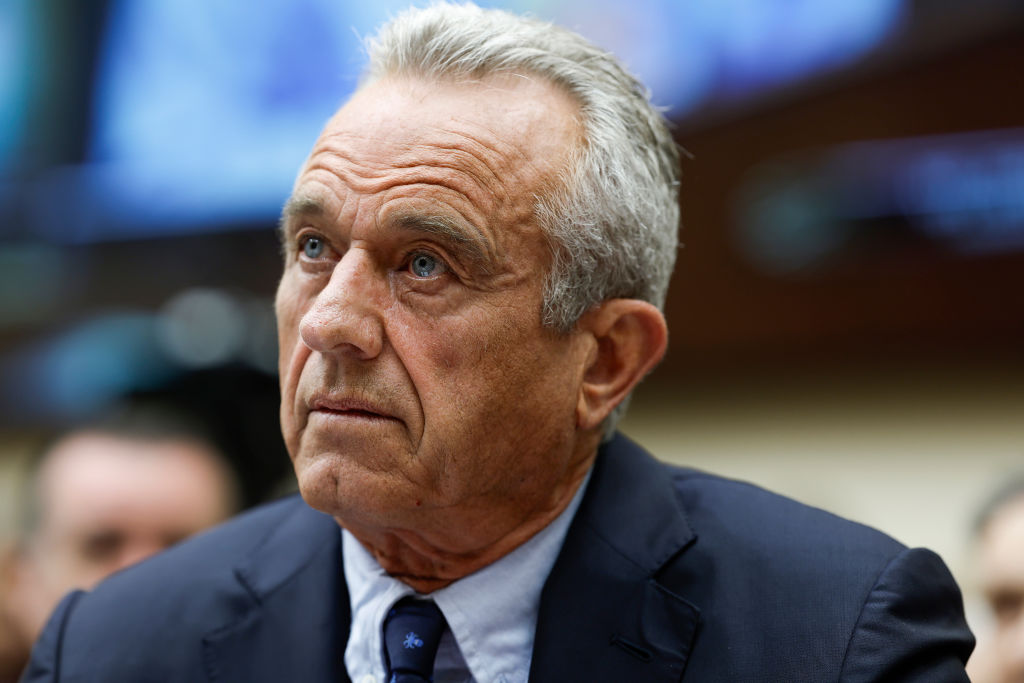
On February 13, 2025, Kennedy was sworn in as the 26th secretary of health and human services in the Oval Office by Justice Neil Gorsuch. He is the first independent or third-party presidential candidate to become a cabinet member after running for president.
Minutes after Kennedy was sworn in, Trump signed Executive Order 14211, which ordered the creation of a "Make America Healthy Again" (MAHA) Commission to be chaired by Kennedy. Its objectives include investigating the incidence and causes of chronic childhood diseases and "assess[ing] the prevalence of and threat posed by the prescription of selective serotonin reuptake inhibitors, antipsychotics, mood stabilizers, stimulants, and weight-loss drugs".
On February 14, 2025, agencies including the Centers for Disease Control and Prevention (CDC) and the National Institutes of Health (NIH) were informed that approximately 5,200 newly hired federal health workers were to be fired that day.
In April 2025, Kennedy fired most of the staff of the National Institute for Occupational Safety and Health, shuttering nearly all its departments. Programs, including approvals of new workplace safety equipment and research into firefighter health, were abruptly canceled.
In June 2025, Kennedy announced that he was removing all 17 members of the Advisory Committee on Immunization Practices (ACIP) and replacing them with new members.
On February 20, 2025, during an unusually severe influenza season, HHS instructed the CDC to suspend its ad campaign promoting flu vaccination. The advertising, in part a response to declining flu vaccination rates, promoted the message that vaccination would result in much milder symptoms and lower chances of becoming severely ill for those with the flu.
Kennedy's tenure began during a measles outbreak in the southwestern US, including the first measles death in a decade. The Texas Department of State Health Services reported 146 cases, 20 hospitalizations, and one death in late February. In his first public comments, on February 26, Kennedy said there had been two deaths and that "there have been four measles outbreaks this year. In this country last year there were 16. So it's not unusual. We have measles outbreaks every year." Such outbreaks of the disease had been declared domestically eliminated until the measles resurgence in the United States that began in the 2010s. He also falsely claimed that the people hospitalized were done so "mainly for quarantine", a claim healthcare professionals refuted. US Senator Ron Wyden wrote: "Nothing about kids dying from measles is normal. Anti-vaxxers like RFK Jr. and the Republicans who enable them are responsible for every single one of these deaths."
Days later, Kennedy called the outbreak a "top priority" for the department. His messaging regarding the outbreak cited fringe theories blaming poor diet and health. He promoted cod liver oil, steroid inhalation, an antibiotic, vitamin A, and other questionable treatments that he called "almost miraculous". While recommending vaccination against measles, he also overstated the vaccine's potential harms and suggested that immunity from natural infection would be better. The CDC says that the MMR vaccine is "much safer than getting measles, mumps, or rubella". The antibiotic is not effective against a viral disease such as measles. Vitamin A is part of measles treatment, primarily in areas where children may be deficient in it.
On February 28, HHS's top spokesperson, Thomas Corry, abruptly resigned, two weeks after being sworn in as the assistant secretary of public affairs. He reportedly clashed with Kennedy over his management of the department during the measles outbreak.
On March 2, Kennedy was criticized for writing an op-ed for Fox News that called vaccines a "personal choice" and recommended vitamins and good nutrition to combat measles. But he also wrote in the piece: "Vaccines not only protect individual children from measles, but also contribute to community immunity, protecting those who are unable to be vaccinated due to medical reasons."
After Kennedy took to the media to falsely claim that vitamin A is both a prophylactic and treatment for measles, doctors in Texas began to see children infected with measles also having symptoms of vitamin A toxicity.
On March 28, Kennedy told Peter Marks, the head of the FDA's vaccine program, that he should resign or be fired. Marks wrote a resignation letter that lamented Kennedy's attempts to erode trust in vaccines: "It has become clear that truth and transparency are not desired by the secretary, but rather he wishes subservient confirmation of his misinformation and lies." Days earlier, the CDC head of communications said after his own resignation, "Kennedy and his team are working to bend science to fit their own narratives, rather than allowing facts to guide policy."
In April, Kennedy praised Texas doctor Ben Edwards as one of two "extraordinary healers" using unverified treatments for measles; the week before, Edwards was aware that he was infected with measles when he met children and parents at his clinic without wearing a mask.
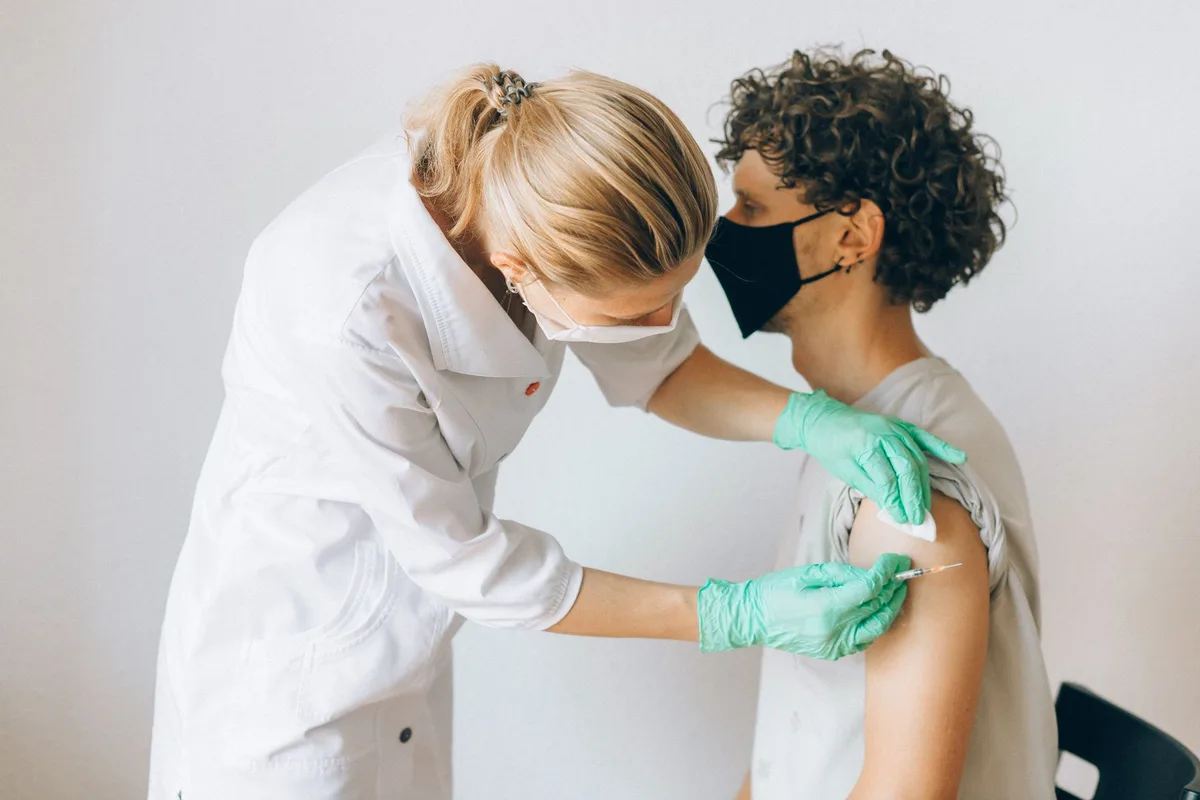
After a second child died from measles in Texas in April, Kennedy said, "the most effective way to prevent the spread of measles is the MMR vaccine". Two days later, in an interview with CBS News, he said, "We encourage people to get the measles vaccine", adding that both his position and that of the federal government was that people should get the measles vaccine, although the government should not mandate it.
On May 22, 2025, the MAHA Commission released a report about childhood chronic disease. It was described as "wide-ranging" and claimed that a range of factors, including diet, vaccinations, medical prescriptions, physical stress, food additives, and pesticides, are "potential drivers behind the rise in childhood chronic disease that present the clearest opportunities for progress".
On May 29, NOTUS first reported that some of the studies the MAHA Commission's report cited did not exist; the authors of several other studies the report cited said their work was mischaracterized. Medical researcher Ivan Oransky said the errors were characteristic of generative AI usage: "They come up with references that share a lot of words and authors and even journals, journal names, but they're not real." Some of the report's citation URLs contained the string "oaicite", indicating a tool produced by OpenAI was used.
White House press secretary Karoline Leavitt said these errors were "formatting issues that are being addressed and the report will be updated. But it does not negate the substance of the report, which, as you know, is one of the most transformative health reports that has ever been released by the federal government." Asked whether the MAHA Commission's report used generative AI, Leavitt said, "I can't speak to that." The report was repeatedly updated that day. NOTUS released a follow-up addressing the updates and reported that while several errors from the original report had been edited or removed, new errors were found, including updated citations that misinterpret scientific studies.
When CDC director Susan Monarez was ousted in August 2025, several CDC leaders quit over Kennedy's anti-science policies. In a resignation note, National Center for Immunization and Respiratory Diseases director Demetre Daskalakis wrote that Kennedy and his appointees "threaten the lives of the youngest Americans and pregnant people". In a statement, lawyers for Monarez said that Kennedy had been "weaponizing public health for political gain" and "putting millions of American lives at risk". Also among those leaving were Debra Houry, the chief medical officer, and the heads of several other directorates. Houry's farewell announcement referenced vaccine misinformation, the 2025 measles outbreak, and the 2025 shooting attack on the CDC. Days after the departure, nine former CDC leaders from both Democratic and Republican administrations wrote in The New York Times that the shakeup at the agency was "unlike anything our country has ever experienced".
On September 22, 2025, Kennedy approved a $50 million grant to the National Institute of Health (NIH) for 13 projects to "help transform autism research" through the proposed Autism Data Science Initiative.
On November 19, 2025, the CDC website on "Autism and Vaccines" was radically changed from its September 2025 version. In an interview, Kennedy reportedly said that "he personally instructed the Centers for Disease Control and Prevention to abandon its longstanding position that vaccines do not cause autism—a move that underscores his determination to challenge scientific consensus and bend the health department to his will."
FactCheck.org wrote that the change was not evidence-based. The revised site makes several false statements, contradicting longstanding scientific evidence that supports the absence of a causal link between childhood vaccines and autism. According to CDC staff, required scientific vetting for all public-facing agency webpages was entirely bypassed in this instance. The Wall Street Journal wrote, "no association has been proven between vaccines and autism". Numerous medical associations and professionals immediately issued statements protesting the changes, including experts from the Center for Infectious Disease Research and Policy (CIDRAP); Children's Hospital of Philadelphia; Stanford University School of Medicine; Texas Children's Hospital Center for Vaccine Development; the American Academy of Pediatrics (AAP); Harvard T.H. Chan School of Public Health; and The Autism Science Foundation.
On December 5, 2025, Kennedy's Advisory Committee on Immunization Practices (ACIP) vaccine panel voted to end the CDC's universal recommendation that newborn babies receive Hepatitis B vaccine doses and instead "recommend individual-based decision-making for parents deciding whether to give the hepatitis B vaccine, including the birth dose, to infants born to women who test negative for the virus. For those infants not receiving the birth dose, ACIP suggested in its recommendation that the initial dose be administered no earlier than two months of age".
The Kennedy-led ACIP also voted to "recommend that when evaluating the need for a subsequent hepatitis B vaccine dose in children, parents should consult with health care providers to decide whether to test antibody levels to hepatitis surface antigen to evaluate adequacy of protection through serology results." This vote came "despite no evidence suggesting fewer doses than the standard series of three offer lifelong protection".
Joseph Hibbeln, an ACIP member who voted against the change, said: "This has a great potential to cause harm, and I simply hope that the committee will accept its responsibility when this harm is caused."
Senate Health, Education, Labor and Pensions Committee chairman Bill Cassidy wrote: "Ending the recommendation for newborns makes it more likely the number of cases will begin to increase again. This makes America sicker."