1981–1991: Dramas, comedies, and awards success
De Niro returned to the crime genre with True Confessions (1981), adapted from the 1977 novel of the same name by John Gregory Dunne. Less challenging than his previous film, De Niro played a priest who clashes with his brother (Robert Duvall), a detective investigating the murder of a prostitute. Vincent Canby of The New York Times thought the plot was hard to follow at times but praised the actors who "work so beautifully together it sometimes seems like a single performance." To expand his range of acting roles and to prove his acting abilities, De Niro sought out films with a comedic tone throughout the 1980s. He found it in The King of Comedy (1982), in which he played the struggling stand-up comedian Rupert Pupkin. De Niro was first to bring the script to the attention of Scorsese, who then gave it a New York setting and darker tone. The film failed to find an audience, and was a box office disappointment, grossing only $2.5 million from a budget of $19 million. However, most critics praised De Niro's performance. His next film credit was in Sergio Leone's Once Upon a Time in America (1984), in which he plays David "Noodles" Aaronson, a New York City Jewish gangster. The theatrical cut, with a runtime of 229 minutes, premiered at the 1984 Cannes Film Festival and received a 15-minute standing ovation. The film was shortened for theaters in the U.S. (139 minutes), but this proved to be highly unpopular with critics. After seeing the full cut, Kenneth Turan of the Los Angeles Times described the film as "excessive as well as tightly controlled" with the actors showing "impressive restraint and power".
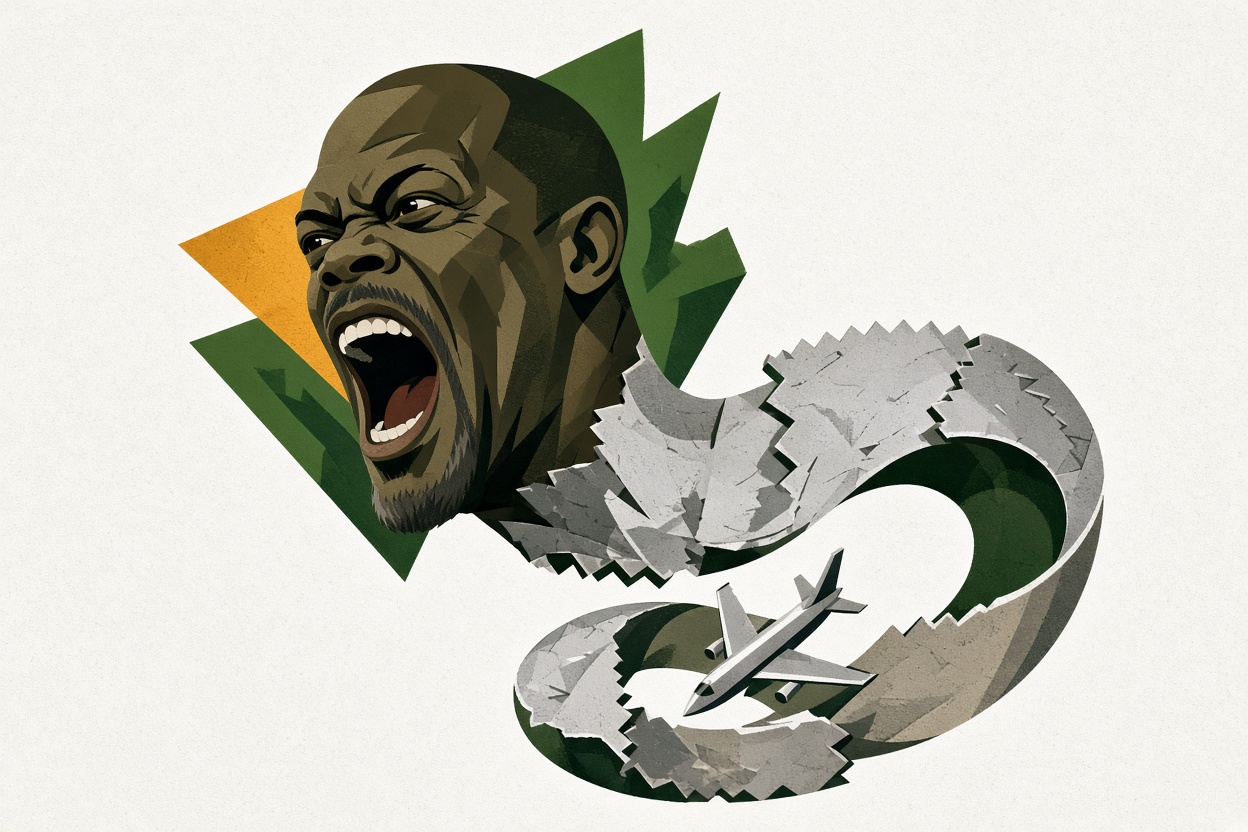
Falling in Love, a romantic comedy starring opposite Meryl Streep, was his last release of 1984. One year later, De Niro starred in a science fiction for the first time, Brazil, about a daydreaming man living in a dystopian society. Although the film was unsuccessful at the box office, Brazil was included in The Criterion Collection. In May 1986, De Niro returned to the stage at Longacre Theatre, playing the lead role in the production Cuba and His Teddy Bear. For his next feature film, he co-starred in The Mission (1986) with Jeremy Irons, a period drama about the experiences of a Jesuit missionary in eighteenth century South America. Vincent Canby reviewed the film negatively, and was critical of De Niro's casting: "De Niro, who was very fine as the street-wise priest in True Confessions, is all right here until he opens his mouth." However, the film won an Academy Award for Best Cinematography, three BAFTAs, including Best Editing, and two Golden Globes for Best Screenplay and Best Original Score.
In 1987, De Niro had two minor film roles. In the first, he was cast as Louis Cyphre in Alan Parker's horror Angel Heart, an adaptation of William Hjortsberg's 1978 novel Falling Angel. In the second, he portrayed Al Capone in De Palma's crime drama, The Untouchables. While Pauline Kael opined that De Niro was "lazy" for undertaking small roles, De Palma defended him by saying he was "experimenting with those characters". In July 1987, he traveled to Russia to serve as president of the jury at the 15th Moscow International Film Festival. Finally that year, he provided a voice-over for the documentary Dear America: Letters Home from Vietnam. The buddy cop film, Midnight Run, was his next effort in 1988. Starring opposite Charles Grodin, De Niro played bounty hunter Jack Walsh. The film received amicable reception and was a commercial success, grossing $81 million worldwide. In his mixed review, Hal Hinson of The Washington Post wrote of De Niro:
De Niro has reduced himself in scale here, too, and it's a relief to see him drop the great-actor mantle, and the theatricality. As a result, he hasn't seemed as fresh since Mean Streets or New York, New York. Walsh is more of a character role than the ones he played in those films; there's less specificity in the conception – he's more of a type – but the actor fits into him snugly, effortlessly, and the chance to play comedy, particularly opposite a comic foil as ideal as Grodin, appears to have revitalized him.
He turned down an opportunity to play Jesus Christ in Scorsese's The Last Temptation of Christ (1988), although he told the director that he would do it as a favor if needed. Scorsese cast Willem Dafoe instead. In 1989, De Niro starred in several films that were not widely seen. He starred alongside Ed Harris and Kathy Baker in the drama Jacknife. The film revolves around the complex relationship between a Vietnam veteran, his sister and fellow army buddy. Next, he starred in the crime comedy We're No Angels (1989) with Sean Penn and Demi Moore, a remake of the 1955 film of the same name. The pair play escaped convicts who go on the run towards Canada. A year later, he starred in the romantic drama Stanley & Iris opposite Jane Fonda. Film critics did not receive We're No Angels or Stanley & Iris positively; modern review aggregator Rotten Tomatoes gives them approval ratings of 47% and 33%, respectively.De Niro and Scorsese soon reunited for their sixth collaboration in 1990, with the crime film Goodfellas. It is an adaptation of the 1985 non-fiction book Wiseguy by Nicholas Pileggi. The film narrates the life of mob associate Henry Hill (Ray Liotta) and his friends and family from 1955 to 1980. De Niro played James Conway, an Irish truck carjacker and gangster. Goodfellas premiered at the 47th Venice International Film Festival to an "enthusiastic" response from Italian critics, although it grossed a moderate $46 million upon its wider release. Peter Travers, writing for Rolling Stone magazine, praised the cast performances, and called De Niro's character "a smooth killer acted with riveting restraint". Chicago Tribune's Gene Siskel was equally impressed by their improvised performances and concluded "easily one of the year's best films." In the awards season, the film was nominated for six Academy Awards, and De Niro was nominated for Best Actor at the BAFTAs. In 2007, the American Film Institute ranked it as the 92nd-greatest American film of all time in their 10th Anniversary Edition of the AFI's 100 Years...100 Movies list. Also in 1990, De Niro appeared in the lead role for Awakenings, directed by Penny Marshall. The drama, based on Oliver Sacks' 1973 book of the same title, tells the story of Dr. Malcolm Sayer (Robin Williams), who discovers benefits of the drug L-Dopa in 1969 and administers it to catatonic patients. The film was nominated for three Academy Awards, including Best Actor for De Niro. Sacks later remarked of the film: "I was pleased with a great deal of it. I think in an uncanny way, De Niro did somehow feel his way into being Parkinsonian. [...] At other levels I think things were sort of sentimentalized and simplified somewhat."
De Niro's next film project was the drama Guilty by Suspicion (1991) in which he plays David Merrill, a fictitious film director, returning to the U.S. during the McCarthy era and Hollywood blacklist. The film received generally favorable reviews. He then had a minor role in the mystery drama Backdraft (1991), playing a veteran fire inspector. De Niro's biggest success of 1991 was Cape Fear, his seventh film with Scorsese and a remake of the 1962 film of the same name. De Niro portrays convicted rapist Max Cady, who seeks revenge against a former public defender who originally defended him. De Niro's performance was widely lauded. David Ansen of Newsweek remarked that De Niro "dominates the film with his lip-smacking, blackly comic and terrifying portrayal of psychopathic self-righteousness." The film grossed $182 million at the box office and earned De Niro a Best Actor nomination at the 64th Academy Awards.