






Richard Weedt Widmark (December 26, 1914 – March 24, 2008) was an American actor and film producer. For his debut film role as the villainous Tommy Udo in the film noir Kiss of Death (1947), he was nominated for an Academy Award for Best Supporting Actor and won the inaugural Golden Globe Award for Most Promising Newcomer.
Early in his film career, Widmark was typecast in similar villainous or anti-hero roles in films noir, but he later branched out into more heroic leading and supporting roles in Westerns, mainstream dramas, and horror films among others. He also produced several films.
For his contributions to motion pictures, Widmark received a star on the Hollywood Walk of Fame.
Contents
Early life
Widmark was born December 26, 1914, in Sunrise Township, Minnesota, the son of Ethel Mae (née Barr) and Carl Henry Widmark. His father, a traveling salesman, was of Swedish descent, and his mother was of English and Scottish ancestry. Widmark grew up in Princeton, Illinois, and lived in Henry, Illinois, for a short time, moving frequently because of his father's work. He earned a Bachelor of Arts in speech at Lake Forest College in 1936, both studying acting and teaching it there after graduating.
Widmark volunteered for the U.S. Army during World War II, but was medically-disqualified due to a perforated ear drum.
Career
Radio
Widmark made his performing debut as a radio actor in 1938 on Aunt Jenny's Real Life Stories. In 1941 and 1942, he was heard daily on the Mutual Broadcasting System in the title role of the daytime serial Front Page Farrell, introduced each afternoon as "the exciting, unforgettable radio drama... the story of a crack newspaperman and his wife, the story of David and Sally Farrell." Farrell was a top reporter for the Brooklyn Eagle. When the series moved to NBC, Widmark turned the role to Carleton G. Young and Staats Cotsworth.
During the 1940s, Widmark was also heard on such network radio programs as Gang Busters; The Shadow; Inner Sanctum Mysteries; Joyce Jordan, M.D.; Molle Mystery Theater; Suspense; and Ethel and Albert. In 1952, he portrayed Cincinnatus Shryock in an episode of Cavalcade of America titled "Adventure on the Kentucky". He returned to radio drama decades later, performing on CBS Radio Mystery Theater (1974–82), and was also one of the five hosts on Sears Radio Theater (as the Friday "adventure night" host) during 1979-1980.
Broadway
Widmark appeared on Broadway in 1943 in F. Hugh Herbert's Kiss and Tell and in William Saroyan's Get Away Old Man, directed by George Abbott, which ran for 13 performances. He was in Chicago appearing in a stage production of Dream Girl with June Havoc when 20th Century Fox signed him to a seven-year contract.
Film and television
Widmark's first movie appearance was in the 1947 film noir Kiss of Death, as the giggling, sociopathic villain Tommy Udo. In his most notorious scene, Udo pushed a woman in a wheelchair (played by Mildred Dunnock) down a flight of stairs to her death. Widmark was almost not cast. He said, "The director, Henry Hathaway, didn't want me. I have a high forehead; he thought I looked too intellectual." Hathaway was overruled by studio boss Darryl F. Zanuck. "Hathaway gave me kind of a bad time," recalled Widmark. Nonetheless, Kiss of Death was a commercial and critical success: Widmark won the Golden Globe Award for New Star of the Year - Actor, and was nominated for the Academy Award for Best Supporting Actor for his performance.
Widmark followed Kiss of Death with other villainous performances in the films noir The Street with No Name and Road House, and the Western Yellow Sky (all 1948), the latter film with Gregory Peck and Anne Baxter. Another standout villainous role was in the racial melodrama No Way Out (1950), with Sidney Poitier in his film debut. Widmark and Poitier became good friends and worked in a number of films together in later years.
Widmark played heroic roles in films, including Down to the Sea in Ships, Slattery's Hurricane (both 1949), and Elia Kazan's Panic in the Streets (1950). His role as first mate Lunceford in the whaling movie Down to the Sea in Ships was his first starring role as the principal hero. His next starring role was in the 1951 WWII drama, The Frogmen. This movie is cited by many Navy Seals as the reason they joined the Navy.
He also featured in Halls of Montezuma (1951) and Don't Bother to Knock (1952) (with Marilyn Monroe), and appeared in two films for director Samuel Fuller: the noir Pickup on South Street (1953) and Cold War drama Hell and High Water (1954).
Widmark was a mystery guest on the CBS quiz show What's My Line? in 1954. The following year, he made a rare foray into comedy on I Love Lucy, portraying himself when a starstruck Lucy trespasses onto his property to steal a souvenir. Widmark finds Lucy sprawled out on his living room floor underneath a bearskin rug.
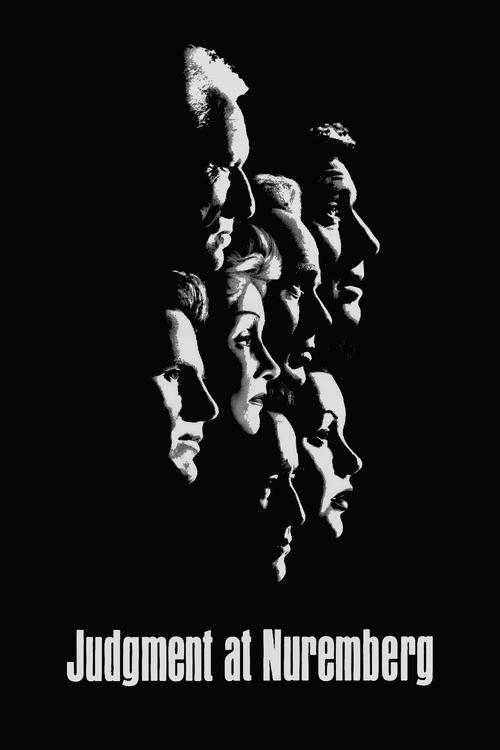
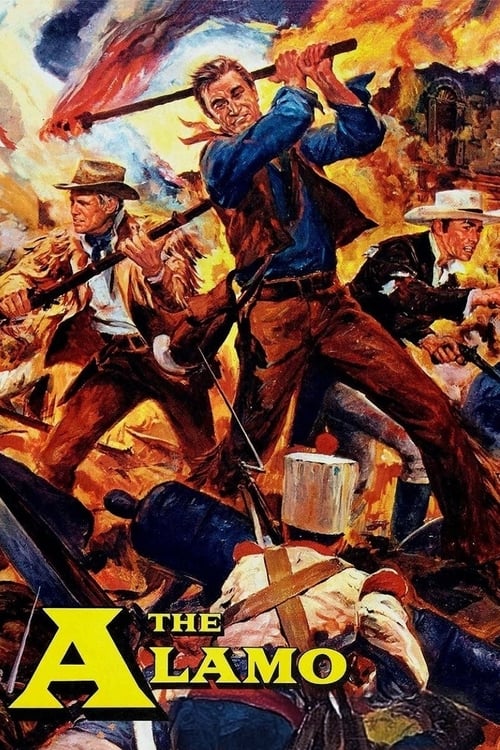
Widmark continued to appear in a number of successful films, including The Tunnel of Love (1959) with Doris Day, the Westerns Warlock (also 1959) with Henry Fonda, as Jim Bowie in John Wayne's The Alamo (1960), the courtroom drama Judgment at Nuremberg (1961), and reuniting with Sidney Poitier in the adventure The Long Ships (1964).
Personal life
Widmark was married to screenwriter Ora Jean Hazlewood for 55 years from 1942 until her death from Alzheimer's disease in March 1997; they met while attending Lake Forest College. The couple had one daughter, Anne Heath Widmark, an artist and author who was married to Baseball Hall of Famer Sandy Koufax from 1969 to 1982. Widmark named his film production company Heath Productions, after his daughter.
In 1999, Widmark remarried to socialite Susan Blanchard, the daughter of Dorothy Hammerstein and stepdaughter of Oscar Hammerstein II; she had been Henry Fonda's third wife.
Political views
Widmark was a lifelong member of the Democratic Party.
Despite having spent a substantial part of his career appearing in gun-toting roles such as cowboys, police officers, gangsters and soldiers, Widmark personally disliked firearms and was involved in several gun-control initiatives. In 1976, he stated:
I know I've made kind of a half-assed career out of violence, but I abhor violence. I am an ardent supporter of gun control. It seems incredible to me that the United States is the only civilized nation that does not put some effective control on guns.
Death
Widmark died after a long illness on March 24, 2008, at his home in Roxbury, Connecticut, at the age of 93. His failing health in his final years was aggravated by a fall he suffered in 2007. He was buried at Roxbury Center Cemetery.
Legacy
For his contributions to the motion picture industry, Widmark has a star on the Hollywood Walk of Fame at 6800 Hollywood Boulevard. In 2002, he was inducted into the Western Performers Hall of Fame at the National Cowboy & Western Heritage Museum in Oklahoma City.
In the 1960s, future Philippine President Rodrigo Duterte listed Widmark as his "idol" in his high school yearbook.
Filmography
Radio appearances
Widmark also appeared on various times on Gang Busters; The Shadow; Inner Sanctum Mysteries; Joyce Jordan, M.D.; Suspense; and Ethel and Albert.