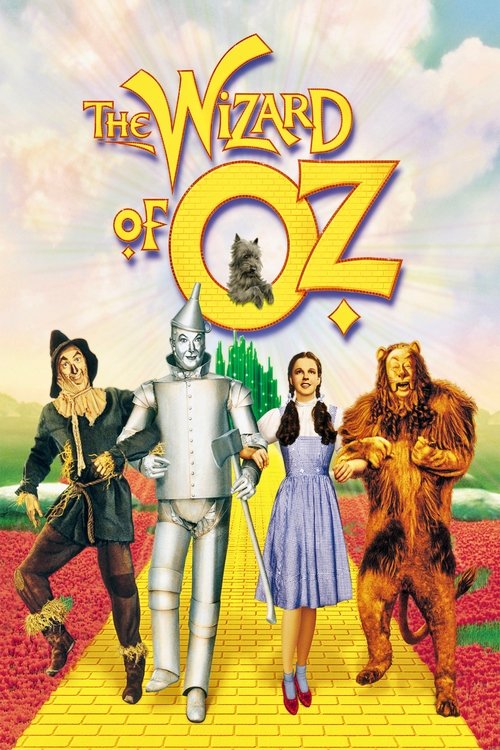




Raymond Wallace Bolger (; January 10, 1904 – January 15, 1987) was an American vaudevillian, eccentric dancer, comedian, actor and singer best known for his performance as the Scarecrow in Metro-Goldwyn-Mayer's 1939 film The Wizard of Oz. He first became interested in dancing as a teenager and, while working as a bank clerk in Boston, participated in dance contests and attended musical performances. In 1923, after being fired from a later job as an insurance clerk, he formed a short-lived vaudeville act, Sanford and Bolger, with Ralph Sanford. He went on to perform in several revues in the 1920s and early 1930s, as well as Gus Edwards' variety show Ritz Carlton Nights (which ran from 1926 to 1929).
As vaudeville declined at the onset of the Great Depression, Bolger moved on to musical theatre and film, playing roles in Life Begins at 8:40 and The Great Ziegfeld before getting the lead in On Your Toes. In late 1938 he was chosen by MGM to play the Tin Woodman in The Wizard of Oz; unhappy with that part, he convinced MGM's executives to let him swap with Buddy Ebsen, who had been slated to play the Scarecrow. As a member of the USO Camp Shows, he entertained soldiers overseas during the Second World War and in 1943 appeared in the wartime film Stage Door Canteen. He starred in his own ABC sitcom The Ray Bolger Show, originally titled Where's Raymond?, from 1953 to 1955. In his later years he made frequent guest appearances in television shows, including The Jean Arthur Show, The Partridge Family, Little House on the Prairie and Diff'rent Strokes.
Contents
Early life
Raymond Wallace Bolger was born, prematurely, on January 10, 1904 in St. Elizabeth's Hospital in Brighton, Massachusetts, into a Catholic family of Irish descent. A misconception exists, however, that he was instead of Portuguese descent and named Raymond Bulcao. He was the son of James Edward Bolger, then a delivery wagon driver for a bakery, and Johannah Cecilia "Annie" Bolger (née Wallace). James was born in Fall River, Massachusetts to parents from Ireland. Annie was born into a large Irish-American family in Bridgewater, Massachusetts. They had married in 1902, whereupon they moved to Dorchester, Massachusetts. In 1909 a sister named Regina was born. Bolger grew up in the Codman Square section of the Dorchester neighborhood of Boston and attended Dorchester High School, from which he graduated in 1920. He recounted that, in his high school years, he danced so poorly that nobody wanted to dance with him. He initially aspired toward being a banker instead of an entertainer, until he discovered that "to be a success in life, [he] had to learn how to dance", after his senior prom date abandoned him because the only dance he could do, at the time, was the waltz. His mother, whom he favored over his father, instilled in him a love of reading and introduced him to L. Frank Baum's Oz series of novels. He also liked Horatio Alger's novels.
His parents separated, but did not divorce, by 1918. In 1918 a bout of pleurisy and bilateral pneumonia struck James, who was working as a ship painter for Hamburg America. With James out of work, the family fell into poverty, so for a period thereafter, Ray did menial work for the Kelly Peanut Company and for local grocers. That same year he went to see Fred Stone perform as the titular scarecrow in Jack O'Lantern, a musical loosely based on The Wonderful Wizard of Oz. Stone became Bolger's idol because of his dancing prowess and competency at acting. After Annie's death, in July of 1919, of a cerebral hemorrhage, Ray clerked Boston's First National Bank each afternoon, which provided the family a weekly $18. He would, in his leisure time, participate in dancing contests held in Scollay Square, which was within walking distance of the bank, and attend musical performances in the area. Ray, who is speculated by his biographer Holly Van Leuven to have resented James for "[adding] to Annie's discomforts", rarely ever made public mention of his father.
Bolger said in a 1940 interview that he once sold vacuums door-to-door in New England. Circa 1922 he joined the New England Mutual Life Insurance Company as an office boy and clerk. While delivering mail between offices he would "[dance] up and down the stairs", and he would also dance for the entertainment of his co-workers. The company once hosted an amateur theatrical show, in which Bolger participated. He became a student of O’Brien’s School for Social and Formal Dancing, during which time he met ballet master Senia Russakoff. In exchange for lessons, and a place to sleep (Bolger had been evicted from a room for not paying rent), at Russakoff's studio, Bolger did his accounting. In 1922 Bolger was fired from New England Mutual either for being late or for dancing by the water cooler.
Career
In 1923 Bolger joined the family theatre company of Bob Ott, who recruited him for his "funny-looking face", and performed song and dance with Ott's troupe. James Bolger, who saw in the show business an opportunity to turn a profit, became an advance man and publicist for the Otts, and took a portion of Ray's salary. A year later, under the Otts' management, Bolger formed the comedy act "Sanford and Bolger" with his dance partner Ralph Sanford, who was from Springfield, Massachusetts. They rebranded later on to "Sanford and Bolger: A Pair of Nifties". Despite popularity in New England, and support from vaudevillian Jimmy Duffy (of Duffy and Sweeney fame), Sanford and Bolger flopped in New York, and in 1925 their act was cancelled at Cohen's Theater in Newburgh. Sanford lost interest in performing the act but remained friends with Bolger. In 1926 Bolger befriended composer Harold Arlen during a four-month stint performing at Shea's Hippodrome Theater; for a time, they shared an apartment on West 57th Street. That same year he and Sanford performed, for a weekly $125 split between them, at the Rialto after Bolger improvised a dance for an audition before conductor Hugo Riesenfeld. Bolger was cast by Reisenfeld in a short film, "The Berth Mark", as a banker who joins a troupe of travelling vaudevillians (one of them played by Peggy Shaw) as a condition for paying their fare. He suffered gum and tooth infections from a paste used to shine his teeth for the film. He contracted with J. J. Shubert starting June 6, 1926 and appeared that evening in the revue The Merry World, at the Imperial Theatre, in the minor role of a "collegian with baggy pinstripe pants, a beanie, and an urge to chant fight songs".
Bolger contracted with Gus Edwards, to be a member of Edwards's travelling troupe, on October 11, 1926. Edwards cast Bolger in the troupe's variety show, Ritz Carlton Nights, as a "quick-witted waiter" sidekick to Edwards. With regard to Ritz Carlton Nights, The Washington Post described Bolger as a "'nut' comedian, with emphasis on the 'nut'". Abe Lastfogel, who worked for the William Morris Agency, became Bolger's agent in 1928. Bolger performed in the New York Palace Theatre, which was the United States' "most important vaudeville theater", with the Ritz Carlton Nights troupe in 1929. Bolger danced in nightclubs in London while on his honeymoon with Rickard from July to August of that year. The British liked his sense of humor and energetic style of dancing. Because he had a passing resemblance to George VI (at the time Albert, Duke of York), people mistakenly curtsied toward him. Bolger was cast as Jerry, a "loose-jointed bootlegger", in Me for You, a musical by Alex A. Aarons and Vinton Freedley which began its 1929-1930 run at the Detroit Opera House on September 10, 1929. The show was received poorly and did not sell well, so Aarons and Freedley rewrote it in October; it returned as Heads Up! in November, with the name of Bolger's character changed to Georgie.
Style
Bolger was informed by the Celtic form of eccentric dance, which required the dancer to be able to flail his lower legs (for which Bolger's long shins and extraordinary flexibility suited him). According to Fritz Weaver he had a heavy dependence on improvisation and "couldn't stick to anything that was choreographed". He could not perform any given dance routine a second time, as he would make it up on the spot and forget it immediately afterward. For his unusually flexible legs he earned the nickname "rubber legs". On his shoes he wore maple taps, in lieu of the typical metal ones, to create a unique sound. He would start using elements of comedy only after demonstrating his physicality. In his routines he acted out the roles of both celebrities and imagined characters for comedic effect. Bolger had limited acting abilities and range, and often was he typecast as, in his words, a "small country boy".
Personal life
In the 1920s, Bolger had a brief relationship with animator Max Fleischer's daughter, Ruth. Bolger met, and was asked out by, Gwendolyn "Gwen" Rickard (1909–1997) in 1926 in the backstage of the Los Angeles Orpheum Theater, after Bolger's performance in Ritz Carlton Nights; Rickard was looking for Gus Edwards, who had departed shortly after the show ended. They separated after Edwards' show went to New York but reunited in 1928 after Bolger returned to Los Angeles. They married in Port Chester, New York on July 9, 1929. James Bolger, who may have disapproved of Rickard's not being Catholic, did not go to the wedding. The newlyweds honeymooned in Europe from July to August.
Rickard, who "wanted to live vicariously" through Bolger, was throughout his career his collaborator and supporter. She advised him on whether to accept roles and gigs, handled his finances, dictated his costuming, persuaded producers of his shows to make the changes she wanted and conceived of many of his creative decisions. In the early years of their marriage she wanted to become a songwriter and to write a novel, but decided to stick to helping her husband's career. They had no children, although they tried. It is unclear why they never conceived; either Bolger or Rickard could have been infertile, though Rickard consulted a gynecologist, in the 1930s, who found no problems with her. Bolger had closer relationships with his in-laws than with his biological relatives (to whom he behaved distantly, even during public appearances), and financially supported his brothers-in-law.
Bolger possessed thousands of records of classical music and was fond of tap dancing to it. His other hobbies included horse race betting, fishing, gin rummy, golf and poker. Bolger was a Roman Catholic and a member of the Good Shepherd Parish and the Catholic Motion Picture Guild in Beverly Hills, California. He was a lifelong Republican who campaigned for Barry Goldwater in the 1964 United States presidential election, Richard Nixon in the 1968 election, and Ronald Reagan in the 1980 election. He supported the United States' escalation in the Vietnam War.
Death and legacy
Bolger was diagnosed with bladder cancer in 1985. Initially his wife cared for him at their home in Beverly Hills, but his deteriorating health incited him to check into Nazareth House, a Catholic nursing home in Los Angeles, in November 1986. He died there on January 15, 1987, five days after his 83rd birthday. His funeral took place on January 19 at the Church of the Good Shepherd. Among the pallbearers were Bob Hope and James Stewart. He was not eulogized, per his wife's wishes. His body was interred in the Holy Cross Cemetery in Culver City.
At the time of his death, Bolger was the last surviving main-credited cast member of The Wizard of Oz. He and Jack Haley are both buried in the same cemetery. He was the only one of Judy Garland's Oz costars who attended her funeral (Bert Lahr pre-deceased her in 1967), joining Harold Arlen, the composer of "Over the Rainbow", and his wife, Anya Taranda. They were reported as among the last remaining guests at the conclusion of the service.
Whenever asked whether he had received any residuals from telecasts of The Wizard of Oz, Bolger would reply: "No, just immortality. I'll settle for that." Bolger's Scarecrow is ranked among the "most beloved movie characters of all time" by AMC and the American Film Institute. The costume was donated to the Smithsonian Institution a few months after his death in 1987.
He has two stars on the Hollywood Walk of Fame. Both were dedicated on February 8, 1960, for his contributions to the entertainment industry: one for motion pictures, located at 6788 Hollywood Blvd, and the other for television, located at 6834 Hollywood Blvd. In 1998, a Golden Palm Star on the Palm Springs, California, Walk of Stars was dedicated to him. In 2016, the City of Boston commissioned a mural in Bolger's honor in the Codman Square section of the Dorchester neighborhood. The first comprehensive biography of Bolger, More Than a Scarecrow by Holly Van Leuven, was published in 2019 by the Oxford University Press.