1978–1989: Experimentation and breakthrough
In 1978, Rajinikanth had 20 releases across Tamil, Telugu and Kannada. His first film of the year was P. Madhavan's Shankar Salim Simon, in which he was among the three leads. Following that, he co-starred alongside Vishnuvardhan in the Kannada film Kiladi Kittu. He played the second lead in Annadammula Savaal, which starred Krishna; Rajinikanth reprised his role from the Kannada original. He then played an important role in the supernatural thriller Aayiram Jenmangal. In Maathu Tappada Maga, he was the main antagonist. Bairavi, directed by M. Bhaskar, was the first Tamil film to cast Rajinikanth as a solo hero. It was for this film that he earned the sobriquet "Superstar". S. Thanu, one of the film's distributors, set up a 35 feet (11 m) high cut-out of Rajinikanth. His next appearance Ilamai Oonjal Aadukirathu, a quadrangular love story written and directed by C. V. Sridhar, saw him play the role of a man who sacrifices his love for his friend, played by Kamal Haasan. The film's success prompted Sridhar to remake the film in Telugu, Vayasu Pilichindi, which retained the original cast of the Tamil film.
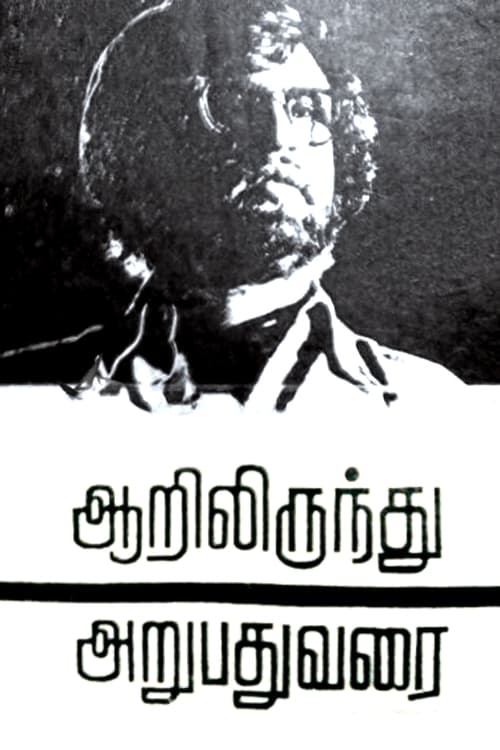
His next film, Vanakkatukuriya Kathaliye, had an introductory song to mark his entry, a trend that would soon catch on in with his later films. Mullum Malarum, released during the same period, received critical acclaim, and earned him his first Filmfare Award for Best Actor – Tamil nomination. The film marked the directional debut of Mahendran, with a screenplay adapted from a novel of the same name published in Kalki. It won the Filmfare Award for Best Tamil Film and a Special Prize (Best Actor) for Rajinikanth at the Tamil Nadu State Film Awards. Following this, he made a foray into Malayalam cinema with I. V. Sasi's fantasy film Allauddinum Albhutha Vilakkum, which was based on a story from the Arabian Nights. The same year, he acted in Dharma Yuddam, in which he played a mentally-ill person avenging the death of his parents. He then co-starred with N. T. Rama Rao in Tiger. Upon completion of Tiger, Rajinikanth had acted in 50 films over a period of four years, and in four languages. Some other popular films released during this period are the youthful entertainer Ninaithale Inikkum, the Tamil–Kannada bilingual Priya, the Telugu film Amma Evarikkaina Amma and the melodrama Aarilirunthu Arubathu Varai. Priya, based on a detective novel by Sujatha, had the distinction of being the first film of Rajinikanth to be shot mostly outside India, mainly in Southeast Asia. Aarilirunthu Arubathu Varai earned him his second nomination for the Filmfare Award for Best Actor – Tamil.
Raijinikanth, who credited Hindi film star Amitabh Bachchan as his inspiration, began playing Amitabh Bachchan's roles in Tamil remakes of his films. This began with Shankar Salim Simon (1978), a remake of Amar Akbar Anthony (1977), followed by Naan Vazhavaippen (1979), a remake of Majboor (1974). He was subsequently cast in a series of roles modelled after Amitabh Bachchan in Tamil remakes of his films. Rajinikanth starred in eleven Tamil remakes of Amitabh Bachchan films, as well as a Telugu remake of Amar Akbar Anthony, Ram Robert Rahim (1980), alongside Sridevi. The most successful of these were remakes of Salim–Javed films, such as Billa (1980), Thee (1981) and Mr. Bharath (1986). He would ultimately be known as the "angry young man" of Tamil cinema.
During this phase of his career, Rajinikanth abruptly chose to quit acting, but was coaxed to return with the Tamil film Billa (1980), a remake of the Bollywood blockbuster Don (1978), written by Salim-Javed and starring Amitabh Bachchan. Billa had Rajinikanth playing dual roles and eventually became his first solo commercial success. His pairing with Sridevi continued in Johnny, where he was once again cast in a double role, earned him his third nomination for the Filmfare Award for Best Actor – Tamil. He also starred in Murattu Kaalai which was a commercial success. The success of Billa was a turning point in Rajinikanth's career, disproving detractors that claimed Rajinikanth was "finished" and which saw him accepted as a full-fledged hero. The success of Billa established Rajinikanth as one of the top stars of Tamil cinema.
In 1981, he appeared in Garjanai which was shot simultaneously in Kannada and Malayalam, making it his last film in those two languages up until 2023. In K. Balachander's first home production, Netrikan, he played dual roles as a womanising father and a responsible son. His first full-length comedy was Thillu Mullu, directed by K. Balachander. He agreed to it solely due to the strong suggestion by his mentor that he should do non-commercial roles, to break the stereotyped action-hero mould by which he was getting famous at the time. Thillu Mullu earned him his fourth nomination for the Filmfare Award for Best Actor – Tamil. 1981 also saw the release of Thee, a remake of blockbuster Hindi film Deewaar (1975), also originally written by Salim-Javed and starring Amitabh Bachchan; in Thee, Rajinikanth reprised the role of Bachchan. In 1982, he starred in Pokkiri Raja, Moondru Mugam, Thanikattu Raja, Pudukavithai and Enkeyo Ketta Kural. Moondru Mugam which starred Rajinikanth playing three different roles for the first time, earned him his fifth nomination for the Filmfare Award for Best Actor – Tamil.
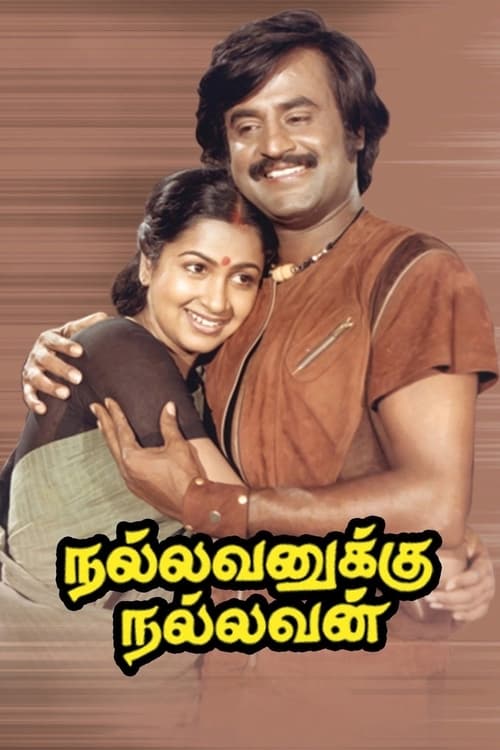
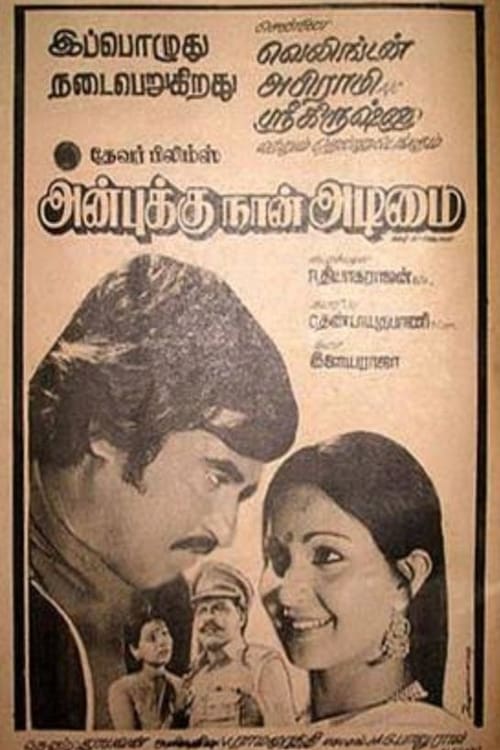
By 1983, he was a popular actor across South Indian cinema, including Telugu and Kannada films. In 1983, Rajinikanth starred in his first Bollywood film, Andhaa Kaanoon, alongside Hema Malini, Reena Roy and Amitabh Bachchan (in an extended cameo appearance). The film opened to excellent response from the audience and emerged a blockbuster at the box office. In 1984, he appeared in Naan Mahaan Alla, a remake of Subhash Ghai's directional Vishwanath, the film proved to be a superhit. That same year, he played a small role in Anbulla Rajinikanth and delivered three more successful Hindi films, Meri Adalat, Gangvaa and John Jani Janardhan (in which he played a triple role). His performance in Nallavanuku Nallavan earned him his first and only Filmfare Award for Best Actor – Tamil. In his 100th film Sri Raghavendra (1985), he played the Hindu saint Raghavendra Swami.
In the second half of the 1980s, Rajinikanth acted in commercially successful films, such as Naan Sigappu Manithan (1985), Geraftaar (1985), Padikkathavan (1985), Mr. Bharath (1986), Dosti Dushmani (1986), Velaikaran (1987), Manithan (1987), Insaaf Kaun Karega (1987), Guru Sishyan (1988) and Dharmathin Thalaivan (1988), with Velaikaran earning him his seventh nomination for the Filmfare Award for Best Actor – Tamil. In 1988, he made his only American film appearance in Bloodstone, directed by Dwight Little, in which he played an English-speaking Indian taxi driver. Rajinikanth finished the decade with films including Rajadhi Raja, Siva, Raja Chinna Roja and Mappillai while also starring in a few Bollywood productions. Raja Chinna Roja was the first Indian film to feature live action and animation.