





Rainer Werner Fassbinder (German: [ˈʁaɪnɐ ˈvɛʁnɐ ˈfasbɪndɐ] ; 31 May 1945 – 10 June 1982), sometimes credited as R. W. Fassbinder, was a German filmmaker, dramatist and actor. He is widely regarded as one of the major figures and catalysts of the New German Cinema movement. He directed over 40 films that span a variety of genres; frequently his work blends elements of Hollywood melodrama with social criticism and avant-garde techniques. His films, according to him, explored "the exploitability of feelings". His work was deeply rooted in post-war German culture: the aftermath of Nazism, the German economic miracle and the Red Army Faction. Early on, Fassbinder focused on marginalized figures in the city—migrant workers, prisoners, and gay people. He worked with a company of actors and technicians who frequently appeared in his projects.
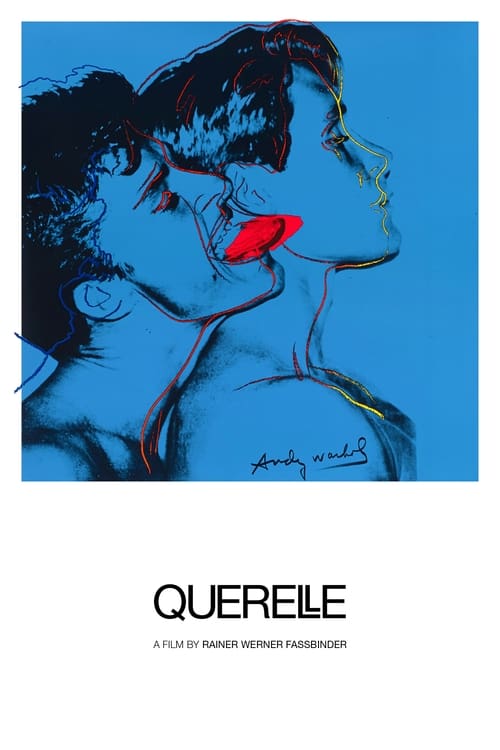
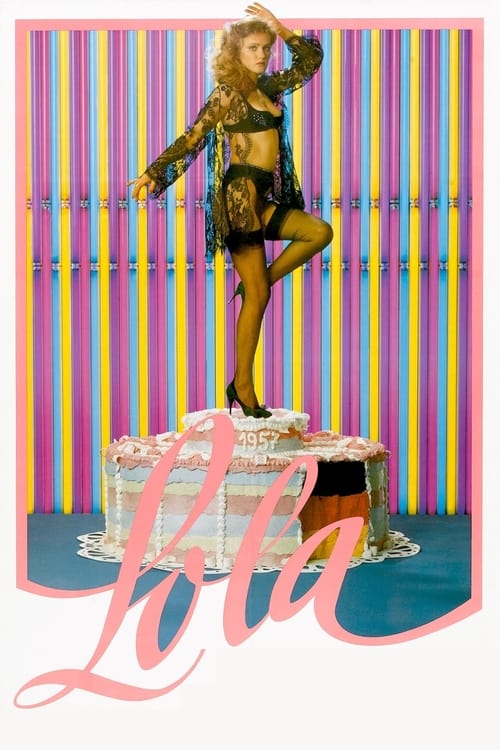
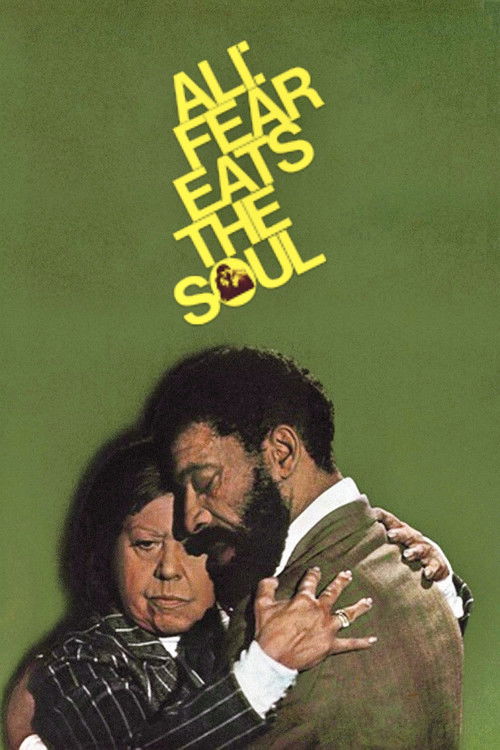
Fassbinder began leading the acting troupe Anti-Theater in 1967, with whom he staged some of his earliest productions. His first feature-length film was a gangster movie called Love Is Colder Than Death (1969); he scored his first domestic commercial success with The Merchant of Four Seasons (1972) and his first international success with Ali: Fear Eats the Soul (1974), both of which are considered masterpieces by contemporary critics. Big-budget projects such as Despair (1978), Lili Marleen and Lola (both 1981) followed. His greatest success came with The Marriage of Maria Braun (1979), chronicling the rise and fall of a German woman in the wake of World War II. Other notable films include the lesbian chamber drama The Bitter Tears of Petra von Kant (1972), Fox and His Friends (1975), Satan's Brew (1976), In a Year of 13 Moons (1978) and Querelle (1982), all of which dealt with homoerotic themes. He also directed the TV series World on a Wire (1973) and Berlin Alexanderplatz (1980).
Fassbinder died on 10 June 1982, aged 37, from a lethal cocktail of cocaine and barbiturates. His career lasted less than two decades, but he was extremely prolific; between 1967 and 1982, he completed over 40 feature films, 24 plays, two television serials, three short films and four video productions, winning five of the most prestigious prizes for feature film in Germany, including the Golden Bear and multiple German Film Awards. His premature death is often considered the end of the New German Cinema timeframe.
Contents
Early life
Fassbinder was born in the small town of Bad Wörishofen on 31 May 1945. He was born three weeks after US Army occupied the town and the unconditional surrender of Germany. The aftermath of World War II deeply marked his childhood and the lives of his family. In compliance with his mother's wishes, Fassbinder later claimed he was born on 31 May 1946, to more clearly establish himself as a child of the post-war period; his real age was revealed shortly before his death. He was the only child of Liselotte Pempeit (1922–93), a translator, and Helmut Fassbinder, a doctor who worked from the couple's apartment in Sendlinger Straße, near Munich's red light district. When he was three months old, he was left with a paternal uncle and aunt in the country, since his parents feared he would not survive the winter with them. He was one year old when he was returned to his parents in Munich. Fassbinder's mother came from the Free City of Danzig (now Gdańsk, Poland), whence many Germans had fled following World War II. As a result, a number of her relatives came to live with them in Munich.
Fassbinder's parents were cultured members of the bourgeoisie. His father concentrated on his career, which he saw as a means to inspire his passion for writing poetry. His mother largely ignored him as well, spending the majority of her time with her husband working on his career. In 1951, Liselotte Pempeit and Helmut Fassbinder divorced. Helmut moved to Cologne while Liselotte raised her son as a single parent in Munich. To support herself and her child, Pempeit took in boarders and found employment as a German to English translator. When she was working, she often sent her son to the cinema to pass time. Later in life, Fassbinder claimed that he saw at least one film a day, sometimes as many as four per day. During this period, Pempeit was often away from her son for long periods while she recuperated from tuberculosis. In his mother's absence, Fassbinder was looked after by his mother's tenants and friends. As he was often left alone, he became used to the independence and later became a juvenile delinquent. He clashed with his mother's younger lover Siegfried, who lived with them when Fassbinder was around eight or nine years old. He had a similar difficult relationship with the much older journalist Wolff Eder (c.1905–71), who became his stepfather in 1959. Early in his adolescence, Fassbinder came out as bisexual.
As a teen, Fassbinder was sent to boarding school. His time there was marred by his repeated escape attempts, and he eventually left school before any final examinations. At the age of 15, he moved to Cologne with his father. Though they argued constantly, Fassbinder stayed with his father for a couple of years while attending night school. To earn money, he worked small jobs; he also helped his father, who rented apartments to migrant workers. During this time, Fassbinder began to immerse himself in his father's world of culture, writing poems, short plays, and stories.
Beginnings
In 1963, aged 18, Fassbinder returned to Munich with plans to attend night school with the idea to eventually study drama. Following his mother's advice, he took acting lessons and from 1964 to 1966 attended the Fridl-Leonhard Studio for actors in Munich. There, he met Hanna Schygulla, who would become one of his most important actors. During this time, aged 20, he made his first 8mm short films, worked as a sound man in student films and as an assistant director or in small acting roles in theatre. During this period, he also wrote the tragic-comic play: Drops on Hot Stones. To gain entry to the Berlin Film School, Fassbinder submitted a film version of his play Parallels. He also entered several 8 mm films including This Night (now considered lost), but he was turned down for admission, as were Werner Schroeter and Rosa von Praunheim who would also have careers as film directors.
He returned to Munich where he continued with his writing. He also made two short films, The City Tramp (Der Stadtstreicher, 1966) and The Little Chaos (Das Kleine Chaos, 1967). Shot in black and white, they were financed by Fassbinder's lover, Christoph Roser, an aspiring actor from a wealthy family, in exchange for leading roles. Fassbinder acted in both of these films, which also featured Irm Hermann. In the latter, his mother – under the name of Lilo Pempeit – played the first of many parts in her son's films.
Theatre career
At the age of 22, Fassbinder joined the now defunct Munich Action-Theatre in 1967; there, he was active as actor, director and scriptwriter. After two months he became the theatre's leader. In April 1968, he directed the production of his play Katzelmacher, which tells the story of a foreign worker from Greece who becomes the object of intense racial, sexual, and political hatred among a group of Bavarian "slackers". A few weeks later, in May 1968, the Action-Theatre was disbanded after its theatre was wrecked by one of its founders. It promptly reformed as the Anti-Theatre under Fassbinder's direction. The troupe lived and performed together. This close-knit group of young actors included among them Fassbinder, Peer Raben, Harry Baer and Kurt Raab, who along with Hanna Schygulla and Irm Hermann became the most important members of his cinematic stock company. Working with the Anti-Theatre, Fassbinder continued writing, directing and acting. In the space of 18 months he directed 12 plays. Of these 12 plays, four were written by Fassbinder; he rewrote five others.
The style of his stage directing closely resembled that of his early films, a mixture of choreographed movement and static poses, taking its cues from musicals, cabaret, films and the student protest movement.
After he made his earliest feature films in 1969, when he was 24, Fassbinder centered his career on directing films but maintained an intermittent foothold in the theater until his death. He worked in various productions throughout Germany and made a number of radio plays in the early 1970s. In 1974, aged 29, he took directorial control over the Theater am Turm (TAT) of Frankfurt; when this project ended in failure and controversy, he became less interested in theatre.
In honor of Rosa von Praunheim, Fassbinder staged the play Dedicated to Rosa von Praunheim.
Early films and acclaim
Fassbinder used his theatrical work as a springboard for making films; and many of the Anti-Theater actors and crew worked with him throughout his entire career (for instance, he made 20 films each with actresses Hanna Schygulla and Irm Herrmann). He was strongly influenced by Brecht's Verfremdungseffekt (alienation effect) and the French New Wave cinema, particularly the works of Jean-Luc Godard. He also praised The Damned (1969) by Luchino Visconti as his favorite movie. Other filmmakers who influenced Fassbinder included Howard Hawks, Michael Curtiz, Raoul Walsh, and Nicholas Ray.
Fassbinder developed his rapid working methods early. Because he knew his actors and technicians so well, Fassbinder was able to complete as many as four or five films per year on extremely low budgets. This allowed him to compete successfully for the government grants needed to continue making films.
Unlike the other major auteurs of the New German Cinema, Volker Schlöndorff, Werner Herzog and Wim Wenders, who started out making movies, Fassbinder's stage background was evident throughout his work. Additionally, he learned how to handle all phases of production, from writing and acting to direction and theater management. This versatility surfaced in his films too where, in addition to some of the aforementioned responsibilities, Fassbinder served as composer, production designer, cinematographer, producer and editor. He also appeared in 30 projects of other directors.
By 1976, Fassbinder had gained international prominence, prizes at major film festivals, premieres and retrospectives in Paris, New York and Los Angeles, and a study of his work by Tony Rayns had been published. All these factors helped make him a familiar name among cinephiles and campus audiences throughout the world. He lived in Munich when not traveling, rented a house in Paris with ex-wife Ingrid Caven. He was often seen in gay bars in New York, earning him cult hero status, but also a controversial reputation in and out of his films. His films were a fixture in art houses of the time after he became internationally known with Ali: Fear Eats the Soul. In 1977, he was a member of the jury at the 27th Berlin International Film Festival.
Film career
Beginning at the age of 21, Fassbinder made forty-four films and television dramas in 15 years, along with directing 15 plays for the theatre. These films were largely written or adapted for the screen by Fassbinder. He was also art director on most of the early films, editor or co-editor on many of them (often credited as Franz Walsh, though the spelling varies), and he acted in 19 of his own films as well as for other directors. He wrote 14 plays, created new versions of six classical plays, and directed or co-directed 25 stage plays. He wrote and directed four radio plays and wrote song lyrics. In addition, he wrote 33 screenplays and collaborated with other screenwriters on 13 more. On top of this, he occasionally performed many other roles such as cinematographer and producer on a small number of them. Working with a regular ensemble of actors and technicians, he was able to complete films ahead of schedule and often under budget and thus compete successfully for government subsidies. He worked fast, typically omitting rehearsals and going with the first take.
Fassbinder's first ten films (1969–1971) were said to be an extension of his work in the theater, shot usually with a static camera and with deliberately unnaturalistic dialogue.
In 1971 through 1977, his films brought him international attention, with films modeled, to ironic effect, on the melodramas Douglas Sirk made in Hollywood in the 1950s. In these films, Fassbinder explored how deep-rooted prejudices about race, sex, sexual orientation, politics and class are inherent in society, while also tackling his trademark subject of the everyday fascism of family life and friendship.
The final films, from around 1977 until his death, were more varied, with international actors sometimes used and the stock company disbanded, although the casts of some films were still filled with Fassbinder regulars. He became increasingly idiosyncratic in terms of plot, form and subject matter in movies like The Marriage of Maria Braun (1979), The Third Generation (1979) and Querelle (1982). He also articulated his themes in the bourgeois milieu with his trilogy about women in post-fascist Germany: The Marriage of Maria Braun (1979), The Angst of Veronica Voss and Lola.
"I would like to build a house with my films", Fassbinder once remarked. "Some are the cellars, others the walls, still others the windows. But I hope in the end it will be a house."
Avant-garde films (1969–1971)
Working simultaneously in theater and film, Fassbinder created his own style from a fusion of the two artforms. His ten early films are characterized by a self-conscious and assertive formalism. Influenced by Jean-Luc Godard, Jean-Marie Straub and the theories of Bertolt Brecht, these films are austere and minimalist in style. Although praised by many critics, they proved too demanding and inaccessible for a mass audience. Fassbinder's rapid working methods had begun by this stage.
Shot in black-and-white with a shoestring budget in April 1969, Fassbinder's first feature-length film, Love Is Colder Than Death (1969) (Liebe ist kälter als der Tod), was a deconstruction of the American gangster films of the 1930s, 1940s and 1950s. Fassbinder plays the lead role of Franz, a small-time pimp who is torn between his mistress Joanna, a sex worker played by Hanna Schygulla, and his friend Bruno, a gangster sent after Franz by the syndicate that he has refused to join. Joanna informs the police of a bank robbery the two men have planned. Bruno is killed in the shootout, but Franz and Joanna escape.
Love Is Colder Than Death is a low-key film with muted tone, long sequences, non-naturalistic acting and little dialogue. Success was not immediate. Love Is Colder Than Death was ill-received at its premiere at the Berlin Film Festival. The film, however, already displays the themes that were to remain present through the director's subsequent work: loneliness, the longing for companionship and love, and the fear and reality of betrayal.
Fassbinder's second film, Katzelmacher (1969; the title is a Bavarian pejorative slang term for a foreign worker from the Mediterranean), was received more positively, garnering five prizes after its debut at Mannheim. It features a group of rootless and bored young couples who spend much of their time in idle chatter, empty boasting, drinking, playing cards, intriguing or simply sitting around. The arrival of Jorgos, a guest worker from Greece, leads to a growing curiosity on the part of the women and the antagonism among the men living in a suburban block of apartments in Munich. This kind of social criticism, featuring alienated characters unable to escape the forces of oppression, is a constant throughout Fassbinder's oeuvre. Katzelmacher was adapted from Fassbinder's first produced play – a short piece that was expanded from forty minutes to feature length, moving the action from a country village to Munich and delaying the appearance of Jorgos.
German melodramas (1971–1976)
After Pioneers in Ingolstadt, Fassbinder took an eight-month break from filmmaking. During this time, he turned for a model to Hollywood melodrama, particularly the films German émigré Douglas Sirk made in Hollywood for Universal-International in the 1950s: All That Heaven Allows, Magnificent Obsession and Imitation of Life. Fassbinder was attracted to these films not only because of their entertainment value, but also for their depiction of various kinds of repression and exploitation.
Fassbinder scored his first domestic commercial success with The Merchant of Four Seasons (Händler der vier Jahreszeiten, 1971). The film portrays a married couple who are fruit sellers. Hans faces rejection from his family after he violently assaults his wife for not bending to his will. She leaves him, but after he suffers a heart attack they reunite, though he now has to employ other men. His restricted ability to function leads him to ponder his own futility. He literally drinks himself to death.
The Merchant of Four Seasons uses melodrama as a style to create critical studies of contemporary German life for a general audience. It was Fassbinder's first effort to create what he declared he aspired to: a cinematic statement of the human condition that would transcend national boundaries as the films of Michelangelo Antonioni, Ingmar Bergman and Federico Fellini had done. It is also his first realization of what he learned from Sirk: that people, however small they may be, and their emotions, however insignificant they may seem, could be big on the movie screen.
Loneliness is a common theme in Fassbinder's work, together with the idea that power becomes a determining factor in all human relationships. His characters yearn for love, but seem condemned to exert an often violent control over those around them. A good example is The Bitter Tears of Petra von Kant (Die bitteren Tränen der Petra von Kant, 1972) which was adapted by Fassbinder from his plays. The title character is a fashion designer who lives in a self-created dreamland and the action is restricted mostly to her lavish bedroom. After the failure of her second marriage, Petra falls hopelessly and obsessively in love with Karin, a cunning young working-class woman who wants a career in modeling. The model's exploitation of Petra mirrors Petra's extraordinary psychological abuse of her silent assistant, Marlene. Fassbinder portrays the slow meltdown of these relationships as inevitable, and his actresses (there are no men in the film) move in a slow, trance-like way that hints at a vast world of longing beneath the beautiful, brittle surface.
International films (1976–1982)
Enthusiasm for Fassbinder's films grew quickly after Fear Eats the Soul. Vincent Canby paid tribute to Fassbinder as "the most original talent since Godard". In 1977, the New Yorker Theater in Manhattan held a Fassbinder Festival.
However, as enthusiasm for Fassbinder grew outside of Germany, his films still failed to impress the native audience. At home, he was better known for his television work and for his open homosexuality. Coupled with the controversial issues of his films – terrorism, state violence, racism, sexual politics – it seemed that everything Fassbinder did provoked or offended someone.
After completing in 1978 his last low-budget and very personal ventures (In a Year of 13 Moons and The Third Generation) he would concentrate on making films that were becoming increasingly garish and stylized. However, his TV series Berlin Alexanderplatz was a naturalistic adaptation of the two-volume novel by Alfred Döblin, which Fassbinder had read many times.
Chinese Roulette (Chinesisches Roulette) is a gothic thriller with an ensemble cast. The film follows a twelve-year-old crippled girl, Angela, who, due to her parents' lack of affection, arranges an encounter between them with their respective lovers at the family country estate. The film climaxes with a truth-guessing game. The players divide into two teams, which take it in turn to pick out one member of the other side and ask them question about people and objects. The game is played at the suggestion of Angela, who plays against her mother. When the mother asks: "In the Third Reich, what would that person have been?", Angela's answer is "Commandant of the concentration camp at Bergen Belsen"; it is her mother she is describing.
There are no happy endings in Fassbinder's films. His protagonists, usually weak men or women with masochistic tendencies, pay a heavy price for their victimization. The Stationmaster's Wife (Bolwieser) is based on a 1931 novel, Bolwieser: The Novel Of a Husband by the Bavarian writer Oskar Maria Graf. The plot follows the downfall of Xaver Bolwieser, a railway stationmaster submitted to the will of his domineering and unfaithful wife, whose repeated infidelities completely ruin Bolwieser's life. Broadcast initially as a two-part television series, The Stationmaster's Wife was shortened to a 112-minute feature film and released in the first anniversary of Fassbinder's death. The film stars Kurt Raab, Fassbinder's close friend whom the director usually cast as a pathetic man. Raab was also set designer of Fassbinder's films until their friendship and professional relationship broke up after making this film.
Personal life
Fassbinder had relationships with both men and women. He rarely kept his professional and personal life separate, and was known to cast family, friends and lovers in his films. Early in his career he had a lasting but fractured relationship with Irm Hermann, a former secretary whom he forced to become an actress. Fassbinder usually cast her in unglamorous roles, most notably as the unfaithful wife in The Merchant of Four Seasons and the silent abused assistant in The Bitter Tears of Petra von Kant.
Hermann idolized him, but Fassbinder tormented and tortured her for over a decade. This included domestic violence: "He couldn't conceive of my refusing him, and he tried everything. He almost beat me to death on the streets of Bochum ..." In 1977, Hermann became romantically involved with another man and became pregnant by him. Fassbinder proposed to her and offered to adopt the child; she turned him down.
In 1969, while portraying the lead role in the TV film Baal under the direction of Volker Schlöndorff, Fassbinder met Günther Kaufmann, a black Bavarian actor who had a minor role in the film. Despite the fact that Kaufmann was married and had two children, Fassbinder fell madly in love with him. The two began a turbulent affair which ultimately affected the production of Baal. Fassbinder tried to buy Kaufmann's love by casting him in major roles in his films and buying him expensive gifts.
Kaufmann relished the attention and became more demanding. Fassbinder bought him four Lamborghinis over the period of a year; Kaufmann wrecked one and sold the others if they failed to meet his expectations. The relationship came to an end when Kaufmann became romantically involved with composer Peer Raben. After the end of their relationship, Fassbinder continued to cast Kaufmann in his films, albeit in minor roles. Kaufmann appeared in 14 of Fassbinder's films, with the lead role in Whity (1971).
Although he claimed to be opposed to matrimony as an institution, in 1970 Fassbinder married Ingrid Caven, an actress who regularly appeared in his films. Their wedding reception was recycled in the film he was making at that time, The American Soldier. Their relationship of mutual admiration survived the complete failure of their two-year marriage. "Ours was a love story in spite of the marriage", Caven explained in an interview, adding about her former husband's sexuality: "Rainer was a homosexual who also needed a woman. It's that simple and that complex." The three most important women of Fassbinder's life, Irm Hermann, Ingrid Caven and Juliane Lorenz, his last partner, were not disturbed by his romantic and sexual involvement with men.
Controversies
Media scandals and controversies ensured that in Germany, Fassbinder was frequently in the news, making calculatedly provocative remarks in interviews. His work often received mixed reviews from the national critics, many of whom only began to take him seriously after the foreign press had hailed him as a major director.
There were frequent exposés of his lifestyle in the press, and attacks on all sides from the groups his films offended. His television series Eight Hours Don't Make a Day was cut from eight to five episodes after pressure from conservatives. The playwright Franz Xaver Kroetz sued over Fassbinder's adaptation of his play Jail Bait, alleging that it was obscene. Lesbians and feminists accused Fassbinder of misogyny (in presenting women as complicit in their own oppression) in his 'Women's Pictures'. The Bitter Tears of Petra von Kant has been cited by some feminist and gay critics as both homophobic and sexist.
Gay critics also criticized Fox and His Friends for not positively depicting homosexuality in bourgeois society, feeling Fassbinder had betrayed them. Conservatives attacked him for his association with the far-left. Marxists said he had sold out his political principles in his depictions of left-intellectual manipulations in Mother Küsters' Trip to Heaven and of a late-blooming terrorist in The Third Generation. Berlin Alexanderplatz was moved to a late-night television slot amid widespread complaints that it was unsuitable for children. The most heated criticism came for his play Trash, the City and Death, whose scheduled performance at the Theater am Turm in Frankfurt was cancelled early in 1975 amid accusations of antisemitism. In the turmoil, Fassbinder resigned from his directorship of that prestigious theater complex, complaining that the play had been misinterpreted. The play is about an unscrupulous and very greedy Jewish businessman in Frankfurt who ruthlessly uses German guilt over the Holocaust to make himself rich. Though published at the time, and quickly withdrawn, the play was not performed until five years after Fassbinder's death by Thieves Theatre in 1987 at ABC No Rio.
Death
By the time he made his last film, Querelle (1982), Fassbinder was consuming significant quantities of drugs and alcohol. On the night of 9–10 June 1982, Wolf Gremm, director of the film Kamikaze 1989 (1982), which starred Fassbinder, was staying in his apartment. Early that evening, Fassbinder retired to his bedroom. He was working on notes for a future film, Rosa L, based on the life of Polish-German revolutionary socialist Rosa Luxemburg. Fassbinder was watching television while reading when, shortly after 1 am, he received a phone call from his friend and assistant Harry Baer. At 3:30 am, when Juliane Lorenz arrived home, she heard the noise of the television in Fassbinder's room, but she could not hear him snoring. Though not allowed to enter the room uninvited, she went in, and discovered his lifeless body with a cigarette still between his lips. A thin ribbon of blood trickled from one nostril.
Fassbinder died from an overdose of cocaine and barbiturates. The notes for Rosa L were found next to his body. His remains were interred at Bogenhausener Friedhof in Munich.
Filmography
Selected credits:
Plays
1965: Nur eine Scheibe Brot (1995, Volkstheater Wien as part of the Bregenzer Festspielen)
1966: Tropfen auf heiße Steine (1985, Theaterfestival München; filmed in 2000 by François Ozon as Gouttes d'eau sur pierres brûlantes)
1968: Katzelmacher (Action-Theater in Munich, filmed by Fassbinder 1969; received Gerhart-Hauptmann-Preis)
1968: Der amerikanische Soldat (Antiteater in Munich, filmed by Fassbinder 1970)
1969: Preparadise sorry now (based on the case of Myra Hindley and Ian Brady, Antiteater in München)
1969: Anarchie in Bayern (Antiteater in Munich)
1969: Gewidmet Rosa von Praunheim (Antiteater in Munich)
1969: Das Kaffeehaus (based on Carlo Goldoni's La bottega del caffè, Schauspielhaus Bremen. Filmed by Fassbinder 1970)
1969: Werwolf (in collaboration with Harry Baer's Antitheather in Berlin)
1970: Das brennende Dorf (based on Fuente Ovejuna by Lope de Vega, Schauspielhaus Bremen)
1971: Blut am Hals der Katze (Antiteater in Nürnberg)
1971: Die bitteren Tränen der Petra von Kant (Deutsche Akademie der Darstellenden Künste or Experimenta in Frankfurt am Main. Filmed by Fassbinder 1972)
1971: Bremer Freiheit (based on the case of Gesche Gottfried, Schauspielhaus Bremen. Filmed by Fassbinder 1972)