



John Peter Sarsgaard (; born March 7, 1971) is an American actor. He studied at the Actors Studio, before rising to prominence playing atypical and sometimes villainous roles in film and television.
He made his film debut with Dead Man Walking (1995). He gained recognition for his roles in The Man in the Iron Mask (1998), Boys Don't Cry (1999), and The Center of the World (2001). He received a nomination for the Golden Globe Award for Best Supporting Actor for his portrayal of Charles Lane in Shattered Glass (2003) and won the Volpi Cup for Best Actor for playing a man with dementia in Memory (2023).
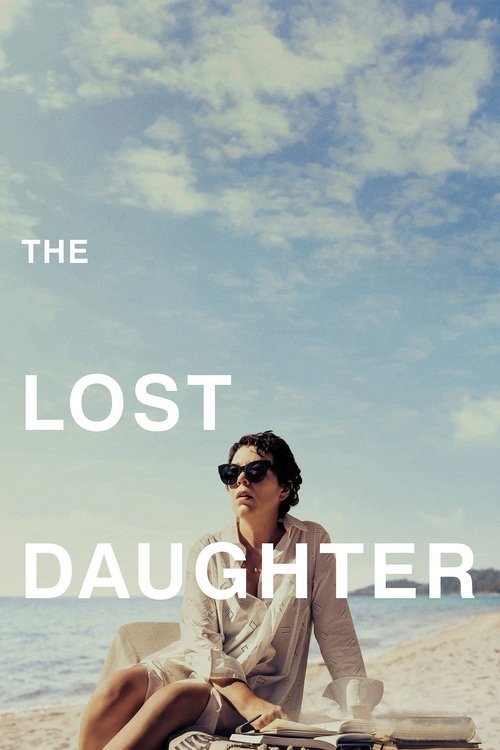
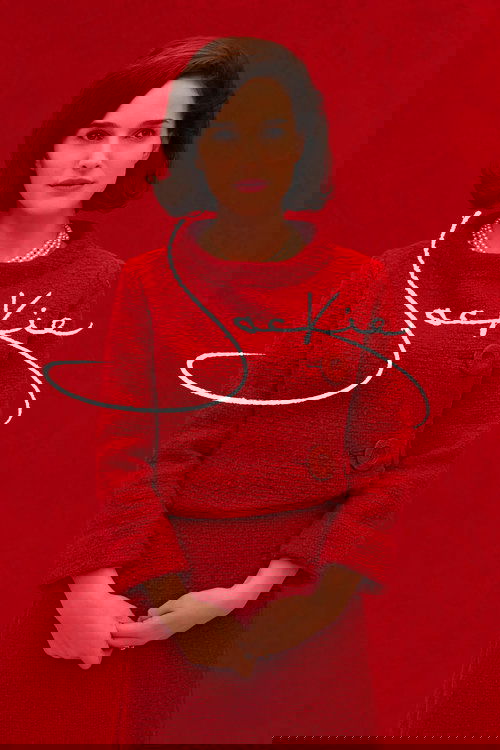
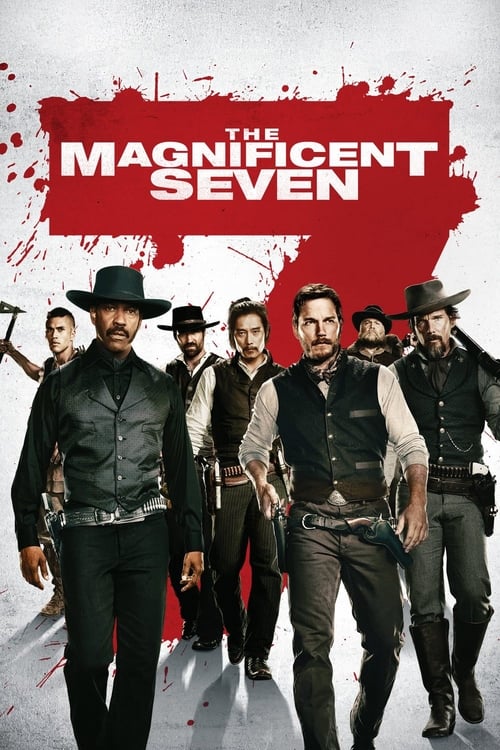
Sarsgaard has acted in films such as Garden State, Kinsey (both 2004), Jarhead, Flightplan (both 2005), Elegy (2008), An Education, Orphan (both 2009), Lovelace, Blue Jasmine (both 2013), Black Mass (2015), Jackie (2016), and The Lost Daughter (2021). He is also known for acting in blockbuster films, such as Knight and Day (2010), Green Lantern (2011), The Magnificent Seven (2016), and The Batman (2022).
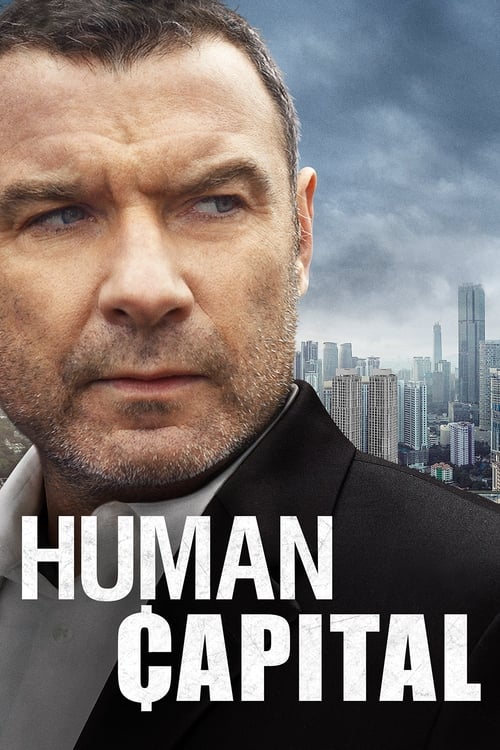
Sarsgaard is also known for his television roles including in the AMC/Netflix crime series The Killing (2013), the Hulu limited series The Looming Tower (2018) and Dopesick (2021), and the Apple TV+ series Presumed Innocent (2024), earning Primetime Emmy Award nominations for Dopesick and Presumed Innocent. Sarsgaard made his Broadway debut portraying Boris Alexeyevich Trigorin in the revival of Anton Chekhov's The Seagull (2008).
Contents
Early life and education
John Peter Sarsgaard was born at Scott Air Force Base in St. Clair County, Illinois, on March 7, 1971, the son of Judy Lea (née Reinhardt) and John Dale Sarsgaard. His father was an Air Force engineer and later worked for Monsanto and IBM. His surname originates in Denmark, where his paternal great-great-grandparents were born; it is pronounced [ˈsɑːsɡɔˀ] in Danish.
Sarsgaard was raised a Catholic and served as an altar boy. His family moved more than 12 times during his childhood, following his father's job. At the age of 7, Sarsgaard originally wanted to become a soccer player and took up ballet to help improve his coordination. After suffering several concussions while playing soccer, he gave up the sport and became interested in writing and theater. He attended Fairfield College Preparatory School, a private Jesuit boys' school in Connecticut, where he became interested in film.
Following his graduation from Fairfield Prep in 1989, he attended Bard College in New York for two years before transferring to Washington University in St. Louis (WashU) in 1991, where he co-founded improvisational comedy troupe "Mama's Pot Roast". While at WashU, Sarsgaard began performing in plays in an offshoot of New York's Actors Studio; His first role was as the servant Laurent in Molière's Tartuffe. In 1993, he graduated with a bachelor's degree in history and moved to New York.
Career
1995–1998: Early work
Sarsgaard branched out with guest roles in television productions filmed in New York City, with Law & Order in 1995, and New York Undercover (1997) as well as an appearance in the 1997 HBO special Subway Stories. He appeared in his first film role in Dead Man Walking (1995), where he played a teenager killed by a convict (Sean Penn).
In 1995, Sarsgaard made his theatrical debut in the Off-Broadway production of Horton Foote's Laura Dennis, which was directed by James Houghton. Ben Brantley of The New York Times wrote: "Mr. Sarsgaard ... emerges as an actor to watch with a performance of breathtaking emotional conviction." The following year he starred in Kingdom of Earth opposite Cynthia Nixon and directed by John Cameron Mitchell. His performance in the play received favorable reviews among critics.
His next film roles were in a series of independent features: Another Day in Paradise (1997), part of an ensemble cast that included James Woods, Melanie Griffith, Vincent Kartheiser, and Natasha Gregson Wagner, and In Desert Blue (1998), where he had a supporting role in the film. He received a substantial role in the 1998 film The Man in the Iron Mask, where he played Raoul, the ill-fated son of John Malkovich's dueling Musketeer, Athos. The film uses characters from Alexandre Dumas' d'Artagnan Romances, and is very loosely adapted from some plot elements of The Vicomte de Bragelonne. The film received ambivalent reviews, but was a success at the box office, earning $182 million worldwide.
1999–2002: Career progression
In 1999, Sarsgaard earned critical recognition in Kimberly Peirce's Boys Don't Cry, where he was cast as notorious killer John Lotter. The film is based on the real-life story of Brandon Teena, who was raped and murdered in 1993 by Lotter and Tom Nissen after they found out that he was a trans man. Boys Don't Cry received overwhelmingly positive acclaim from critics, and his performance was critically well received. According to The Boston Globe, "Peter Sarsgaard ... makes the killer's terrible trajectory not only believable, but grounded in the most mundane clodhopper behavior. He isn't a drooling monster, he's a guy you wouldn't look twice at a bar or a convenience store." A contributor from the Seattle Post-Intelligencer wrote "It's a marvelous performance supported ably by ... Sarsgaard as the unpredictable, sociopathic Lotter." The film was screened at a special presentation at the 2000 Venice Film Festival. In regards to his character, as how Sarsgaard made him "likeable, sympathetic even" was because he wanted the audience "to understand why they would hang out with me. If my character wasn't necessarily likable, I wanted him to be charismatic enough that you weren't going to have a dull time if you were with him." In another interview, Sarsgaard said he felt "empowered" by playing Lotter.
His first leading role was in the 2001 feature The Center of the World, where he plays Richard Longman, a lonely young entrepreneur who skips out on his company's big initial public offering and pays a stripper (Molly Parker) $10,000 to fly to Las Vegas with him. The film received average reviews, however, A.O. Scott of the New York Times, reported that the performances by both Sarsgaard and Parker "provide a rough grain of authenticity, capturing the blunted affect and aimless neediness of people in their 20s struggling to navigate a world of material abundance and impoverished emotional possibility." Scott concluded in his recap that Sarsgaard made his character "seem like a genuinely nice guy, too innocent to grasp the sleaziness of his bargain with Florence."
In 2002, Sarsgaard starred in three films, K-19: The Widowmaker, Empire and The Salton Sea. In K-19: The Widowmaker, he portrayed a young Russian navy lieutenant Vadim Radchenko, a prototype of Boris Korchilov. The film's budget cost was $100 million to make, but upon release, it grossed $35 million in the United States and $30 million internationally, qualifying it as a box office failure. His next role was in Empire, a crime thriller, where he was cast in a supporting role. Sarsgaard played a meth addict in D. J. Caruso's The Salton Sea. In October 2002, Sarsgaard returned to theater in a New York production of Lanford Wilson's Burn This, where he replaced Edward Norton.
2003–present: Continued success
2003 marked a significant turning point in Sarsgaard's career when he starred in the feature film Shattered Glass. He depicted journalist Charles Lane, the lead editor of The New Republic. Shattered Glass is based on the real events of journalist Stephen Glass' career at The New Republic during the mid-1990s and his fall when his widespread journalistic fraud is exposed. During the film's promotion, Sarsgaard noted his portrayal of Lane: "I just wanted to get his perspective on the actual events. [...] I think that I tried to have some respect for myself and that way you're respecting the real person you're playing. I've done it a number of times. And it's always a little bit confusing. The best thing to do is just to ignore the fact, I think, that you're playing somebody who is a real-life character." According to the San Diego Union-Tribune, "Peter Sarsgaard is appealingly level, a stolid straight-shooter as Lane". A reviewer from the Chicago Tribune noted that Sarsgaard plays Lane with "great subtlety and grace". The newspaper concluded with, "The character doesn't seethe with personal resentment; when he does a slow burn, he conveys a much deeper sense of a man's value system being violated past the breaking point." Sarsgaard's performance in the film earned him his first Golden Globe Award nomination and an Independent Spirit Award nomination.
Following the success of Shattered Glass, Sarsgaard starred in several roles. In 2004, he starred in the comedy-drama Garden State, where he played Mark, the sarcastic best friend to Zach Braff's character. In the same year, Sarsgaard portrayed Clyde Martin, in the biographical film Kinsey, a movie about the life of Alfred Kinsey, played by Liam Neeson. Kinsey was Sarsgaard's first film role which featured full frontal nudity. Paul Clinton of CNN reported that Sarsgaard's Clyde Martin "stands out" and "confirms that he's without doubt one of the best character actors of his generation." When asked about his kissing scenes with Neeson in Kinsey, Sarsgaard said:
It wasn't as hard as, say, running around with all my gear on in Jarhead. I'd rather go for an awkward moment than physical exertion any day. The only thing that I think [male actors] get freaked out about when they have to do something like kiss a guy in a movie—when to their knowledge they're straight—is that they're afraid they're going to be turned on. And if you're not afraid that you're going to be turned on—meaning that you know what you like—then really it's not that hard.
In 2005, Sarsgaard starred in the drama The Dying Gaul, where he plays Robert Sandrich, a struggling screenwriter who has written a serious love story about a man and his terminally ill partner. The film received favorable reviews. In an interview, Sarsgaard said, he felt like he was playing a character based on Craig Lucas, the director, whom he describes as "elitist in a fun way". Because his character, a screenwriter, is also "elitist," when he sells his soul by compromising his artistic vision, "...the conflict seems bigger. Anyone can sell their soul. Even people with integrity. There's always that temptation to guard against. Which is why it's best to keep as much as possible hidden."
Personal life
In an interview with The New York Times, Sarsgaard stated that he followed Catholicism, saying: "I like the death-cult aspect of Catholicism. Every religion is interested in death, but Catholicism takes it to a particularly high level. [...] Seriously, in Catholicism, you're supposed to love your enemy. That really impressed me as a kid, and it has helped me as an actor. [...] The way that I view the characters I play is part of my religious upbringing. To abandon curiosity in all personalities, good or bad, is to give up hope in humanity."
Among his most notable romantic relationships, Sarsgaard dated burlesque dancer Dita Von Teese and model and actress Shalom Harlow. Early in his film career, he dated photographer Malerie Marder, a close friend from his days attending Bard College, who had featured Sarsgaard in some of her early work.
Sarsgaard began a romantic relationship with actress Maggie Gyllenhaal, the sister of his close friend Jake Gyllenhaal, in 2002. In April 2006, they announced their engagement, and on May 2, 2009, they married in a small ceremony in Brindisi, Italy. They have two daughters, born in October 2006 and April 2012.
Sarsgaard is vegan, but says he cooks meat for his children.
In June 2013, Sarsgaard and numerous other celebrities appeared in a video showing support for Chelsea Manning. He is a signatory of the Film Workers for Palestine boycott pledge that was published in September 2025.