Overview
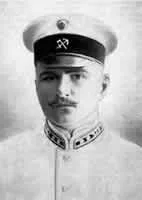
Pavel Pototsky (1879 - 1932) was a Polish engineer, oil specialist, based in Baku. He initiated and oversaw the Bibiheybat Bay drying project. In 1929, Pototsky was awarded the first prize for the best construction work by the All-Union Exhibition of National Economic Achievements of the USSR, and in 1931 he was awarded the Order of Lenin.
Life and activities
Pavel Pototsky was born in 1879 in St. Petersburg to a noble family. His father, Nikolai Pototsky, was a general and taught at the Mikhailovsky Military Academy in St. Petersburg. He appoints his son Paul to military service - he sends him to the Pajes Corps. But the young Paul wanted to be an engineer. Pavel Pototsky transferred to the Institute of Roads and Communications of the Pajes Corps and received a higher education. After graduating with honors in 1901, Pavel Pototsky traveled to the Netherlands to learn the intricacies of excavation. After returning from the Netherlands, Pototsky began working on the construction of a canal at the mouth of the Dnieper River in Kherson. There, Pavel is presented with a project, and he puts forward his project. As a result of the implementation of the project put forward by him, the work time is reduced by 2 times. Here it is possible to read Pototsky's name on the walls of the dam, which is visible during the withdrawal of water. He worked here until 1910, when he was invited to lead the filling of Bibiheybat Bay. In 1910, the Baku oil industry invited Pavel Pototsky, a well-educated and skilled engineer in excavation, to lead the filling of Bibiheybat Bay. He was asked to continue the work of Witold Zglenicki, another Polish engineer who died prematurely in 1904 and studied oil fields in Baku. Until then, nowhere in the world had wetlands been filled with soil. As early as the 1890s, Azerbaijan's oil industry asked the Tsarist government to allow them to exploit the waters of Bibiheybat Bay.
The main essence of this work was the construction of oil fields on the artificial lands to be created and drilling to the sea. For this purpose, at the insistence of P. Pototsky, in 1910 the Sormovo plant was commissioned to produce a caravan of drilling machines. This caravan was completed in 1916. The caravan consisted of 2 dump trucks with 1,100 horsepower, 5 tugboats with 1,100 horsepower, 10 barges with a capacity of 1,100 cubic meters and other facilities. Soils were removed from the seabed to fill the gulf.
From Wikipedia (CC BY-SA 4.0).