Acting
One of Duke's early acting roles was in the late 1950s on the soap opera The Brighter Day. She was featured in the uncredited role of Augusta Davis in the 1958 black and white short "An American Girl". Duke also appeared in print ads and in television commercials. In 1959, at age 12, she was a contestant on The $64,000 Question and won $32,000; Duke's category of expertise, according to her autobiography Call Me Anna, was popular music. The game show was revealed to have been rigged, and Duke was called to testify before a panel of the United States Senate. She eventually testified before congressional investigators and broke into tears when she admitted she had been coached to speak falsely.
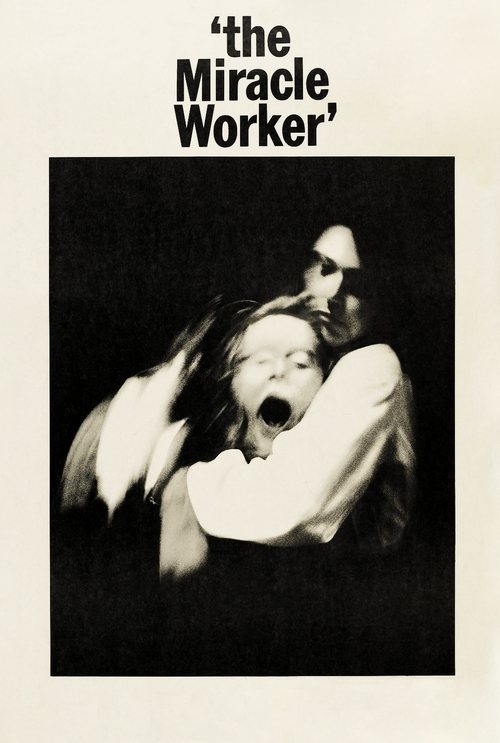
Also in 1959, Duke appeared in a television adaptation of Meet Me in St. Louis as Tootie Smith, the role that had originated in the film version by Margaret O'Brien. Duke's first major starring role was Helen Keller (with Anne Bancroft as Anne Sullivan), in the Broadway play The Miracle Worker, which ran from October 1959 to July 1961. Duke originated the role of Keller on Broadway, although Patty McCormack actually originated the role in its earlier original presentation as a live television drama on Playhouse 90. During the run, her name was elevated above the play's title on the theater's billboard, believed to be the first time this had been done for such a young star. The play was subsequently made into a 1962 film for which Duke received the Academy Award for Best Supporting Actress. Before the film started shooting, the actress and activist Helen Keller briefly met. At age 16, Duke was the youngest person at that time to have received an Academy Award in a competitive category. Duke returned to television, this time starring with Laurence Olivier and George C. Scott in a television production of The Power and the Glory (1961).
Duke's own series, The Patty Duke Show, was created by Sidney Sheldon especially for her, in the wake of the 1961 Walt Disney hit movie The Parent Trap with Hayley Mills as identical twins. The series premiered in September 1963. At that time, Duke had not been diagnosed as having bipolar disorder, but Sheldon noticed that she had two distinct sides to her personality, so he developed the concept of identical cousins with contrasting personalities. Duke portrayed both main characters: Patricia "Patty" Lane, a fun-loving American teenager who occasionally got into trouble at school and home, and her prim and proper "identical cousin" from Scotland, Catherine "Cathy" Lane. William Schallert portrayed Patty's father, Martin, and his twin brother, Kenneth, Cathy's father; Jean Byron played her mother, Natalie; Paul O'Keefe was her younger brother, Ross; and Eddie Applegate portrayed her boyfriend, Richard Harrison (though the actor was more than a decade older than Duke). The show also featured such high-profile guest stars as Sammy Davis Jr., Peter Lawford, Paul Lynde, and Sal Mineo. It lasted three seasons and earned Duke an Emmy Award nomination. In 1999, the program's characters were revisited and updated in The Patty Duke Show: Still Rockin' in Brooklyn Heights, with Cindy Williams taking on the villain role of Sue Ellen Turner when Kitty Sullivan was unable to reprise her role.After the cancellation of The Patty Duke Show in 1966, Duke began her adult acting career by playing Neely O'Hara in Valley of the Dolls (1967). The film was a box-office success, but audiences and critics had a difficult time accepting all-American teenager Duke as an alcoholic and drug-addicted singing star. While the film has since become a camp classic—thanks in large part to Duke's over-the-top performance—at the time, it almost ruined her career. In 1969, Duke starred in Me, Natalie, playing an "ugly duckling" Brooklyn teenager struggling to make a life for herself in the Bohemian world of Greenwich Village. Duke won the Golden Globe Award for Best Actress (Musical or Comedy) for the role.
Duke returned to television in 1970, starring in a made-for-TV movie, My Sweet Charlie. Her portrayal of a pregnant teenager on the run won Duke her first Emmy Award. Her acceptance speech was rambling and disjointed, leading many in the industry to believe that Duke was drunk or using drugs at the time. In fact, Duke was experiencing a manic phase of her bipolar disorder, which remained undiagnosed until 1982. Duke received her second Emmy in 1977 for the TV miniseries Captains and the Kings and her third in 1980 for a TV version of her 1979 stage revival of The Miracle Worker, this time playing Anne Sullivan to Melissa Gilbert's Helen Keller. Her turns in the made-for-TV movies The Women's Room (1980) and George Washington (1984) both garnered her Emmy nominations. In the 1980s, Duke was cast in a number of short-lived TV series. The ABC sitcom It Takes Two, from Soap and Benson creator Susan Harris, was cancelled after one season; Hail to the Chief, in which she appeared as the first female President of the United States; and a comedy, Karen's Song, which aired on the fledgling Fox network. Duke was also a co-host of AM Los Angeles on KABC-TV alongside Steve Edwards in 1987.
Duke's film roles in the 1980s included the Canadian film By Design (1981), which garnered her a Genie Award nomination for Best Foreign Actress, and the made-for-TV movie A Time to Triumph (1986), the true story of Concetta Hassan, a woman who struggles to support her family after her husband is injured, but who eventually becomes a United States Army helicopter pilot. In 1990, Duke's autobiography, Call Me Anna, was adapted for television; she played herself from her mid-30s onward. In 1992, Duke portrayed the mother of Meg Ryan's character in the film adaptation of the play Prelude to a Kiss. Seven years later, Duke received an Emmy nomination for her appearances in three episodes of Touched by an Angel.
In 1985, Duke became the second woman, after Kathleen Nolan, to be elected president of the Screen Actors Guild, a post she held until 1988. Duke's tenure as president was marked by factional in-fighting and controversy, but she gained respect for managing to maintain solidarity among the guild's members. During her term, Duke led industrial actions and contract negotiations and oversaw the relocation of the guild's headquarters.
Duke gradually reduced her work schedule in the 2000s, but took occasional TV roles, including guest appearances on shows such as Glee and the reboot of Hawaii Five-0. In 2011, Duke joined the cast of the drama The Protector. She also returned to the stage on occasion—in 2002 as Aunt Eller in a revival of Oklahoma! on Broadway and in 2009 as Madame Morrible in the San Francisco production of the musical Wicked. In 2010, Duke hosted a PBS TV special When Irish Eyes Are Smiling: An Irish Parade Of Stars. The special was part of the My Music series and featured Irish and Irish-American folk music and sentimental standards. In May 2011, she directed the stage version of The Miracle Worker at the now defunct Interplayers Theater in Spokane, Washington.
In 2011, Duke appeared in public service announcements for the U.S. government, promoting the Social Security website. In several, she appeared as Patty and Cathy using split-screen effects. In others, Duke appeared with George Takei wearing a Star Trek-like costume. In 2015, she made her final TV appearance, guest-starring on Liv and Maddie as Grandma Janice and Great-aunt Hilary, a pair of identical twins.