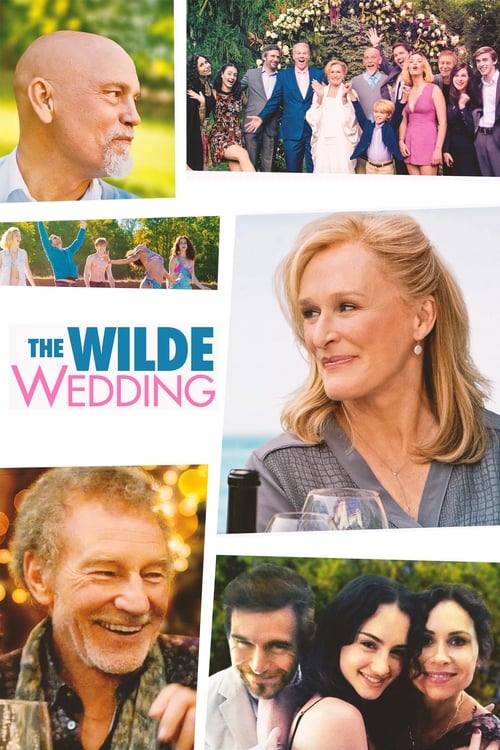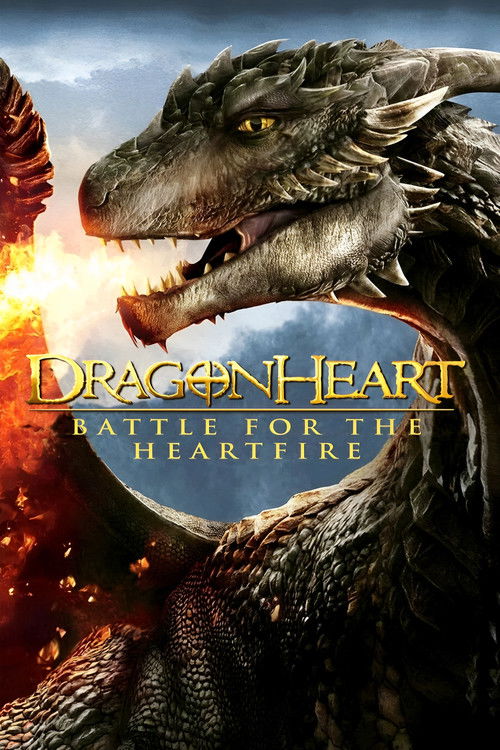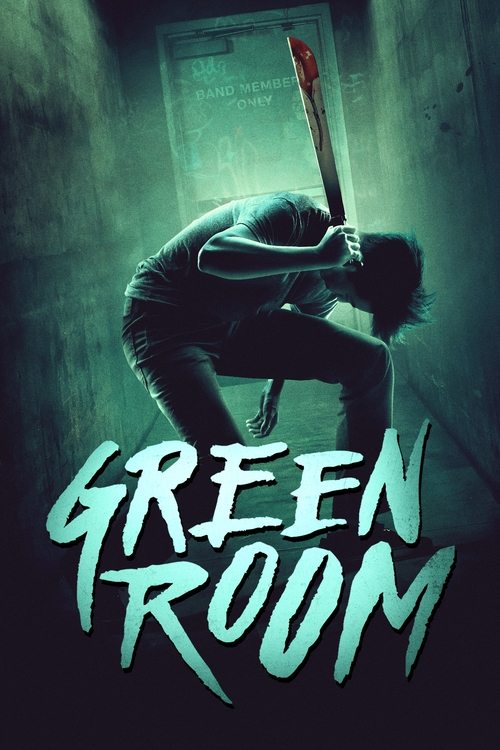




Sir Patrick Stewart (born 13 July 1940) is an English actor. With a career spanning over 60 years on stage and screen, he has received various accolades, including two Olivier Awards and a Grammy Award, as well as nominations for a Tony Award, three Golden Globe Awards, four Emmy Awards, and three Screen Actors Guild Awards. He was knighted by Queen Elizabeth II for services to drama in 2010.
In 1966, Stewart became a member of the Royal Shakespeare Company. He made his Broadway theatre debut in 1971 in a production of A Midsummer Night's Dream. In 1979, he received the Laurence Olivier Award for Best Actor in a Supporting Role for his performance in Antony and Cleopatra in the West End. His first television role was in Coronation Street in 1967. His first major screen roles were in Fall of Eagles (1974), I, Claudius (1976) and Tinker Tailor Soldier Spy (1979). In 2008 he reprised his role as King Claudius in Hamlet and received his second Olivier Award and his first Tony Award nomination for respectively the West End and Broadway theatre productions.
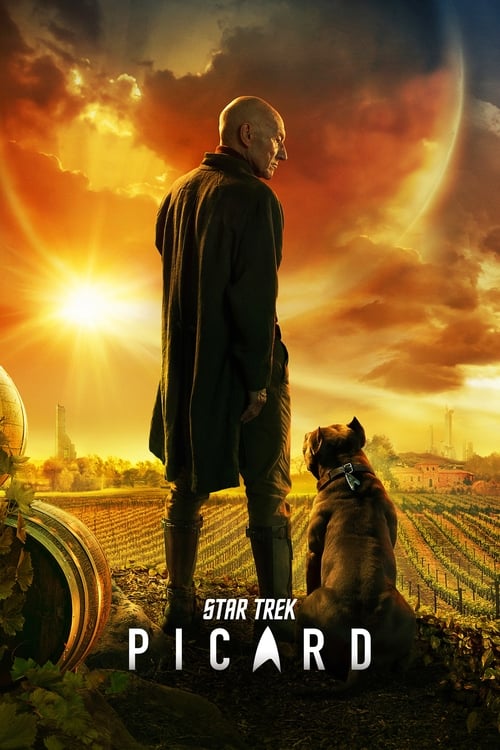
Stewart gained international stardom for his leading role as Captain Jean-Luc Picard in Star Trek: The Next Generation (1987–1994), a role he reprised in a series of films and Star Trek: Picard (2020–2023). He starred as Captain Ahab in the USA Network miniseries Moby Dick (1998), Ebenezer Scrooge in TNT television film A Christmas Carol (1999) and King Henry II in the Showtime film The Lion in Winter (2003). He was Primetime Emmy Award-nominated for his comedic roles in the NBC sitcoms Frasier (2003) and BBC comedy series Extras (2005). He also starred as the lead of the Starz comedy series Blunt Talk (2015–2016). He voices CIA executive Avery Bullock on American Dad! (2005–present).
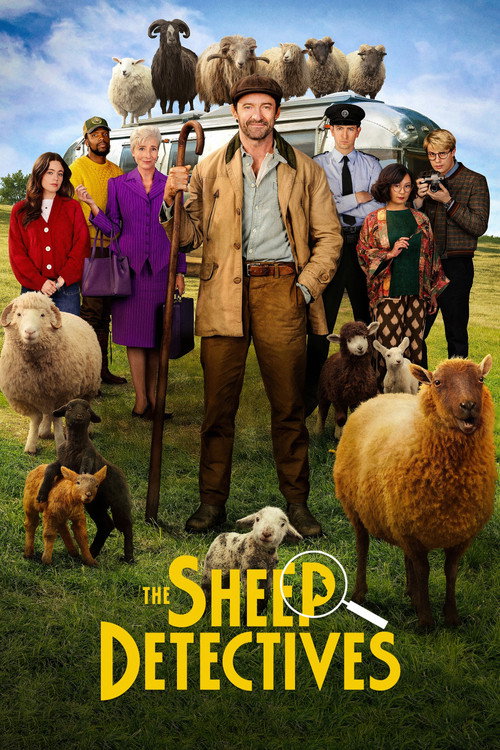
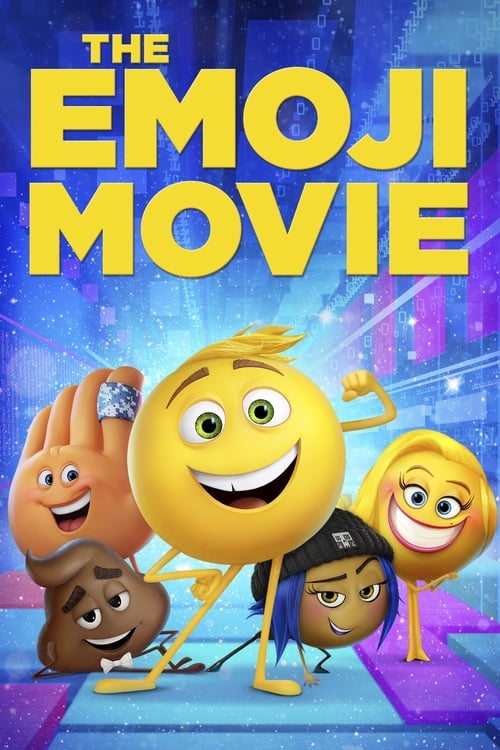
On film, he gained stardom portraying Professor Charles Xavier in the X-Men film series from 2000 to 2017, reprising the role in the Marvel Cinematic Universe. He also acted in Hedda (1975), Excalibur (1981), Dune (1984), L.A. Story (1991), Robin Hood: Men in Tights (1993), Jeffrey (1995) and The Kid Who Would Be King (2019). He has also voiced roles in The Plague Dogs (1982), The Prince of Egypt (1998), Bambi II (2006), TMNT (2007), The Emoji Movie (2017), and The Sheep Detectives (2026).
Contents
Early life and education
Patrick Stewart was born in Mirfield in the West Riding of Yorkshire on 13 July 1940, the son of Gladys (née Barrowclough), a weaver and textile worker, and Alfred Stewart (1905–1980), a regimental sergeant major in the British Army Parachute Regiment during the Second World War who later worked as a general labourer and postman. He has two older brothers named Geoffrey (born 1925) and Trevor (born 1935). He spent much of his childhood in a poor household in Mirfield, where he experienced domestic violence at the hands of his father. As a result of wartime service during the Dunkirk evacuation, his father suffered from combat fatigue, which is now known as PTSD. Stewart said in 2008, "My father was a very potent individual, a very powerful man, who got what he wanted. It was said that when he strode onto the parade ground, birds stopped singing. It was many, many years before I realised how my father inserted himself into my work. I've grown a moustache for Macbeth. My father didn't have one, but when I looked in the mirror just before I went on stage I saw my father's face staring straight back at me."
Stewart attended Crowlees Junior and Infant School, a Church of England–affiliated school in Mirfield. He later attributed his acting career to his English teacher there, Cecil Dormand, who "put a copy of Shakespeare in [Stewart's] hand" and told him to get up and perform. He entered Mirfield Secondary Modern School in 1951, aged 11, and continued to study drama there. Around the same time, he met and befriended fellow actor Brian Blessed on a drama course in Mytholmroyd. At the age of 15, he left school and increased his participation in local theatre. He supported himself with work as a newspaper reporter and obituary writer for the local newspaper, Stewart left after one year when his boss gave him an ultimatum to choose acting or journalism. According to one of his brothers, Stewart would attend theatre rehearsals when he was supposed to be in work and then invent the stories he was reporting on, or persuade other reporters to cover for him. Stewart got a job in a furniture store, that not only allowed him to attend rehearsals with little scheduling conflict, but he also found that his thespian talent was applicable, resulting him in becoming productive in sales while practising his acting technique by tailoring his sales pitch for each customer. He also trained in boxing. He has said that acting served as a means of self-expression in his youth. Stewart and Blessed later received grants to attend the Bristol Old Vic Theatre School. Stewart was the first person who was neither a graduate of Oxford nor Cambridge to receive a grant from West Riding Council.
Career
Early acting career (1959–1987)
Stewart's first professional stage appearance was on 19 May 1959 at the Theatre Royal, Bristol (for the Bristol Old Vic Company), playing Cutpurse (a thief among the audience for the play-within-a-play) in Cyrano de Bergerac, directed by John Hale. Following a period with Manchester's Library Theatre, Stewart became a member of the Royal Shakespeare Company in 1966, remaining with them until 1982. He was an associate artist of the company in 1967. He appeared with actors such as Ben Kingsley and Ian Richardson. In January 1967, he made his debut TV appearance on Coronation Street as a fire officer. In 1969, he had a brief TV cameo role as Horatio, opposite Ian Richardson's Hamlet, in a performance of the gravedigger scene as part of episode six of Sir Kenneth Clark's Civilisation television series. During the early 1970s, UCSB professor Homer Swander recruited him to help teach American university students about Shakespeare, which led to his breakthrough into Hollywood. He made his Broadway debut as Snout in Peter Brook's 1970 production of A Midsummer Night's Dream, then moved to the Royal National Theatre in the early 1980s.
Over the years, Stewart took roles in many major television series without ever becoming a household name. He appeared as Vladimir Lenin in Fall of Eagles; Sejanus in I, Claudius; Karla in Tinker Tailor Soldier Spy and Smiley's People; Claudius in a 1980 BBC adaptation of Hamlet. He took the romantic male lead in the 1975 BBC adaptation of Elizabeth Gaskell's North and South. He also took the lead, as psychiatric consultant Dr Edward Roebuck, in BBC's Maybury in 1981. He continued to play minor roles in films, such as King Leondegrance in John Boorman's Excalibur (1981), the character Gurney Halleck in David Lynch's Dune (1984), Dr. Armstrong in Tobe Hooper's Lifeforce (1985) and Henry Grey in Lady Jane (1986), the story of English Queen Lady Jane Grey.
Stewart preferred classical theatre to other genres, asking Doctor Who actress Lalla Ward why she would work in science fiction or on television. In 1987, he nonetheless agreed to work in Hollywood on a revival of Star Trek, after Robert H. Justman saw him while attending a literary reading at UCLA. Stewart knew nothing about the cultural influence of Star Trek or its iconic status in American culture. He was reluctant to sign the standard contract of six years, but did so as he, his agent, and others with whom Stewart consulted, all believed the new show would quickly fail, and that he would return to his London stage career after making some money. Regardless, Stewart's trusted colleague, Ian McKellen, was particularly vocal in advising Stewart not to throw away his theatrical career for this foray into television, which Stewart had to disregard considering the opportunity. While in Hollywood, he spent 18 months using the professional name "Patrick Hewes Stewart" while negotiating the rights to his original name from an American actor who had already registered it with the Screen Actors Guild.
Film and TV career (1987–present)
When Stewart was picked for the role of Captain Jean-Luc Picard in Star Trek: The Next Generation (1987–1994), the Los Angeles Times called him an "unknown British Shakespearean actor". Still living out of his suitcase because of his scepticism that the show would succeed, he was unprepared for the long schedule of television production that began at 4:45 am each day. He initially experienced difficulty fitting in with his less-disciplined castmates. In interviews, he recalled with embarrassment a time when he scolded the main cast for being unprofessional in his opinion, by saying "We're not here... to have fun!" Furthermore, Stewart has stated that his "spirits used to sink" whenever he was required to memorise and recite technobabble. He eventually came to better understand the cultural differences between the stage and television and relaxed to a degree at work, and his favourite technical line became "spacetime continuum".
Stewart remained close friends with his fellow Star Trek actors and became their advocate with the producers when necessary. Marina Sirtis credited Stewart with "at least 50%, if not more" of the show's success because others imitated his professionalism and dedication to acting. Jonathan Frakes said that, with some shows he'd been on, there were actors who showed up without having read the script, but Stewart had "set such a high bar for preparation. We all came to work in the morning completely prepared. We knew our lines and had broken down the script".
Stewart unexpectedly became wealthy because of the show's success. In 1992, during a break in filming, Stewart calculated that he earned more during that break than from ten weeks of Woolf in London. From 1994 to 2002, he also portrayed Picard in the films Star Trek Generations (1994), Star Trek: First Contact (1996), Star Trek: Insurrection (1998) and Star Trek: Nemesis (2002); and in Star Trek: Deep Space Nine's pilot episode "Emissary", and received a 1995 Screen Actors Guild Award nomination for "Outstanding Performance by a Male Actor in a Drama Series".
When asked in 2011 for the highlight of his career, he chose Star Trek: The Next Generation, because "it changed everything [for me]." He has also said he is very proud of his work on Star Trek: The Next Generation for its social messages and educational impact on young viewers. When questioned about his role's significance compared to his distinguished Shakespearean career, he said, "The fact is all of those years in Royal Shakespeare Company—playing all those kings, emperors, princes and tragic heroes—were nothing but preparation for sitting in the captain's chair of the Enterprise." The accolades he has received include the readers of TV Guide in 1992 choosing him with Cindy Crawford, of whom he had never heard, as television's "most bodacious" man and woman. In an interview with Michael Parkinson, he expressed gratitude for Gene Roddenberry's response to a reporter who said, "Surely they would have cured baldness by the 24th century", to which Roddenberry replied, "In the 24th century, they wouldn't care."
Theatre (1990–present)
After The Next Generation began, Stewart soon found that he missed acting on the stage. Although he remained associated with the Royal Shakespeare Company, the lengthy filming for the series had prevented him from participating in most other works, leaving a "gaping hole" of many years in his CV as a Shakespearean actor, causing him to miss opportunities to play such notable roles as Hamlet, Romeo, and Richard III. Instead, Stewart began writing one-man shows that he performed in California universities and acting schools. One of these—a version of Charles Dickens's A Christmas Carol in which he portrayed all 40-plus characters—became ideal for him as an actor as well, because of its limited performing schedule.
In 1991, Stewart performed it on Broadway, receiving a nomination for that year's Drama Desk Award for Outstanding One-Person Show. He staged encore Broadway performances in 1992 and 1994, with the 1993 run held in London and the 1996 production in Los Angeles. Stewart brought the show back to Broadway in 2001, with all proceeds going to charity – and the show of 28 December's revenue, specifically, going to the 11 September campaign of the Actors Fund of America. A 23-day run re-opened in London's West End in December 2005. For his performances in this play, Stewart has received the Drama Desk Award for Best Solo Performance in 1992 and the Laurence Olivier Award for Best Entertainment for Solo Performance in 1994. He was also the co-producer of the show, through the company he set up for the purpose: Camm Lane Productions, a reference to his birthplace in Camm Lane, Mirfield.
Shakespeare roles during this period included Prospero in Shakespeare's The Tempest, on Broadway in 1995, a role he would reprise in Rupert Goold's 2006 production of The Tempest as part of the Royal Shakespeare Company's Complete Works Festival. In 1997, he took the role of Othello with the Shakespeare Theatre Company (Washington, D.C.) in a "photo negative" production of a white Othello with an otherwise all-black cast. Stewart had wanted to play the title role since the age of 14, so he and director Jude Kelly inverted the play so Othello became a comment on a white man entering a black society.
As part of this RSC tour, Stewart traveled to Ann Arbor, Michigan, for a major university residency, starring in both productions as Prospero in The Tempest and Mark Antony in Antony and Cleopatra.
Voice work
Known for his strong and authoritative voice, Stewart has lent his voice to a number of projects. He has narrated recordings of Prokofiev's Peter and the Wolf (winning a Grammy), Vivaldi's The Four Seasons (which had also been narrated by William Shatner), C. S. Lewis's The Last Battle (conclusion of the series The Chronicles of Narnia), Rick Wakeman's Return to the Centre of the Earth; as well as numerous TV programmes such as High Spirits with Shirley Ghostman. Stewart provided the narration for Nine Worlds, an astronomical tour of the Solar System and nature documentaries such as The Secret of Life on Earth and Mountain Gorilla. He is heard as the voice of the Magic Mirror in Disneyland's live show, Snow White – An Enchanting Musical. He also was the narrator for the American release of Dragons: A Fantasy Made Real. He is narrator for two fulldome video shows produced and distributed by Loch Ness Productions, called MarsQuest and The Voyager Encounters.
He lent his voice to the Activision-produced Star Trek computer games Star Trek: Armada, Armada II, Star Trek: Starfleet Command III, Star Trek: Invasion, Bridge Commander, and Elite Force II, all reprising his role as Picard. Stewart reprised his role as Picard in Star Trek: Legacy for both PC and Xbox 360, along with the four other major Starfleet captains from the different Star Trek series.
In addition to voicing his characters from Star Trek and X-Men in several related computer and video games, Stewart worked as a voice actor on games unrelated to both franchises, such as Castlevania: Lords of Shadow, Forgotten Realms: Demon Stone, Lands of Lore: The Throne of Chaos and The Elder Scrolls IV: Oblivion for which in 2006 he won a Spike TV Video Game Award for his work as Emperor Uriel Septim. He also lent his voice to several editions of the Compton's Interactive Encyclopedia.
His voice talents also appeared in a number of commercials including the UK TV adverts for the relaunch of TSB Bank, Domestos bleach and Moneysupermarket.com, an advertisement for Shell fuel and an American advertisement for the prescription drug Crestor. He also voiced the UK and Australian TV advertisements for the PAL version of Final Fantasy XII.
Stewart used his voice for Pontiac and Porsche cars and MasterCard Gold commercials in 1996, and Goodyear Assurance Tyres in 2004. He also did voice-overs for RCA televisions. He provided the voice of Max Winters in TMNT in March 2007. In 2008, he was also the voice of television advertisements for Currys and Stella Artois beer. Currently, he is heard during National Car Rental television spots.
Awards and honours
Stewart, who was a member of the Royal Shakespeare Company from 1966 to 1982, is an Honorary Associate Artist of the company, a designation typically awarded after an actor’s principal period with the RSC.
TV Guide named him the Best Dramatic Television Actor of the 1980s in 1993. On 16 December 1996, Stewart received a Star on the Hollywood Walk of Fame at 7021 Hollywood Blvd. Stewart was appointed an Officer of the Order of the British Empire (OBE) in the 2001 New Year Honours for services to acting and the cinema. He also received an honorary fellowship from the University of Wales, Cardiff, in July 2001.
In 2004, Stewart was appointed chancellor of the University of Huddersfield, and in July 2008 he became a professor of performing arts. During this period, he regularly attended graduation ceremonies in the UK and Hong Kong and taught master classes for drama students.
He stepped down from the chancellorship in July 2015 and was named chancellor emeritus at the installation ceremony for his successor, Prince Andrew, Duke of York.
A year later, in August 2016, a university building was renamed the "Sir Patrick Stewart Building".
Stewart was made a Knight Bachelor in the 2010 New Year Honours for services to drama, and his knighthood was conferred by Queen Elizabeth II at an investiture ceremony at Buckingham Palace on 2 June 2010.
He received an honorary Doctorate of Letters (D.Litt.) from the University of East Anglia in 2011, He carried the Olympic torch in July 2012 as part of the official relay for the 2012 London Summer Olympics and stated it was an experience he "will never forget", adding that it was better than any movie premiere.
Stewart received a D.Litt. from the University of Leeds in 2014, and was awarded an honorary doctorate (Dr.h.c.) by the Vrije Universiteit Brussel in 2015.
Charity work and activism
In 2006, Stewart made a short video against domestic violence for Amnesty International, in which he recollected his father's physical attacks on his mother and the effect it had on him as a child. He said, "The physical harm ... [was] a shocking pain. But there are other aspects of violence which have more lasting impact psychologically on family members. It is destructive and tainting. As a child witnessing these events, one cannot simply help somehow feeling responsible for them; for the pain, and the screaming, and the misery." In the same year, he gave his name to a scholarship at the University of Huddersfield, where he was Chancellor (2004–2015), to fund post-graduate study into domestic violence. Stewart's childhood experience also led him to become a patron of Refuge, a UK charity for abused women.
In 2009, Stewart gave a speech at the launch of Created Equal, a book about women's rights, talking again about his personal experiences with domestic violence and the impacts they had on him. He said, "Violence is a choice, and it's a choice a man makes ... the lasting impact on my mother ... and indeed on myself ... was extreme. Overcoming the lessons of that male stereotype that I was being shown was a struggle." He now hopes to set an example of "what it has been like to be in an environment of such violence and that it can pass and that one can survive it and even though sometimes still a struggle." Additionally, in October 2011, he presented a BBC Lifeline Appeal on behalf of Refuge, discussing his own experience of domestic violence and interviewing a woman whose daughter was murdered by her ex-husband.
Stewart has supported the armed forces charity Combat Stress since learning about his father's post-traumatic stress disorder when researching his family genealogy for the documentary series Who Do You Think You Are? He is a patron of the United Nations Association – UK, and delivered a speech at UNA-UK's UN Forum 2012 on Saturday 14 July 2012, speaking of his father's experiences in the Second World War, and how he believed the UN was the best legacy of that period.
On 15 April 2018 Stewart attended the launch event of the People's Vote, a campaign group calling for a public vote on the final Brexit deal between the UK and the European Union.
In 2019, he acted as an International Rescue Committee spokesperson.
Personal life
Relationships and children
Stewart married his first wife, Sheila Falconer, in 1966; they divorced in 1990. Together, they have a son, Daniel, and a daughter, Sophia. Daniel is also an actor, and appeared alongside his father in the film Death Train, the sitcom Blunt Talk, and the Star Trek: The Next Generation episode "The Inner Light", playing his son in the latter.
In 1997, Stewart became engaged to American producer Wendy Neuss, one of the producers of Star Trek: The Next Generation. They married on 25 August 2000 and divorced three years later. Four months before his divorce from Neuss, Stewart co-starred with English actress Lisa Dillon in a production of The Master Builder, and the two were romantically involved until 2007.
In 2008, Stewart began dating American singer and songwriter Sunny Ozell, whom he met while performing in Macbeth at the Brooklyn Academy of Music. He purchased a home in Brooklyn's Park Slope neighbourhood in August 2012, and subsequently began living there with Ozell. In March 2013, it was reported that they were engaged, and they married in September 2013 with Ian McKellen officiating. In 2020, Stewart revealed that his marriage to Ozell in Nevada had not been legally binding because McKellen's marriage credentials were not valid in Nevada. Upon learning that McKellen's credentials would not be valid, the couple held a secret official ceremony with McKellen at a Mexican restaurant in Los Angeles a couple weeks prior to the Nevada ceremony.
Beliefs, causes, and interests
Stewart has stated that his politics are rooted in a belief in "fairness" and "equality". He considers himself a socialist and is a member of the Labour Party. He stated, "My father was a very strong trade unionist and those fundamental issues of Labour were ingrained into me." He was critical of the Iraq War and UK government legislation in the area of civil liberties, in particular its plans to extend detention without charge to 42 days for terrorist suspects. He signed an open letter of objection to this proposal in March 2008. In August 2018 he was widely misquoted by the Daily Telegraph among others, who announced that he had left Labour owing to concerns over the leadership of Jeremy Corbyn. He posted on Twitter to confirm that he had been misquoted and denied that he had left the party.
Stewart is an atheist and a patron of Humanists UK. He also identifies as a feminist. He has publicly advocated the right to assisted suicide. In January 2011, he became a patron of Dignity in Dying and campaigns for an assisted dying law in the UK.
In August 2014, Stewart was one of 200 public figures who signed a letter to The Guardian expressing their hope that Scotland would vote to remain part of the United Kingdom in September's referendum on that issue. In 2016, Stewart was among more than 280 figures from the arts world who backed a vote to remain in the EU in the referendum on that issue.
On 2 March 2017, Stewart said he was going to apply for US citizenship to oppose the Trump administration. However, in an interview by the Press Association at the British Film Institute Luminous Fundraising Gala on 3 October 2017, he said that he hoped the US would pass stronger gun laws, but did not mention any intention of becoming an American citizen in furtherance of that hope.
Stewart is a lifelong supporter of his local football club Huddersfield Town. He was at Wembley Stadium in 2017 when the club won promotion to the top division for the first time since 1972. Since 2010, he has been president of Huddersfield Town Academy, the club's project for identifying and developing young talent.
In an interview with American Theatre, he said: "From time to time, I have fantasies of becoming a concert pianist. I've been lucky enough through the years to work very closely with the great Emanuel Ax. I've said to him that if I could switch places with anyone it would be with him."
Audiobooks
2005: The Last Battle by C. S. Lewis
2006: A Christmas Carol by Charles Dickens (Audible)
2023: Making It So: A Memoir by himself
2026: Patrick Stewart Performs the Complete Sonnets of William Shakespeare
Books
Stewart, Patrick (2023). Making It So: A Memoir. New York, NY: Gallery Books. ISBN 9781982167738. OCLC 1398633873.