1992 restoration
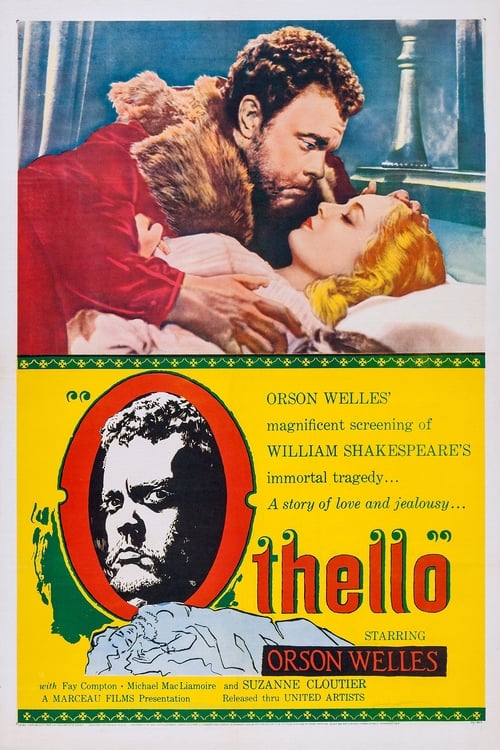
In 1992, Beatrice Welles-Smith, daughter of Orson Welles, supervised a restoration of the film, which saw over $1,000,000 spent on improving the picture quality, resynchronizing the audio, adding extra sound effects, and completely rerecording the music in stereo. Although the restoration was greeted with positive reviews upon its release, it subsequently came under attack for numerous technical flaws and alterations. Further alterations were made between the restoration's theatrical release and its home media release, after complaints that the opening scene lacked the Gregorian chanting it had previously had, and another scene was missing entirely. This is the only version which has been available on VHS and DVD since the mid-1990s, since legal action by Beatrice Welles has blocked either version released by Orson Welles from being sold. This version runs to 91 minutes.
Multiple film historians criticized the restoration work. Jonathan Rosenbaum argued that numerous changes were made against Welles's intent and that the restoration was incompetent, having used as its source an original distribution print with a flawed soundtrack. In fact, the visual elements of the 1992 restoration utilized a fine-grain master positive — discovered in a storage facility in New Jersey — as its source, not a distribution print. The audio came from a distribution print that was resynchronized, virtually syllable by syllable, by the restoration team to match the master positive. As some voice parts had music underneath, the newly recorded music and effects track had to match whatever music was underneath the dialogue, leading to inconsistencies. The flaw in the American cut's soundtrack is how white noise is audible in the background throughout dialogue and music, but that the noise cuts out when there is no action—meaning the white noise is more noticeable whenever it returns. The restoration sought to minimize this problem, but it is still present in places. By contrast, the white noise problem is not present to begin with in Welles's original 1952 European cut.
Rosenbaum makes several charges of incompetence on the restoration team's part, including that the restoration team were unaware of the European cut's existence, and instead based their work on the American cut which was farther from Welles's original vision. The team recut the order of entire scenes to make the dialogue match. One scene was inexplicably missing from the cinema release, but restored for the video/DVD release. The opening scene, in cinema release, was lacking the important Gregorian chanting, but this was restored for the DVD. The soundtrack attracted particular criticism. Instead of consulting the papers of composer Angelo Francesco Lavagnino, where a full copy of the score survives, the restorers chose to transcribe the music from the poor-quality audio of the print they had, with numerous mistakes having been made — Lavagnino's son has gone so far as to argue the new score is so different it is no longer his father's work. The new score was also recorded with arguably less impressive resources than the original version—although Welles only used a single microphone for a monaural soundtrack, he had 40 mandolins playing in his version, while the new stereo soundtrack used three. Further, Rosenbaum states that by refusing to give permission for her father's version to be shown or released, Beatrice Welles "effectively made her father’s version of the film (as well as, more indirectly, his final feature Filming Othello) illegal, so that she can make more money on her own version", since she only receives royalties on the version which she restored. Many of these criticisms have been subsequently echoed by other scholars such as David Impastato and Michael Anderegg.
Anderegg particularly criticizes the bold claims made by the restorers at the time of the film's 1992 release, including Beatrice Welles's statements "This is a film that no one has seen", that it was a "lost film", and that it was "never given a theatrical release" (all of which are untrue), and he dismisses as hyperbolic the judgment of film restorer Michael Dawson that Welles's original dubbing was like "Japanese sci-fi." Instead, Anderegg argues that Othello was simply seldom screened. Jonathan Rosenbaum has defended the out-of-synchronization dubbing of some lines in Welles's original version, pointing out it was typical of European films of the early 1950s, and likening modern attempts to resynchronize it to the proposed colorisation of Citizen Kane.
In 2014 Carlotta Films U.S. released a 2K digital restoration of the 1992 version on D.C.P. This digital version premiered in Dallas at the 2014 USA Film Festival, and subsequently played in other cities on the art-house circuit. The New Yorker reported that the monaural soundtrack was a great improvement on the previous version of the restoration — "much more appropriate for a low-budget, black-and-white 1952 release."