



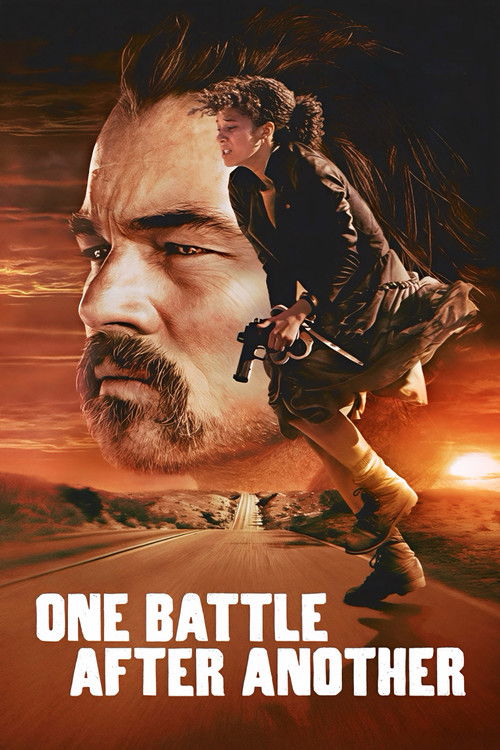
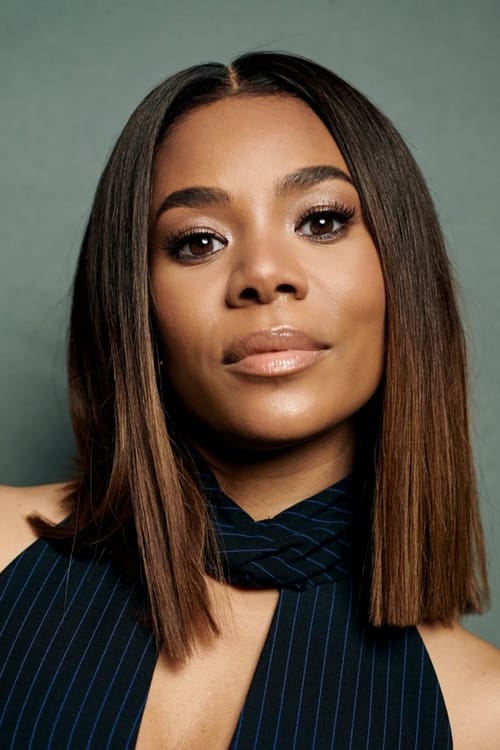
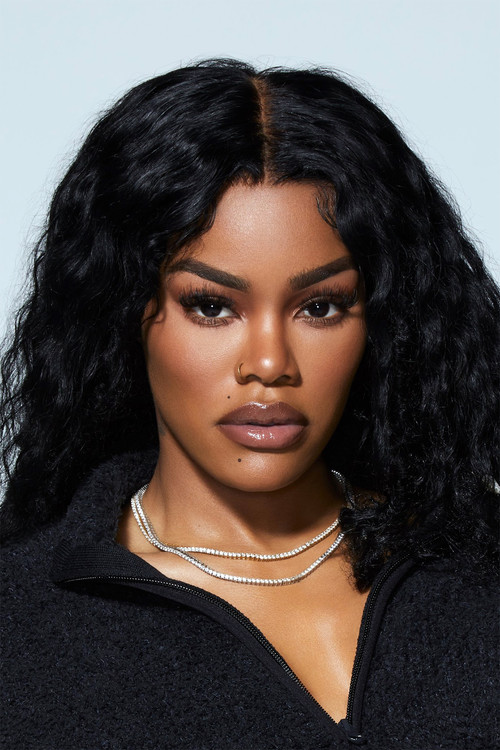
One Battle After Another is a 2025 American action-comedy thriller film written, directed, and produced by Paul Thomas Anderson. Inspired by the 1990 novel Vineland by Thomas Pynchon, the film's ensemble cast includes Leonardo DiCaprio, Sean Penn, Benicio del Toro, Regina Hall, Teyana Taylor, and Chase Infiniti, in her film debut. It follows a washed-up former revolutionary (DiCaprio) who is brought back into conflict when his enemy (Penn) resurfaces after sixteen years.
Anderson had wanted to adapt Vineland since the early 2000s, and eventually incorporated his own stories into the narrative while writing the screenplay. Principal photography took place in California from January to June 2024 using VistaVision, becoming one of the first films to use the format since the 1960s. Following its premiere on September 8, 2025, One Battle After Another was released in the United States by Warner Bros. Pictures on September 26. With a budget of $130–175 million, it is the most expensive film of Anderson's career and the highest-grossing at over $213 million worldwide.
One Battle After Another received acclaim and numerous accolades. At the 98th Academy Awards, it was nominated for 13 awards and won Best Picture, Best Director, Best Supporting Actor (Penn), Best Adapted Screenplay, Best Film Editing, and Best Casting. It also received one win from a record seven nominations at the 32nd Actor Awards; three wins at the 31st Critics' Choice Awards, including Best Picture; four wins at the 83rd Golden Globes, including Best Motion Picture – Musical or Comedy; and six wins at the 79th British Academy Film Awards, including Best Film. The film was listed by the American Film Institute as one of the top ten films of 2025 and won five awards from the National Board of Review, including Best Film.
Contents
Plot
"Ghetto" Pat Calhoun and Perfidia Beverly Hills are lovers and members of a far-left militant revolutionary group, the French 75. While breaking out detained immigrants from Otay Mesa Detention Center, Perfidia sexually humiliates the commanding officer, Steven J. Lockjaw, who becomes obsessed with her sexually. Later, when Lockjaw catches Perfidia planting a bomb, he lets her go after she agrees to his demand to meet him for sex. Soon after, Perfidia becomes pregnant.
After Perfidia gives birth to a girl they name Charlene, Pat tries to persuade her to settle down, but she instead abandons Pat and Charlene to continue her revolutionary activities. Perfidia is arrested after murdering a security guard during a botched bank robbery. Lockjaw arranges for her to avoid prison in exchange for information on key French 75 members. Perfidia enters witness protection, while Lockjaw uses the information she provided to hunt down and summarily execute her comrades. French 75 member Howard Sommerville gives Pat and Charlene stolen identities as Bob and Willa Ferguson, while Perfidia flees witness protection for Mexico.
Sixteen years later, living off-the-grid in the sanctuary city of Baktan Cross, California, Bob has become a paranoid stoner. He is protective of Willa, now a free-spirited and self-reliant teenager who resents Bob's substance abuse, and told her that her mother was a hero who died when she was a baby. Through his anti-immigration efforts, Lockjaw has become a colonel and a prominent figure within the U.S. security agencies. When Lockjaw is invited to become a member of the Christmas Adventurers Club, a white supremacist secret society, he seeks to kill Willa to hide his past interracial relationship with Perfidia. He hires bounty hunter Avanti Q to capture Howard, whose distress signal goes out to the remaining members of the French 75.
Using an immigration and drug enforcement operation as cover, Lockjaw sends troops to Baktan Cross. French 75 member Deandra rescues Willa before her school dance is raided and takes her to a convent of revolutionary nuns, where she guesses the truth about her mother's betrayal. While high at home, Bob is warned by the French 75 about Lockjaw, whose men then raid his house. Escaping through a tunnel, Bob is helped by Sergio St. Carlos, Willa's karate sensei and a community leader, who also evacuates immigrants via a hidden passage. After learning about the convent from another French 75 member, Bob flees with Sergio's students across rooftops but falls and is arrested, although not recognized.
Production
Development
Paul Thomas Anderson had considered adapting the 1990 novel Vineland by Thomas Pynchon since the early 2000s, but struggled, believing his love for the novel would get in the way of his ability to fairly rework it. Instead, Anderson set aside working on an adaptation and envisioned two ideas: one about an "action car-chase movie" and one about a "female revolutionary". One Battle After Another ultimately emerged as a combination of those two stories with some elements of Vineland, particularly the father-daughter dynamic.
Casting
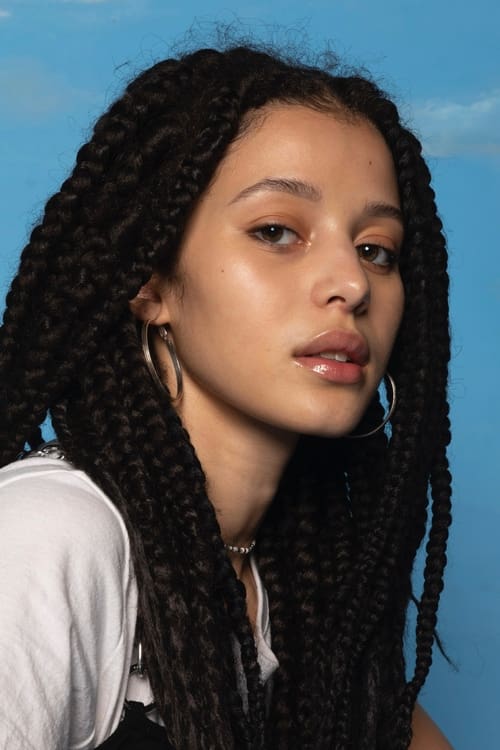
In June 2023, Anderson's next film, rumored to star Leonardo DiCaprio, Regina Hall, Viggo Mortensen and Joaquin Phoenix, found its home at Warner Bros. Pictures. In January 2024, DiCaprio and Hall were confirmed to star, with Sean Penn joining the cast. DiCaprio reportedly received his standard $25 million fee for his involvement. In February, Alana Haim, Wood Harris, Chase Infiniti, Shayna McHayle, and Teyana Taylor joined the cast. The casting of Benicio del Toro was confirmed in June. Jacob Batalon revealed that he auditioned for the role of Comrade Josh.
To land the role of Willa Ferguson, the teenage daughter of the film's central character, Infiniti went through a six-month audition process involving multiple callbacks and camera tests as well as chemistry reads with DiCaprio and Hall. The reads were designed to gauge the rapport between the then-newcomer and her potential castmates, but, said Infiniti, "They felt like the coolest kind of masterclass. I remember leaving the room thinking, 'I would love this part, but even if I don't get it, I'll take that with me forever.'" Infiniti had also been a kickboxing trainer, but she still spent months training in both karate and mixed martial arts that tested her readiness to do her own stunts and handle some intense scenes with Penn. "With Willia [sic], it was anybody who's right", casting director Cassandra Kulukundis said of the broad criteria Anderson gave her, adding, "Doesn't matter if they've ever acted before, if they're a star, if I found them in school, if I find them on the street. That was a huge net – if you were between 12 and 25, I was looking at you." Kulukundis was able to narrow the search when she realized how important the physical demands of the part were to the performance. "The moment I saw [Infiniti] dancing, I don't know how to describe it. She's the most unique looking human being I've ever seen." For Kulukundis, Infiniti's ability to hold her own against DiCaprio was also vital. "We tried [DiCaprio] with a bunch of girls and he was really thoughtful and helpful, and we could see the chemistry with Chase. She just kept passing all the tests."
Filming
Principal photography began in California in January 2024. The film, under the working title BC Project, had filmed for eleven days across Humboldt County in Arcata, Cutten, Eureka, Kneeland, and Trinidad. Local experts, including the Sisters of the Valley, on which the Sisters of the Brave Beaver in the film was based, were consulted. To make observations about music and fashion trends, Anderson and his crew attended the prom at Eureka High School; students were cast as extras for a key scene.
On February 3, production moved to Sacramento, with filming at the Sacramento County Administration Building and Sacramento County Courthouse. A homeless encampment was cleared to allow for filming, sparking controversy. The former Sacramento mansion of Governor Ronald Reagan was used for exterior shots for the Christmas Adventurers Club's headquarters, tying the film back into the original novel, with Pynchon's focus on Reagan.
The production took a two-and-a-half-month break from filming because del Toro had a scheduling conflict with Wes Anderson's The Phoenician Scheme (shot between March and June 2024). When del Toro arrived fresh off the set of The Phoenician Scheme, with ten days between projects, he stepped into a fast-moving production. "I had 10 days to unpack and pack", del Toro said of the 2024 shoot, adding, "Unpack my character in Wes' movie and then get dressed like Sensei and just go. You don't have time to adjust. If you want to jump on a carousel, you generally want time to run and catch up and then jump in. There was none of that."
On location filming also took place in Anza-Borrego Desert State Park and Borrego Springs in May 2024, and El Paso, Texas, including El Paso Streetcars, in June 2024. Other filming locations included La Purísima Mission, the Westgate Hotel, and the city of San Diego and Otay Mesa near the Mexico–United States border.
Cinematography
The film was shot by Michael Bauman on 35 mm movie film using VistaVision cameras, marking his third collaboration with Anderson, following Phantom Thread (2017) and Licorice Pizza (2021). Between 75 and 80% of the film was shot on VistaVision. One Battle After Another is notable for utilizing VistaVision cameras; Brady Corbet's The Brutalist (2024) seemed to revive the high-resolution widescreen 35 mm format from the 1950s. "The question was more, 'Is this going to be a reliable enough format for us?' When you see the shots from The Brutalist, [DP] Lol Crawley has got the camera on a tripod. It's just sitting there and we weren't going to do anything like that", Bauman said, adding, "One Battle was always going to be about movement. It had to be handheld; it had to be on Steadicam; it had to be strapped to cars; it had to bounce around." Bauman described his experience shooting the film as "being on the knife's edge", mostly because it was shot on location instead of a sound stage.
Bauman revealed that Anderson wanted something in the "vein of '70s cinema", pointing to films like The French Connection (1971) and The Last Detail (1973), explaining that this "stylistic roughness" was "essential" for Anderson in telling the story. According to Bauman, VistaVision "was a response to television that some of the studios were developing. And instead of it being four-perf vertical, like a normal 35 millimeter camera, this takes the film and puts it eight-perf horizontal, which allows for a much bigger negative space. Each frame is twice the size. And so it's a much richer image." The format was ideal for capturing some of the action sequences in the film, particularly the final car chase sequence. Bauman further admitted that it was a challenge to figure out how to "blend the richness of VistaVision" to make One Battle After Another "look like a '70s type of film that felt like a lot of the scenes out of The French Connection". He pushed VistaVision to its limits, while using and testing it, saying, "This camera system hadn't really been used at this quantity of film because we shot about 1.5 million feet [460 kilometres] of film for the project [and] hadn't had that kind of level of film run through it in a long time [...] It really underscores the power of shooting on film and what VistaVision is as far as projecting it. It's really a super resting image that has a strong emotional feel to it. The ability to experience that by going to the theater is really unique."
Regarding the impact and location of the climactic car chase, Bauman said, "The sequence is really a testament to the location being the driving force. When Michael Glazier, the location manager, originally found it, he found it almost like by accident when he was driving after he found the location for the 1776 camp." To figure out how to capture the scene's "dynamic energy", Bauman and his team worked with Allan Padelford, a veteran stunt coordinator and second unit director best known for designing high-octane car-chase action sequences, and his Padelford Camera Car.
Post-production
Editing was completed by Andy Jurgensen, who had previously edited Licorice Pizza. As a frequent collaborator of Anderson's, Jurgensen knew how to best be "fluid" in his work on the film to match his director's sensibilities. Discussing the final car chase sequence, Jurgensen said, "It was shot over a number of days and there really weren't storyboards for it, [Anderson] just had ideas for the beginning, middle, and end. It was really a matter of shooting the cars from the different perspectives [...] We just had to make sure we had all the pieces. I did a string out of all the different perspectives as we were shooting the scenes so that we made sure that we had good moments from all the angles, then it was finding the best bits and starting to assemble. It was just a long sequence going through all of Willa's shots of her eyes, looking at both the rear-view mirror and the side view mirror looking behind at the reflections. You're just slowly kind of whittling down the best fits." Jurgensen further explained that "it evolved to be what the final [edit] was" and that he was "still adding elements in the final mix", adding, "We went through many edits, but in the test screenings, it was always people's favorite part."
Additionally, Jurgensen was on location and got to view dailies with Anderson on a vintage VistaVision horizontal projector, which they borrowed from Warner Bros. "I was the only one traveling from editorial, and then I could supervise setting up the screening room and be there for all the screenings, which was really helpful", said Jurgensen. "And then while they were shooting, I also brought my computer system, getting digital dailies and making more notes, assembling stuff. You're with the crew and it's just so much better. You understand what everyone's going through and you're part of the process. But that's Paul's style."
In February 2024, Variety reported that the film had been greenlit with a $115 million production budget. In August 2024, The Wall Street Journal reported the budget was "more than $140 million", noting that Anderson's highest-grossing film, There Will Be Blood (2007), only made $76 million, but that "Warner executives say DiCaprio's box-office track record justifies the budget for Anderson". That month, sources indicated the film had been titled The Battle of Baktan Cross as rumors circulated that it was loosely inspired by Pynchon's Vineland; Anderson previously adapted Pynchon's Inherent Vice (2009) into a feature film in 2014.
By August 2025, Variety reported the film's final budget as $175 million, while Warner Bros. said it cost $130 million. The film is the most costly of Anderson's career. Deadline Hollywood reported that below-the-line, on location shooting in California cost $101.6 million, with a tax credit of $8.4 million. By September 2025, Variety reported that an additional $70 million was spent on marketing.
Music
The score was composed by Jonny Greenwood, and recorded with the London Contemporary Orchestra and conductor Hugh Brunt. It was released by Nonesuch Records on September 26, 2025. The film also features two songs by Jon Brion, marking Anderson and Brion's first collaboration since Punch-Drunk Love (2002).
Marketing
The marketing campaign for One Battle After Another cost $70 million. On March 27, 2025, DiCaprio launched his own YouTube channel with the debut of the teaser trailer. Extended footage of the film was shown during the Warner Bros. presentation at CinemaCon in April 2025. The second trailer for the film was released online on July 24, 2025. That same day, a video announcement, via the One Battle After Another Instagram account, announced the film was coming to Fortnite Creative on September 12. Additionally, posts on Twitter that applied meme templates to out-of-context clips from the film were released.
Multiple film critics and news outlets found the marketing to be "confusing" and "unusual". Dana Nussbaum, Warner Bros. Pictures co-head of global motion picture marketing, defended this approach to promoting the film, stating, "Every campaign must be bespoke and you have to quickly shift based on what the audience is telling you", adding, "The audience moves really fast and you have to be moving at the same pace."
Release
Theatrical
The film was released on September 26, 2025, following previews on September 24. It is the first of Anderson's films to be released in IMAX. The film was previously set to be released on August 8, 2025, but was moved for a potential awards season campaign. It premiered at the TCL Chinese Theatre in Los Angeles on September 8, 2025, and had a global tour beginning in London on September 16, in Mexico City on September 18, and ending in New York City on September 21. The film also screened at Fantastic Fest on September 23, 2025.
One Battle After Another was projected in the VistaVision format, with screenings at the Vista Theatre in Los Angeles, Regal Union Square 17 in New York, Coolidge Corner Theatre in Brookline, and Odeon Luxe Leicester Square in London. The film was also released in other formats, including 4DX, digital IMAX, Dolby Vision, IMAX 70 mm, and standard 70 mm film. It also screened in 35 mm at the New Beverly Cinema in June 2026.
In January 2026, it was reported that the film would return to select IMAX 70 mm locations to celebrate its Academy Award nominations.
Home media
One Battle After Another was released on digital streaming on November 14, 2025, and on 4K Ultra HD Blu-ray, Blu-ray, and DVD on January 20, 2026. It began streaming on HBO Max on December 19, 2025. The film was released on JioHotstar in India on February 26, 2026. Streaming analytics firm FlixPatrol, which monitors daily updated VOD charts and streaming ratings across the globe, reported that One Battle After Another became the most-streamed film on HBO Max within the first four days of its release in December 2025. The film also ranked as the No. 1 film globally on the streaming service as of December 23. It became available to stream on HBO Max in the United Kingdom on March 26, 2026; UK-based viewers are also able to stream the film via NOW and Sky Cinema.
Following the film's success at the 98th Academy Awards, where it won six Oscars (including Best Picture), it received newfound success on the Apple TV store, despite being available to stream on HBO Max. FlixPatrol reported that the film's PVOD success on iTunes surged, with it hitting #1 in the United States as of March 17, 2026, where it also topped the charts in 33 other countries.
On June 2, 2026, One Battle After Another was released as a collectible 4K UHD Blu-ray SteelBook. It includes new bonus features and behind-the-scenes materials curated by Anderson, including camera, lighting and costume tests, a screen test from Infiniti, and a feature-length "making-of" documentary. Additional extras include a deep dive into the editing process and footage from the film's opening night at the Vista Theatre, plus a 24-page booklet of behind-the-scenes photography.
Reception
Box office
One Battle After Another grossed $72.9 million in the U.S. and Canada, and $140.2 million in other territories, for a worldwide total of $213.1 million. The film ended up being a box-office disappointment, falling short of its estimated $300 million break-even point. It is also Anderson's highest-grossing release to date.
In the U.S. and Canada, the film opened in 3,634 theaters, the widest release for a film directed by Anderson and his first to debut in wide release. It made $8.8 million on its first day, including $3.1 million from Thursday previews. The film earned $22 million over the weekend, topping the box office, and handily marking the best weekend for a film directed by Anderson, topping the $4.9 million earned by There Will Be Blood in its fifth weekend in 2008. In its second weekend, One Battle After Another grossed $11 million (a drop of 50%), finishing second behind then-newcomer Taylor Swift: The Official Release Party of a Showgirl.
Critical response
The film received widespread acclaim, with multiple critics calling the film a "masterpiece". On the review aggregator website Rotten Tomatoes, 94% of 444 critics' reviews are positive, with an average rating of 8.9/10. The website's consensus reads: "An epic screwball adventure teeming with awe-inspiring action set pieces, One Battle After Another is Paul Thomas Anderson's most entertaining film yet while also one of his most thematically rich." Metacritic, which uses a weighted average, assigned the film a score of 95 out of 100, based on 63 critics, indicating "universal acclaim". Audiences polled by CinemaScore gave the film an average grade of "A" on its A+ to F scale, while those at PostTrak rated the film four-and-a-half out of five stars, with 74% of audiences saying they would "definitely recommend" it.
Owen Gleiberman of Variety wrote that the film "taps into the fierce urgency of now; it gives you a chill that's also a wake-up call", adding that it "has the kind of twists and turns that feed the audience, giving us the childlike sensation that we have no idea what's coming next, and that that's the happiest way there is to watch a movie". Brian Tallerico of RogerEbert.com wrote that One Battle After Another "is a timeless story of resistance, one that playfully weaves together influences as broad-reaching as the true story of Weather Underground and cinematic depictions of rebellion, but it's also a remarkably propulsive, fun, and eventually moving piece of work about the human beings caught up in the chaotic machine". Justin Chang of The New Yorker called the film "a father-daughter epic, with an unusually personal gush of feeling. You can count on one hand the number of scenes that Bob and Willa share, but their connection – a swirl of protectiveness, exasperation, and fiercely unconditional love – binds the movie and its madly whirling parts together".
Katie Walsh of the Chicago Tribune called the film a "searing indictment of this particular moment in American history" by which "Anderson balances the sprawling, conspiracy-minded aspects of this yarn with the intimate father-daughter story, which is the heart of the matter". Writing for The New York Times, Manohla Dargis called the film "a carnivalesque epic about good and evil, violence and power, inalienable rights and the fight against injustice; it's also a love story. The film speaks to the failures of the past and of the present but insists on the promise of the future". Richard Lawson of The Hollywood Reporter wrote that One Battle After Another is "a furious film, a richly engaging and persuasive polemic" in which "Anderson shows a previously unseen aptitude for action and suspense; One Battle After Another is, essentially, a thriller, albeit one teeming with enormous ideas about the collapse and possible rescue of the country".
Critical analysis
According to Jesse Hassenger of The Guardian, the "film has irked some on the right and galvanized others on the left". Hassenger added that some on the right accused the film for being "an apologia for radical left-wing terrorism".
The New York Times' Michelle Goldberg argued it was "an antifascist movie at a fascist moment", a film which she observed "was made in the America that existed before Donald Trump's return" to office eight months earlier; Goldberg alleged whether or not "if such a forthrightly antifascist film could be produced in Hollywood today".
Author, podcaster, and screenwriter Bret Easton Ellis alleged, "It's kind of shocking to see these kind [sic] of accolades for – I'm sorry, it's not a very good movie – because of its political ideology, and it's so obvious that's what they're responding to [...] Why it's considered a masterpiece, the greatest film of the decade, the greatest film ever made [is] because it really aligns with this kind of leftist sensibility." Ellis later added on his podcast allegations that, "You have the left and the entertainment press propping this movie up to such an absurd degree that it felt unnatural."
Responding to the political controversies surrounding the film, Gleiberman posited that "part of the power of One Battle After Another is that it is not, in fact, a left-wing movie, it's important to recognize how that misperception has been fed by a lot of people on the left [...] I think a lot of the attitude of the entertainment media has been to reflexively treat One Battle After Another as if the film itself were raising a revolutionary fist – and as if there were something 'left-wing' about attacking authoritarianism. There is not."
The film broaches the subject of the U.S. Immigration and Customs Enforcement (ICE) agency with the French 75's raid on Otay Mesa Detention Center, an ICE facility; the agency is not mentioned directly. However, as authority is depicted in the film as unpredictable, militarized, and with the power to destabilize entire neighborhoods, many critics and outlets agreed that this made the film's release incredibly "timely" amidst the expansion of ICE operations under the second Trump administration. Murphy said in February 2026 that the concurrent ICE operations in Minneapolis, which killed civilians, made the film "devastatingly" timely:
Year-end lists
The American Film Institute and National Board of Review listed One Battle After Another as one of 2025's ten best films. Film Comment, a New York Times' readers poll, and a Sight and Sound poll of over 100 international critics all ranked it as the year's best. IndieWire's annual critics poll also ranked the film at #1, with a final result of 573 points; 101 of the 148 critics who voted had One Battle After Another somewhere on their Top 10 ballots, while 43 of those 101 mentions were #1 picks. Additionally, IndieWire surveyed fifty filmmakers' favorite films of the year; twenty listed One Battle After Another. These included Fede Álvarez, Olivier Assayas, Clint Bentley, Oliver Laxe, and Michael Mann; Laxe called the film "a testament to the excess of our times, on every level". In his list of 2025's 20 best films, Rolling Stone's David Fear called One Battle After Another a "thundering, dizzying epic", and "a timeless tale about revolutionaries taking care of their own while getting the next generation to pick up the flag".
One Battle After Another appeared on more critics' annual "best of" lists than any other 2025 film, receiving the most #1 votes. The film was included on 735 lists, with 212 ranking it at #1. It appeared on former U.S. president Barack Obama's annual list of his favorite films of each year; though it was not ranked, One Battle After Another appeared at the top of the list.
Fear also included Penn and Taylor's performances in his Rolling Stone list of 2025's 17 best film performances. Taylor's was named one of the year's 25 best by The Hollywood Reporter. Vanity Fair also listed Taylor's as one of the best; Mark Guiducci wrote that "there is much to love about [One Battle After Another], but Taylor is at the top of the list". Penn's performance was ranked by multiple critics as one of the best villain performances of 2025.
In December 2025, Collider's William Smith ranked One Battle After Another 9th on his list of the "10 Greatest Movie Masterpieces of the Last 10 Years", calling it one of "the most imminent" and "entertaining" films of the year, and adding that its "righteous indignation" and "bold politics" feel "particularly pointed and appropriate for the current state of America". Collider's Diego Pineda Pacheco ranked the film 8th on his list of the "10 Greatest Movie Masterpieces of the 21st Century", writing, "[Anderson] has been delivering masterpiece after masterpiece since the '90s, but this one truly does feel like the epitome of his career, an artistic achievement unlike any other he's made before ... [the film] is full of fascinating characters and exceptional performers, making it an enthralling dramedy packed with exquisite creative choices."
Accolades
At the 31st Critics' Choice Awards, One Battle After Another won three awards, including Best Picture and Best Director for Anderson. It was also nominated for nine awards at the 83rd Golden Globes, receiving the most nominations of any film that year; del Toro, DiCaprio, Infiniti, Penn, and Taylor all received nominations for their performances. Ultimately, the film won four Golden Globes: Best Motion Picture – Musical or Comedy, Best Director, Best Supporting Actress – Motion Picture (Taylor), and Best Screenplay. It also became the most-nominated film in the history of the Screen Actors Guild at the 32nd Actor Awards, with a record-breaking seven nominations and Penn winning Outstanding Performance by a Male Actor in a Supporting Role.
At the 79th British Academy Film Awards, the film led the nominations with fourteen overall, winning six, including Best Film and Best Director. Additionally, at the 98th Academy Awards, the film received thirteen nominations, including Best Picture, Best Director, Best Adapted Screenplay and four acting nominations (for del Toro, DiCaprio, Penn, and Taylor), the second-most of any film that year. The film went on to win six Oscars: Best Picture (Somner, Murphy, and Anderson), Best Director (Anderson), Best Supporting Actor (Penn), Best Adapted Screenplay (Anderson), Best Film Editing (Jurgensen), and Best Casting (Kulukundis), becoming the inaugural recipient for the latter.
Potential sequel
In January 2026, Taylor said that she was open to a sequel or a companion piece to the film that would continue and expand the story of Perfidia Beverly Hills, and suggested making a spinoff using both new scenes, and footage that did not make the final cut of One Battle After Another. She added that there is "so much story" that could be told. The following month, Taylor told IndieWire that she had discussed with Anderson the possibility of a sequel centered on Perfidia, and that "the conversations are very, very real".
I'm like, 'We need to see what Perfidia did in those 16 years.' But Perfidia and Willa need some scenes together. When Willa walked out the door in that last scene, I said, 'Where's she really going? Is she going to free Deandra? Is she going to find her mommy?' I love that it's still hopeful and it's room for a little part two in there somewhere [...] I want to give everybody confirmation that I [have been] begging PTA to give us that.
_(cropped).jpg?width=400)

_(1).jpg?width=400)