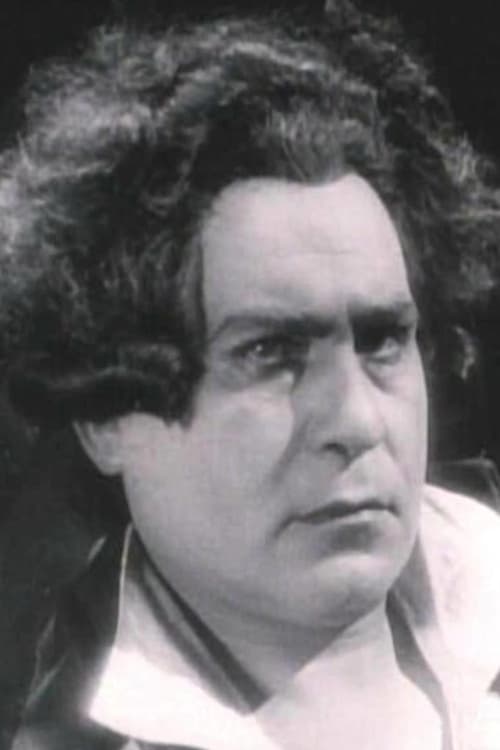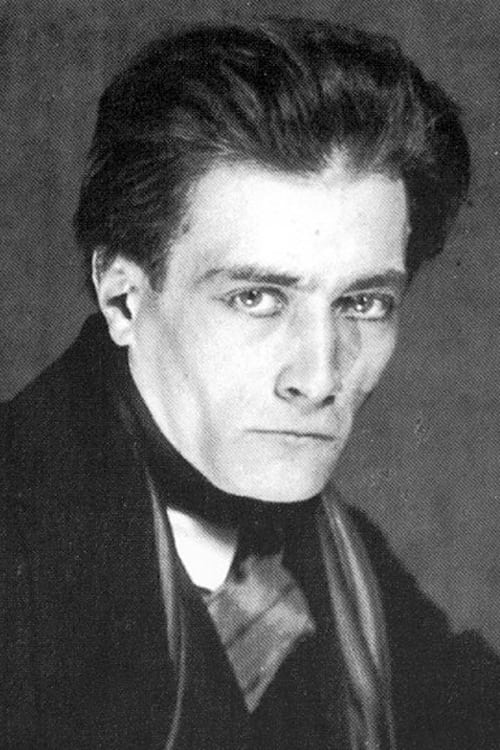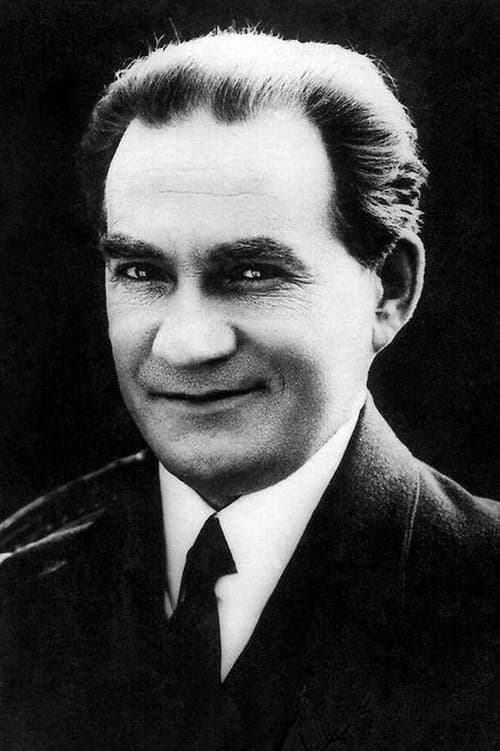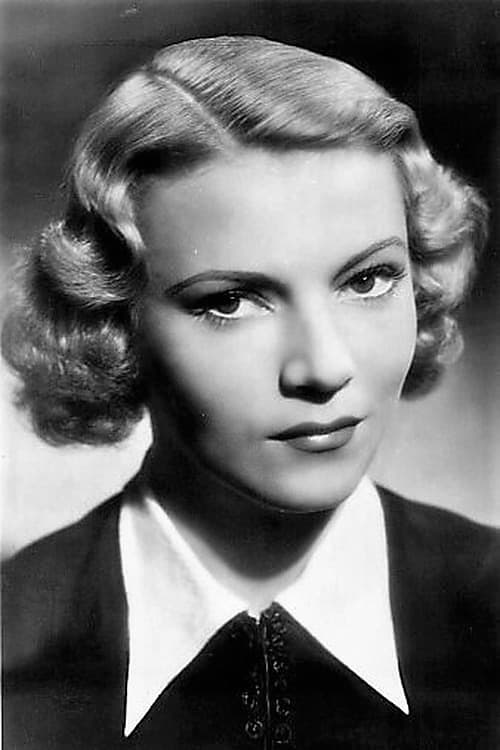




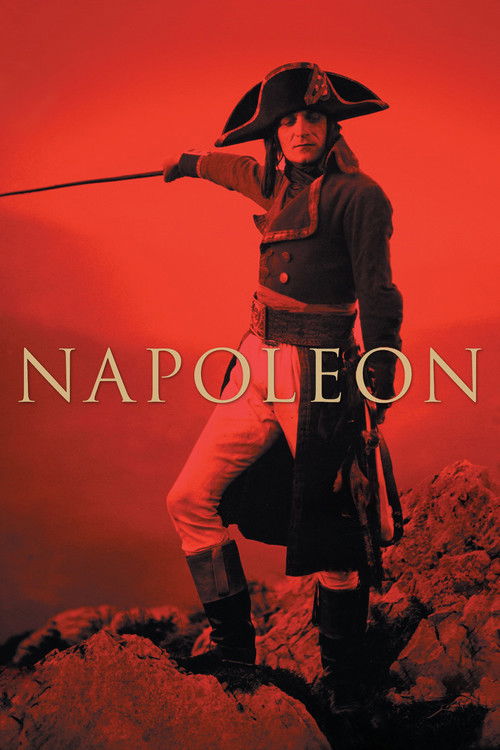
Napoléon (on-screen title: Napoléon vu par Abel Gance, "Napoleon as seen by Abel Gance") is a 1927 French silent epic historical film, produced and directed by Abel Gance, that tells the story of Napoleon's early years.
The only film to use Polyvision (for the finale), it is recognised as a masterwork of fluid camera motion, produced in a time when most camera shots were static. Many innovative techniques were used to make the film, including fast cutting, extensive close-ups, a wide variety of hand-held camera shots, location shooting, point of view shots, multiple-camera setups, multiple exposure, superimposition, underwater camera, kaleidoscopic images, film tinting, split screen and mosaic shots, multi-screen projection, and other visual effects. A revival of Napoléon in the mid-1950s influenced the filmmakers of the French New Wave. The film used the Keller-Dorian cinematography for its color sequences.
The film begins in Brienne-le-Château with youthful Napoleon attending military school where he manages a snowball fight like a military campaign, yet he suffers the insults of other boys. It continues a decade later with scenes of the French Revolution and Napoleon's presence at the periphery as a young army lieutenant. He returns to visit his family home in Corsica but politics shift against him and put him in mortal danger. He flees, taking his family to France. Serving as an officer of artillery in the Siege of Toulon, Napoleon's genius for leadership is rewarded with a promotion to brigadier general. Jealous revolutionaries imprison Napoleon but then the political tide turns against the Revolution's own leaders. Napoleon leaves prison, forming plans to invade Italy. He falls in love with the beautiful Joséphine de Beauharnais. The emergency government charges him with the task of protecting the National Assembly. Succeeding in this he is promoted to Commander-in-Chief of the Army of the Interior, and he marries Joséphine. He takes control of the army which protects the French–Italian border and propels it to victory in an invasion of Italy.
Gance planned for Napoléon to be the first of six films about Napoleon's career, a chronology of great triumph and defeat ending in Napoleon's death in exile on the island of Saint Helena. After the difficulties encountered in making the first film, Gance realised that the costs involved would make the full project impossible.
Napoléon was first released in a gala at the Palais Garnier (then the home of the Paris Opera) on 7 April 1927. The film had been screened in only eight European cities when Metro-Goldwyn-Mayer bought the rights to it, but after screening it in London, it was cut drastically in length, and only the central panel of the three-screen Polyvision sequences was retained before it received a limited release in the United States. There, the film was indifferently received at a time when talkies were just starting to appear. The film was restored in 1980 after twenty years' work by silent film historian Kevin Brownlow, with further restoration done under his supervision in 2016. A new restoration of the film, supervised by Georges Mourier, premiered in France in July 2024.
Contents
Plot
The scenario of the film as originally written by Gance was published in 1927 by Librairie Plon. Much of the scenario describes scenes that were rejected during initial editing, and do not appear in any known version of the film. The following plot includes only those scenes that are known to have been included in some version of the film. Not every scene described below can be viewed today.
Act I
In the winter of 1783, young Napoleon Buonaparte (Vladimir Roudenko) is enrolled at Brienne College, a military school for sons of nobility, run by the religious Minim Fathers in Brienne-le-Château, France. The boys at the school are holding a snowball fight organised as a battlefield. Two bullies—Phélippeaux (Petit Vidal) and Peccaduc (Roblin)—schoolyard antagonists of Napoleon, are leading the larger side, outnumbering the side that Napoleon fights for. These two sneak up on Napoleon with snowballs enclosing stones. A hardened snowball draws blood on Napoleon's face. Napoleon is warned of another rock-snowball by a shout from Tristan Fleuri (Nicolas Koline), the fictional school scullion representing the French everyman and a friend to Napoleon. Napoleon recovers himself and dashes alone to the enemy snowbank to engage the two bullies in close combat. The Minim Fathers, watching the snowball fight from windows and doorways, applaud the action. Napoleon returns to his troops and encourages them to attack ferociously. He watches keenly and calmly as this attack progresses, assessing the balance of the struggle and giving appropriate orders. He smiles as his troops turn the tide of battle. Carrying his side's flag, he leads his forces in a final charge and raises the flag at the enemy stronghold.
The monks come out of the school buildings to discover who led the victory. A young military instructor, Jean-Charles Pichegru (René Jeanne), asks Napoleon for his name. Napoleon responds "Nap-eye-ony" in Corsican-accented French and is laughed at by the others. Despite the fact Pichegru thought Napoleon had said "Paille-au-nez" (straw in the nose), Pichegru tells him that he will go far.
In class, the boys study geography. Napoleon is angered by the condescending textbook description of Corsica. He is taunted by the other boys and kicked by the two bullies who hold flanking seats. Another of the class's island examples is Saint Helena, which puts Napoleon into a pensive daydream.
Unhappy in school, Napoleon writes about his difficulties in a letter to his family. A bully reports to a monk that Napoleon is hiding letters in his bed, and the monk tears the letter to pieces. Angry, Napoleon goes to visit the attic quarters of his friend Fleuri, a place of refuge where Napoleon keeps his captive bird, a young eagle that was sent to him from Corsica by an uncle. Napoleon tenderly pets the eagle's head, then leaves to fetch water for the bird. The two bullies take this opportunity to set the bird free. Napoleon finds the bird gone and runs to the dormitory to demand the culprit show himself. None of the boys admit to the deed. Napoleon exclaims that they are all guilty, and begins to fight them all, jumping from bed to bed. In the clash, pillows are split and feathers fly through the air as the Minim Fathers work to restore order. They collar Napoleon and throw him outside in the snow. Napoleon cries to himself on the limber of a cannon, then he looks up to see the young eagle in a tree. He calls to the eagle which flies down to the cannon barrel. Napoleon caresses the eagle and smiles through his tears.
Act II
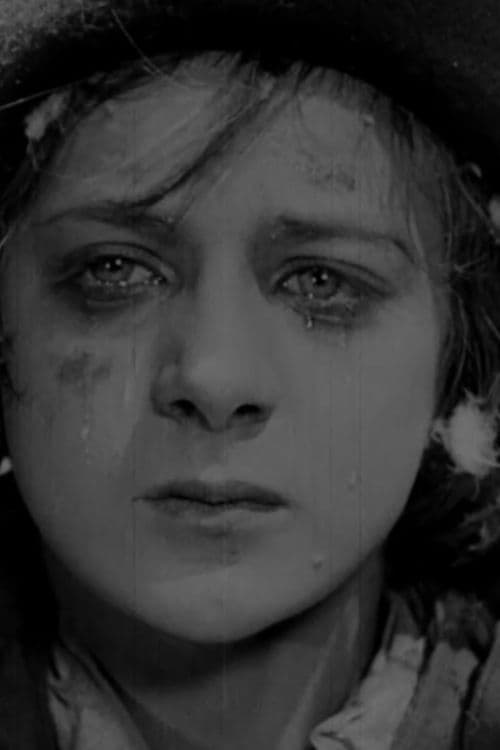
In July 1793, fanatic Girondist Charlotte Corday (Marguerite Gance) visits Marat in his home and kills him with a knife. Two months later, General Jean François Carteaux (Léon Courtois), in control of a French army, is ineffectively besieging the port of Toulon, held by 20,000 English, Spanish and Italian troops. Captain Napoleon is assigned to the artillery section and is dismayed by the obvious lack of French discipline. He confronts Carteaux in an inn run by Tristan Fleuri, formerly the scullion of Brienne. Napoleon advises Carteaux how best to engage the artillery against Toulon, but Carteaux is dismissive. An enemy artillery shot hits the inn and scatters the officers. Napoleon stays to study a map of Toulon while Fleuri's young son Marcellin (Serge Freddy-Karl) mimes with Napoleon's hat and sword. Fleuri's beautiful daughter Violine Fleuri (Annabella) admires Napoleon silently.
General Jacques François Dugommier (Alexandre Bernard) replaces Carteaux and asks Napoleon to join in war planning. Later, Napoleon sees a cannon being removed from a fortification and demands that it be returned. He fires a shot at the enemy and establishes the position as the "Battery of Men Without Fear". French soldiers rally around Napoleon with heightened spirits. Dugommier advances Napoleon to the position of commander-in-chief of the artillery.
French troops under Napoleon prepare for a midnight attack. Veteran soldier Moustache (Henry Krauss) tells 7-year-old Marcellin, now a drummer boy, that the heroic drummer boy Joseph Agricol Viala was 13 when he was killed in battle. Marcellin takes courage; he expects to have six years of life left. Napoleon orders the attack forward amidst rain and high wind. A reversal causes Antoine Christophe Saliceti (Philippe Hériat) to name Napoleon's strategy a great crime. Consequently, Dugommier orders Napoleon to cease attacking, but Napoleon discusses the matter with Dugommier and the attack is carried forward successfully despite Saliceti's warnings. English cannon positions are taken in bloody hand-to-hand combat, lit by lightning flashes and whipped by rain. Because of the French advance, English Admiral Samuel Hood (W. Percy Day) orders the burning of the moored French fleet before French troops can recapture the ships. The next morning, Dugommier, seeking to promote Napoleon to the rank of brigadier general, finds him asleep, exhausted. An eagle beats its wings as it perches on a tree next to Napoleon. ('End of the First Epoch'.)
Act III
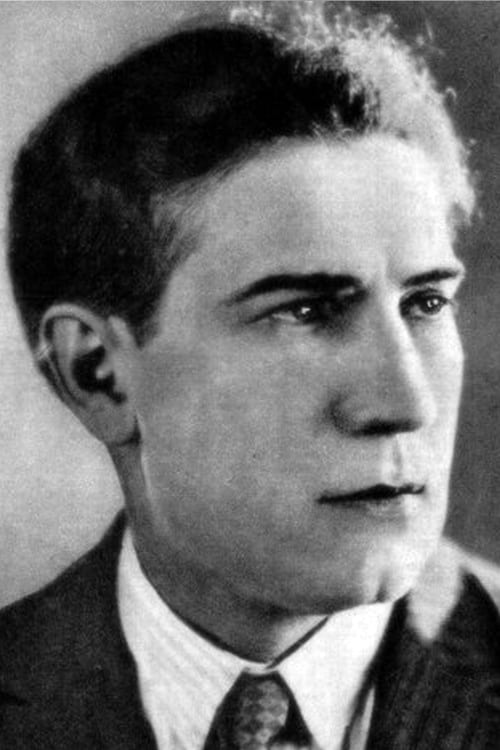
After being shamed in Toulon, Saliceti wants to put Napoleon on trial. Robespierre says he should be offered the command of Paris, but if he refuses, he will be tried. Robespierre, supported by Georges Couthon (Louis Vonelly) and Louis Antoine de Saint-Just (Abel Gance), condemns Danton to death. Saint-Just puts Joséphine into prison at Les Carmes where she is comforted by General Lazare Hoche (Pierre Batcheff). Fleuri, now a jailer, calls for "De Beauharnais" to be executed, and Joséphine's ex-husband, Alexandre de Beauharnais (Georges Cahuzac) rises to accept his fate. Elsewhere, Napoleon is also imprisoned for refusing to serve under Robespierre. He works out the possibility of building a canal to Suez as Saliceti taunts him for not trying to form a legal defence.
In an archive room filled with the files of condemned prisoners, clerks Bonnet (Boris Fastovich-Kovanko) and La Bussière (Jean d'Yd) work secretly with Fleuri to destroy (by eating) some of the dossiers including those for Napoleon and Joséphine. Meanwhile, at the National Assembly, Violine with her little brother Marcellin watches from the gallery. Voices are raised against Robespierre and Saint-Just. Jean-Lambert Tallien (Jean Gaudrey) threatens Robespierre with a knife. Violine decides not to shoot Saint-Just with a pistol she brought. Back at the archives, the prison clerks are given new dossiers on those to be executed by guillotine: Robespierre, Saint-Just and Couthon.
Joséphine and Napoleon are released from their separate prisons. Napoleon declines the request by General Aubry to command infantry in the War in the Vendée under General Hoche, saying he would not fight Frenchman against Frenchman when 200,000 foreigners were threatening the country. He is given a minor map-making command as punishment for refusing the greater post. He draws up plans for an invasion of Italy. In Nice, General Schérer (Alexandre Mathillon) sees the plans and laughs at the foolhardy proposal. The plans are sent back, and Napoleon pastes them up to cover a broken window in the poor apartment he shares with Captain Marmont (Pierre de Canolle), Sergeant Junot (Jean Henry) and the actor Talma (Roger Blum). Napoleon and Junot see the contrast of cold, starving people outside of wealthy houses.
Joséphine convinces Barras to suggest to the National Assembly that Napoleon is the best man to quell a royalist uprising. On 3 October 1795 Napoleon accepts and supplies 800 guns for defence. Directed by Napoleon, Major Joachim Murat (Genica Missirio) seizes a number of cannons to fight the royalists. Di Borgo shoots at Napoleon but misses; di Borgo is then wounded by Fleuri's accidental musket discharge. Saliceti is prevented from escaping in disguise. Napoleon sets Saliceti and di Borgo free. Joseph Fouché (Guy Favières) tells Joséphine that the noise of the fighting is Napoleon "entering history again". Napoleon is made General in Chief of the Army of the Interior to great celebration.
Act IV
Just before leaving Paris, Napoleon enters the empty National Assembly hall at night, and sees the spirits of those who had set the Revolution in motion. The ghostly figures of Danton and Saint-Just speak to Napoleon, and demand answers from him regarding his plan for France. All the spirits sing "La Marseillaise".
Only 48 hours after his wedding, Napoleon leaves Paris in a coach for Nice. He writes dispatches, and letters to Joséphine. Back in Paris, Joséphine and Violine pray at the little shrine to Napoleon.
Napoleon speeds to Albenga on horseback to find the army officers resentful and the soldiers starving. He orders a review of the troops. The troops respond quickly to the commanding presence of Napoleon and bring themselves to perfect attention. Fleuri, now a soldier, tries and fails to get a hint of recognition from Napoleon. The Army of Italy is newly filled with fighting spirit. Napoleon encourages them for the coming campaign into Italy, the "honour, glory and riches" which will be theirs upon victory. The underfed and poorly armed force advances into Montenotte and takes the town. Further advances carry Napoleon to Montezemolo. As he gazes upon the Alps, visions appear to him of future armies, future battles, and the face of Joséphine. The French troops move forward triumphantly as the vision of an eagle fills their path, a vision of the blue, white and red French flag waving before them.
Music
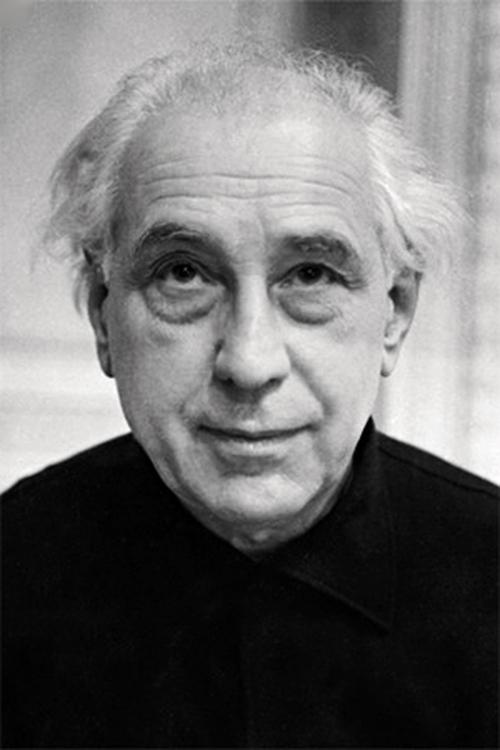
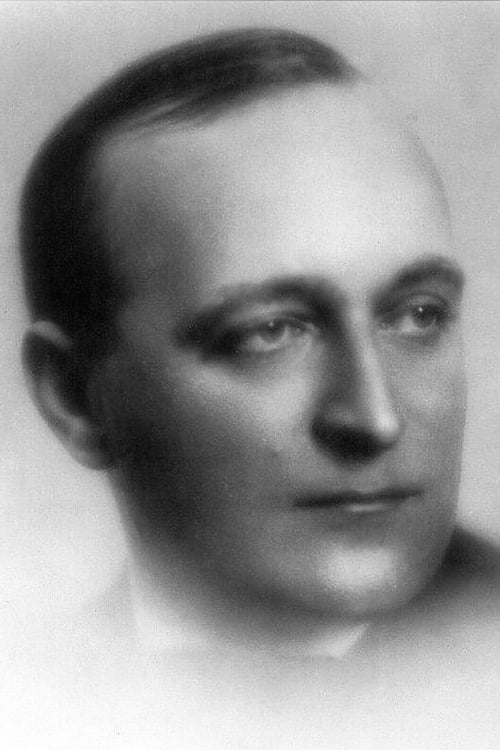
The film features Gance's interpretation of the birth of the song "La Marseillaise", the national anthem of France. In the film, the French singer Maryse Damia portrays the spirit of the song. "La Marseillaise" is played by the orchestra repeatedly during a scene at the Club of the Cordeliers, and again at other points in the plot. During the 1927 Paris Opera premiere, the song was sung live by Alexandre Koubitzky to accompany the Cordeliers scene. Koubitzky played Danton in the film, but he was also a well-known singer. Gance had earlier asked Koubitzky and Damia to sing during the filming of the Cordeliers scene to inspire the cast and extras. Kevin Brownlow wrote in 1983 that he thought it was "daring" of Gance "to make a song the highpoint of a silent film!"
The majority of the film is accompanied by incidental music. For this material, the original score was composed by Arthur Honegger in 1927 in France. A separate score was written by Werner Heymann in Germany, also in 1927. In pace with Brownlow's efforts to restore the movie to something close to its 1927 incarnation, two scores were prepared in 1979–1980; one by Carl Davis in the UK and one by Carmine Coppola in the US.
Beginning in late 1979, Carmine Coppola composed a score incorporating themes taken from various sources such as Ludwig van Beethoven, Hector Berlioz, Bedřich Smetana, Felix Mendelssohn and George Frideric Handel. He composed three original themes: a heroic one for Napoleon, a love theme for scenes with Josephine, and a Buonaparte family theme. He also used French revolutionary songs that were supplied by Davis in early 1980 during a London meeting between Coppola, Davis and Brownlow. Two such songs were "Ah! ça ira" and "La Carmagnole". Coppola returns to "La Marseillaise" as the finale. Coppola's score was heard first in New York at Radio City Music Hall performed for very nearly four hours, accompanying a film projected at 24 frames per second as suggested by producer Robert A. Harris. Coppola included some sections of music carried solely by an organist to relieve the 60-piece orchestra.
Working quickly from September 1980, Davis arranged a score based on selections of classical music; especially the Eroica Symphony by Beethoven who had initially admired Napoleon as a liberator, and had dedicated the symphony to Napoleon. Taking this as an opportunity to research the music Napoleon would have heard, Davis also used folk music from Corsica, French revolutionary songs, a tune from Napoleon's favourite opera (Nina by Giovanni Paisiello) and pieces by other classical composers who were active in France in the 18th century. Davis uses "La Marseillaise" as a recurring theme and returns to it during Napoleon's vision of ghostly patriots at the National Assembly. In scoring the film, Davis was assisted by David Gill and Liz Sutherland; the three had just completed the Thames Television documentary series Hollywood (1980), on the silent film era. To accompany a screening of 4 hours 50 minutes shown at 20 frames per second during the 24th London Film Festival, Davis conducted the Wren Orchestra. Following this, work continued on restoration of the film with the goal of finding more footage to make a more complete version. In 2000, Davis lengthened his score and a new version of the movie was shown in London, projected at 20 frames per second for 5 hours 32 minutes. The 2000 score was performed in London in 2004 and 2013, and also in Oakland, California, in 2012, with Davis conducting local orchestras.
Triptych sequence
Polyvision is the name that French film critic Émile Vuillermoz gave to a specialised widescreen film format devised exclusively for the filming and projection of Gance's Napoléon. It involves the simultaneous projection of three reels of silent film arrayed in a horizontal row, making for a total aspect ratio of 4.00:1 (3× 1.33:1). Gance was worried the film's finale would not have the proper impact by being confined to a small screen. Gance thought of expanding the frame by using three cameras next to each other. This is considered to be the best-known of the film's several innovative techniques. Though American filmmakers began experimenting with 70mm widescreen (such as Fox Grandeur) in 1929, widescreen did not take off until CinemaScope was introduced in 1953.
Polyvision was only used for the final reel of Napoleon, to create a climactic finale. Filming the whole story in Polyvision was logistically difficult as Gance wished for a number of innovative shots, each requiring greater flexibility than was allowed by three interlocked cameras. When the film was greatly trimmed by the distributors early on during exhibition, the new version only retained the centre strip to allow projection in standard single-projector cinemas. Gance was unable to eliminate the problem of the two seams dividing the three panels of film as shown on screen, so he avoided the problem by putting three completely different shots together in some of the Polyvision scenes. When Gance viewed Cinerama for the first time in 1955, he noticed the widescreen image was still not seamless, and the problem was not entirely fixed.
Restorations
Film historian Kevin Brownlow conducted reconstructions of the film in the years leading up to 1980, including the Polyvision scenes. As a boy, Brownlow had purchased two 9.5 mm reels of the film from a street market. He was captivated by the cinematic boldness of short clips, and his research led to a lifelong fascination with the film and a quest to reconstruct it. On 31 August 1979, Napoléon was shown to a crowd of hundreds at the Telluride Film Festival, in Telluride, Colorado. The film was presented in full Polyvision at the specially constructed Abel Gance Open Air Cinema, which is still in use today. Gance was in the audience until the chilly air drove him indoors after which he watched from the window of his room at the New Sheridan Hotel. Kevin Brownlow was also in attendance and presented Gance with his Silver Medallion.
Brownlow's 1980 reconstruction was re-edited and released in the United States by American Zoetrope (through Universal Pictures) with a score by Carmine Coppola performed live at the screenings. The restoration premiered in the United States at Radio City Music Hall in New York City on 23–25 January 1981; each performance showed to a standing room only house. Gance could not attend because of poor health. At the end of 24 January screening, a telephone was brought onstage and the audience was told that Gance was listening on the other end and wished to know what they had thought of his film. The audience erupted in an ovation of applause and cheers that lasted several minutes. The acclaim surrounding the film's revival brought Gance much-belated recognition as a master director before his death eleven months later, in November 1981.
Another restoration was made by Brownlow in 1983. When it was screened at the Barbican Centre in London, French actress Annabella, who plays the fictional character Violine in the film (personifying France in her plight, beset by enemies from within and without), was in attendance. She was introduced to the audience prior to screenings and during one of the intervals sat alongside Kevin Brownlow, signing copies of the latter's book about the history and restoration of the film.
Brownlow re-edited the film again in 2000, including previously missing footage rediscovered by the Cinémathèque Française in Paris. Altogether, 35 minutes of reclaimed film had been added, making the 2000 restoration five and a half hours.
Legacy
Napoléon is widely considered to be one of the greatest and most innovative films of not only the silent era but also of all time. Review aggregator Rotten Tomatoes reports that 87% of critics have given the film a positive review, based upon 68 reviews, with an average score of 9.3/10. The website's critics consensus reads: "Monumental in scale and distinguished by innovative technique, Napoléon is an expressive epic that maintains a singular intimacy with its subject."
Anita Brookner of London Review of Books wrote that the film has an "energy, extravagance, ambition, orgiastic pleasure, high drama and the desire for endless victory: not only Napoleon’s destiny but everyone’s most central hope." The 2012 screening has been acclaimed, with Mick LaSalle of the San Francisco Chronicle calling the film, "A rich feast of images and emotions." He also praised the triptych finale, calling it, "An overwhelming and surprisingly emotional experience." Judith Martin of The Washington Post wrote that the film "inspires that wonderfully satisfying theatrical experience of whole-heartedly cheering a hero and hissing villains, while also providing the uplift that comes from a real work of art" and praised its visual metaphors, editing, and tableaus. Peter Bradshaw wrote in The Guardian that Napoléon "looks startlingly futuristic and experimental, as if we are being shown something from the 21st century’s bleeding edge. It’s as if it has evolved beyond spoken dialogue into some colossal mute hallucination." Mark Kermode described the film "as significant to the evolution of cinema as the works of Sergei Eisenstein and D. W. Griffith" that "created a kaleidoscopic motion picture which stretched the boundaries of the screen in every way possible."
Director Stanley Kubrick was not a fan of the film, saying in an interview "I found it really terrible. Technically [Gance] was ahead of his time and he introduced new film techniques – in fact Eisenstein credited him with stimulating his initial interest in montage – but as far as story and performance goes it's a very crude picture."
It is included by the Vatican in a list of important films, as compiled in 1995, under the category of "Art".
Home media
For many years the Brownlow restoration with Carl Davis's score was unavailable for home viewing. In 2016 it was released by BFI and Photoplay Productions on DVD, Blu-ray and for streaming via the BFI Player.
Francis Ford Coppola's 1981 edit (3 hours and 43 minutes), accompanied by Carmine Coppola's score and projected at 24 fps, has been released on VHS and Laserdisc in the US, and in Australia on a Region 4 DVD. These have also been pirated on DVDs emanating from Europe and elsewhere. To suit home viewers watching on a single standard-width television screen, the triptych portion is letterboxed, such that image height is reduced to one-third for that portion of the film.
A 4K Blu-ray release of the Mourier restoration was announced by French label Potemkine for November 4, 2025.