1940s
During the 1940s Curtiz continued to release more critically acclaimed films, including The Sea Hawk (1940), Dive Bomber (1941), The Sea Wolf (1941), Casablanca (1942), Yankee Doodle Dandy (1942), This Is the Army (1943), Mildred Pierce (1945), and Life with Father (1947).
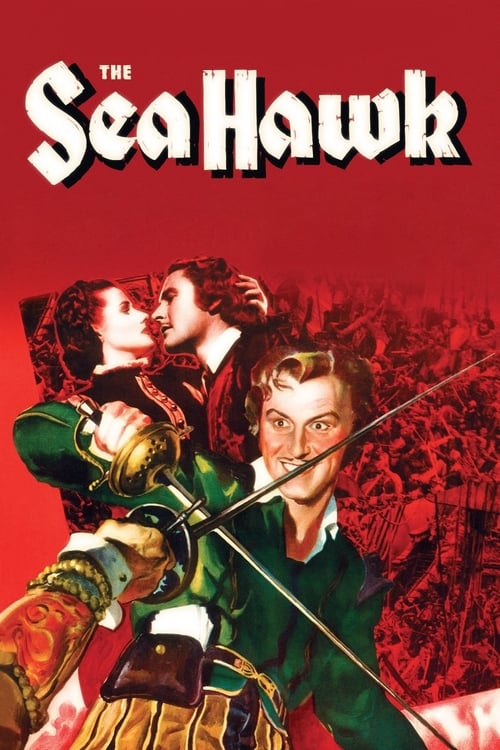
One of the biggest hits of 1940 was The Sea Hawk, starring Errol Flynn in the role of an adventurer in the mold of Sir Francis Drake. Flora Robson played Queen Elizabeth I, and Claude Rains acted as the Spanish ambassador, whose job it was to mislead the Queen, who rightly suspected the Spanish Armada was about to attempt to invade England. Some critics felt the story was equivalent to actual events then taking place in Europe, describing it as a "thinly veiled diatribe against American isolationism on World War II's brink." Film columnist Boyd Martin noticed the similarities:
The parallel of the dreams of empire indulged in by King Philip of Spain and those apparently momentarily enjoyed by Hitler is so obvious that it will not escape detection even by the youngest film follower who reads his newspaper and goes to see the film ... In having been supplied with a parallel, Mr. Curtiz rides his Sea Hawk neck and neck with contemporary history.
Dive Bomber (1941) was released a few months before the attack on Pearl Harbor.
Curtiz shot every foot of Dive Bomber with Navy assistance and under strict Navy scrutiny. Filming at the active naval base in San Diego required great care, especially for aerial sequences. To create realistic shots, he mounted cameras on the Navy's planes to achieve "amazing point-of-view shots," taking viewers inside the cockpit during flight. He also mounted cameras underneath the wings of planes to dramatize take-offs from the Enterprise, an aircraft carrier launched a few years earlier.
Bosley Crowther of The New York Times gave it a good review:
The Warners have photographed this picture in some of the most magnificent technicolor yet seen ... masses of brilliantly colored planes, ranked in impressive rows about an air base or upon the huge flight decks of carriers, and roaring in silver majesty, wing to wing, through the limitless West Coast skies. Never before has an aviation film been so vivid in its images, conveyed such a sense of tangible solidity when it is showing us solid things or been so full of sunlight and clean air when the cameras are aloft. Except for a few badly matched shots, the job is well nigh perfect.
The film was well received by the public, becoming the sixth-most popular film that year. No other pre-Pearl Harbor picture matched the quality of its flying scenes. Film columnist Louella Parsons wrote, "Dive Bomber again makes us glad we are Americans protected by a Navy as competent as ours."
Edward G. Robinson starred in The Sea Wolf (1941), his second film directed by Curtiz. He portrayed the rampaging, dictatorial captain of a ship in an adaptation of one of Jack London's best known novels. Robinson said the character he portrayed "was a Nazi in everything but name," which, Robinson observed, was relevant to the state of the world at that time. John Garfield and Ida Lupino were cast as the young lovers who attempt to escape his tyranny. Some reviews described the film as one of Curtiz's "hidden gems ... one of Curtiz's most complex works." Robinson was impressed by Garfield's intense personality, which he felt may have contributed to Garfield's death at age 39:
John Garfield was one of the best young actors I ever encountered, but his passions about the world were so intense that I feared any day he would have a heart attack. It was not long before he did.
Curtiz directed another Air Force film, Captains of the Clouds (1942), about the Royal Canadian Air Force. It stars James Cagney and Brenda Marshall. According to Hal B. Wallis, its producer, it became Warner Bros.' most extensive and difficult production, and everything had to be relocated to Canada. Like Dive Bomber, the vivid aerial scenes filmed in Technicolor were another feature that garnered critical attention, and the film was nominated for Best Art Direction and Best Color Cinematography.
Shortly after Captains of the Clouds was completed, but released after his next picture, Casablanca, Curtiz directed the musical biopic, Yankee Doodle Dandy (1942), a film about singer, dancer, and composer George M. Cohan. It stars James Cagney in a role totally opposite from the one he had played four years earlier in Curtiz's Angels with Dirty Faces. Where the earlier film became a career high point for Cagney's portrayals of a gangster, a role he played in many earlier films, in this film, an overtly patriotic musical, Cagney demonstrates his considerable dancing and singing talents. It was Cagney's favorite career role.
Cagney's bravura performance earned him his only Academy Award as Best Actor. For Warner Bros., it became their biggest box-office success in the company's history up to that time, nominated for nine Academy Awards and winning four. The success of the film also became a high point in Curtiz's career, with his nomination as Best Director. The film has been added to annals of Hollywood as a cinematic classic, preserved in the United States National Film Registry at the Library of Congress as being "culturally, historically, or aesthetically significant".
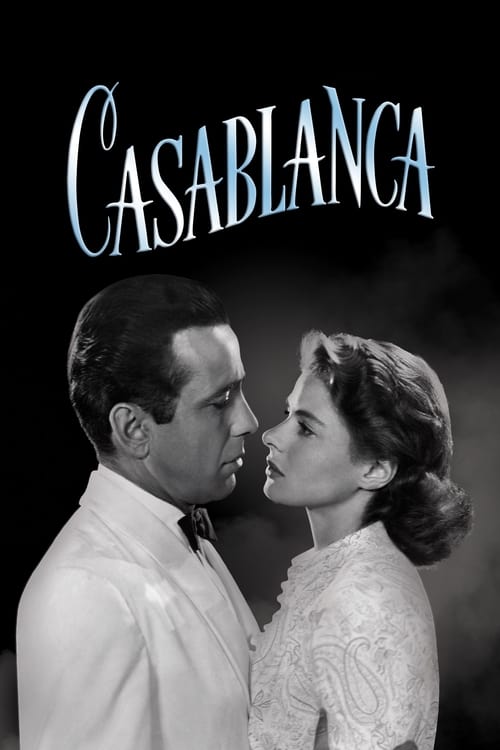
Curtiz directed Casablanca (1942), a World War II-era romantic drama described by Roger Ebert in 1996 as one of the most popular films ever made. Its stars were Humphrey Bogart, playing an expatriate living in Morocco, and Ingrid Bergman as a woman who was trying to escape the Nazis. The supporting cast features Paul Henreid, Claude Rains, Conrad Veidt, Sydney Greenstreet, and Peter Lorre. The picture received eight Academy Award nominations and won three, including Best Picture and one for Curtiz as Best Director. Time magazine in 2012 described Casablanca as "the best movie ever made".
Another patriotic Curtiz film was This Is the Army (1943), a musical adapted from the stage play with a score by Irving Berlin. As America was engaged in World War II, the film boosted the morale of soldiers and the public. Kate Smith's rendition of "God Bless America" was one of the highlights of the film's nineteen songs.
As a result of the film's numerous popular and generic elements, such as ground and aerial combat, recruitment, training, and marching as well as comedy, romance, song, and dance, it was the most financially successful war-themed film of any kind made during World War II.
During this period, Curtiz also directed the World War II propaganda film Mission to Moscow (1943), a film which was commissioned at the request of President Franklin D. Roosevelt in support of the U.S. and British ally, the Soviet Union, at that time holding down 80% of all German forces as they repelled the Nazi invasion of Russia. The film was mostly well received by critics and was a success at the box office, but the film soon proved to be controversial after it stirred up strong anti-Communist attacks. Curtiz took the criticism personally and vowed never again to direct an overtly political film, a promise which he kept.
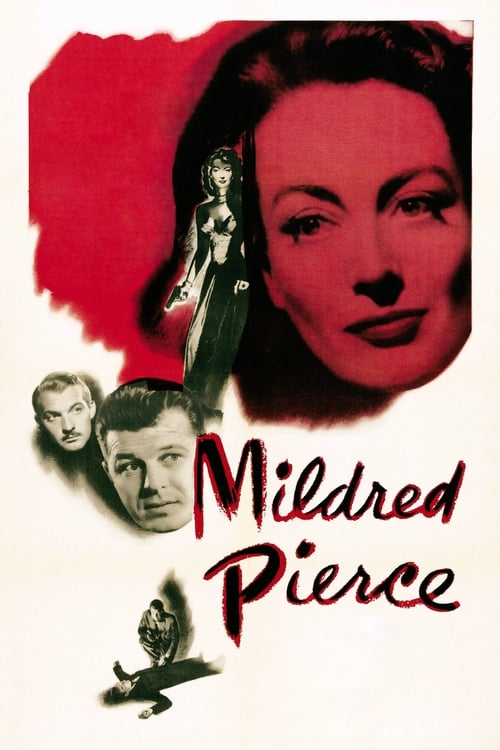
Mildred Pierce (1945) was based on the novel by James M. Cain. Its star, Joan Crawford, gave one of the strongest performances in her career, playing a mother and successful businesswoman who sacrifices everything for her spoiled daughter, played by Ann Blyth.
At the time Crawford accepted the part from Warner Bros., her 18-year career at MGM had been in decline. She had been one of Hollywood's most prominent and highest-paid stars but her films began losing money, and by the end of the 1930s, she was labeled "box office poison". Rather than remain at MGM and see newer, younger talent draw most of the studio's attention with better roles, she left MGM and signed a contract with Warner Bros. at a reduced salary.
Curtiz originally wanted Barbara Stanwyck for the role. However, Crawford, who by then had not been in a film for two years, did her best to get the part. Rare for a major star, she was even willing to audition for Curtiz. She was already aware that "Mr. Mike Curtiz hated me ... I don't want those big broad shoulders," he said. During her reading of an emotional scene as he watched, she saw him become so overwhelmed by her delivery that he cried, and he then said, "I love you, baby."
To help Crawford prepare for certain court scenes, Curtiz took her downtown, where they spent time visiting jails and watching criminal trials. In photographing her, he used careful film noir camera techniques, a style he learned in Europe, to bring out the features of Crawford's face, using rich black-and-white highlights. He was aware that Crawford guarded her screen image very carefully, and that she truly cared about quality. Crawford learned to appreciate Curtiz's genius with the camera. Eve Arden, who was nominated as Best Supporting Actress for the film, said "Curtiz was one of the few directors who knew what he wanted and was able to express himself exactly, even in his amusing Hungarian accent."
Mildred Pierce was nominated for six Academy Awards, including Best Picture. Only Crawford won, for Best Actress, her first and only Oscar. The novel's author, James M. Cain, gave her a leather-bound copy of Mildred Pierce, which he inscribed: "To Joan Crawford, who brought Mildred to life as I had always hoped she would be, and who has my lifelong gratitude." The film returned Crawford to the ranks of leading stars.
After the success of the film, Jack Warner gave Curtiz two new and exceptional contracts in appreciation, boosting his salary and reducing the number of films he had to direct each year to two.
Curtiz directed William Powell and Irene Dunne in Life with Father (1947), a family comedy. It was a big hit in the United States, and was nominated for four Academy Awards, including Best Actor for Powell. During Powell's career, he acted in 97 films; his third and last nomination was for this film. One review stated, "He is magnificent in the role, imbuing it with every attribute of pomp, dignity, unconscious conceit, and complete loveableness! His is one of the really great screen performances of the year ... that crowns a long screen life."
In the late 1940s, Curtiz made a new agreement with Warner Bros. under which the studio and his own production company were to share the costs and profits of his subsequent films with his films to be released through Warner Bros. "I'm going to try to build my own stock company and make stars of unknowns. It is getting impossible to sign up the big stars, because they are tied up for the next two years," he said. He also said that he was less concerned with looks than personality when using an actor. "If they are good-looking, that's something extra. But I look for personality."
He soon learned that good stories were even harder to come by: "Studios will pay anything for good stories ... they will buy it up before anyone else can get it," he complained. The story for Life With Father was said to have cost the studio $300,000, and the full budget for making the film was about $3 million.
The subsequent films did poorly, however, whether as part of the changes in the film industry in this period or because Curtiz "had no skills in shaping the entirety of a picture". Either way, as Curtiz himself said, "You are only appreciated so far as you carry the dough into the box office. They throw you into gutter next day".